
Image: NASA
As NASA’s Nancy Grace Roman Space Telescope advances toward launch, the mission is beginning to transition from a completed observatory into an active scientific program. In recent weeks, the agency has opened the first round of community science proposals for the telescope.
Known as Cycle 1, the call invites astronomers to compete for observing time, signaling that the telescope is no longer just a future asset, but a working scientific platform preparing for use.
At the same time, NASA has refined how Roman’s core mission is expected to be carried out, placing increasing emphasis on its role as a wide-field survey engine designed to map the large-scale structure of the universe. Rather than focusing on individual deep targets, Roman would observe vast regions of the sky, capturing hundreds of millions of galaxies in a single, coordinated effort to study dark matter distribution and the effects of dark energy over cosmic time.
While the James Webb Space Telescope continues to deliver high-resolution observations of specific objects, Roman is intended to operate as a complementary system, generating the statistical datasets needed to understand how those objects fit into the larger architecture of the universe.
Advertisement – scroll for more content
Roman’s are expected to cover areas of the sky orders of magnitude larger than previous space telescopes, enabling a new class of “cosmic census” science. By combining weak gravitational lensing measurements with galaxy clustering data, researchers aim to build one of the most detailed maps of matter distribution ever produced.
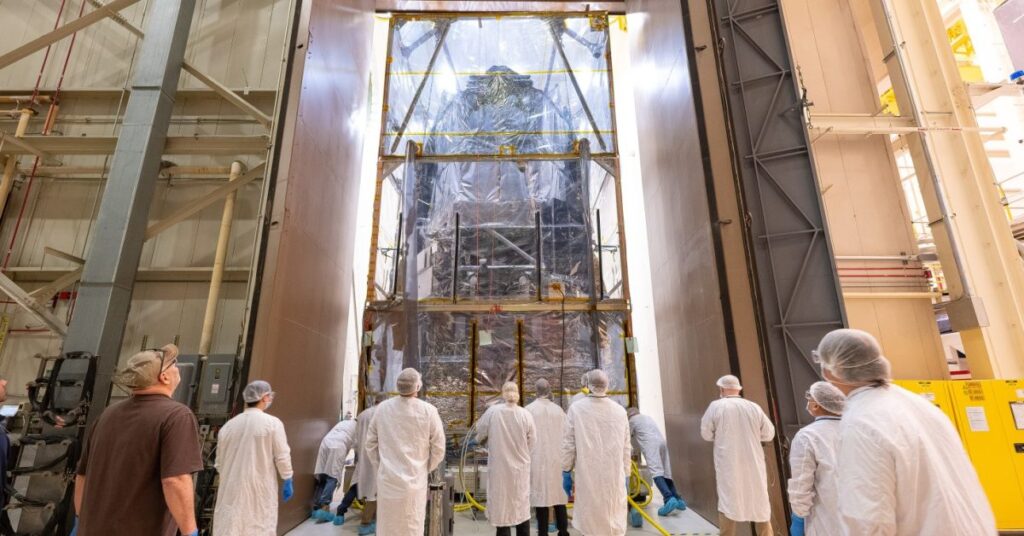
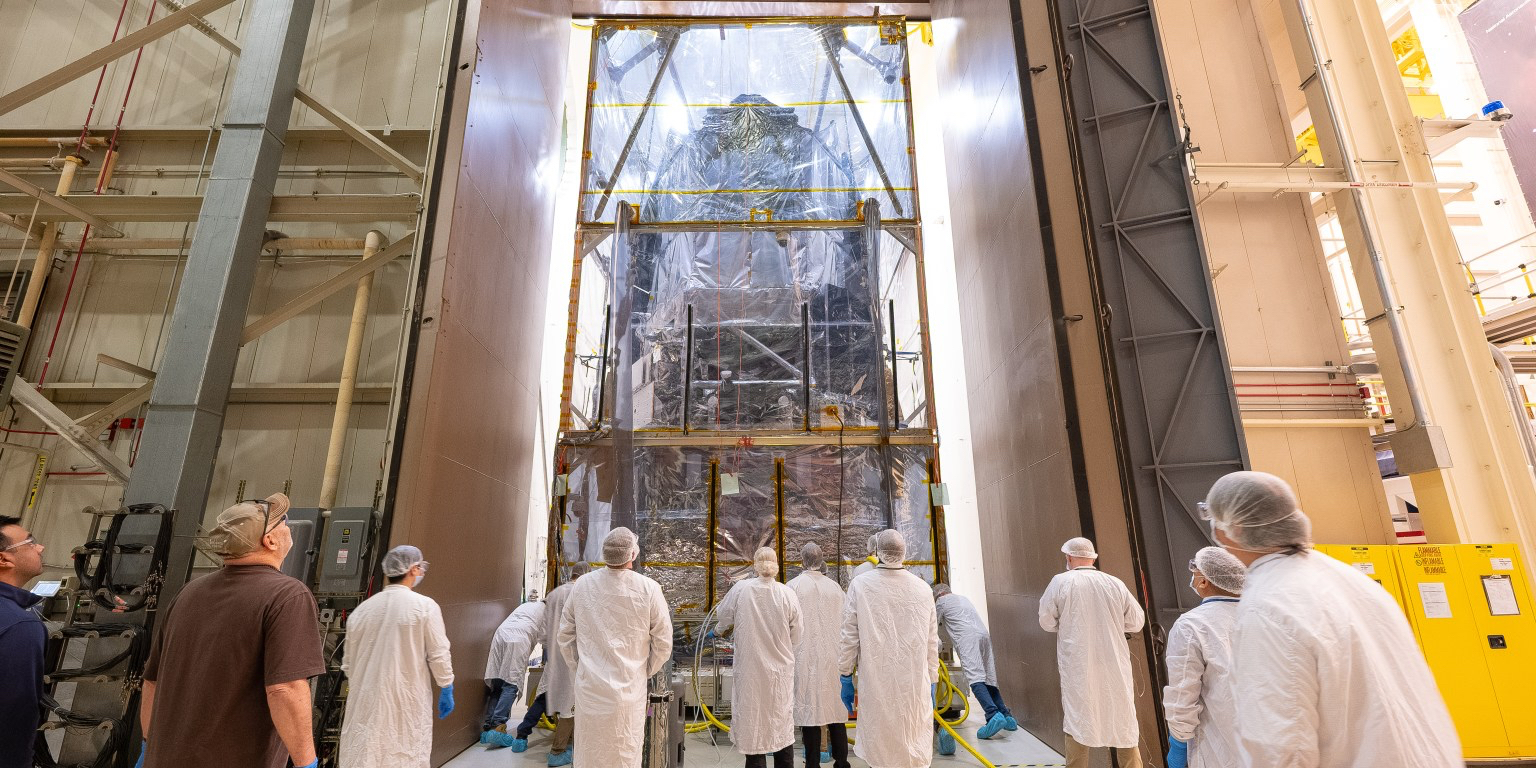
Meanwhile, NASA maintains that Roman is tracking toward a launch as early as late 2026, with a formal commitment of no later than May 2027. The agency expects to ship the telescope from its Goddard Space Flight Center clean room in Maryland to Kennedy Space Center in Florida in early summer to begin preparations for launch.
Roman’s exoplanet program is also entering a more defined phase as the mission approaches operations. Its microlensing survey is expected to detect thousands of planets, including those not bound to stars. NASA says these observations would be used to support broader statistical studies of planetary populations across the galaxy, rather than focusing solely on individual detections.
Together, these developments reflect a transition in the mission’s status, from a focus on construction and system readiness to the planning of scientific operations. The telescope is being positioned as a survey instrument intended to generate large datasets for use across multiple areas of astrophysics.
With launch approaching and the scientific community now actively engaged, the telescope is moving steadily from promise to participation, and closer to reshaping how the universe is mapped and understood.


FTC: We use income earning auto affiliate links. More.