
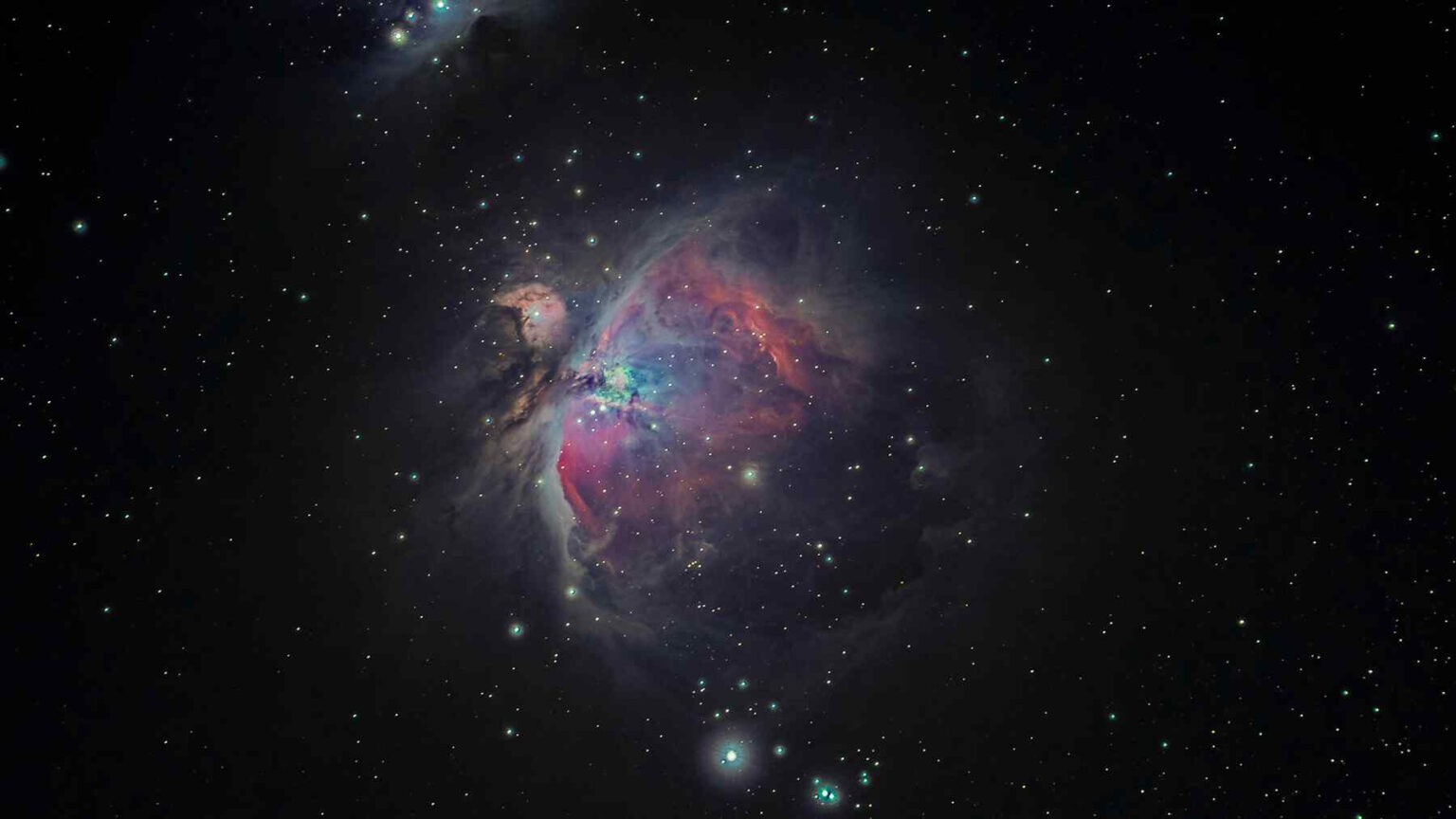
The universe is as scared as the Earth or Moon.
Since the launch of the Hubble and James Webb Telescopes, we have unearthed many new discoveries about the cosmos, and we have only begun to scratch the surface as to what is out there. Astronomers have been mapping certain regions of space for a while now, and recently made a shocking finding.
How can 300 scars emerge in the universe with no clear reason or cause?
How we are reaching for the stars, thanks to Hubble and JWST
Hubble was our first major venture into studying the deepest regions of the cosmos through a space-based telescope.
It primarily gives us a glimpse into what is out there by analyzing visible and ultraviolet light, providing images that are eerily similar to our own vision, just magnified at an astonishing level.
The James Webb Telescope took things to a whole other level, using sensors that have been optimized to pick up infrared light.
This allows JWST to gaze past the huge plumes and clouds of space dust that have blocked our view of space and time for generations. Hubble gave us a view of a universe in its infancy, providing astronomers with images of the cosmos from 13.4 billion years ago.
JWST revealed what was happening even earlier than Hubble did, providing an image of the cosmos from 13.5 billion years ago.
The mysteries of our universe have become that much easier to unravel
Thanks to the Webb Telescope, astronomers were able to track a huge asteroid that came perilously close to our Moon’s orbit.
The world of astronomy came together to provide the first-ever image of a black hole through the Event Horizon Telescope project. This amazing venture used several existing radio telescopes to turn the planet into an Earth-sized virtual dish.
We have only recently begun to understand what makes the universe tick, and nearly every day, new discoveries are emerging.
Such as a team of astronomers finding tiny red dots that are traversing the cosmos at approximately 600,000 mph. These minute red dots are actually distant stars that exploded in a violent death of epic proportions, NASA finds.
And NASA keeps making remarkable findings that change the way we look out at the night sky.
A new article, “NASA’s Webb Telescope just found 300 galaxies that defy explanation,” published in ScienceDaily, has noted that there are many galaxies that we have only recently found.
NASA finds hundreds of scarred galaxies that puzzle astronomers
The iconic space agency has found about 300 distant galaxies that have evidence of massive scarring, and nobody knows why.
These are not your run-of-the-mill stars; they are candidates for some of the earliest galaxies formed in time. The issue for NASA? These strange celestial objects are far too bright according to our current understanding of how the cosmos came to be.
Researchers from the University of Missouri found the “cosmic rule-breakers” by doing a bit of space detection work that Batman would be proud of.
The James Webb Telescope used infrared sensors to detect distant galaxies
Astronomers found that these “cosmic rule-breakers” formed with far more energy in a much shorter timeframe than what our current set of knowledge understands. Through the Webb and Hubble telescopes, NASA has found several unexplained mysteries in space.
From distant cosmic “explosions” to the more recent scarred galaxies that break the rule book of how galaxies are formed, things in space are getting weirder.
If these 300 scarred objects are indeed galaxies, it proves that the early days of the universe were far more violent and explosive than what we initially believed. This discovery, along with the 100-year-old mystery over Dark energy, proves that we have only begun to understand the first days after the Big Bang.
How will this change our understanding of the universe and how it formed after the Big Bang, nearly 14 billion years ago?