
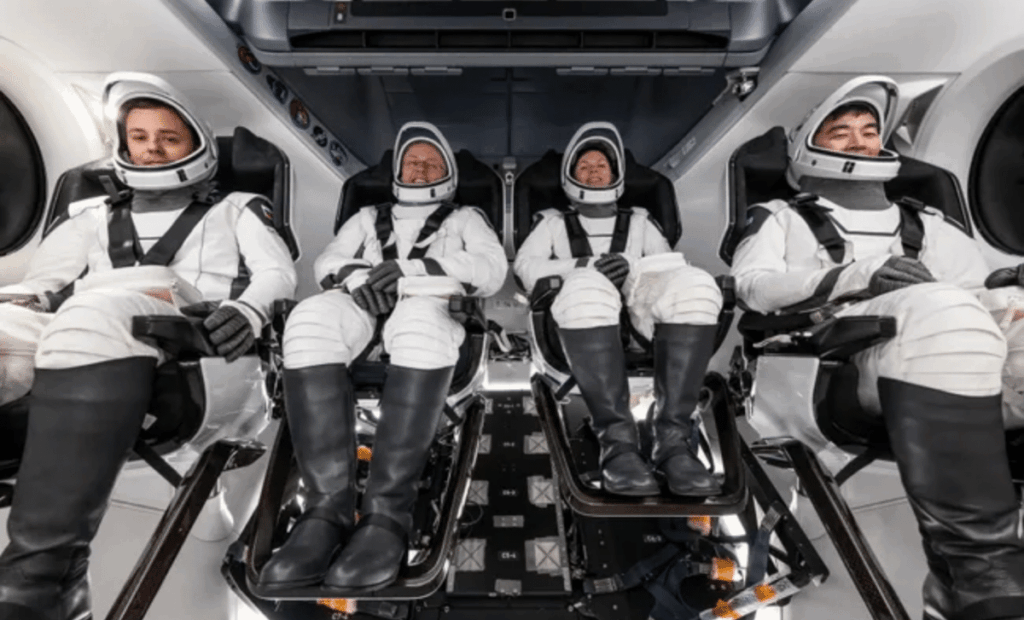
A veteran NASA astronaut’s unexplained medical emergency in orbit is casting a sharp light on one of the most fragile aspects of human spaceflight, health. The incident, reported by the Associated Press and published in early 2026, underscores a growing concern as missions extend farther from Earth: what happens when something goes wrong and help is days away, not hours.
A Medical Emergency That Shook The International Space Station
The incident unfolded aboard the International Space Station, where astronaut Michael Fincke experienced a sudden and baffling medical episode that left him unable to speak. There was no warning, no gradual onset, and no clear trigger, just a rapid loss of function that immediately alarmed his crewmates. In the confined and highly controlled environment of the ISS, even minor anomalies are taken seriously. This was not minor. Crew members quickly recognized the severity of the situation and initiated emergency protocols while contacting flight surgeons on Earth.
“It was completely out of the blue. It was just amazingly quick,” Fincke said, according to the Associated Press. “My crewmates definitely saw that I was in distress. It was all hands on deck within just a matter of seconds.” The response was immediate and coordinated, reflecting years of training for high-stakes contingencies. Onboard diagnostic tools, including ultrasound equipment, were deployed to assess his condition in real time. Despite these efforts, no definitive cause was identified. The episode lasted roughly 20 minutes, leaving behind more questions than answers and exposing a critical vulnerability in space medicine.
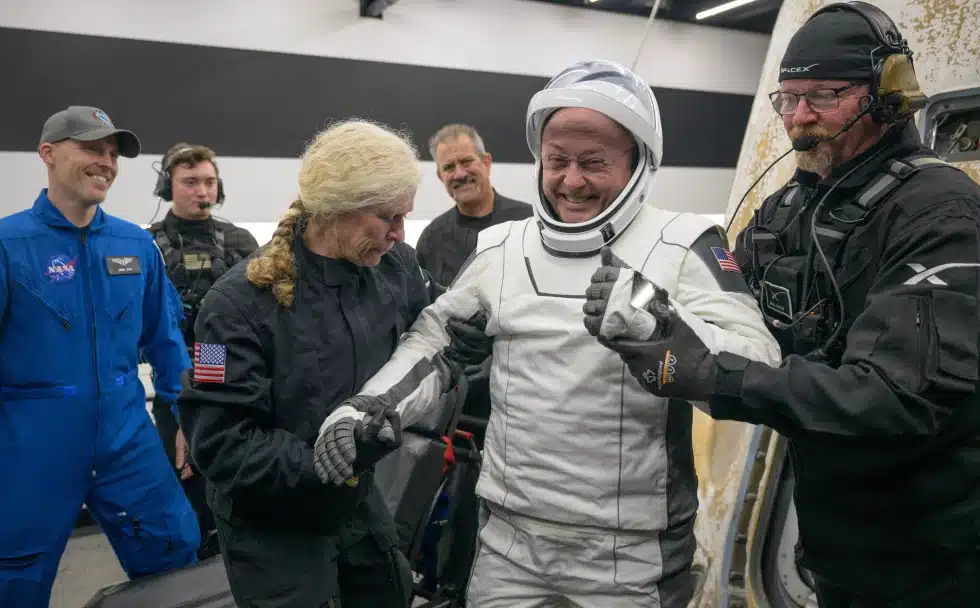 In his image provided by NASA, NASA astronaut Mike Fincke is helped out of the SpaceX Crew-11 capsule after they re-entered the Earth in a middle-of-the-night splashdown near San Diego, Calif., on Jan. 15, 2026. (Bill Ingalls/NASA via AP, File)
The Limits Of Space Medicine In Orbit
The Associated Press highlights that this event triggered NASA’s first-ever medical evacuation from the ISS, a decision that underscores the seriousness of the situation. While low Earth orbit allows relatively quick returns, even that process involves complex logistics and risk. Fincke and his crew were brought back earlier than planned, cutting short mission objectives and delaying scheduled activities such as spacewalks. This outcome reveals the delicate balance between mission goals and astronaut safety.
In orbit, medical capabilities are inherently limited. Astronauts are trained in emergency procedures, and spacecraft carry essential diagnostic tools, yet they lack the full range of treatments available on Earth. There are no fully equipped surgical facilities, no specialists on standby, and no rapid access to advanced imaging technologies. Every decision must be made remotely, guided by experts thousands of miles away. This constraint becomes even more pronounced when the root cause of a medical issue remains unknown. In Fincke’s case, doctors ruled out a heart attack, yet the absence of a diagnosis leaves open the possibility of recurrence, raising concerns about how such events would be handled during longer missions.
Artemis Missions Face A New Layer Of Risk
As NASA prepares for the Artemis II mission, a crewed flight around the Moon, the implications of this incident grow more serious. Lunar missions introduce delays in communication, extended travel times, and limited evacuation options. Unlike the ISS, where return to Earth can occur within hours, astronauts traveling to or orbiting the Moon may face days-long journeys before reaching medical care. This shift fundamentally changes how risks are assessed and managed.
The agency’s broader ambitions, including plans for a sustained human presence and a potential lunar base, depend on solving these challenges. A single unexplained medical event could jeopardize not only individual lives but entire missions. Engineers and medical teams are now under increasing pressure to develop more autonomous healthcare systems for space. These may include AI-assisted diagnostics, advanced telemedicine capabilities, and compact yet powerful medical devices designed specifically for deep-space environments. The Fincke episode serves as a stark reminder that exploration is not only about propulsion and engineering, but also about the resilience of the human body in unfamiliar conditions.
The Unknown Factor In Deep Space Exploration
What makes this case particularly unsettling is the lack of a clear explanation. Space is already known to affect the human body in complex ways, from bone density loss to fluid shifts that impact vision and cardiovascular function. Yet sudden neurological symptoms, like the temporary loss of speech experienced by Fincke, introduce a new category of uncertainty. Without a confirmed cause, it becomes difficult to predict, prevent, or treat similar missions in the future.
NASA is now reviewing medical records from past missions to identify whether comparable incidents have occurred but gone unrecognized. This retrospective analysis could reveal patterns or risk factors that were previously overlooked. It also raises broader questions about how much is still unknown regarding human adaptation to space. As missions become longer and more ambitious, these unknowns carry greater weight. The success of future exploration efforts may depend as much on medical breakthroughs as on technological innovation.
A Wake-Up Call For The Future Of Human Spaceflight
Fincke has since recovered and reports feeling fine, yet the implications of his experience continue to ripple through the space community. The incident has become a case study in the unpredictability of human health beyond Earth, prompting renewed focus on medical preparedness. It highlights the need for redundancy, adaptability, and rapid response capabilities in environments where traditional healthcare infrastructure does not exist.
As humanity pushes toward the Moon and beyond, each mission brings new lessons. This one delivers a clear message: the greatest challenges of space exploration are not always mechanical or environmental. Sometimes, they come from within. Understanding and mitigating these risks will be key to ensuring that the next giant leap is not only possible, but safe.