
178
NASA is preparing to make history with Artemis 2, the first crewed mission to orbit the moon since 1972. Liftoff is scheduled no earlier than April 1 at 6:24 p.m. EDT (2224 GMT) from Kennedy Space Center in Florida, carrying four astronauts on a roughly 10-day journey to lunar orbit and back.
The mission will test critical spacecraft systems, provide unprecedented views of the moon, and perform experiments on how humans adapt to deep-space conditions.
Artemis 2 Launch Date
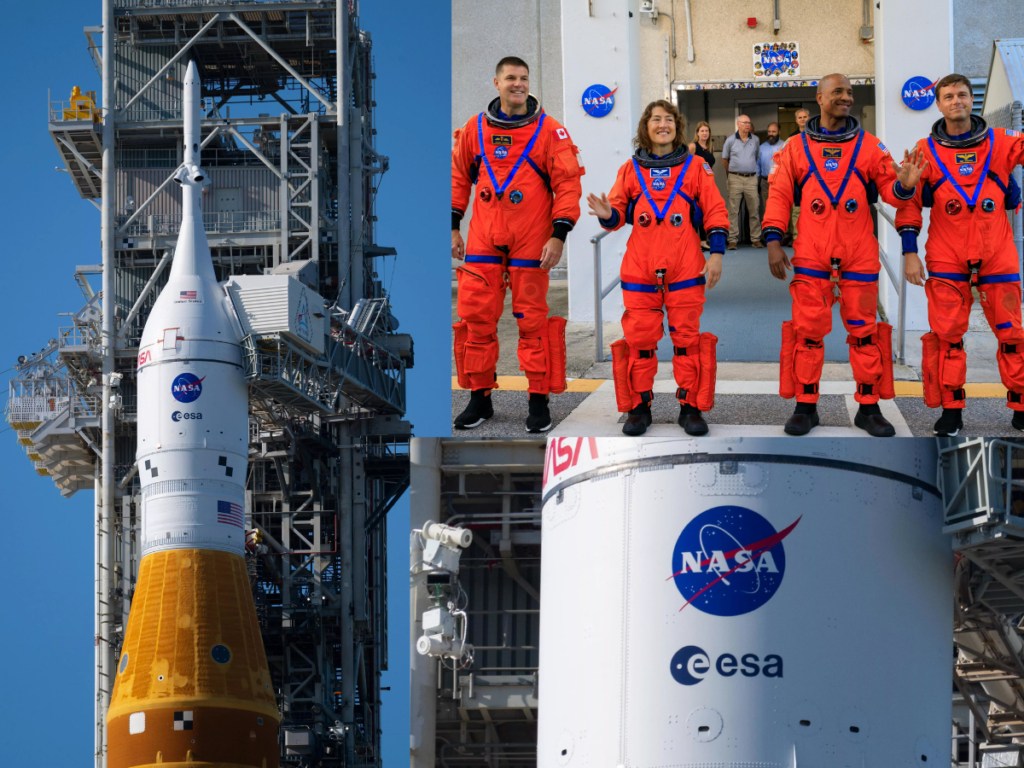
The mission will carry NASA astronauts Reid Wiseman (commander), Victor Glover (pilot), Christina Koch (mission specialist), and Canadian Space Agency astronaut Jeremy Hansen (mission specialist) aboard the Orion spacecraft. The historic journey is scheduled to begin April 1, 2026.
You Might Be Interested In
Where to Watch Artemis 2 Launch
NASA’s official TV app will provide live coverage of the launch and mission events, including close-up views of the SLS rocket and Orion spacecraft during countdown and liftoff.
NASA Live Stream Free
NASA is offering free live streaming of Artemis 2, featuring external cameras on Orion that will send near-continuous footage of the spacecraft and crew. Image quality may vary depending on distance and data traffic, but viewers will have a front-row seat to this historic mission.
Artemis 2 Launch Time
The planned launch time is 6:24 p.m. EDT (2224 GMT). After reaching low Earth orbit, Orion will perform a “trans-lunar injection” burn roughly 24 hours later, sending the astronauts on their path to lunar orbit.
NASA Live Satellite
Live feeds from NASA satellites and Orion’s cameras will provide continuous coverage, including the mission’s highlight: a flyaround of the moon’s far side. This will give both the crew and the public detailed views of the lunar surface from as close as 5,000 miles (8,000 km).
Artemis 2 Launch Date Countdown
Countdown coverage will start hours before launch on NASA channels, with live updates on the crew, spacecraft, mission objectives, and pre-flight preparations.
Mission Highlights
Artemis 2 will:
-Test the SLS rocket and Orion spacecraft in a crewed mission for the first time.
– Conduct biomedical experiments to study the effects of microgravity and deep-space radiation on the human body.
– Maintain daily communications with Earth, with the possibility of a ship-to-ship call with the International Space Station (ISS).
After roughly 10 days in space, the crew will return to Earth with a planned splashdown off the coast of San Diego, supported by NASA and the U.S. Navy.