
This week in science: Japanese researchers find out just how many times you can clone a clone; CERN takes antimatter on a road trip for the first time; Australian scientists discover that sperm gets lost in space; and much more!
‘Dead End’: Radical 20-Year Study Reveals Genetic Cloning Hits a Limit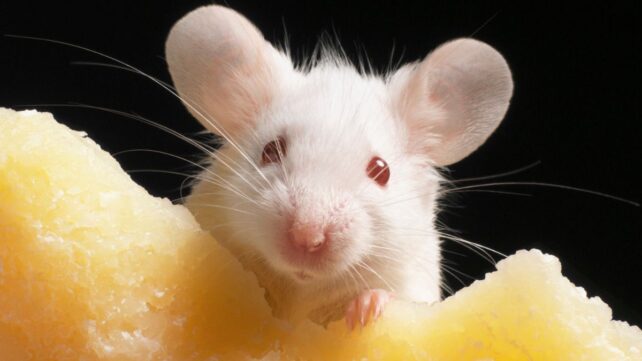 (Peter Finch/Stone/Getty Images)
A 20-year mouse study has hit the limits of cloning. Genetic mutations built up after 25 generations, with 58th-gen mice unviable.
“Although serial cloning could not continue beyond the 58th generation (G58), the re-cloned mice remained healthy except G58, raising the possibility that subsequent generations could be produced via sexual reproduction,” the authors suggest.
Read the full story here.
Human Evolution May Be Undergoing a Major Shift Right Before Our Eyes (Volodymyr Yakimchuk/Creatas Video+/Getty Images Plus)
Human evolution is transitioning to being driven by culture and technology rather than environment, a controversial study suggests.
“When we learn useful skills, institutions, or technologies from each other, we are inheriting adaptive cultural practices. On reviewing the evidence, we find that culture solves problems much more rapidly than genetic evolution. This suggests our species is in the middle of a great evolutionary transition,” said cultural evolution researcher Tim Waring of the University of Maine.
Read the full story here.
Giant Study May Have Found The Ideal Amount of Coffee to Lower Stress (Tom Werner/DigitalVision/Getty Images)
Drinking two to three cups of coffee per day has been linked to lower risks of depression and anxiety – but more than five cups raised those risks again.
This relationship stayed consistent across coffee types – ground, instant, and even decaffeinated – and the benefits of coffee consumption were higher for men compared to women.
Read the full story here.
World’s First Antimatter Delivery by Truck Signals a ‘New Era’ in Physics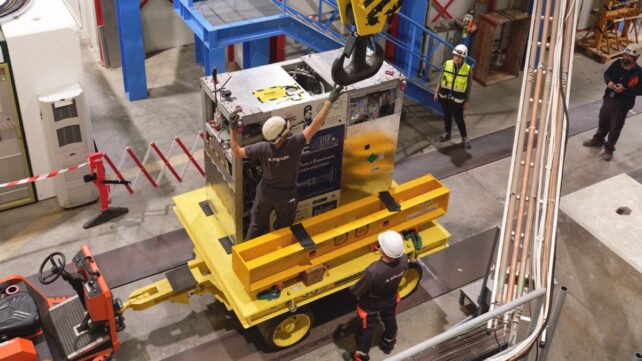 The trap device. (© 2026 CERN/Multimedia Production Team, MPT; Arnold, Melanie; Brice, Maximilien)
CERN transported a truckload of antimatter on Tuesday for the first time ever. The 10-km trip is a major milestone for studying the strange stuff.
“The particles are still at the same position,” CERN physicist Stefan Ulmer said jubilantly after the drive. “Everything went smoothly… It’s a very big success.”
Read the full story here.
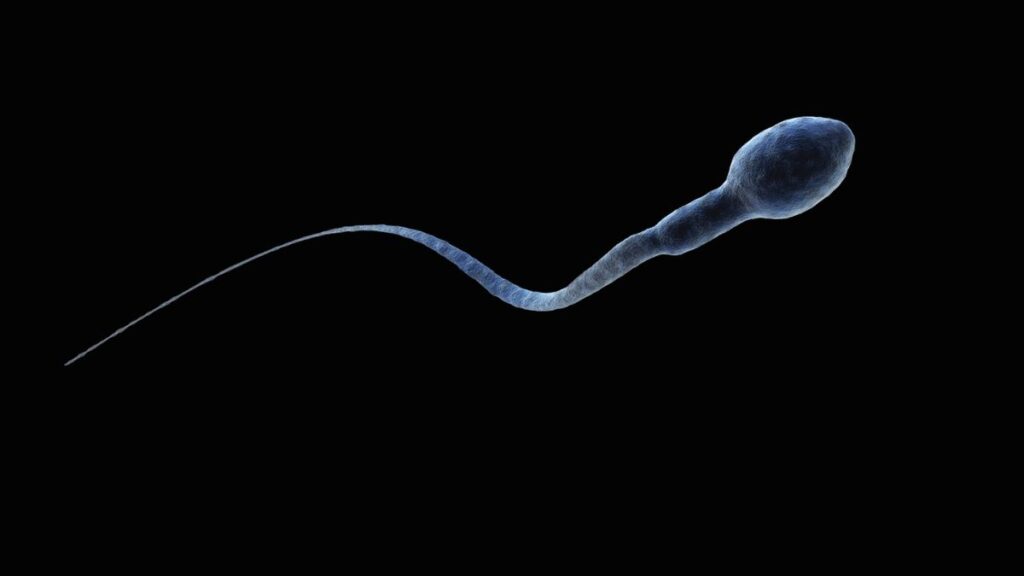
Sperm Get Lost in Microgravity, And It Could Seriously Impact Space Travel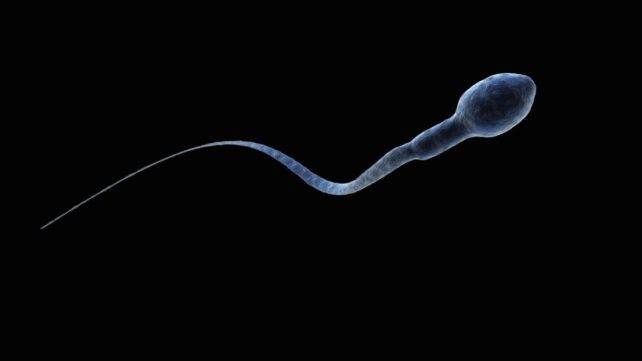 (Burazin/The Image Bank/Getty Images)
Experiments have shown that human sperm struggle to navigate to an egg in low gravity – a major issue for future human space travel.
“We observed a significant reduction in the number of sperm that were able to successfully find their way through the chamber maze in microgravity conditions compared to normal gravity,” explains biologist Nicole McPherson from Adelaide University.
Read the full story here.
New Experimental Drug Shrinks Tumors in Prostate Cancer Clinical Trial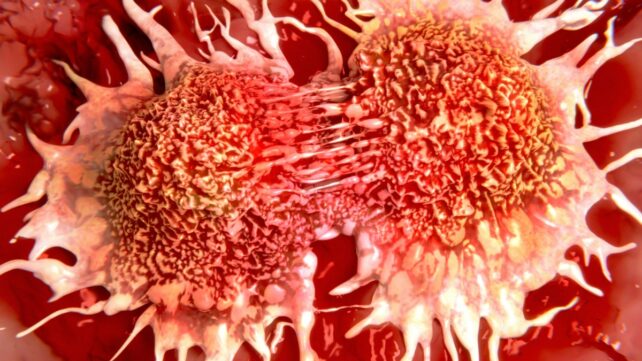 Illustration of prostate cancer cells dividing. (selvanegra/Canva)
In a new clinical trial, an experimental drug called VIR-5500 shrank tumors and reduced biomarkers of advanced prostate cancer.
Remarkably, initial findings showed that in the patients who received the highest doses, 82% saw reductions in their PSA (prostate-specific antigen) levels – a commonly used measure of prostate cancer.
Read the full story here.