
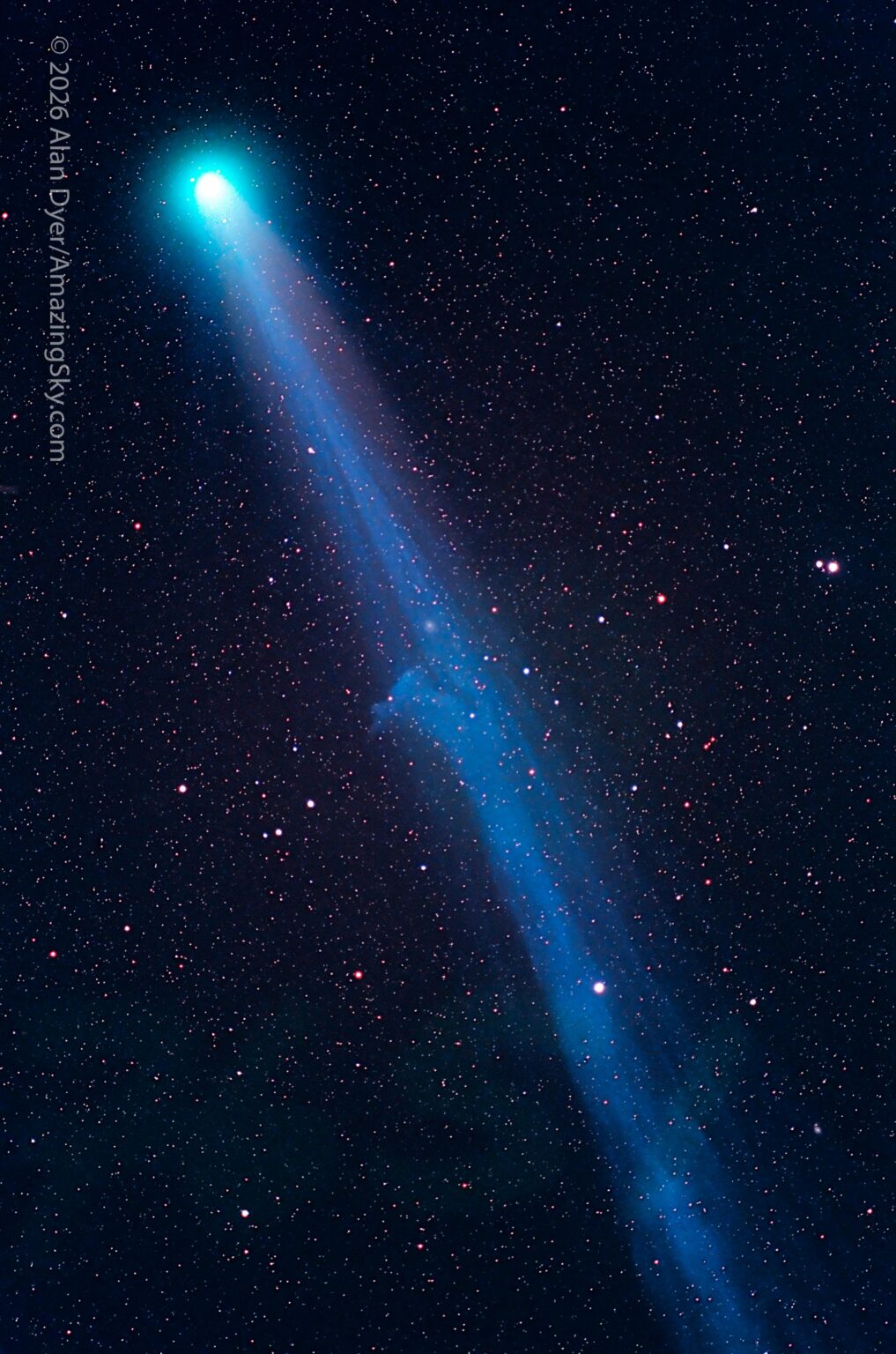
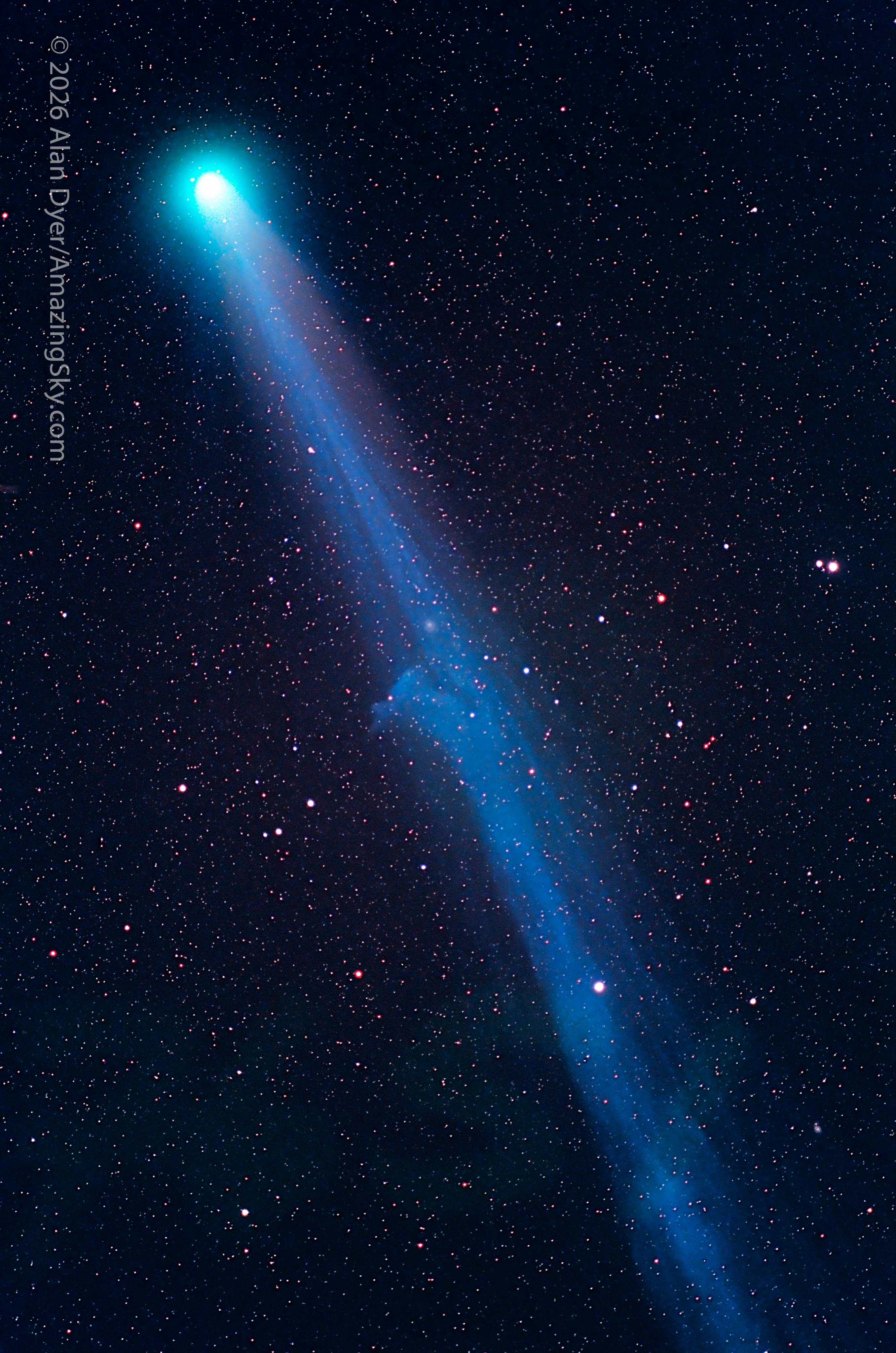
Alan Dyer was one of many who photographed it on March 25, 1996–the night of closest approach
I reprocessed this image on March 25, 2026, to mark the 30th anniversary," says Dyer. "The comet's tail was at its greatest length and showed a strong 'disconnection event' caused by solar activity."
Hyakutake’s electric-blue ion tail stretched across as much as 90 degrees of sky, rippling with solar wind disturbances. For many observers, it was the first time a comet looked truly alive and dynamic. Nightly changes were visible to ordinary people simply looking up from their own backyards.
Comet Hyakutake arrived without much warning, peaked quickly, and faded almost as fast. Thirty years later, veterans still speak of it in reverent tones.
The next Great Comet could appear with as little notice. The Oort cloud contains an enormous reservoir of fresh comets, and a steady trickle of them enters the inner solar system each year. It only takes one big one to suddenly turn a faint fuzzball into a sky-spanning spectacle.
Happy 30th, Comet Hyakutake!
https://spaceweather.com/archive.php?view=1&day=27&month=03&year=2026
Alan Dyer
https://spaceweathergallery2.com/indiv_upload.php?upload_id=231796
by Neaterntal