
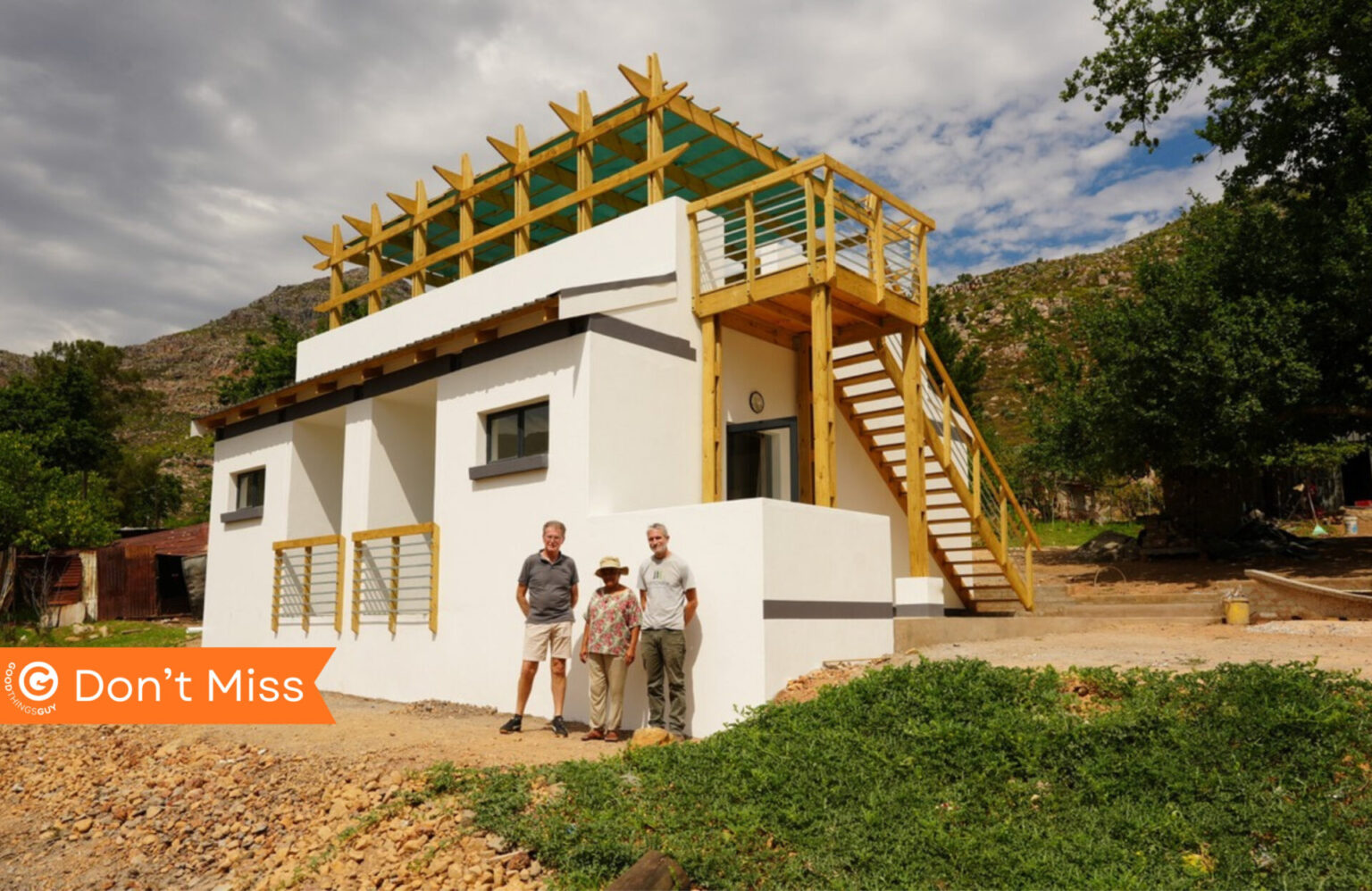
What a brilliant way to turn the problem ofinvasive plants into a solution of beautiful, earth-kind homes!
Western Cape, South Africa (26 March 2026) – The Elandskloof community near Citrusdal has unveiled a first-of-its-kind community centre that is both an architectural feat and a major environmental victory! It also brings new hope for South Africa’s housing crisis.
The new building is constructed entirely of bricks, made from the biomass of invasive alien black wattle trees.
These trees were cleared from the riverbanks within the Groot Winterhoek Strategic Water Source Area.
The centre is built on a community-owned farm with a deep history. The community was dispossessed in 1962 and had its land restored in 1996.
The project is a result of a three-year partnership between nonCrete, non-profit Phuhlisani, the Elandskloof community, and the WWF Nedbank Green Trust.
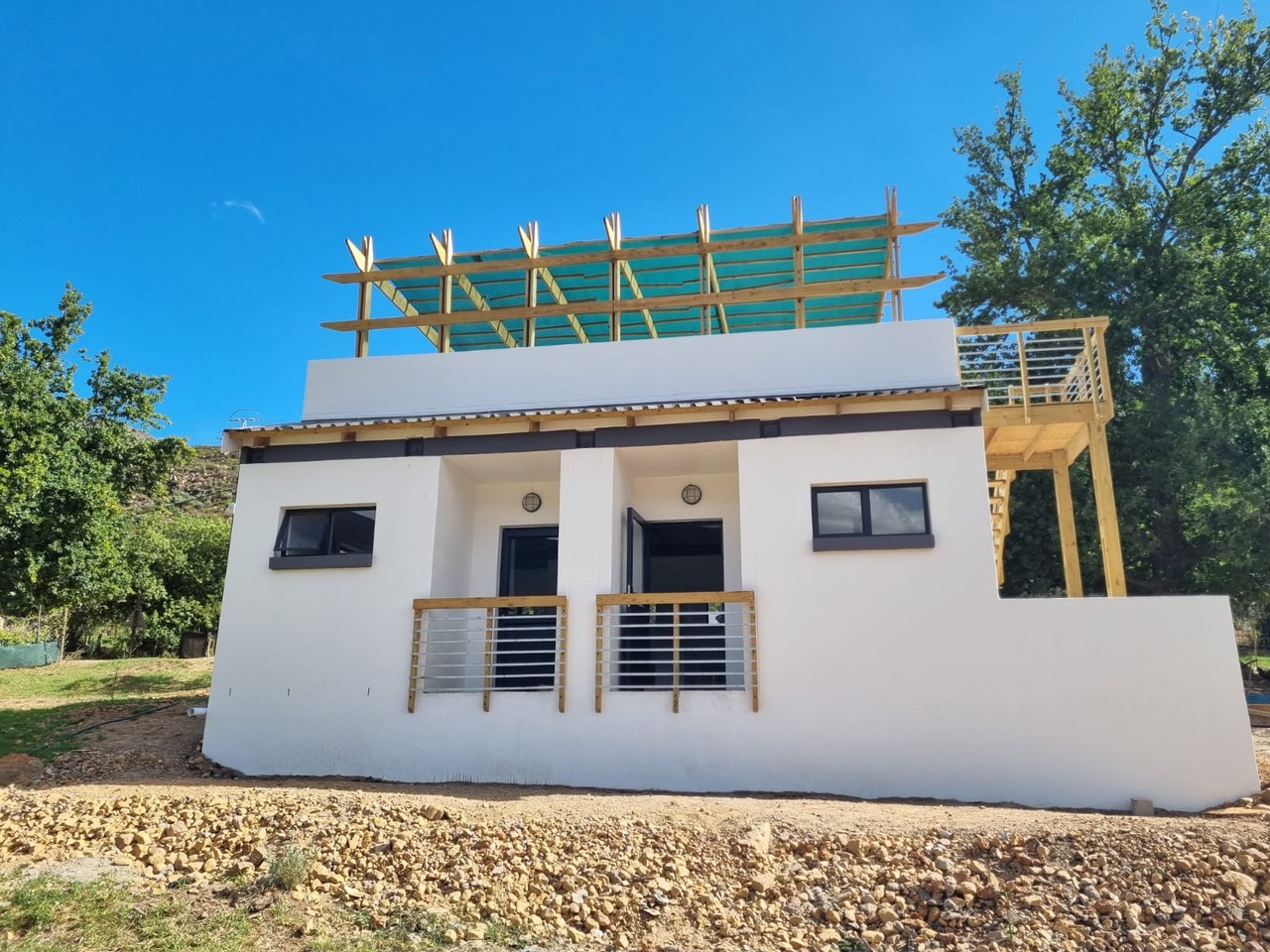 Photo Credit: WWF South Africa
By removing the invasive wattle, the project has already helped increase the freshwater supply and has also reduced the risk of runaway fires.
“To develop this method and design, we collaborated with the Institute of Technology in Architecture at ETH Zurich, Switzerland; and the Council for Scientific and Industrial research (CSIR),” says Andrew Lord, who co-founded nonCrete with Stephen Lamb.
The company has over two decades of experience in sustainable construction, design, engineering and architecture.
“The ultimate aim is to develop a safer, more dignified government-funded housing alternative,” continues Lord. “Millions of South Africans are still awaiting their homes, and this approach could be a very viable option for lower-cost housing, but also for all types of housing and buildings.”
To create the low-carbon building bricks, invasive plant material was put through a chipper and then combined with a specially developed binder.
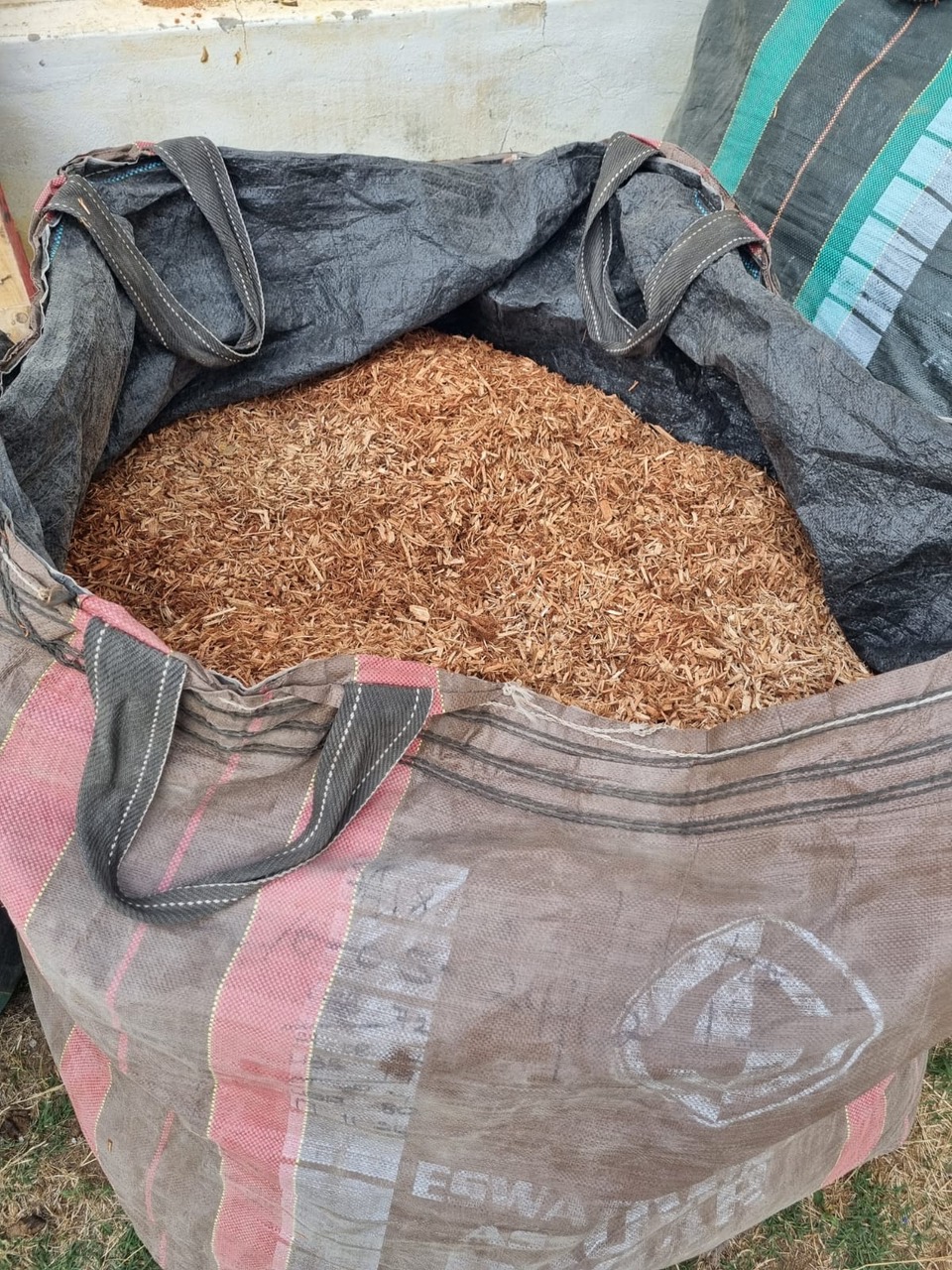 Photo Credit: WWF South Africa
One-Nil Construction was central to the construction. Their team, including Grabeth Nduna, Peter Mafuwe, and Mojalefa Thelingoana, mastered the unique material mix.
“We developed a structural mix that is incredibly strong but 55% lighter than conventional concrete. We have something special here and it also creates jobs, which the government has committed to achieve.” says Nduna.
By swapping out traditional stone, sand, and cement for invasive biomass, the project significantly lowers the environmental footprint of construction. With the built environment cited as contributing almost 40% of global greenhouse gas emissions, this is an exciting and innovative way forward!
“Making use of invasive wattle biomass for our bricks significantly reduces the amount of stone, sand and cement used in standard concrete bricks,” says. Lord.
The project could be a blueprint for the rest of the country.
“The methodology has the potential to be duplicated across the country in all areas with invasive alien infestations,” says Poovi Pillay, Executive Head of Nedbank’s Social Impact Unit. “It frees up freshwater and replaces conventional, carbon-heavy building materials and practices in a sustainable, environmentally rehabilitative way, including locking the carbon absorbed by the trees into the construction.”
Beyond being eco-friendly, the bricks offer superior insulation and fire resistance. They passed official testing with flying colours, including a three-hour fire-resistance rating under a continuous load. The building also sports a unique vaulted roof system designed to use less steel and concrete while maintaining incredible strength.
The project has provided both a new facility and new skills for the Elandskloof community, too. Five community members were trained to manufacture the 18,000 bricks required for the centre.
“We are very happy with the project and this new way of building,” says Flippie George, CPA Chairperson. “At first it was strange to us, and we weren’t sure if the nonCrete people knew what they were talking about, but when we visited their factory in Cape Town and witnessed how they developed this unique brick and roof system, we realised that we have something very special here. The fact that the community centre was built from the ground up on our farm, with our people trained in the brick-making technique, is also very exciting and we hope we can build homes this way.”
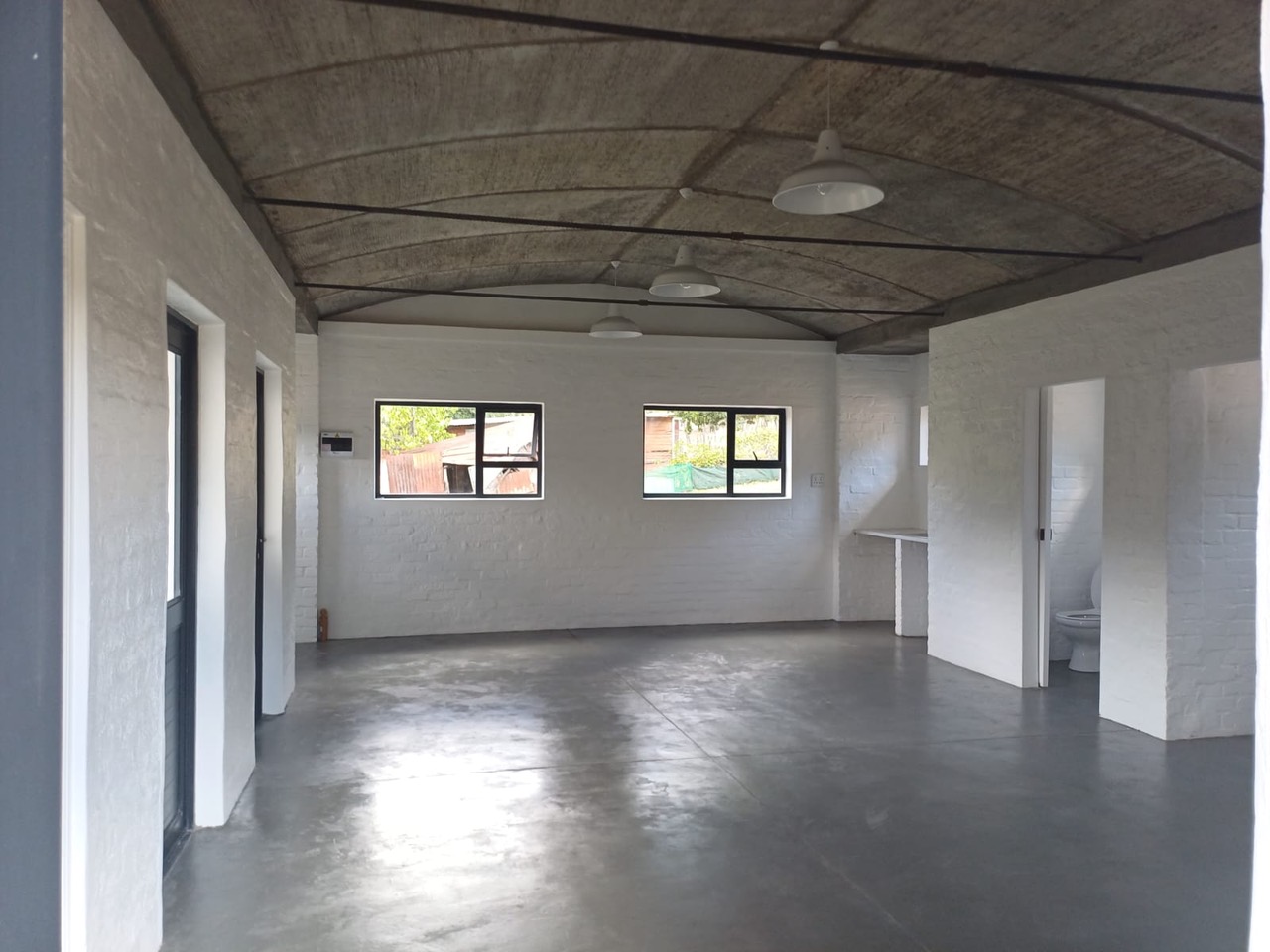 Photo Credit: WWF South Africa
With the centre complete, the community is working with Phuhlisani to apply for housing subsidies through the municipality to develop the farm sustainably. This includes plans for agriculture and the potential proclamation of a nature reserve, too.
“The land is currently being used by only a handful of small-scale livestock and vegetable farmers. And they harvest indigenous plants like wild buchu, which grows abundantly here and for which there is market demand. We are also working closely with CapeNature and the South African National Biodiversity Institute to have a portion of the farm proclaimed as a protected environment or nature reserve, as it has critical biodiversity areas and wetlands. Agriculture and other livelihood zones can continue under a protected environment.” shares Phuhlisani’s David Mayson, who has a longstanding relationship with the Elandskloof community and helped them with the land restitution process.
Lord encourages that the new community centre is a symbol of the potential for more widespread change.
“Our goal is for construction to become restoration; to collaborate with construction companies, cement manufacturers, planners, architects, engineers, municipalities and other government departments. We want to share this technology and create jobs. Our team wants to train people to build their own houses and buildings.”
Sources: WWF South Africa.
Don’t ever miss the Good Things. Download the Good Things Guy App now on Apple or Google.
Do you have something to add to this story? Please share it in the comments or follow GoodThingsGuy on Facebook and Twitter to keep up to date with good news as it happens, or share your good news with us by clicking here or click the link below to listen to the Good Things Guy Podcast with Brent Lindeque – South Africa’s very own Good Things Guy. He’s on a mission to change what the world pays attention to, and he truly believes there’s good news around us. In the Good Things Guy podcast, you’ll meet these everyday heroes and hear their incredible stories:
Or catch an episode of Good Things with Brent Lindeque or our Weekly Top 5 below. The videos here are always changing, updated with the latest episodes from these two shows. Both are part of Good Things TV, created to bring South Africans balance at a time when the news can feel overwhelmingly negative. Our goal is simple: to remind you that there are still so many good things happening in our country – and to leave you feeling a little more proudly South African.