
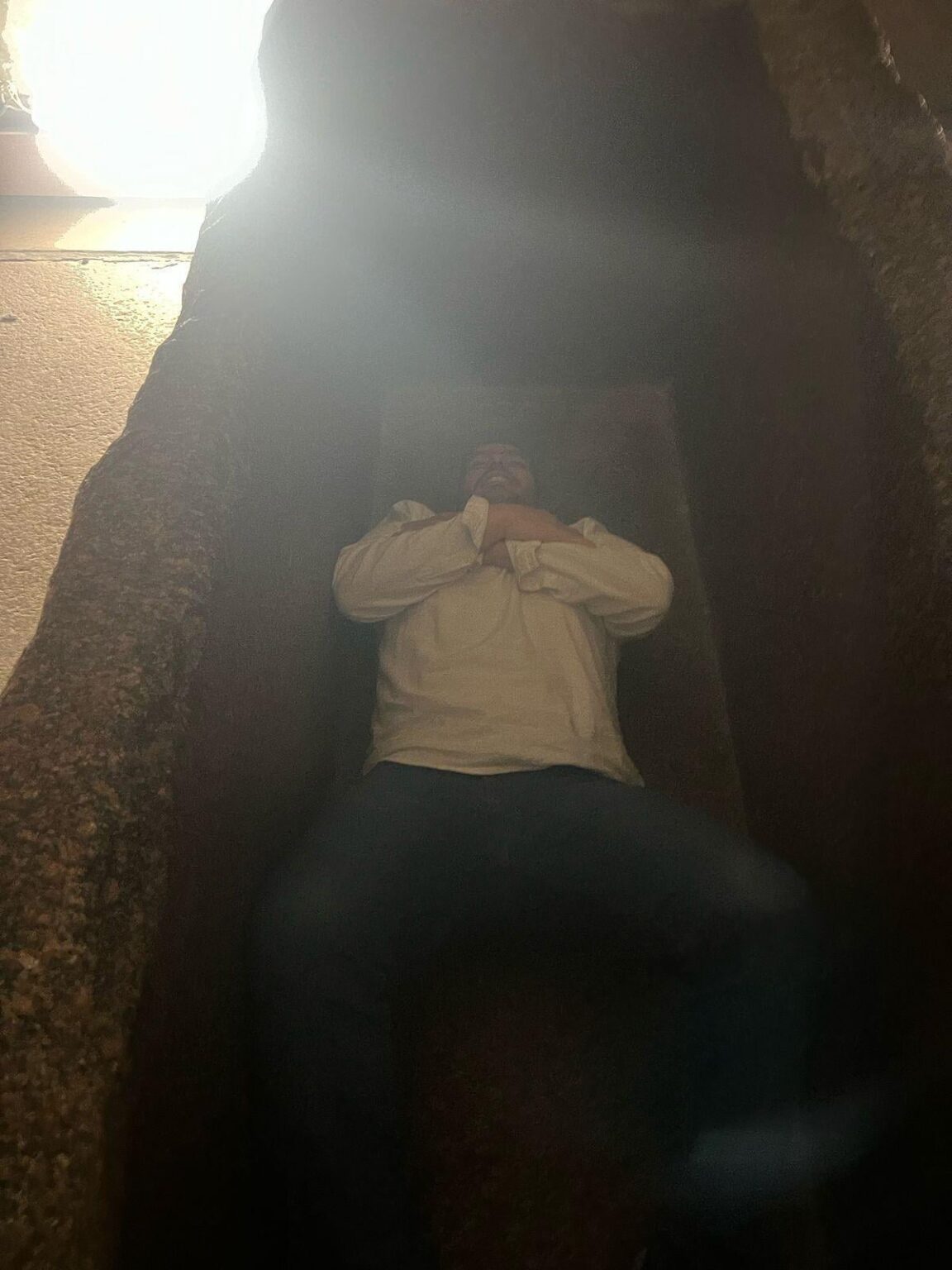
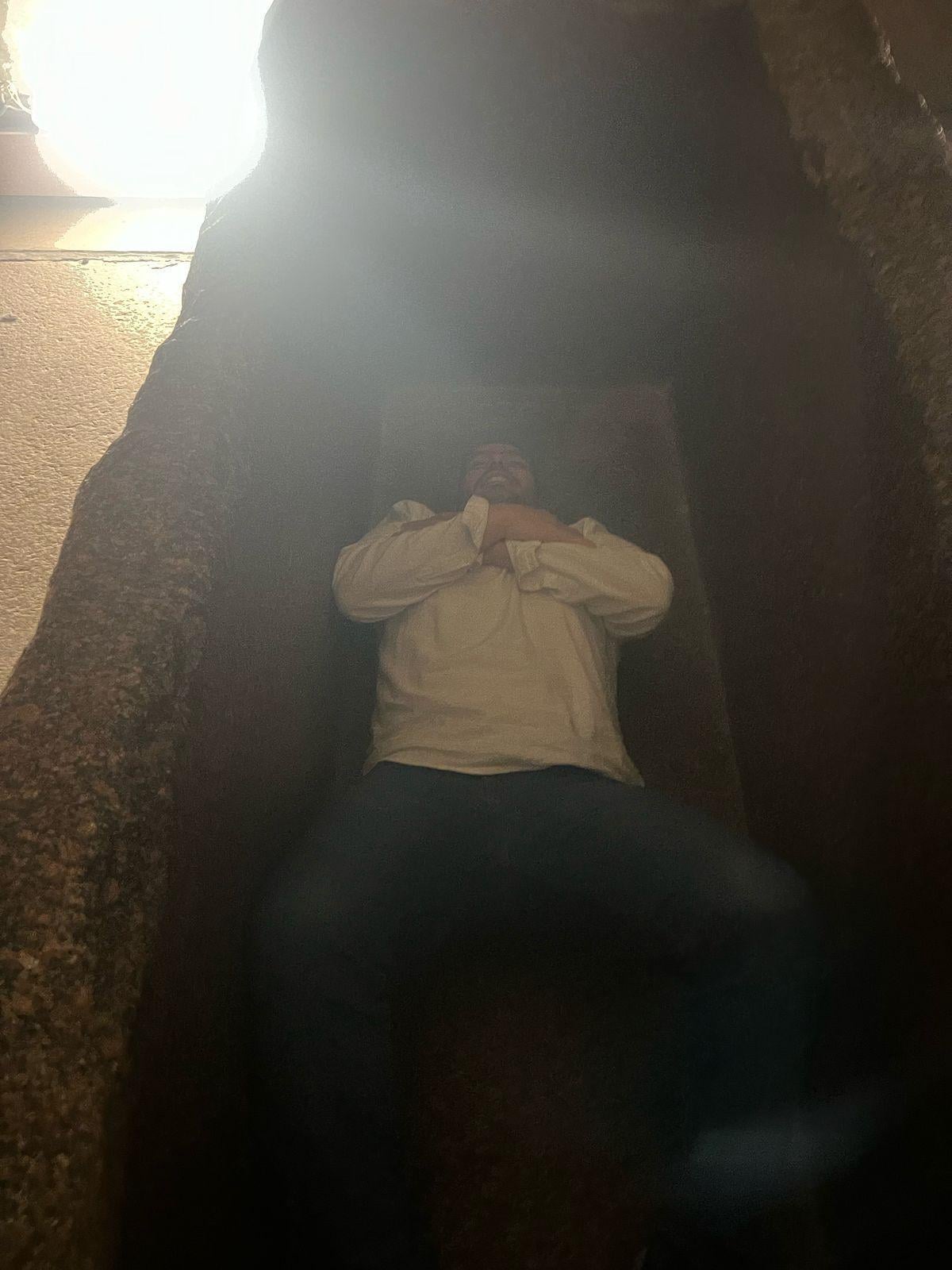
On February 26, 2025, I was lying inside the granite sarcophagus of the King's Chamber in the Great Pyramid of Giza. Above me, seven planets were aligned in the sky. And the constellation Cygnus — the Northern Cross — was rising for the first time after 70 days of invisibility below the horizon.
I didn't plan what happened next.
In the months that followed, I discovered that the Sphinx is not just a statue. It's a mathematical key. Three of its measurements, combined with two angles from Cygnus, predict EVERY major dimension of the Giza plateau — the height of the Great Pyramid, the three bases, the slope angle, the King's Chamber, the Grand Gallery, the distances between structures. All with errors below 0.2%.
But that's not even the crazy part.
Cygnus itself — just its star positions, no Earth measurements needed — hides a 4D hypercube (tesseract) in its own geometry. Fibonacci sequence. Golden ratio. A Pythagorean cascade that climbs from 2D to 3D to 4D. Its borders sum to exactly 90°. The probability of this being random: less than 1 in 3 million.
And the Sphinx? Its body length (72.55 m) is the exact value that completes the 4th dimension. Without the Sphinx, Cygnus has 3 dimensions. With it, 4.
I put everything in a paper. Open access. Every single number is verifiable with a calculator. No speculation. No mysticism. Just math.
📄 https://doi.org/10.5281/zenodo.19237286
What do you think? Try to break it.
by Smart-Scallion-7844