
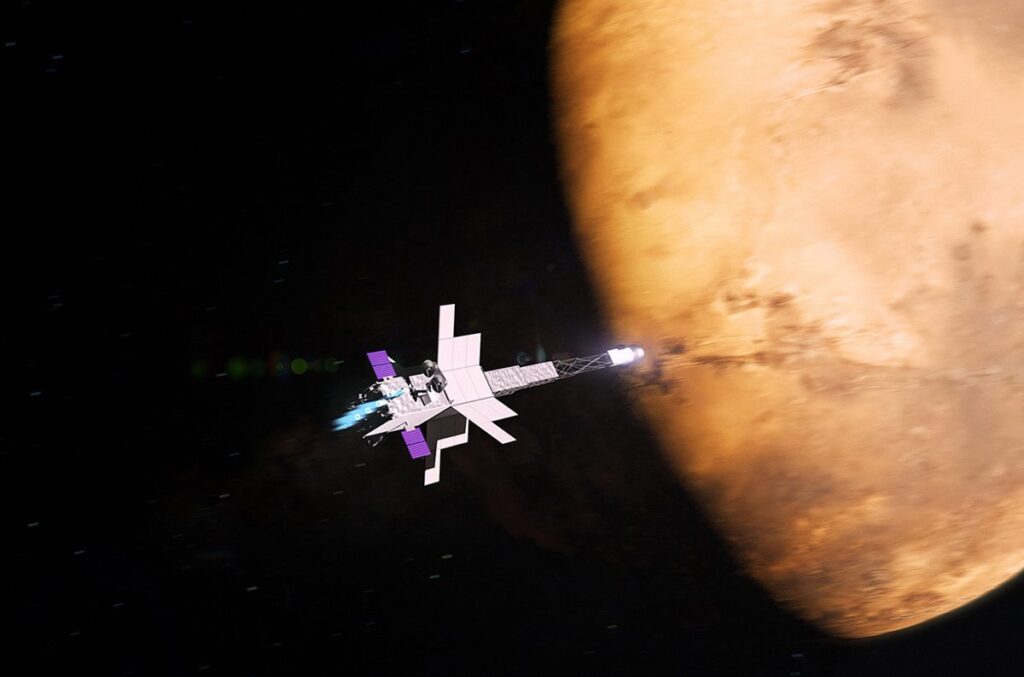
NASA says it’s going to launch a nuclear-powered interplanetary spacecraft to Mars before the end of 2028.
The spacecraft, named Space Reactor-1 Freedom, will “demonstrate advanced nuclear electric propulsion in deep space”, NASA says, and could enable high-power missions beyond Jupiter, into the outer Solar System.
 Credit: Mark Stevenson/Stocktrek Images
NASA made the announcement during its Ignition news conference on March 24, 2026, where it also outlined a revamped approach to sending astronauts to the Moon and building a permanent lunar base.
Watch NASA’s full Ignition news conference
To the Moon and Mars
During the Ignition event, NASA announced it would, in the long term, target sending astronaut missions to the lunar surface once every six months.
The space agency also said it would increase deployment of lunar rovers and other technology demonstrations to the Moon.
And it would work towards the delivery of heavy infrastructure that would enable the development of a habitable Moon base for regular crewed missions to the lunar surface.
As well as this, NASA said it would develop a new module to attach to the International Space Station, but which would eventually detach to form a new US space station in Earth orbit.
And NASA also made an announcement about plans for sending spacecraft to Mars.
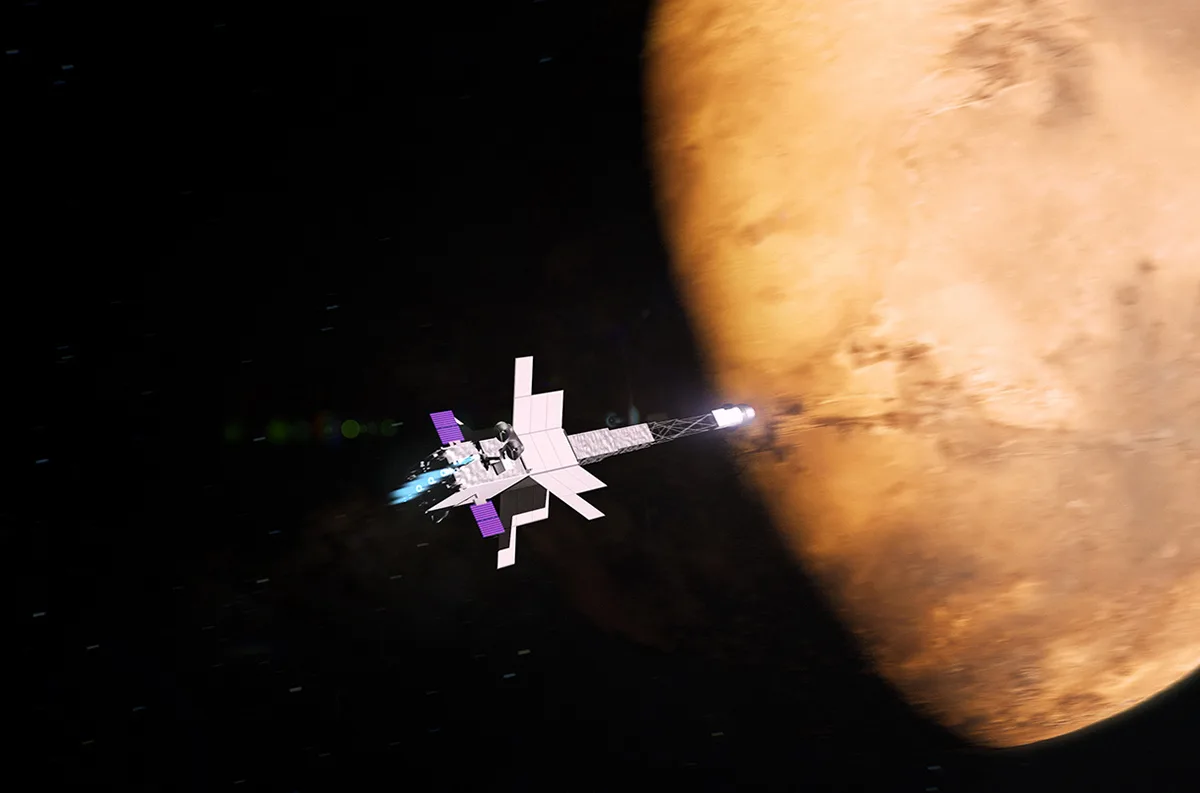 Artist’s impression of Space Reactor-1 Freedom, the nuclear-powered spaceship NASA says it is sending to Mars. Credit: NASA
Space Reactor‑1 Freedom
Space Reactor‑1 Freedom will be the first ever nuclear-powered interplanetary spacecraft and will launch to Mars before the end of 2028, NASA said during the event.
This, the space agency says, could provide a new opportunity for “mass transport in deep space and enable high power missions beyond Jupiter where solar arrays are not effective.”
Space Reactor-1 Freedom would repurpose infrastructure originally built for the Lunar Gateway, which was to be NASA’s permanently-occupied space station in orbit around the Moon.
During the Ignition news conference, NASA said it would pause development of the Lunar Gateway and instead focus on establishing a permanent human habitat on the lunar surface.
When SR-1 Freedom reaches Mars, it will deploy Skyfall, a payload of helicopters similar to NASA’s Ingenuity helicopter, which performed a successful test flight on Mars in April 2021.
“Freedom will establish flight heritage nuclear hardware, set regulatory and launch precedent and activate the industrial base for future fission power systems across propulsion, surface and long‑duration missions,” NASA says.
The space agency has already announced plans to put a nuclear reactor on Earth’s Moon.
Nuclear hardware on Mars could, NASA says, power future sustained exploration to the outer Solar System.
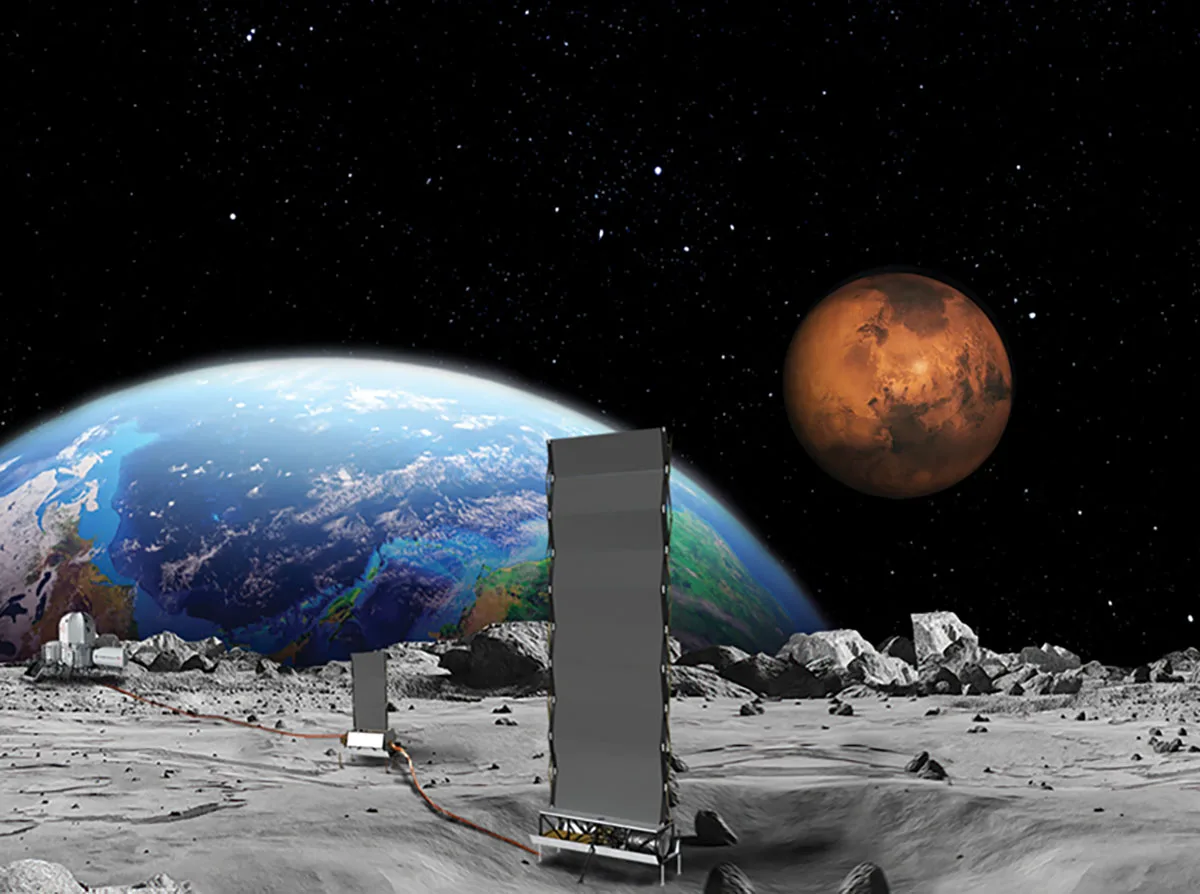 A concept image of NASA’s Fission Surface Power Project on the Moon. Credit: NASA
“On the Moon, we are shifting to a focused, phased architecture that builds capability landing by landing, incrementally, and in alignment with our industrial and international partners,” says NASA Associate Administrator Amit Kshatriya.
“In low Earth orbit, we are recognising where the market is and where it isn’t, recognising the incredible value of the International Space Station, and building a transition that builds a competitive commercial ecosystem rather than forcing a single outcome the market cannot support.
“In our science missions, we are opening the lunar surface to researchers and students nationwide, and with Space Reactor‑1 Freedom, we are finally putting nuclear propulsion on a trajectory out of the laboratory and into deep space.”
What are your thoughts on NASA’s plans for the Moon and Mars? Let us know by emailing contactus@skyatnightmagazine.com