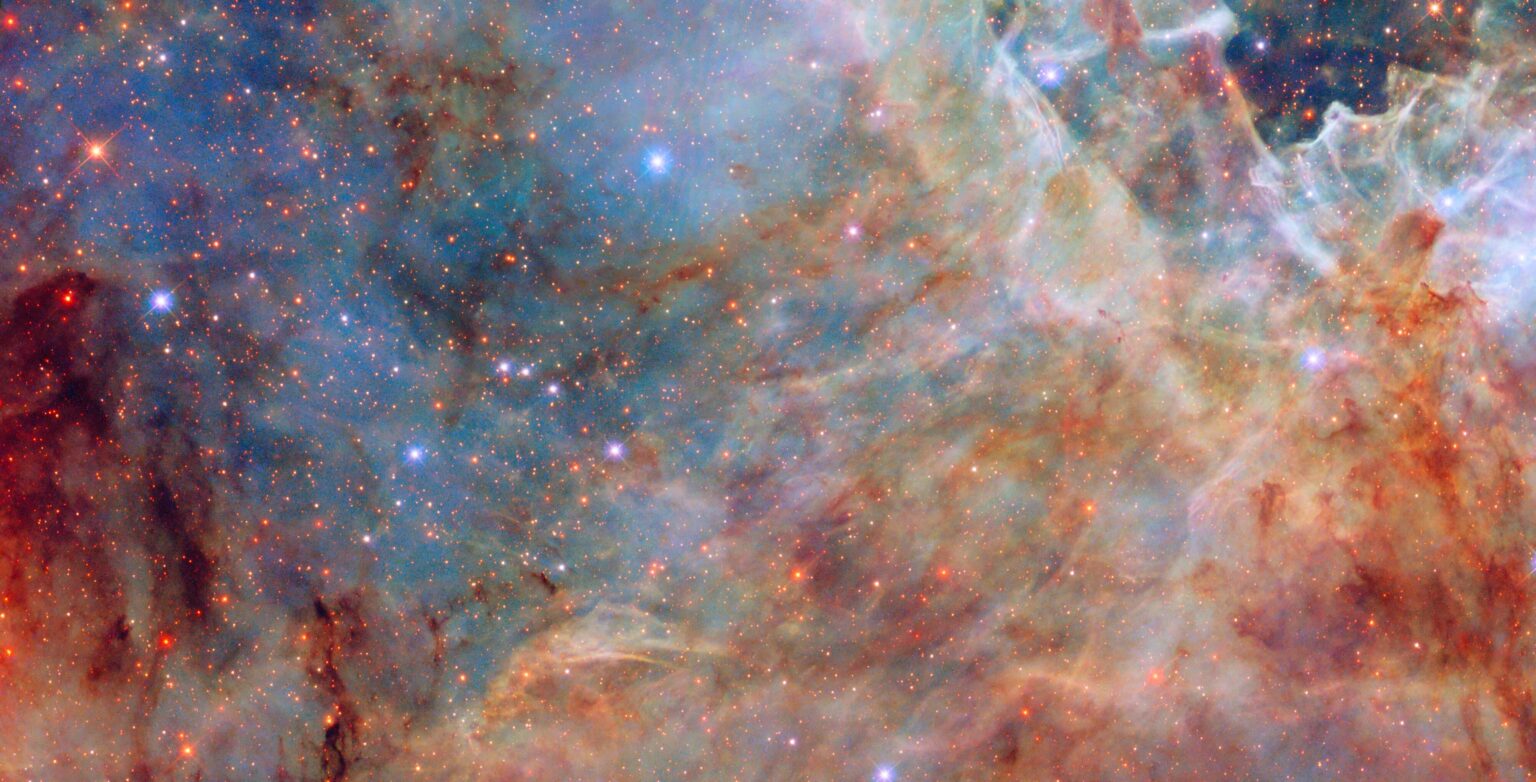
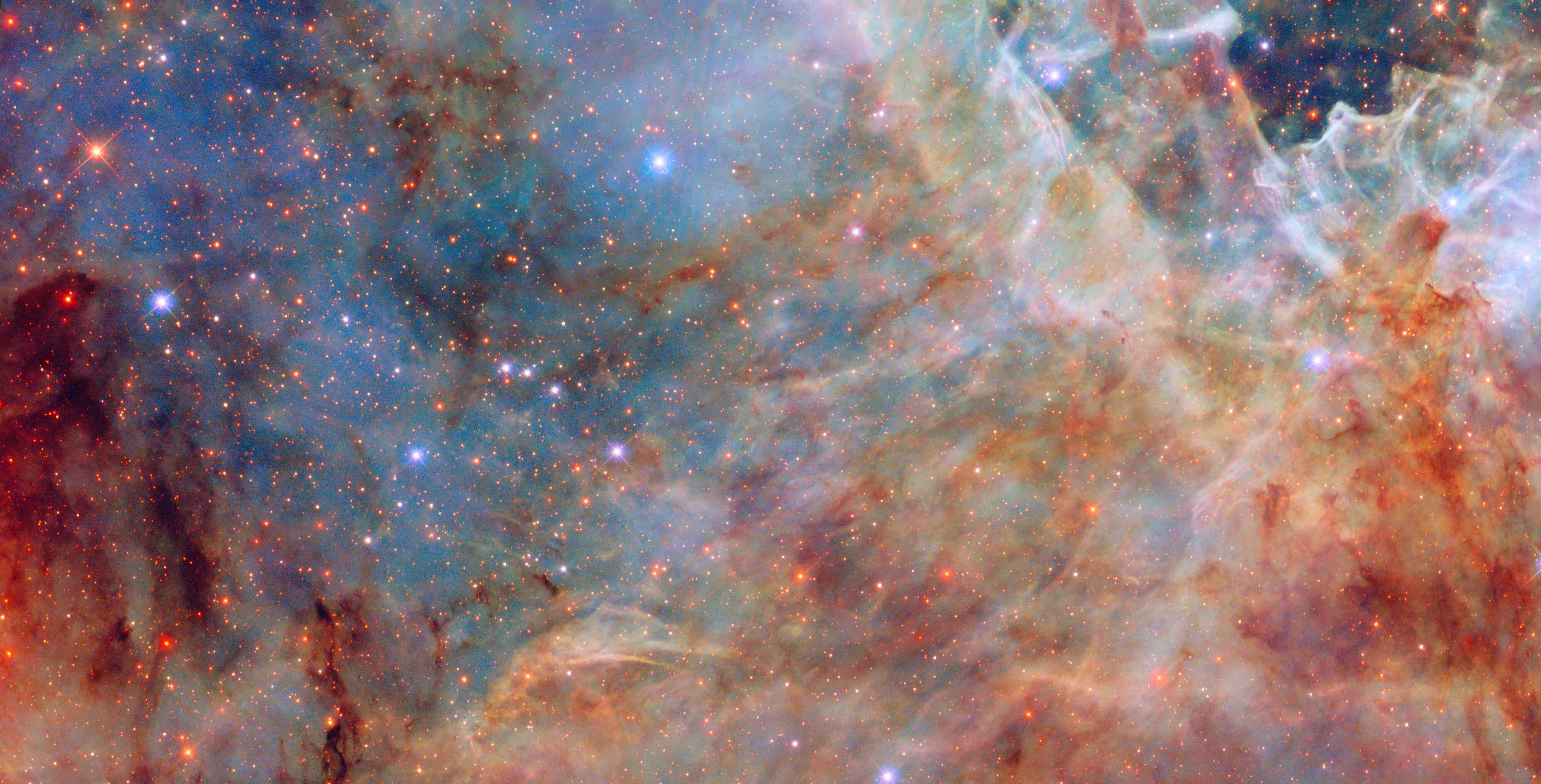
The scene pictured here is on the outskirts of the Tarantula Nebula, the largest and most productive star-forming region in the local Universe. At its centre, the Tarantula Nebula hosts the most massive stars known, which weigh in at roughly 200 times the mass of the Sun. The section of the nebula shown here features serene blue gas, brownish-orange dust patches and a sprinkling of multicoloured stars.
The stars within and behind the dust clouds appear redder than those that are not obscured by the dust. Dust absorbs and scatters blue light more than red light, allowing more of the red light to reach our telescopes and making the stars appear redder than they are. This image incorporates ultraviolet and infrared light as well as visible light.

1 Comment
From NASA:
The scene pictured here is on the outskirts of the Tarantula Nebula, the largest and most productive star-forming region in the local Universe. At its centre, the Tarantula Nebula hosts the most massive stars known, which weigh in at roughly 200 times the mass of the Sun. The section of the nebula shown here features serene blue gas, brownish-orange dust patches and a sprinkling of multicoloured stars.
The stars within and behind the dust clouds appear redder than those that are not obscured by the dust. Dust absorbs and scatters blue light more than red light, allowing more of the red light to reach our telescopes and making the stars appear redder than they are. This image incorporates ultraviolet and infrared light as well as visible light.