
“Hearst Magazines and Yahoo may earn commission or revenue on some items through these links.”
Here’s what you’ll learn when you read this story:
At the height of the Space Race, two Italian amateur radio enthusiasts claimed to have captured secret audio of cosmonauts, including a horrific death.
While some Cold War columnists in the 1960s argued for the existence of “lost cosmonauts,” no such deaths have ever been confirmed, even after the collapse of the Soviet Union.
The Judica-Cordiglia brothers always affirmed the authenticity of their audio recordings, though skeptics have raised questions regarding their veracity.
The Space Race, that high-tech Cold War competition to see which global superpower could conquer the cosmos first, was such a frantic and aggressive era of rocket-powered experimentation that it’s often remarkable to consider how low the death toll was during that time.
We know, of course, that the United States was prepared for some interstellar fatalities; President Richard Nixon had an alternate speech prepared in the event that the Apollo 11 mission went catastrophically wrong. But officially, only a handful of lives were lost during the Space Race. The most famous of the rare space-related fatalities from this time occurred during pre-launch tests, like the altitude chamber fire that killed would-be cosmonaut Valentin Bondarenko (the first official Space Race fatality) and the 1967 electrical fire that claimed the lives of the Apollo 1 crew in the United States.
In fact, remarkably, only a single life from each side of the Cold War was lost post-launch during that fraught period, and both of them were below the “von Kármán line” often used to define the edge of space: Soviet Vladimir Komarov aboard Soyuz 1 in April of 1967, and American Michael J. Adams during November 1967’s X-15 Flight 191.
Note: If the end of the “Space Race” is defined, not by the 1969 Moon landing, but rather the 1975 U.S./U.S.S.R. joint Apollo-Soyuz Test Project, then a list of spaceflight fatalities would also include the 1971 deaths of Soyuz 11 crew Georgy Dobrovolsky, Viktor Patsayev and Vladislav Volkov.
If the limited number of lives lost during the Space Race seems surprising now, at the height of Cold War paranoia and Soviet secrecy, some found it downright unbelievable.
As far back as 1962, Washington Post reporter Drew Pearson repeated rumors in his “Washington Merry-Go-Round” column that “5 Soviet cosmonauts may have been killed in manned space flight attempts.” Journalist Julius Epstein was so fervent in his conviction that the U.S.S.R. was covering up a dozen cosmonaut deaths (with the help, according to Epstein, of the U.S. State Department) that his conspiracy theory was eventually read into the Congressional Record. But did anyone have anything to support this conspiracy theory beyond rumors and hearsay?
Yes, actually. A pair of Italian brothers had an audio recording of one of those deaths. That is, if you choose to believe them.
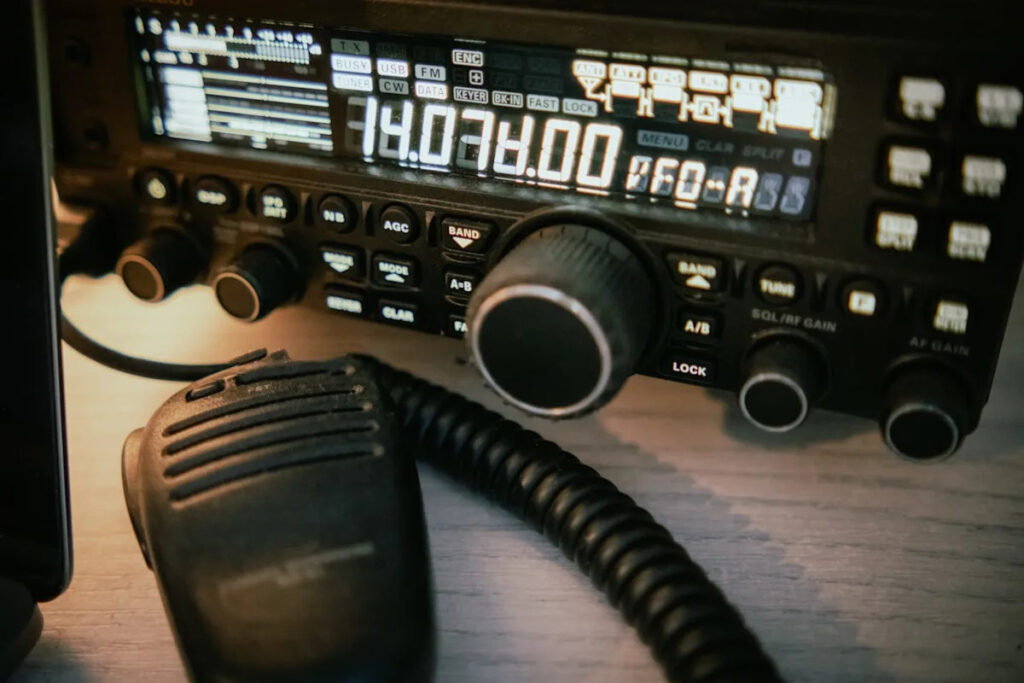
The Judica-Cordiglia brothers, Achille and Giovanni Battista, were amateur radio enthusiasts, according to the 1965 Reader’s Digest profile on the pair. The siblings, residing in Turin, Italy, purportedly built their own radio equipment from “chicken wire, used pipe, [and] second hand radios,” as well as cheap U.S. military equipment sold off in the aftermath of the Second World War.
Setting up shop in an abandoned German WWII bunker known as Torre Bert in the late 1950s, the duo purportedly picked up signals from both the Soviet Sputnik program and the U.S.’s Explorer 1. But with the dawn of a new decade and an even stronger surge on both sides of the Berlin Wall to “win” the Space Race, the transmissions the Judica-Cordiglia brothers claimed to have intercepted took on a darker tone.
On November 28, 1960, as the brothers would tell it for decades after, they picked up a transmission from a Soviet space vessel. The message was in Morse Code: “…—…,” translating to “S.O.S,” the universal distress call.
If true, that meant the brothers had picked up a distress call from a cosmonaut on Soviet test flight, one the U.S.S.R. never acknowledged.
Note: The 1965 Reader’s Digest story claims that “Amateurs in Texas and Germany picked up the same message” and that “Three days later Russia admitted a launch which had ended in failure – but did not mention a man aboard.” Neither of these claims could be independently verified at the time of writing.
That two amateur radio enthusiasts in Italy had managed to listen in on a distress signal that a global superpower was desperate to conceal is undoubtedly remarkable. That they continued to be able to intercept more and more dramatic distress calls after that is so noteworthy that it strains credulity.
In February 1961, the brothers picked up another wordless, rhythmic signal. But this time, it was not Morse Code. It was a heartbeat. The brothers recorded the racing heartbeat and heavy breathing, bringing the audio to the famed Turin cardiologist Achille Mario Dogliotti, who supposedly identified it as “the heart of a dying man.”
Mere months later, on April 12, 1961, Soviet cosmonaut Yuri Gagarin made history as the first man to orbit the Earth. For those who believe in the brothers’ recorded heartbeats, of course, Gagarin was merely the first man to survive the flight. Only a month later, Achille and Giovanni Battista’s equipment intercepted a new signal, suggesting that the U.S.S.R. tried put the first woman into orbit as well, with disastrous consequences.
The recording of the scratchy and garbled transmission, which the brothers claimed to have heard on May 23, 1961, still lingers on various corners of the internet. In it, a woman’s voice exclaims in Russian:
“I CAN SEE A FLAME!… I CAN SEE A FLAME!… I FEEL HOT… I FEEL HOT… THIRTY-TWO… THIRTY-TWO… FORTY-ONE… FORTY-ONE… AM I GOING TO CRASH?… YES…YES… I FEEL HOT!… I FEEL HOT!… I WILL REENTER!… I WILL REENTER… I AM LISTENING!… I FEEL HOT!…”
The brothers claimed they were able to determine what was said in the horrifying message because, though they were not Russian speakers themselves, they had previously convinced their younger sister to learn Russian.
This detail is where, for some, the whole thing begins to unravel.
Some have noted that the message doesn’t follow the standard protocols for Soviet communication. Giovanni Battista, when interviewed by Vice in 2020 before his death, countered that dying people wouldn’t take much time for protocols. Others have suggested that the recording was made by the aforementioned sister, and that the Russian speaker on the recording had a notable Italian accent. A native Russian speaker consulted for this piece attested that they could not detect a distinct accent, but that the poor audio quality impedes such detection, noting only that the speaker’s pronunciation of the Russian for “FORTY-ONE” felt suspect.
Was the woman’s distress call a hoax? Were all the recordings a hoax? Giovanni Battista, when pressed, countered that after all this time, what merit would there be in maintaining a lie?
Of course, one could say the same regarding why former Soviet officials would maintain a cover-up decades after their entire government collapsed. After all, just a month before the alleged S.O.S. broadcast, on October 24, 1960, the Soviet Union suffered the Nedelin catastrophe, a launch pad disaster at the Baikonur Cosmodrome in Kazakhstan that killed at least 60 people. While kept secret at the height of the Cold War, the Nedelin catastrophe was acknowledged by Russia in 1989. Countless Soviet secrets, including famous espionage cases like that of the Rosenbergs, were exposed after the fall of the Berlin Wall. Why would these cosmonaut catastrophes caught on tape not be confirmed as well?
Some party involved isn’t telling the truth, and the reason is likely the same for either side: to avoid embarrassment.
You Might Also Like