
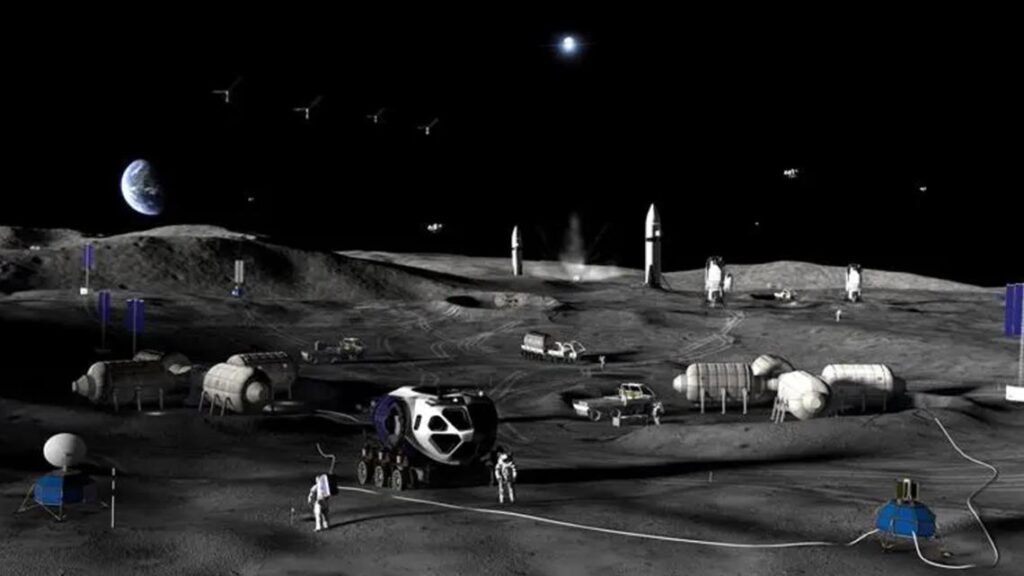
The agency shared ambitious plans to create a permanent and habitable base on the moon, while moving away from plans for a space station orbiting around the moon.
WASHINGTON — NASA unveiled ambitious plans for the space agency’s future during an event Tuesday that included goals to create a permanent base on the moon, with an estimated investment of $20 billion.
The initiatives are part of a larger project to transform the agency under the Trump administration’s National Space Policy. NASA said the goals are designed to establish and ensure American leadership in space.
Tuesday’s event also revealed that the agency was moving away from its “Lunar Gateway” concept, which was to be the first space station orbiting around the moon. Instead, NASA plans to focus on lunar surface operations.
“America will never again give up the moon,” NASA administrator Jared Isaacman said Tuesday. “That brings us to the next step: Building the moon base. It should not really surprise anyone that we are pausing Gateway in its current form and focusing on infrastructure that supports sustained operations on the lunar surface.”
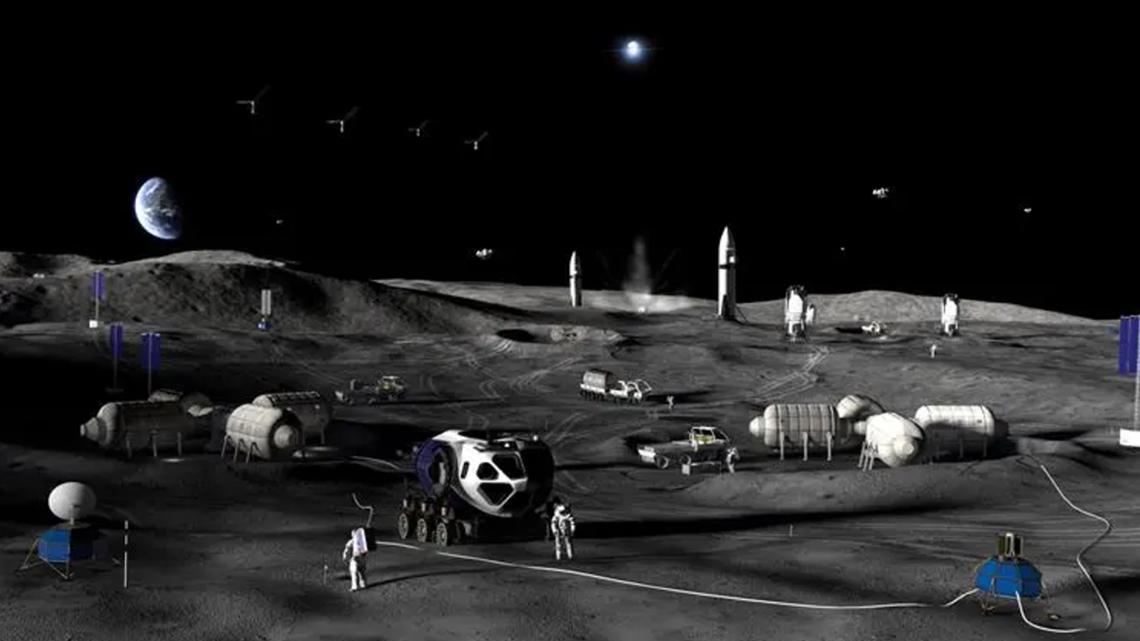
Here’s a closer look at how NASA plans to make that happen.
Artemis: Return to the moon
The pressure is on to get humans back on the moon as soon as possible. Efforts through the Artemis project are well underway, with the goal to step foot on the lunar surface before the end of Trump’s second term.
It will be the first crewed mission to the moon since the 1970s.
“NASA is committed to achieving the near-impossible once again,” Isaacman said in a news release.
Five voyages are planned for the overall Artemis mission, with specific goals set for each trip.
Recent changes to the Artemis mission include adding another voyage to space and restructuring the timeline to speed up the process, though technical challenges during rocket development testing has led to numerous setbacks in the lunar program.
Artemis I: A flight with no crew tests the Space Launch System and the Orion spacecraft around the moon. This took place on Nov. 16, 2022. Artemis II: Send a crew around the moon and back to Earth. This launch has yet to lift off and has been delayed several times due to technical challenges. It’s tentatively scheduled for next week. The mission itself is expected to last 10 days for the four crew members. Artemis III: Test commercial landers in low-Earth orbit from SpaceX, Blue Origin, or both in 2027. Artemis IV: Return to the moon, with astronauts transferring from Orion on a commercial lander to the lunar surface once they reach the moon’s orbit. This launch is planned for early 2028. Artemis V: Use the standard Space Launch System (SLS) rocket configuration for a lunar surface mission by late 2028. Subsequent missions are planned after this mission is successfully completed.
NASA reinforced its goals Tuesday to achieve at least one surface landing “every year thereafter,” the agency stated. One way they believe this goal can be met is through “commercially procured and reusable hardware,” which essentially translates to a more sustainable means of transportation to and from the lunar surface than the existing launch procedures.
Building a permanent moon base
The goal to build a permanent base on the moon was laid out as a three-part plan, which NASA is estimating will cost roughly $20 billion.
First, build and test technologies that can be reused and with more frequency to send to the moon.
Second, work to establish a “semi-habitable infrastructure” to support astronaut operations on the surface.
Third, “enable long-duration human presence.” This includes establishing habitats with large, scalable infrastructure to support the base into the future. This would require investments in power, communications, and surface mobility.
“The objective is clear: build the foundation for an enduring lunar base and take the next step toward Mars,” Isaacman said in a post on X.