A mission NASA might kill is still returning fascinating science from Jupiter | “We can’t quite afford to support everything that we have done in the past.”
A mission NASA might kill is still returning fascinating science from Jupiter | “We can’t quite afford to support everything that we have done in the past.”
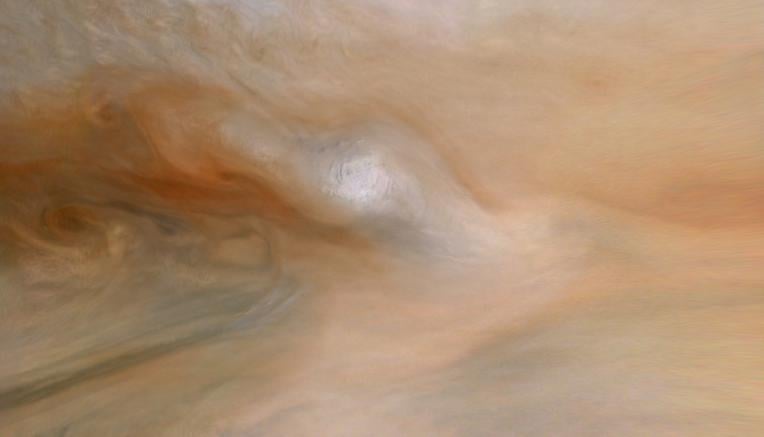
>Jupiter’s colossal storms generate lightning flashes at least 100 times more powerful than those on Earth, according to scientists analyzing data from NASA’s Juno spacecraft.
>The findings were published March 20 in the journal AGU Advances and were based on data recorded by Juno in 2021 and 2022, after NASA granted an extension to the spacecraft’s operations upon completing a five-year science campaign at Jupiter. Juno remains in good health, but NASA officials have not said if they will approve another extension for the mission. The issue is money.
>Questions about the future of Juno and more than a dozen other robotic science missions began swirling nearly a year ago, when the Trump administration asked mission leaders to submit “closeout” plans for how to turn off their spacecraft. Ars first reported the news soon after the White House released a budget request that called for slashing NASA’s science budget by nearly half.
>Some of NASA’s Solar System exploration missions on the list have received NASA approval to continue operations. These include the OSIRIS-APEX mission, which brought asteroid samples back to Earth in 2023 and is now using leftover fuel to chase down another asteroid in 2029; and NASA’s Lunar Reconnaissance Orbiter, the agency’s only active spacecraft at the Moon, which will be funded for at least three more years.
>Congress rejected most of the Trump administration’s proposed NASA cuts. Lawmakers passed a fiscal-year 2026 budget with $2.54 billion for NASA’s planetary science division, far above the White House’s request, but about $220 million shy of last year’s funding.

1 Comment
>Jupiter’s colossal storms generate lightning flashes at least 100 times more powerful than those on Earth, according to scientists analyzing data from NASA’s Juno spacecraft.
>The findings were published March 20 in the journal AGU Advances and were based on data recorded by Juno in 2021 and 2022, after NASA granted an extension to the spacecraft’s operations upon completing a five-year science campaign at Jupiter. Juno remains in good health, but NASA officials have not said if they will approve another extension for the mission. The issue is money.
>Questions about the future of Juno and more than a dozen other robotic science missions began swirling nearly a year ago, when the Trump administration asked mission leaders to submit “closeout” plans for how to turn off their spacecraft. Ars first reported the news soon after the White House released a budget request that called for slashing NASA’s science budget by nearly half.
>Some of NASA’s Solar System exploration missions on the list have received NASA approval to continue operations. These include the OSIRIS-APEX mission, which brought asteroid samples back to Earth in 2023 and is now using leftover fuel to chase down another asteroid in 2029; and NASA’s Lunar Reconnaissance Orbiter, the agency’s only active spacecraft at the Moon, which will be funded for at least three more years.
>Congress rejected most of the Trump administration’s proposed NASA cuts. Lawmakers passed a fiscal-year 2026 budget with $2.54 billion for NASA’s planetary science division, far above the White House’s request, but about $220 million shy of last year’s funding.