
It takes thousands of people to build a lunar spacecraft; let’s meet them and see what they do. Today: Guillaume Schang.
What is your name and role in the European Service Module (ESM) programme?
My name is Guillaume Schang, and I am the European safety engineer for ESM.
How long have you been involved in the European Service Module’s development and what were/are your tasks?
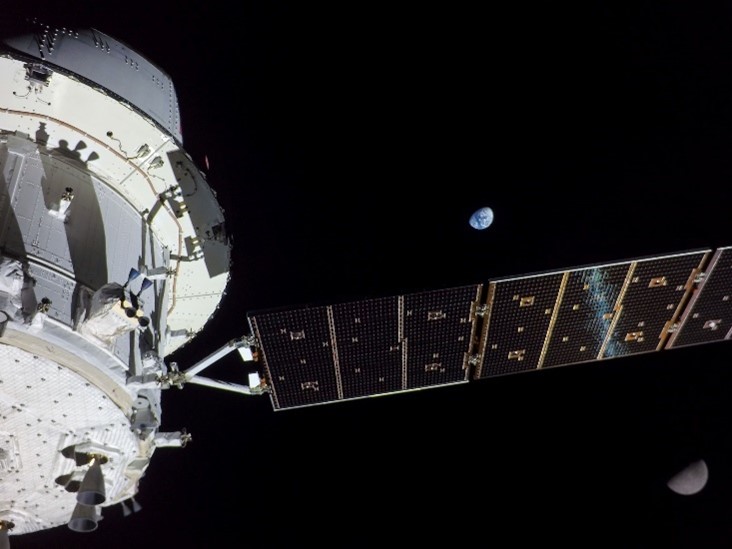
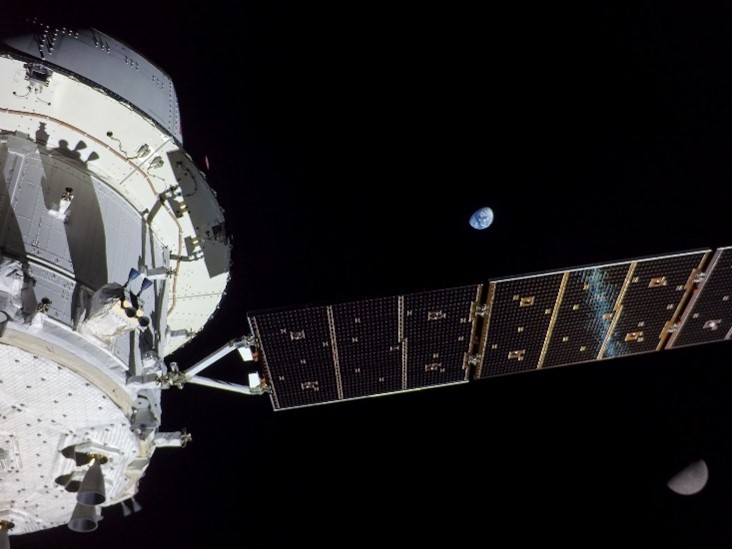
A portrait of Earth, the Moon and Orion and its European Service Module during Artemis I. Credit: NASA
I joined the European Service Module team in early 2024, replacing a colleague who had been part of the programme since its beginning.
My role focuses on safety: reviewing related documentation – such as failure analyses, probabilistic assessment and hazard reports – at key readiness milestones, including critical design review, and ensuring consistency as the spacecraft evolves. When I arrived, the design of ESM-2 was complete, so I contributed to consolidating mission-specific constraints and verifications as part of the standard safety engineering process. In parallel, I have been involved in the qualification reviews and design evolution of the ESM-3 and ESM-4, destined for the Artemis III and Artemis IV missions.
Safety is a joint effort, and I work closely with NASA, Lockheed Martin and Airbus through a shared safety and engineering evaluation panel. Together, we review evidence that the controls defined to prevent safety hazards in ESM are properly implemented. When new or complex technical topics arise, we also make sure that the associated risks are clearly understood, thoroughly assessed and, where necessary, that actions are taken to bring those risks back to an acceptable level for the programme and the crew.
For Artemis II, I will be on the ESM safety console in the Eagle mission control room at ESA’s technical centre, ESTEC, in the Netherlands. My job is to continuously monitor whether ESM is operating within the limits needed to safely continue the mission. If something were to fail, I assess how severe it is, how much redundancy remains, what the next worst failure could be, and whether the mission can continue safely or if a change of course should be recommended. I then communicate my assessment to the rest of our engineering team on the ESM consoles. At critical decision points – such as before the trans-lunar injection (TLI) burn performed by ESM’s main engine – safety is the key criterion in confirming that Orion and its crew are ready to continue their journey to the Moon.
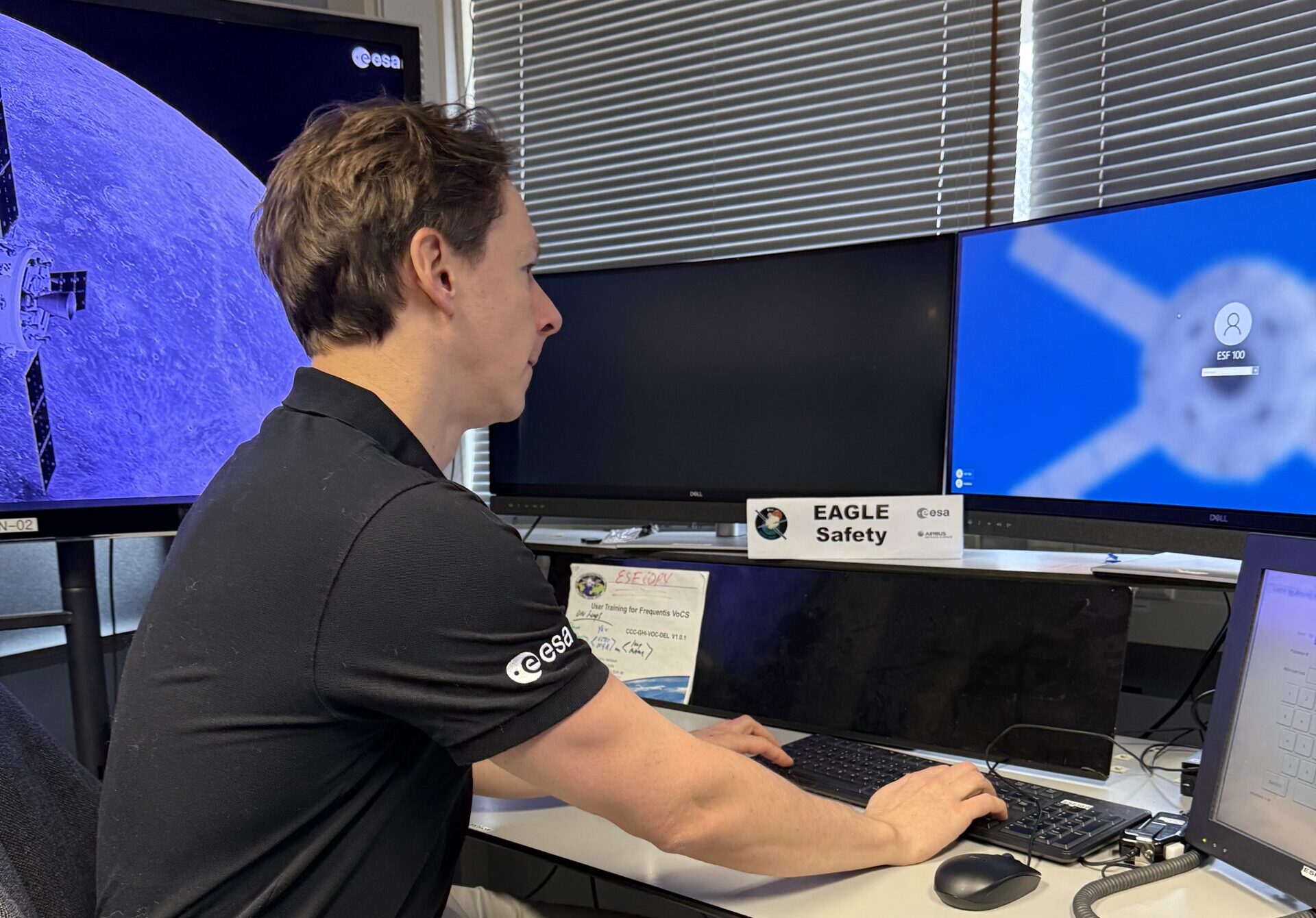
Guillaume in the Eagle room at ESTEC.
Credit: ESA-M. Deschamps
What is your educational background and prior work experience? How did you come to work on the European Service Module?
I have a double degree in physics and astronautic & space engineering from Polytech’ Clermont in France and Cranfield University in the UK, with a focus on systems engineering.
Before joining ESA in 2022, I spent most of my career in aeronautics, working under strict safety regulations for commercial aircraft. I began as a system engineer – mostly working on fire protection and propulsion systems – at a start-up developing a bi-turboprop 19-passenger aircraft. I then spent eight years as a reliability and safety engineer at Ratier-Figeac in France, the design authority and manufacturer for cockpit controls and propeller systems.
At ESA, I initially worked on reliability and safety aspects for a variety of missions, mainly in Earth observation – including LSTM, Chime and ROSE-L – and also supported a return-of-experience initiative within my section from a dependability standpoint on ESA missions. When the safety lead for ESM retired, I stepped into the role. It felt like a natural transition – flight airworthiness assessment during design, production and operations is part of the day-to-day work in aeronautics, so my experience was directly relevant for human spaceflight.
What is the most notable or memorable moment during your time working on the European Service Module?
My most memorable moment so far was travelling to NASA’s Johnson Space Center in Houston for an Artemis II simulation. Seeing the Saturn V rocket, walking into mission control, and taking part in the simulation from the Mission Evaluation Room (MER) made it feel very real. Witnessing the level of preparation, focus and partnership between teams from NASA, ESA, Airbus and Lockheed Martin and the dedication to the mission’s success was a great experience and made me realise that we are the ones continuing the legacy of the Apollo missions.
Technically the mission will closely resemble our simulations – well, I hope with less failures encountered than the ones deliberately thrown at us during training! However, I think doing this for real during the historic Artemis II mission will feel very different.
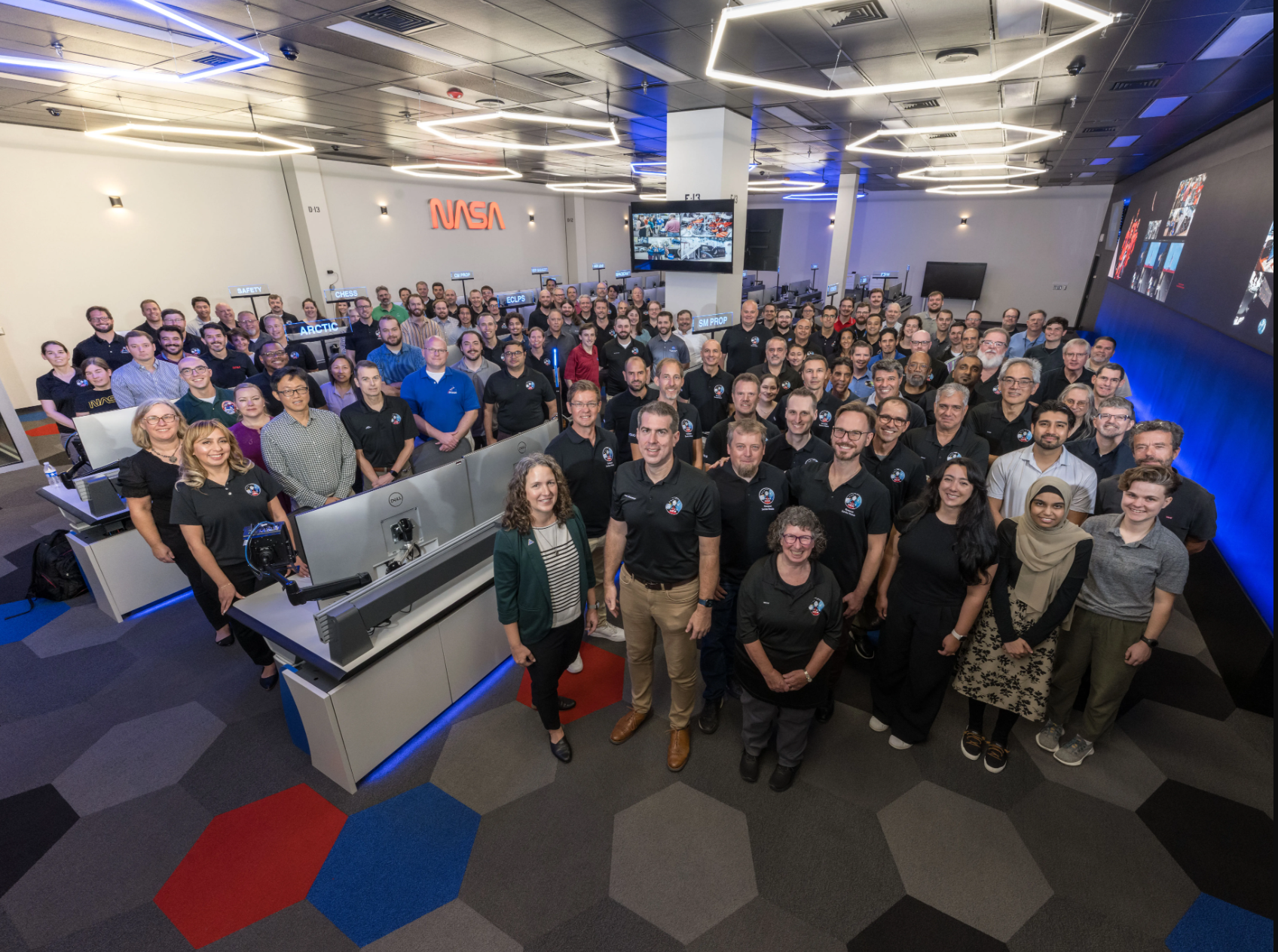
The Orion Mission Evaluation Room team gathers for a group photo in the new evaluation room at NASA’s Johnson Space Center in Houston in August 2025.
NASA-J. Valcarcel
What does it mean to you to be part of the larger team offering humans a place to stay around the Moon?
In the current global context, I find it very meaningful to work on a mission that brings people together across agencies, countries and cultures. Artemis shows how international cooperation can work in practice, with partners relying on each other and learning from different perspectives. ESA itself is built on collaboration between many Member States, and working with international partners broadens our way of thinking. I believe a sustained exploration programme requires this kind of joint effort, and from an engineering point of view, it is a unique opportunity to contribute to something much larger than any single organisation or country.
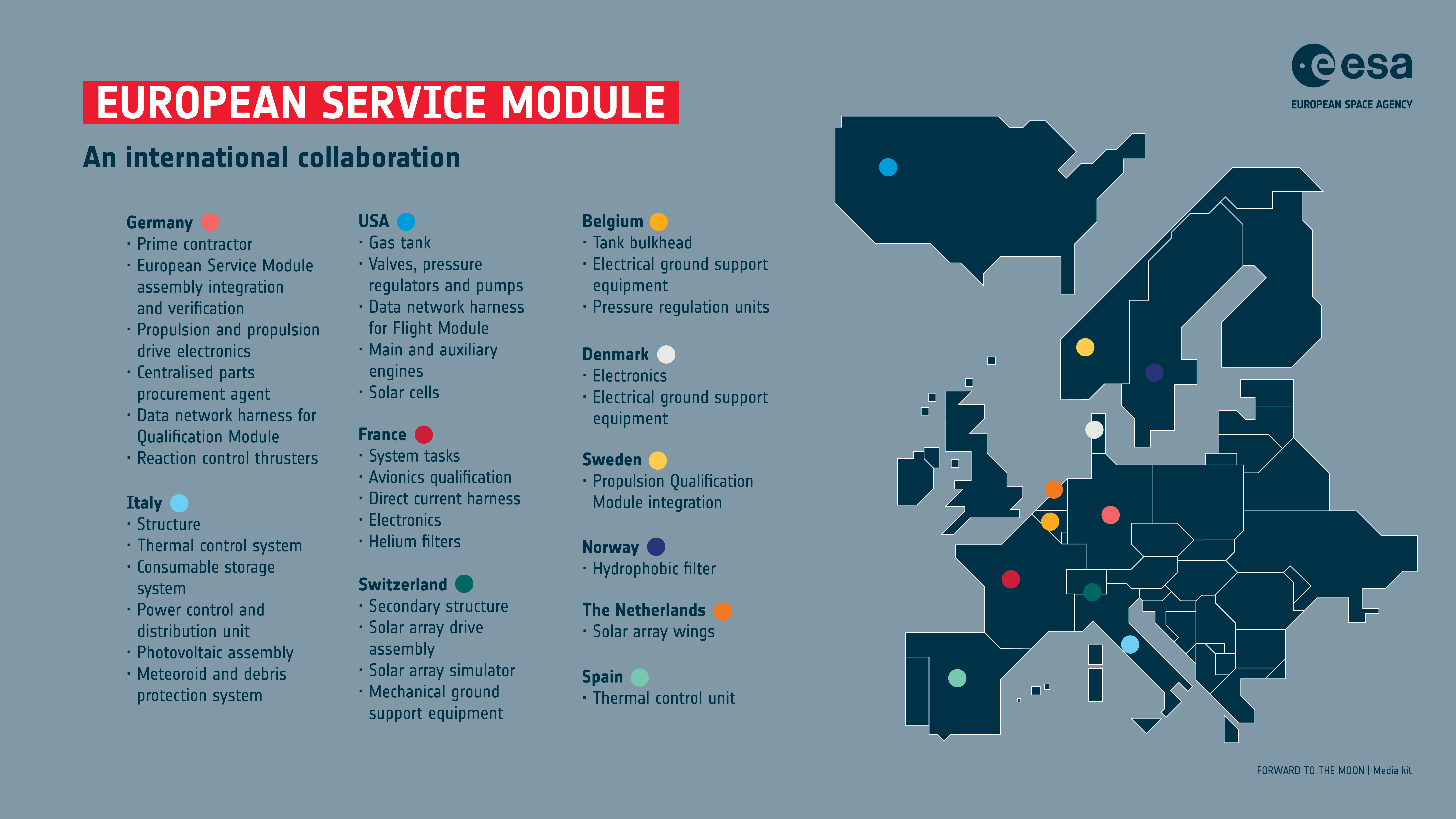
ESM is an international collaboration, with parts from 10 ESA Member States.
Credit: ESA-A. Brancaccio
What is one thing you’d like the European public to know about your job?
Safety is not a one-person responsibility; it relies on curiosity, communication and close collaboration with many engineering disciplines. The most effective way to work on safety is to be fully integrated into the engineering team, from the early design stages onwards, and to understand the technical reasoning behind decisions. I see the role as being like a system engineer who focuses on what could go wrong: constantly thinking about “what if?” scenarios, asking the difficult questions, showing discernment to prioritise the scenarios most likely to pose a threat, and understanding the remaining capability of the module in case of an anomaly.
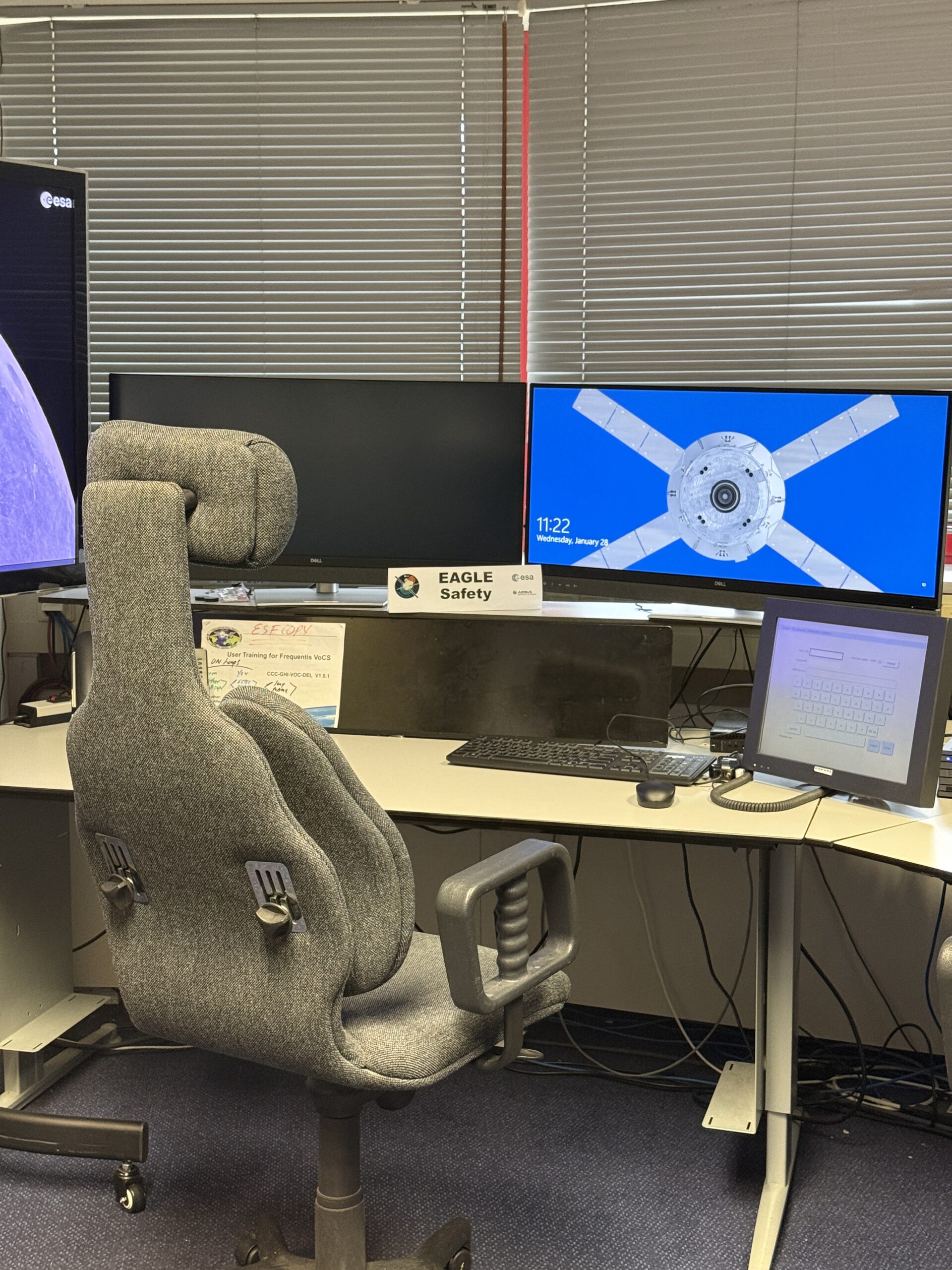
The safety console in Eagle. Credit: ESA-M. Deschamps
Do you have any advice for future generations interested in space exploration?
There isn’t one path to working in space. I think it’s important that even if you’re leaning towards a career in space exploration, you shouldn’t exclude engineering fields that might seem unrelated. What matters is making the most of every experience and developing a solid engineering mindset: understanding hardware limits, environmental and operational constraints, and how to manage risk. Those skills can be developed in many industries, and they can all one day be applied to space.
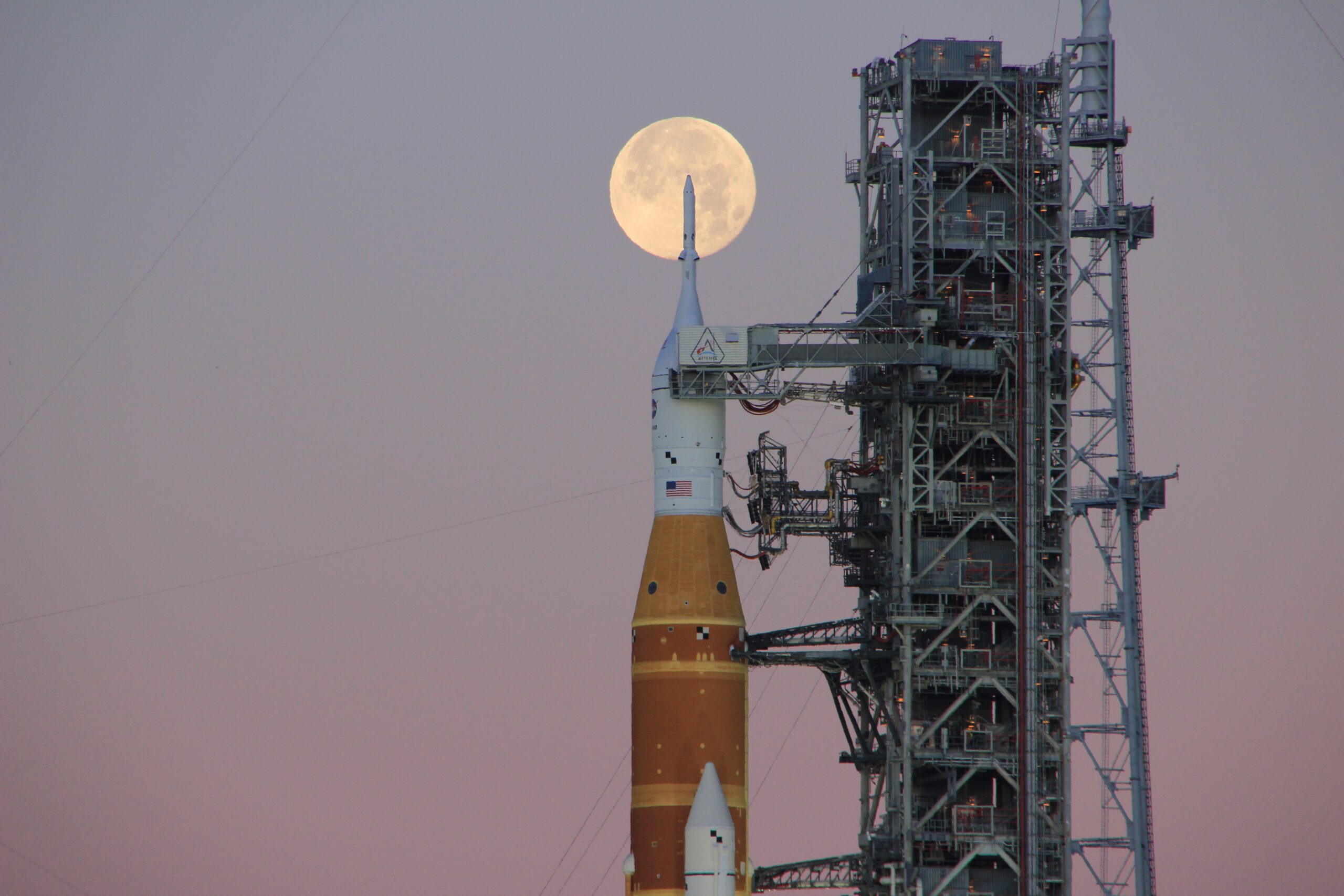
The Artemis II rocket, with the Orion spacecraft and its European Service Module, on the launchpad.
Credit: ESA-M. Born