
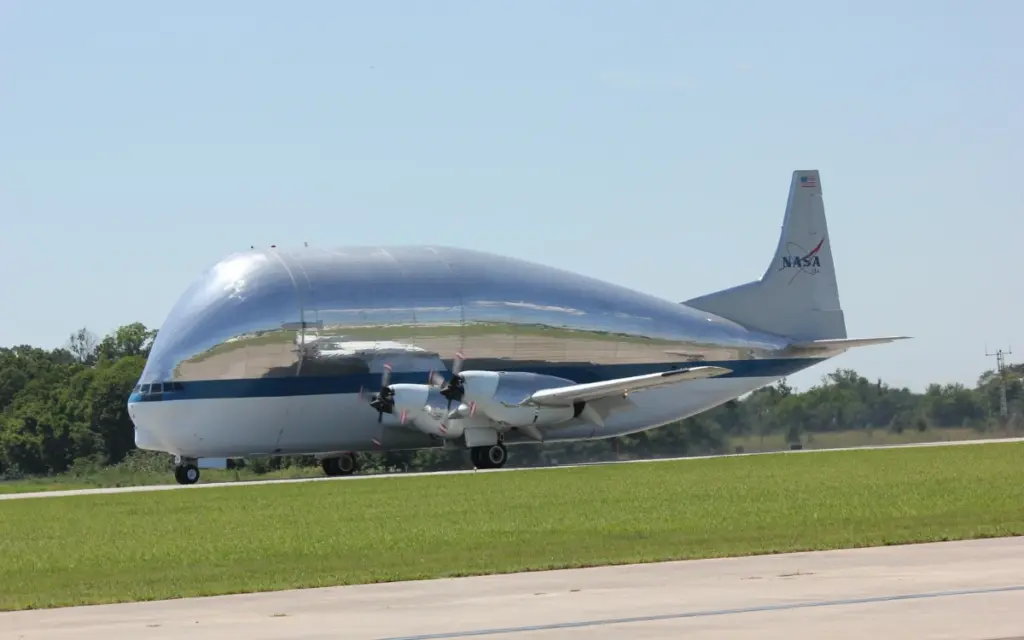
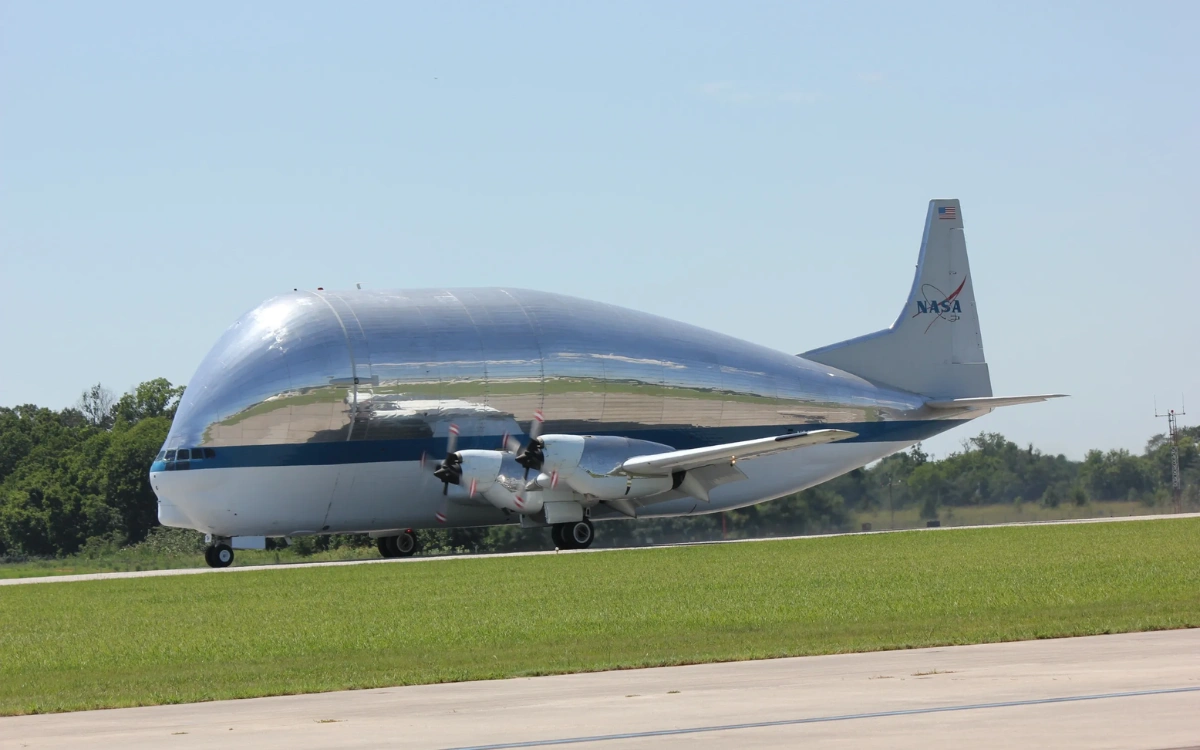
The NASA Super Guppy looks like a flying joke, but this bizarre plane is actually one of the most critical machines keeping modern spaceflight alive.
With its bulbous fuselage and cartoonish proportions, it seems more suited for a Pixar film than serious work in space.
Yet in 2026, this decades-old aircraft is still hauling priceless components for missions headed to the Moon.
In fact, without the Super Guppy, NASA would have a logistics nightmare on its hands.
Click the star icon next to supercarblondie.com in Google Search to stay ahead of the curve on the latest and greatest supercars, hypercars, and ground-breaking technology
Logistics is an underrated part of spaceflight
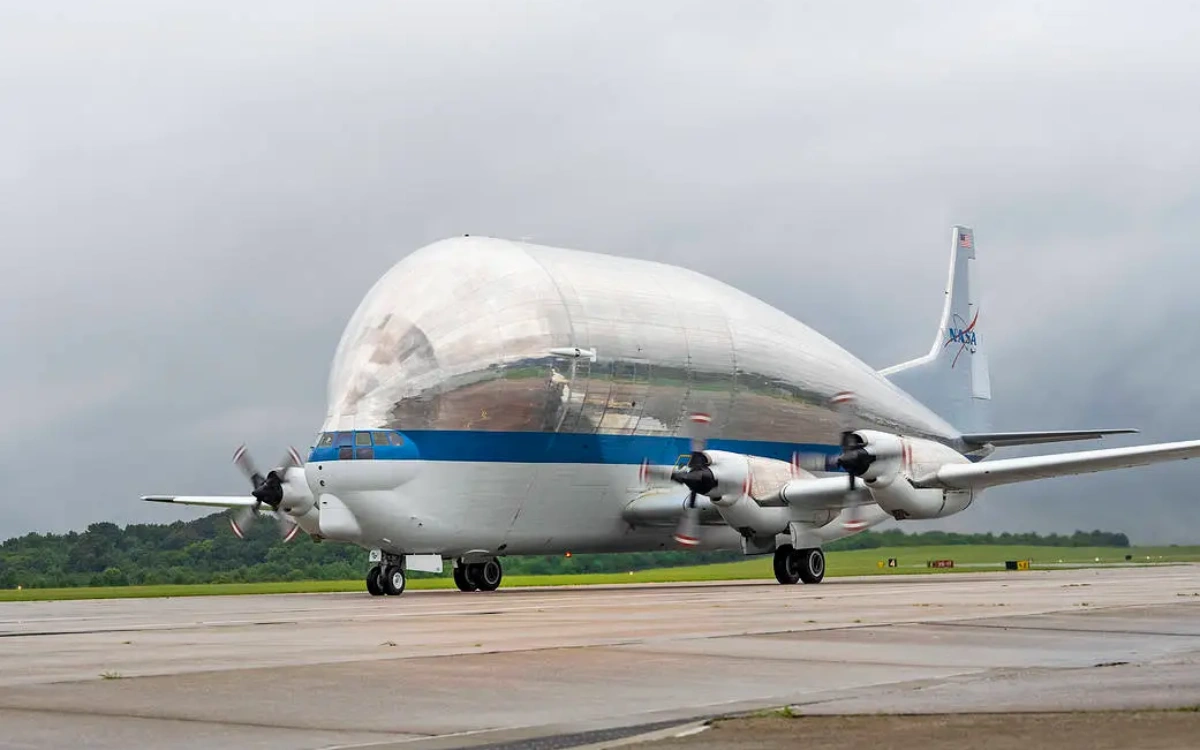
Originally built from a 1953 Boeing-derived tanker airframe and later transformed in 1983, the Super Guppy was designed for one purpose only: carrying things that no other aircraft on Earth can.
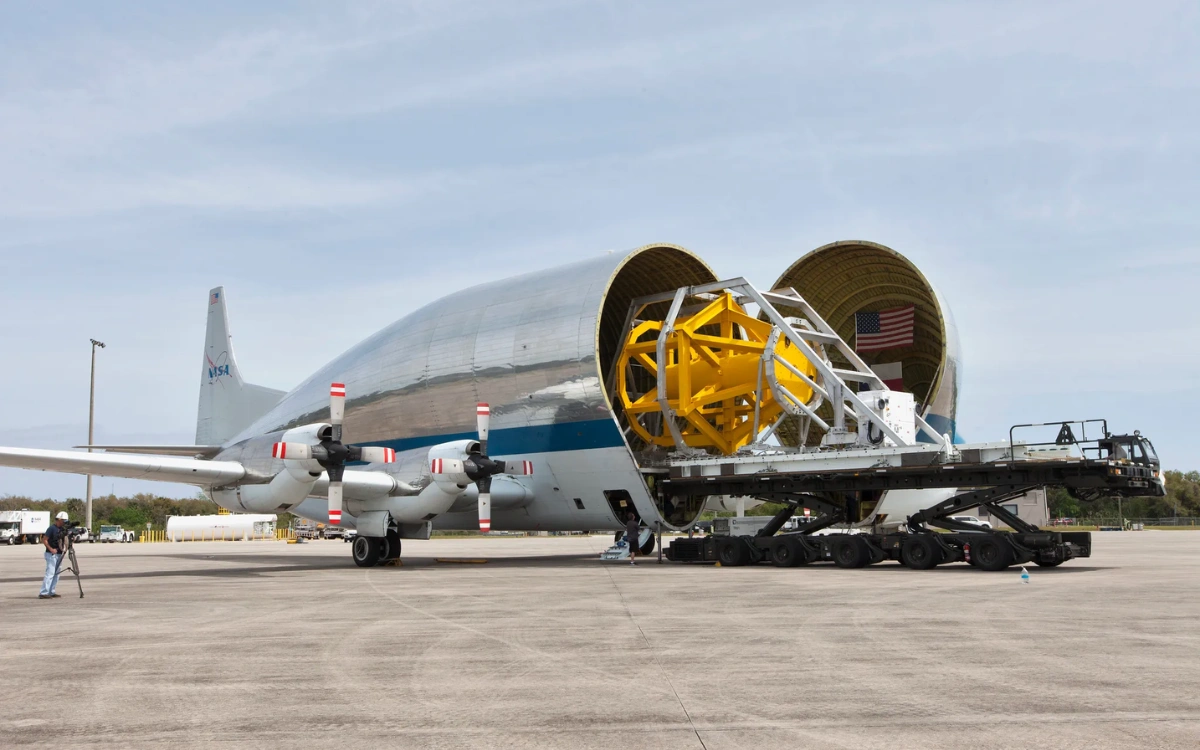
Its massive cargo bay stretches 25 feet wide and over 100 feet long, large enough to swallow spacecraft components whole.
 NASA
NASA
In fact, parts of the Orion spacecraft, which will carry astronauts under the Artemis program, regularly rely on this flying giant to get from factory to launch site.
While the Super Guppy’s size certainly draws attention, what makes it truly unique is how it loads cargo.
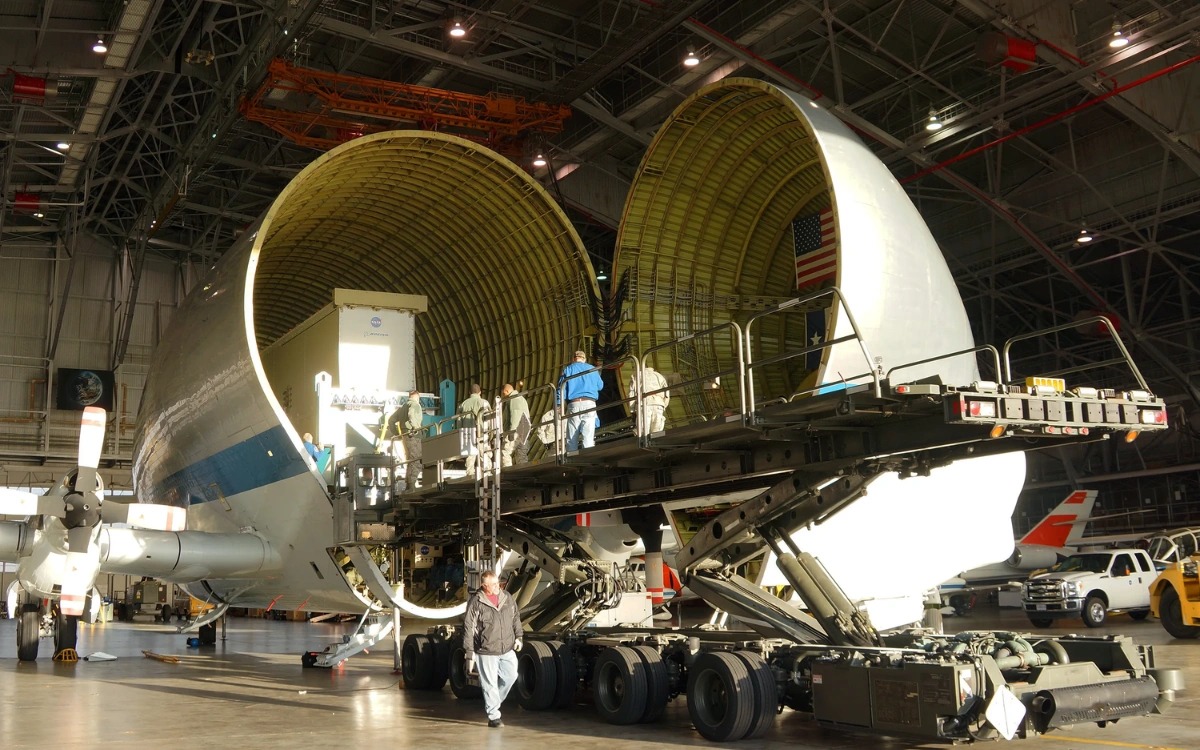
The entire nose of the aircraft, cockpit included, swings open like a giant door.
 NASA
NASA
Every cable, control line, and system connection at the front must disconnect and then reconnect perfectly before takeoff.
If even one connection fails, the aircraft simply doesn’t fly.
It is a high-stakes process repeated every single time something is loaded.
Despite its ungainly looks, the Guppy gets the job done.
 NASA
NASA
It cruises at a modest 250 mph, which is far slower than modern transports.
However, speed isn’t really the point.
When you are moving a 25-foot-wide spacecraft component across the country, nothing else comes close.
After all, moving it by land is completely unfeasible.
Even legendary cargo planes like the Antonov An-225 Mriya, before its destruction in 2022, couldn’t match its unique loading capabilities.
Only one NASA Super Guppy in the world
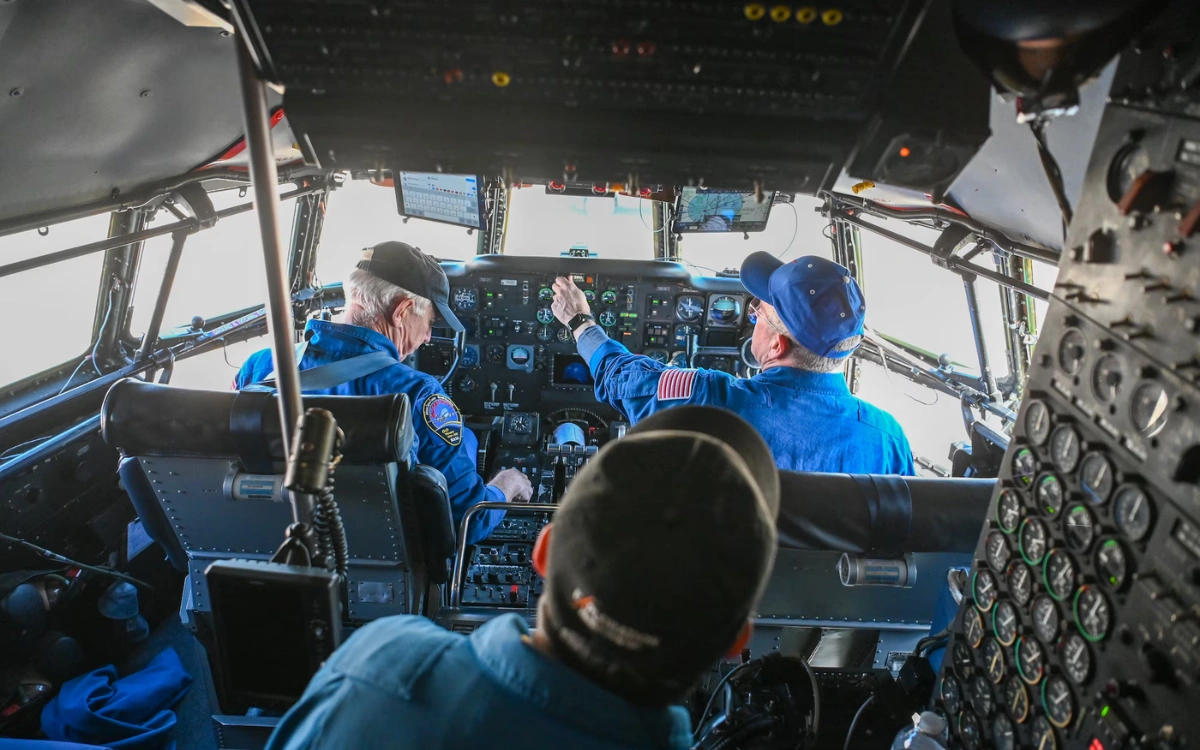
Inside the cockpit, things feel like a time capsule.
There are no digital screens or fly-by-wire systems, just analog dials and mechanical controls straight out of the 1950s.
 Tinker Air Force Base
Pilots don’t train on simulators either, because none exist for this one-of-a-kind aircraft.
If you want to learn to fly it, you have to fly the real thing.
That rarity is exactly what makes the Super Guppy so vital for spaceflight.
There is only one left in operation, and every mission it flies carries enormous importance.
From Apollo-era rocket stages to modern space station modules, this aircraft has been quietly enabling space exploration for decades.
It might not look cutting-edge, but the Super Guppy proves that sometimes, the strangest designs are the ones that change history.
DISCOVER SBX CARS:
The global premium car auction platform powered by Supercar Blondie