
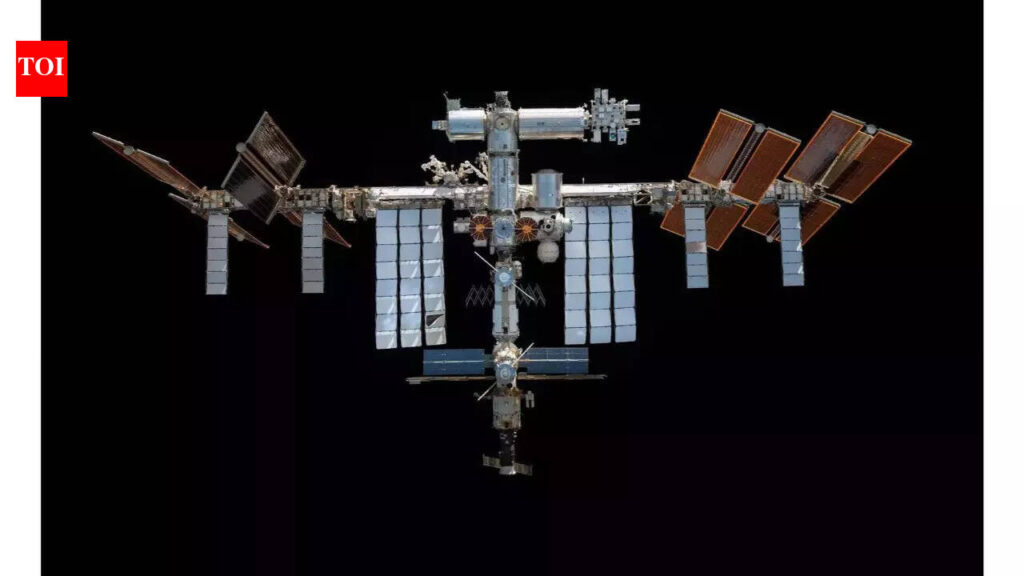
 Jeff Bezos’ Blue Origin, along with several other companies, is competing to build the next International Space Station (ISS). This development comes as NASA and its international partners plan to deorbit the ISS by 2030. On its FAQ page, NASA stated that it is “committed to fully use and safely operate the space station through 2030, as the agency also works to enable and seamlessly transition to commercially owned and operated platforms in low Earth orbit.” In 2021, NASA also signed agreements worth $415.6 million with three US companies, Blue Origin, Nanoracks, and Northrop Grumman, to develop designs for commercial space stations and other low-Earth orbit destinations. Apart from these, several other companies are developing orbital research facilities and modular habitats to support astronauts living and working in space. Industry observers suggest these stations could provide greater flexibility, lower costs, and expanded opportunities for scientific research and space-based industry.“In the future, the United States plans to transition its operations in low Earth orbit to commercially owned and operated destinations to ensure continued access to essential research and technology development,” NASA added.NASA has also selected Elon Musk’s SpaceX to develop and deliver the Deorbit Vehicle, which will enable the controlled deorbiting of the ISS and help reduce risks to populated areas.
Jeff Bezos’ Blue Origin and other companies are developing ISS replacement
Multiple private companies are developing commercial space stations to replace the International Space Station (ISS), with multiple projects targeting launches between 2027 and 2029. Here’s a list of companies that are developing ISS replacement:Jeff Bezos’ Blue Origin and Sierra Space are jointly building Orbital Reef, a “mixed-use business park” in low Earth orbit designed to support research, commercial, and industrial activities.In 2020, NASA supported Axiom Space in developing Axiom Station, a commercial space station backed by both government funding and private investment, with its first module expected to attach to the International Space Station in 2027 before transitioning to independent operations.On the other hand, Starlab Space LLC, a joint venture involving Voyager Space and Airbus, is advancing its station after clearing a key NASA review, with a planned 2029 launch.Vast Space is developing the Haven series, starting with Haven-1 as a standalone station, followed by a modular Haven-2 system designed to expand capacity over time.Lastly, Max Space, a newer entrant, is working on Thunderbird Station using inflatable habitat technology, targeting a 2029 launch while also planning an earlier in-orbit demonstration.
How NASA is planning to deorbit the ISS
On its official page, NASA wrote, “The primary objective during space station deorbit operations is the responsible re-entry of the space station’s structure into an unpopulated area in the ocean. The chosen approach for safe decommissioning is a combination of natural orbital decay, intentionally lowering the altitude of the station likely using current propulsive elements, and then execution of a re-entry maneuver for final targeting and to control the debris footprint. Due to the high propellant requirement of this final maneuver, the Earth’s natural atmospheric drag will be used as much as possible to lower station’s altitude while setting up deorbit. Once all crew have safely returned to Earth, and after performing small maneuvers to line up the final target ground track and debris footprint over an uninhabited region of the ocean, space station operators will command a large re-entry burn, providing the final push to ensure safe atmospheric entry into the target footprint.”