
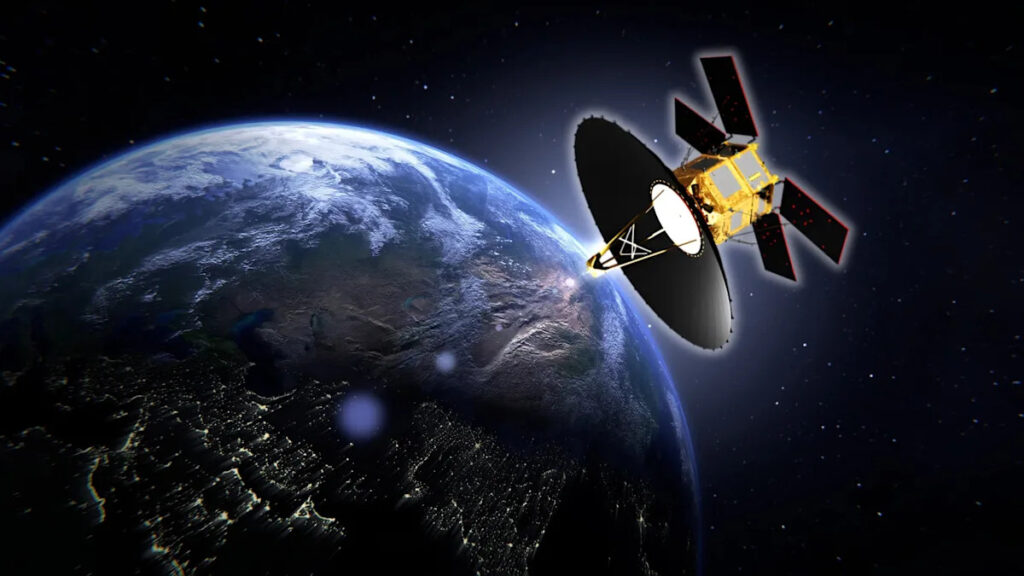
SINGAPORE – When a collision warning reaches the NTU Satellite Research Centre, scientists jolt into action.
They ping the operator of the oncoming satellite to discuss plans, which could take days to execute, to move their satellites out of harm’s way.
Any collision in space will be dear as Nanyang Technological University’s six research satellites – which gather data and test special instruments – cost a few million dollars to produce and launch.
These alerts are sounding more often now – around once a year for each satellite – as opposed to once every few years in the past.
“As more and more satellites launch, it is important for operators to prepare and actively manage the situation,” said Mr Lim Wee Seng, executive director of the centre formed in 1996 to advance space science and launch small satellites.
Soon, a new agency will take on the role of national authority to safeguard Singapore’s access to space amid rising congestion.
Over 30 Singapore satellites have been launched over the past two decades.
The National Space Agency of Singapore (NSAS), which will start work on April 1, is also expected to develop laws that can strike a balance between promoting the sector and protecting the sustainable use of outer space.
Its mandate also includes building a multi-agency operations centre to support government agencies with their needs, say, for satellite images around Singapore’s ports.
The new agency will expand on the functions of Singapore’s 13-year-old space office, the Office for Space Technology and Industry (OSTIn).
Space is currently dominated by superpowers including the United States and China.
SpaceX, founded by entrepreneur Elon Musk, is the most prolific launcher of satellites in the world, responsible for the vast majority of new satellites entering orbit.
To date, SpaceX’s Starlink constellation is made up of over 9,000 satellites to provide better telecommunications and broadband coverage to underserved rural and remote areas across the globe.
Altogether, there are more than 12,000 satellites in orbit, and more than 100 million fragments of space junk littering the cosmos.
The US’ NASA is the most renowned space agency, with plans to send astronauts to travel around the moon in 2026 – the first human mission to the Moon in over 50 years.
The key aim of the Artemis II mission is to test a life support system that will sustain four astronauts for 10 days in deep space.
NASA sent 24 astronauts to the Moon during the Apollo missions that ended in 1972, and currently has more than 20 Earth-observing satellites in orbit. A handful of others are orbiting Moon and Mars to study the celestial giants.
China has plans to launch 200,000 satellites in the near future to compete with Starlink. The country already has over 1,000 satellites in orbit which collect data for surveillance, navigation and telecommunications.
It has also sent around 20 astronauts to space including to its space station Tiangong, an in-orbit laboratory designed to study plant growth in microgravity, produce oxygen artificially and research new materials for next-generation semiconductors, among other experiments.
The value of the space sector’s economic activities is expected to grow to US$1.8 trillion (S$2.3 trillion) by 2035, from US$630 billion in 2023, according to a 2024 World Economic Forum report.
Singapore’s role
Singapore does not plan to send astronauts to the Moon, lead deep-space explorations or build rocket launchpads.
The Government wants to invest in advanced tools for Earth observation, secure communications, satellite image analysis, carbon monitoring, and space traffic and debris management – as they are believed to have high-growth potential.
“Advances in data analytics and artificial intelligence have created new products and services around satellite data – presenting significant potential for Singapore to capture economic value from the space sector,” said a spokesperson from OSTIn.
Singapore’s space sector comprises around 70 companies employing some 2,000 professionals in fields including mechanical, electrical and aerospace engineering, as well as physics and computer science.
These firms have so far focused on building small satellites and specialised components, analysing Earth’s images and data for the shipping and environment sectors, and providing timely aid during regional disasters.
Small satellites range in size from a fridge to a shoebox.
ST Engineering is Singapore’s largest satellite producer. Since 2015, it has launched five satellites, of which three are currently co-owned with the Government.
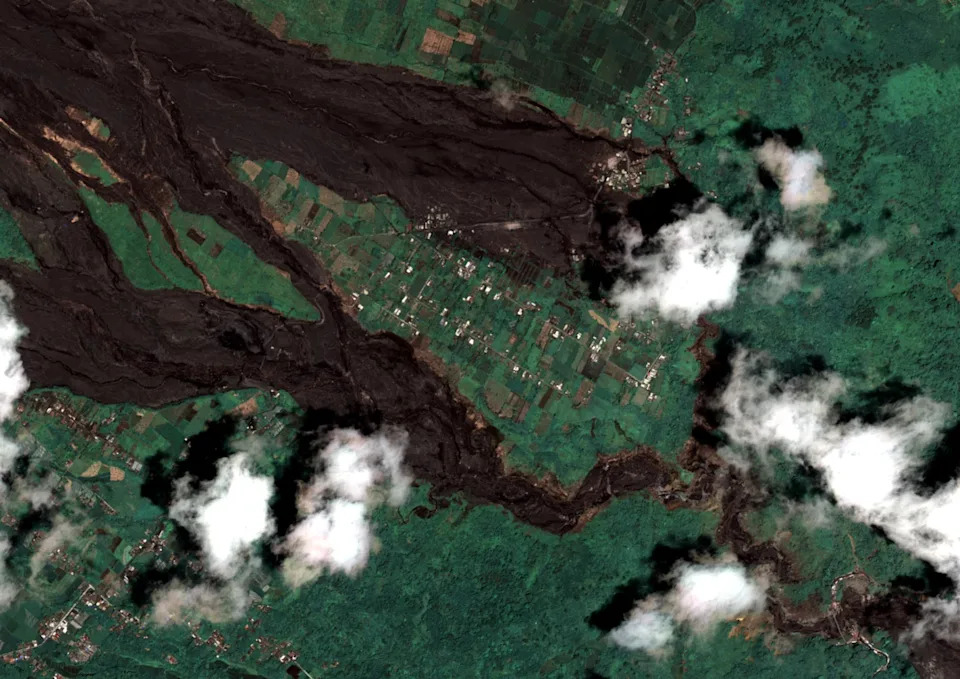
A photo of extensive damage near Sumberwuluh village in Indonesia captured by one of ST Engineering’s Earth observation satellites, after Mount Semuru erupted in December 2022.
(PHOTO: COURTESY OF ST ENGINEERING)
When a major oil spill hit Singapore’s waters in June 2024, ST Engineering provided the Maritime and Port Authority of Singapore with images that tracked the movement of oil slicks.
Unlike bigger satellites, small satellites operate in low Earth orbit, generally around 160km to 2,000km above the Earth’s surface, which allows for higher-resolution images. The costs of building and launching small satellites are also lower.
Companies in Singapore have also innovated in specialised satellite components including low-power electric engines, laser communications technology and quantum technologies to secure satellite data.
Local start-up Transcelestial, for one, is the inventor of a laser communications terminal that sits in a European small satellite to test 6G space-to-ground connectivity.
Speed bumps
Turbo-charging this space requires NSAS to remove some obstacles.
For a start, the agency can streamline access to grants for early-stage start-ups.
OSTIn currently provides research grants through its $210 million Space Technology Development Programme, which started in 2022.
However, some firms said the programme operates on a reimbursement model, which means start-ups must first foot the bill.
Dr Mark Lim, chief executive of Singapore-based space-tech firm Aliena, hopes the current reimbursement method of giving grants can be relooked for start-ups unable to pay upfront bills.
“The initial investments required for space technology validation is significantly larger than that in other sectors,” he said.
Upfront spending is necessary as start-ups need to prove their value to investors by testing their technology in space – which takes millions of dollars – to attract more funding.
Aliena’s chief technology officer George-Cristian Potrivitu said: “You need an entity willing to shoulder the risk for these first missions. Usually, that body is a space agency. Once you’ve proven the technology in orbit, investors are much more confident in providing the capital needed to scale commercially.”
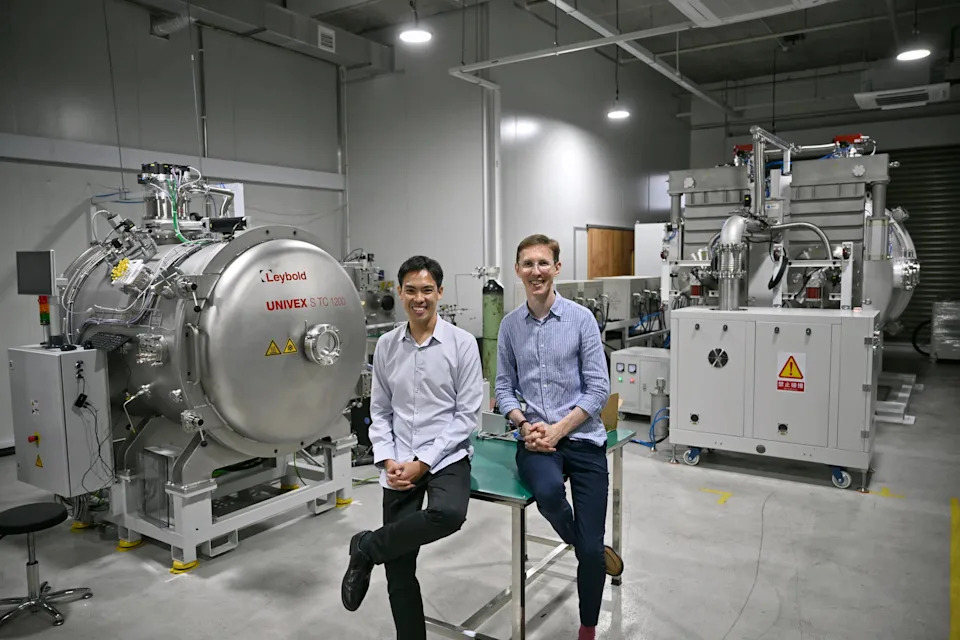
Aliena’s chief executive Mark Lim (left) and chief technology officer George-Cristian Potrivitu at their office in Ubi.
(ST PHOTO: ARIFFIN JAMAR)
The long gestation period for space tech has also worked against many start-ups.
It could take as long as 10 years before their technology can see investment returns. But investors have little appetite for these long-term space-tech projects. This is why NSAS’ support is crucial.
The lack of legislation here could also obstruct firms’ global ambitions.
Experts said that Singapore’s credibility as a space player hinges on it having a strong rule of law to regulate product quality, the satellites and components launched, and the disposal of space junk, and to prevent accidents.
NSAS is expected to plug this legislative gap.
In 2024, OSTIn put out a set of guidelines recommending individuals and organisations to register objects launched into outer space, and inform the office of any significant changes such as the loss of ability to communicate with the object, or the transfer of the object into another orbit.
Experts foresee these could soon be mandatory.
Mr Chew Hwee Yong, CEO of the Association of Aerospace Industries (Singapore), said: “We want to make sure we know what we have sent out and track where they are.”
The OSTIn guidelines also recommend that all space-related activities in Singapore be aligned with practices spelled out by the UN Committee on the Peaceful Uses of Outer Space and the International Organization for Standardization.
One such recommendation under the UN committee is for space systems to be designed to release minimal debris during operations to reduce collision risk or the risk of killing the astronauts manning them.
Mr Low Jin Phang, chief operating officer for defence and public security at ST Engineering, said: “We welcome regulation around commercial collision avoidance that safeguards our space missions and satellites.”
There is also merit in spelling out common standards for the building of space vehicles and components to safeguard the quality of made-in-Singapore assets, similar to how standards are in place for the automotive and aerospace sectors, said Mr Chew.
While regulations are needed, some firms have asked for export control processes to be streamlined to allow local firms to sell easily overseas.
Currently, firms exporting selected space electronics and satellites need to obtain a certificate from buyers each time they make a sale.
The certificate contains a declaration that the purchased parts will not be used for malicious or unauthorised purposes, including military use.
The certificate needs to be sent to Singapore Customs for approval, which usually takes up to three days, before the sale can be finalised.
Mr Rajan Rajgopal, CEO of Singapore-based Zero-Error Systems, said: “Export controls can be streamlined for efficiency.”
Zero-Error, whose technology protects satellite data from being corrupted when exposed to harsh radiation in space, suggested that a certificate be necessary only when orders made by a customer exceed a certain number.
The current global talent crunch is also expected to act as a speed bump to Singapore’s space-tech ambition.
While Singapore has a strong pool of engineers, experience in space missions, satellite operations, space-grade manufacturing and AI-powered systems remains scarce.
“Aeronautical engineering is different from astronautical engineering,” said Mr Chew. “Do we have enough of such courses? I think that is something we need to review.”
Ms Lynette Tan, CEO of Space Faculty, which runs space-related workshops and competitions, said one way the talent gap can be plugged is through programmes jointly created by the private and public sectors.
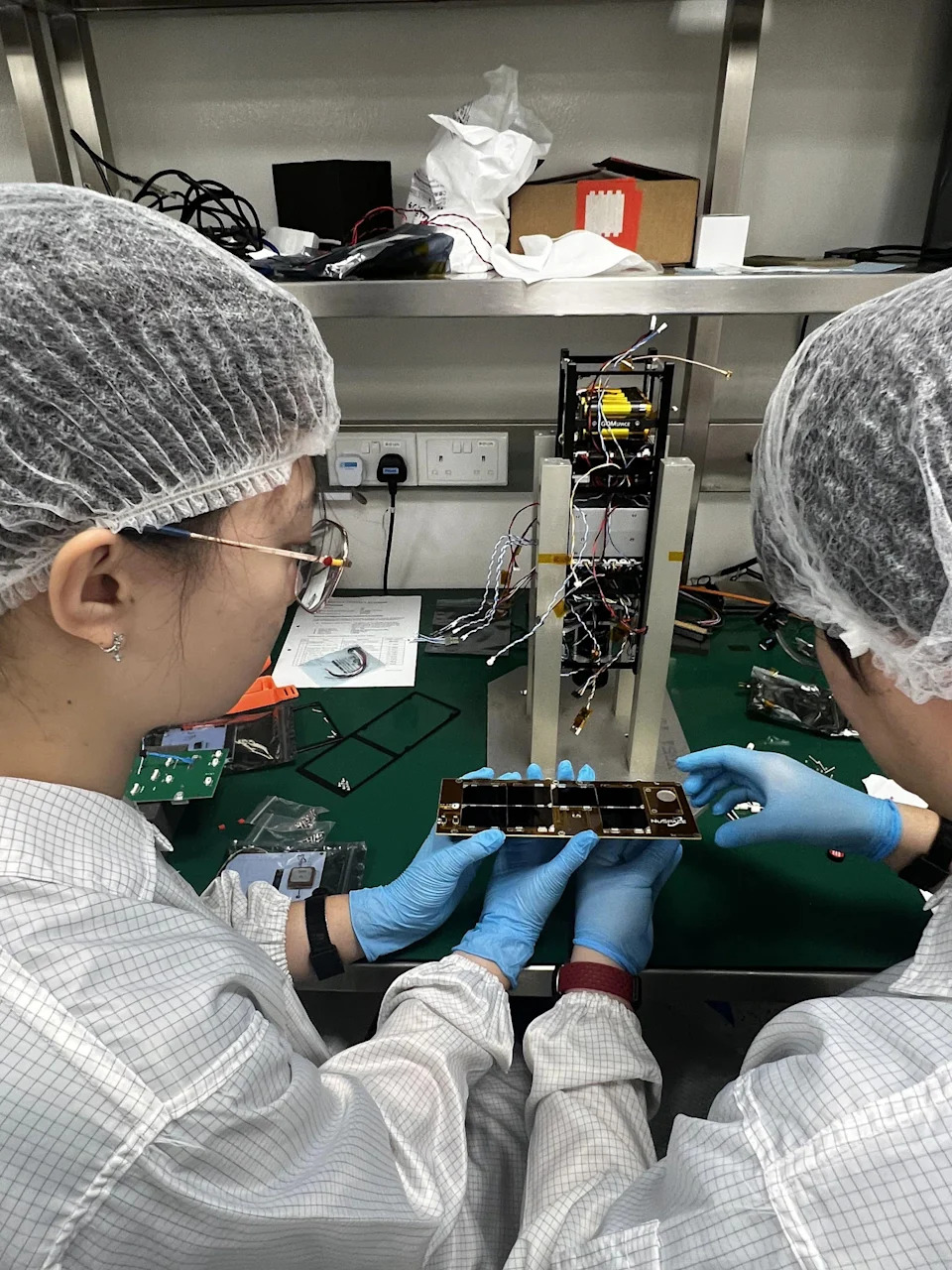
Students from pre-tertiary institutions get hands-on training on how to build a nanosatellite, as part of Space Faculty’s series of space-related workshops.
(PHOTO: COURTESY OF SPACE FACULTY)
She cited Space Faculty’s partnership with NTU and NuSpace to run satellite-building workshops, where participants learn how to build nanosatellites.
The first one, dubbed MANGOSAT, is built by 22 pre-university students and will be completed by end-March.
To be launched into space in 2028, the nanosatellite collects advanced images for environmental and agricultural purposes.
“We provide training and knowledge on how to build a satellite. It is also a way to introduce them to the space sector.
“They go in with their eyes open, and won’t have some fantasy about space,” Ms Tan said.
“It’s a very multidisciplinary field. After all, satellites are robots that also need to abide by the laws of physics.”
Mr Lim from the NTU Satellite Research Centre said that every year, about 20 of the university’s postgraduates get involved in space-related research, including areas such as developing small nanosatellite missions and creating flood maps to aid rescue efforts.
Next up: Space traffic management to prevent collisions. Students might be researching the use of AI to optimise satellite manoeuvres.
The last major space collision in 2009 involved the defunct Russian military satellite Kosmos 2251 and communications satellite Iridium 33. The impact released over 1,800 fragments of debris, each measuring at least 10cm in diameter.
“But there have been more warnings. We need to get ready with these studies as space needs long-term preparation,” said Mr Lim.
NSAS will have its hands full.
How satellites are launched into space
Over the past two decades, Singapore has launched more than 30 satellites. In July 2023, seven satellites made in Singapore were launched from Satish Dhawan Space Centre in India, including the DS-SAR Earth observation satellite developed by ST Engineering and Singapore’s Defence Science and Technology Agency.
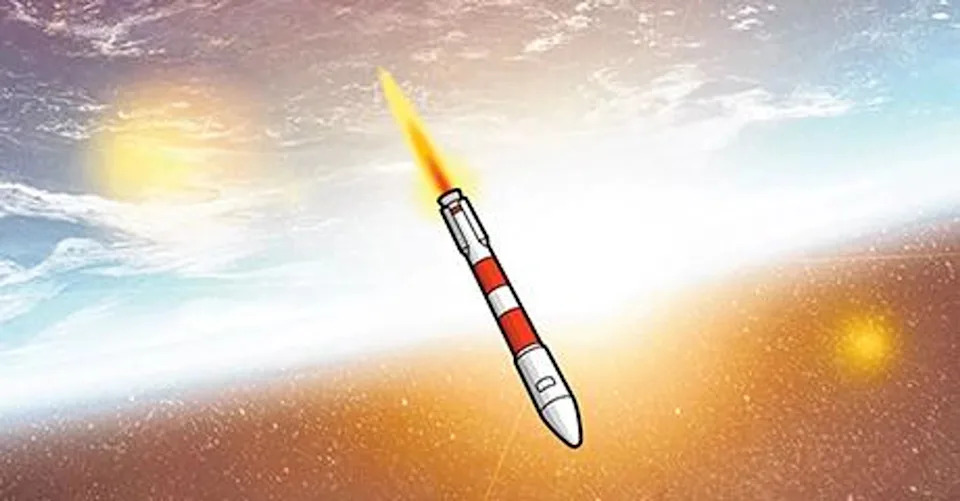
1. The rocket lifts off by burning fuel to generate thrust that overcomes Earth’s gravity, eventually reaching orbital speeds of around 7.5kms, or 27,000kmh. In comparison, that is roughly 30 times faster than a commercial airplane.
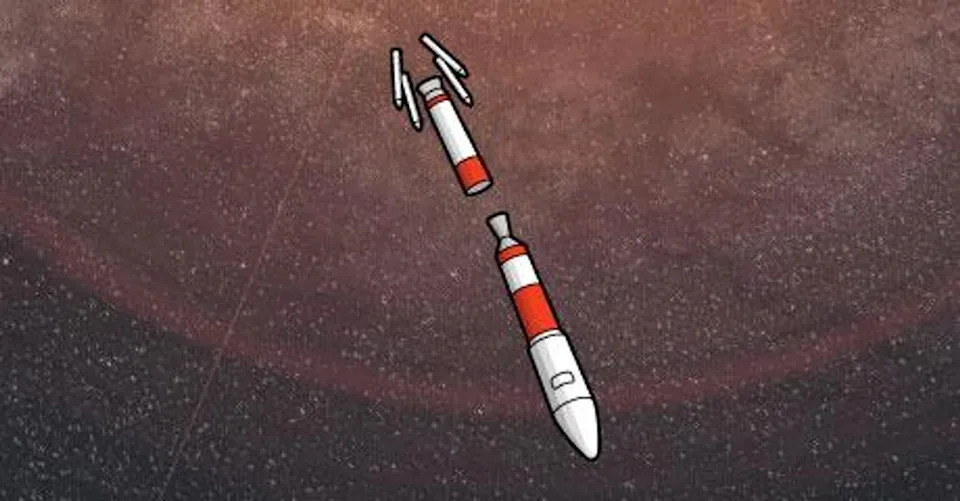
2. After hitting a height of around 50km within two minutes, an empty fuel capsule at the bottom separates from the rocket to shed weight.
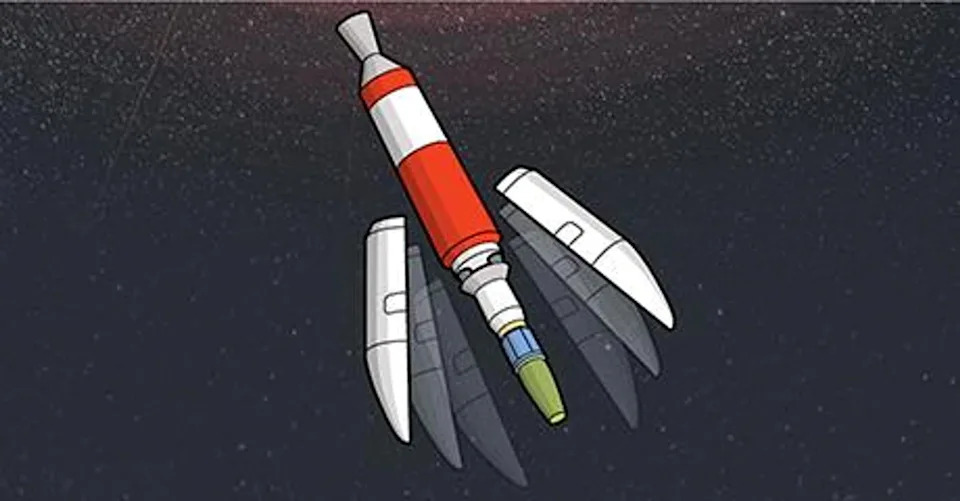
3. At 113km from the ground, the satellite that sits in the payload system at the pointed end of the rocket no longer requires protection from air pressure or heat. Hence, the protective cone separates and falls off, further reducing the weight of the rocket.
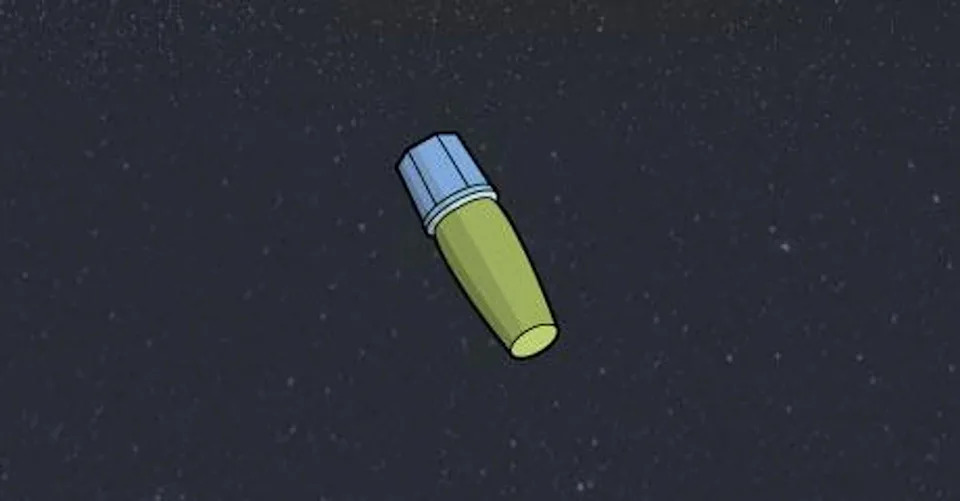
4. After 21 minutes, the rocket is 530km away from the Earth’s surface. The satellite is pushed out into orbit via a spring mechanism.
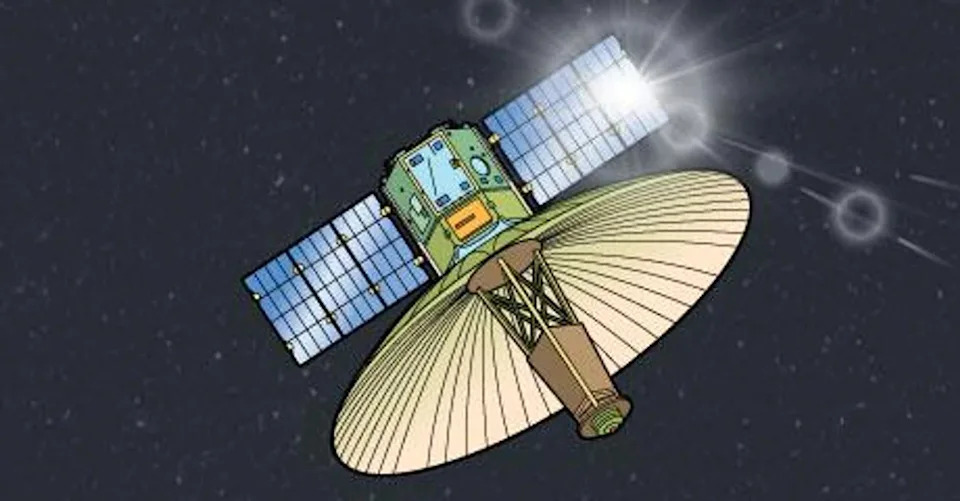
The DS-SAR is a 352kg satellite that provides imagery of the Earth for various Singapore government agencies – by day or by night, and in all weather conditions.
Developed in Singapore: Companies that produce satellite componentsAliena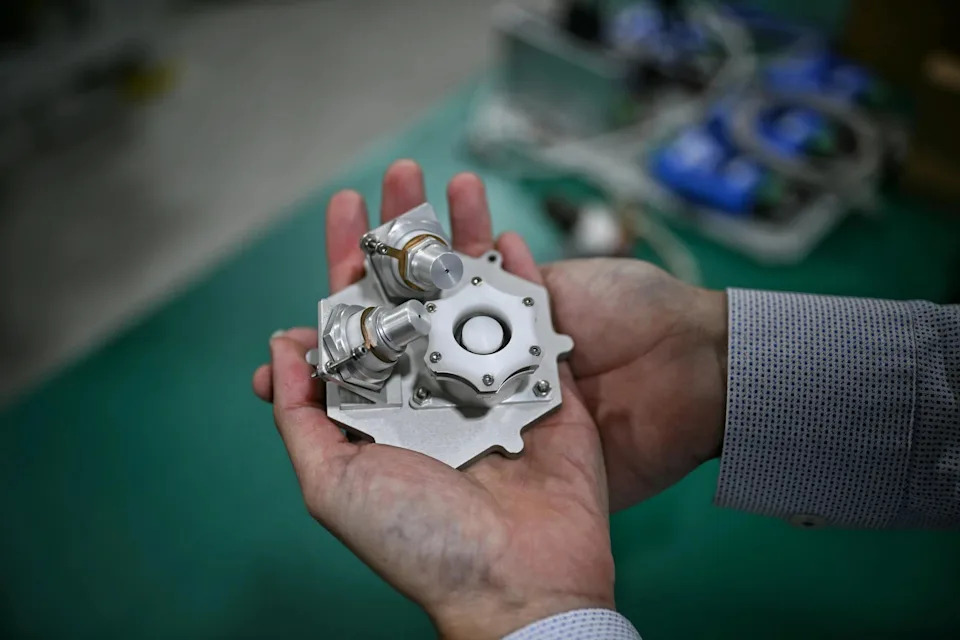
A thruster designed and built by Aliena, which was founded in 2018 by two students who met while working on their PhDs in NTU.
Thrusters are used by satellites to manoeuvre in space to keep them in orbit and avoid collisions.
Zero-Error Systems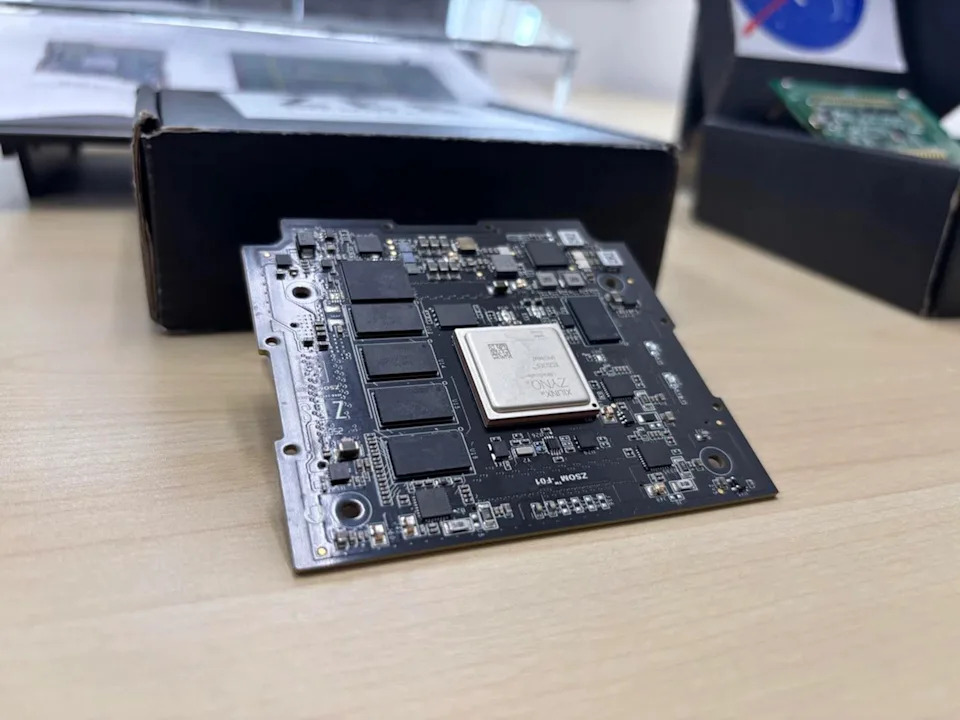
Radiation-hardened chips developed by Zero-Error Systems help to protect satellites from radiation exposure in space, which can corrupt data and cause electronics to fail.
Addvalue Technologies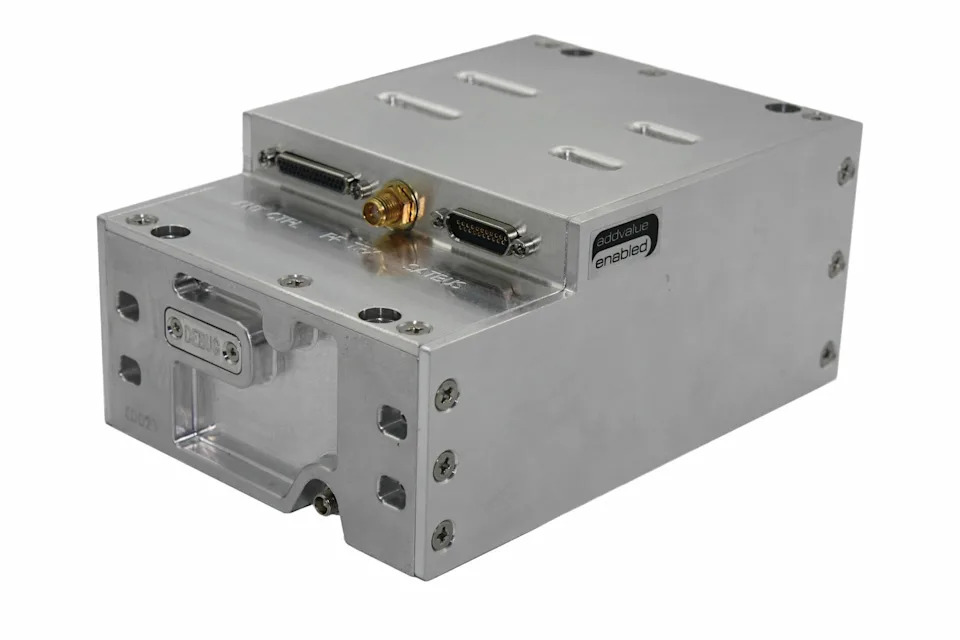
The Inter-satellite Data Relay System, which is installed in more than 30 satellites currently in space, enables satelites to beam information back to Earth at all times of the day. AddValue Technologies An orbit is the curved path a satellite follows around the Earth.
Currently, most commercial satellites are able to connect with Earth only when they y directly over their ground station, which typically happens once every 90 minutes when they complete an orbit.
Orbit levels in spaceGeostationary orbit
Sits 35,786km above the Earth’s equator.
Satellites here match the rotation of Earth, which allows them to always remain above the same point on the ground. These satellites could be used for gathering weather data, broadcasting TV signals, and telecommunications.
Medium Earth orbit
The region approximately 2,000km to 35,500km above Earth.
Satellites stationed here are used for navigation purposes and communication services.
Low Earth orbit
The region between 160km and 2,000km above Earth.
Home to the International Space Station (about 400km above Earth).
More than 12,000 satellites orbit Earth, with most found within this region.
More than 100 million pieces of debris from launches, collisions and wear-and-tear are also oating around in this zone, which has led to growing concerns about space safety and overcrowding.
Commercial planes usually fly 8km to 13km above sea level, and recreational hot air balloon rides go up to 0.9km in altitude.
Source: The Straits Times © SPH Media Limited. Permission required for reproduction