
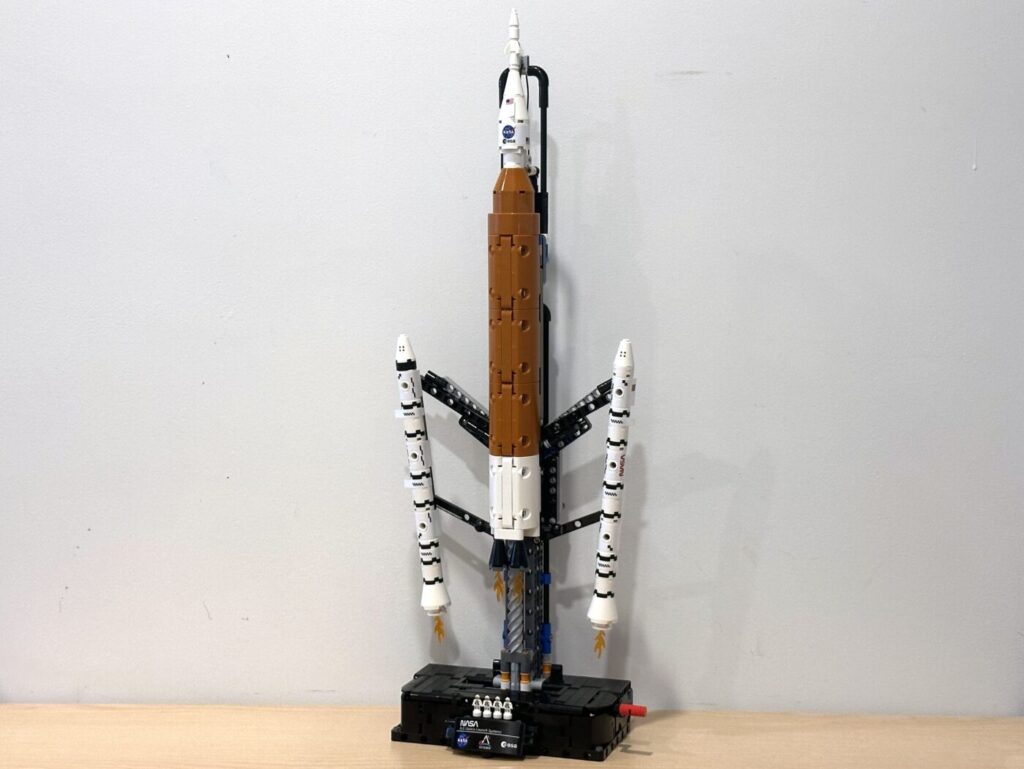
March 20, 2026
|

0

If there’s one thing the LEGO Technic theme draws flak for, it’s for constantly releasing an endless stream of sports cars and trucks that the fanbase laments as repetitive.
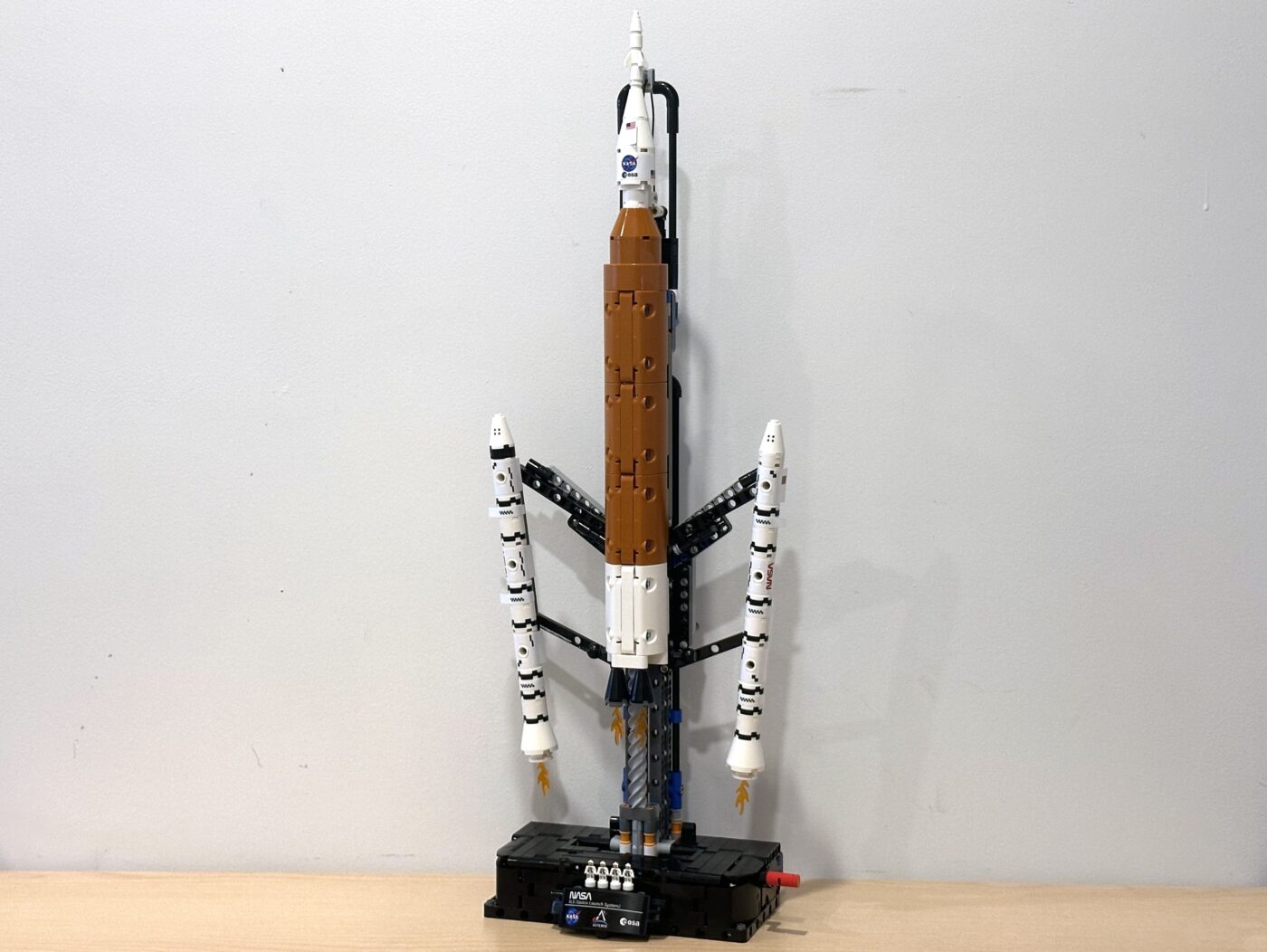
However, sets in recent years have started to break the mold, including a very unique model that is 42221 NASA Artemis Space Launch Rocket! As part of the Technic “Space” subtheme, it’s an almost educational-like set that showcases how NASA rockets launch, and the different stages it goes through to achieve orbital velocity.
Sporting a very different design with very different play features, this set is sure to be a standout – so let’s take a closer look and see if it lives up to its promise!
42221 NASA Artemis Space Launch Rocket Set Details
42221 NASA Artemis Space Launch Rocket Set Details
Set Name
NASA Artemis Space Launch Rocket
Retail Price
US$59.99 / AU$99.99 / €59.99 / £54.99 / CAD$79.99
Unboxing

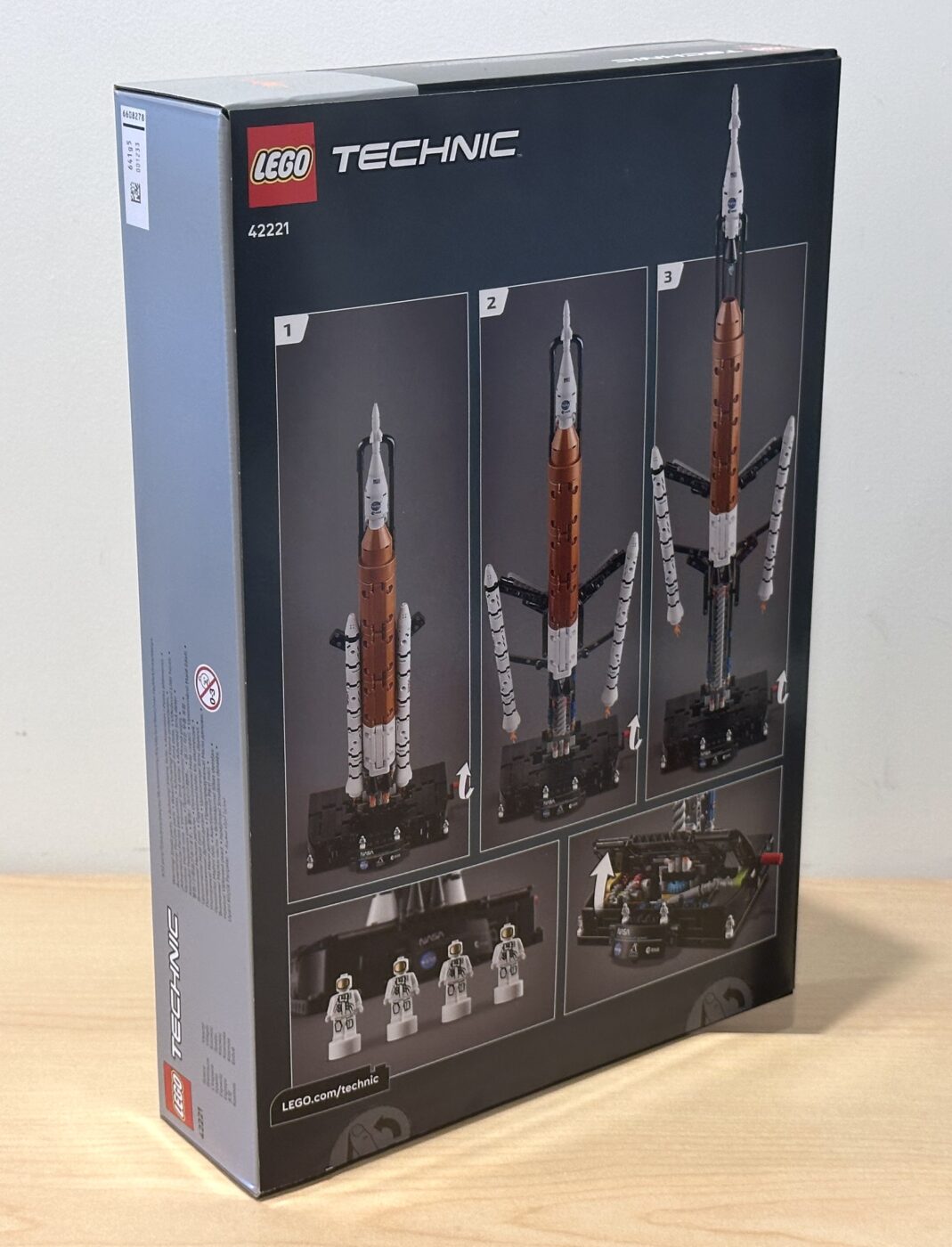
Unsurprisingly, the box has a vertical configuration to showcase the Artemis Rocket. The back shows off some of the features, including the main rocket launch and the various stages of how it works.

Inside are paper bags numbered from 1 to 7…
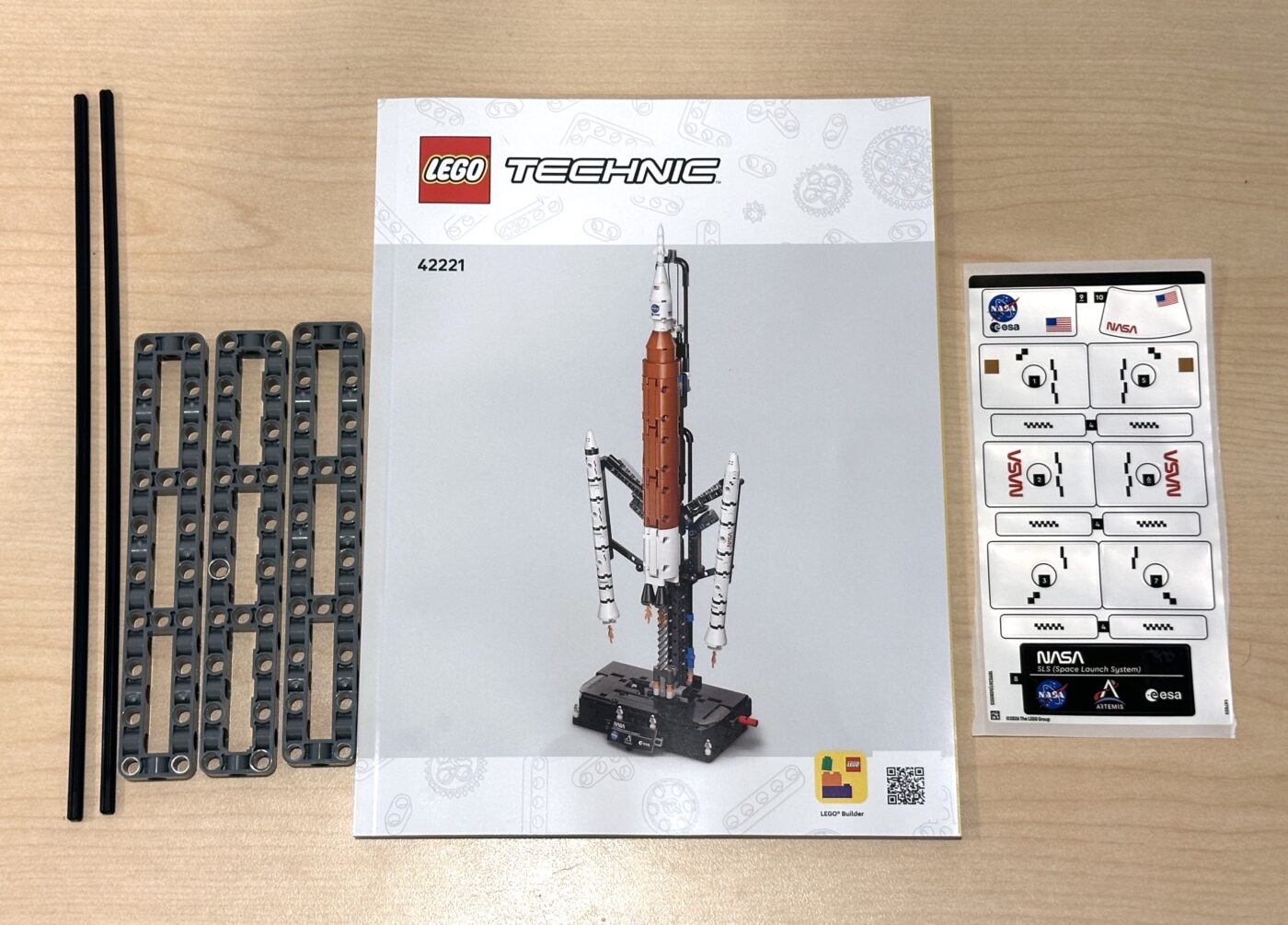
…plus a few Technic elements loose in the box, an instruction manual, and a sticker sheet.
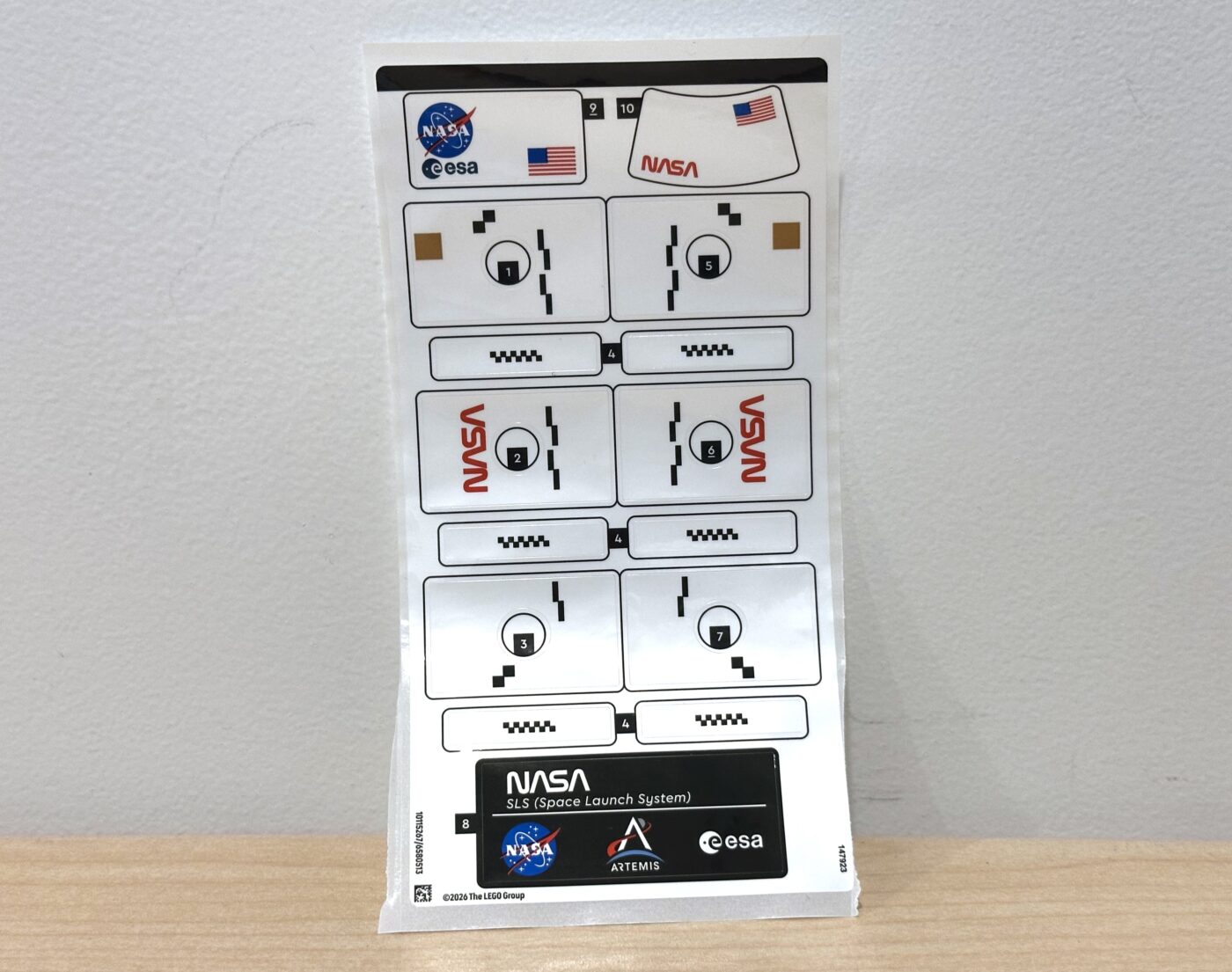
There are a fair number of stickers, most of which are applied to curved surfaces for the rocket. They were generally straightfoward to apply, but are problematic in other areas – more on this later.
Build Process
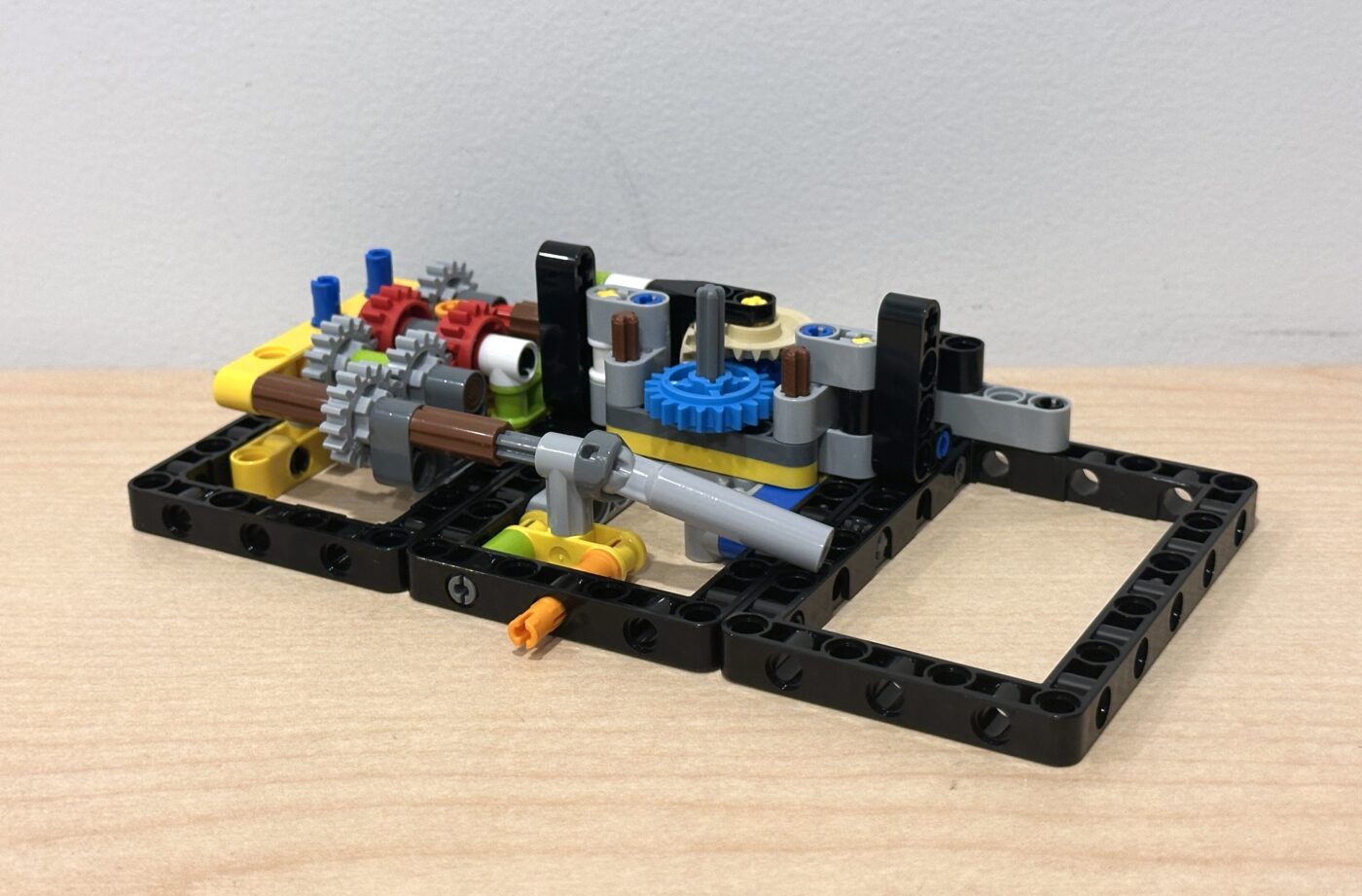
Bag 1 starts with the base, assembling a variety of gears to build the underlying mechanism.
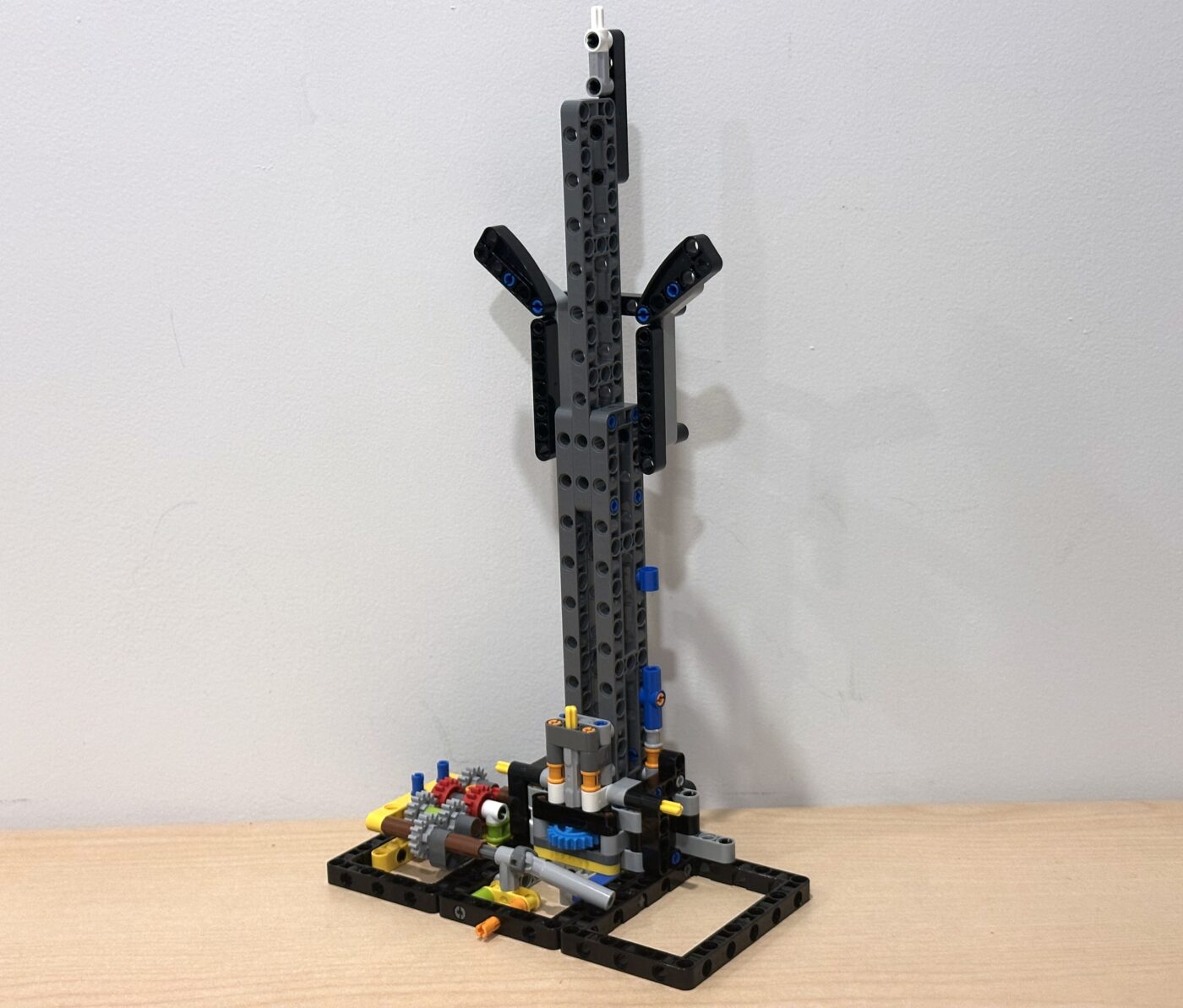
Bag 2 immediately starts adding vertical height upwards, with the help of the three grey Technic beams loose in the box.
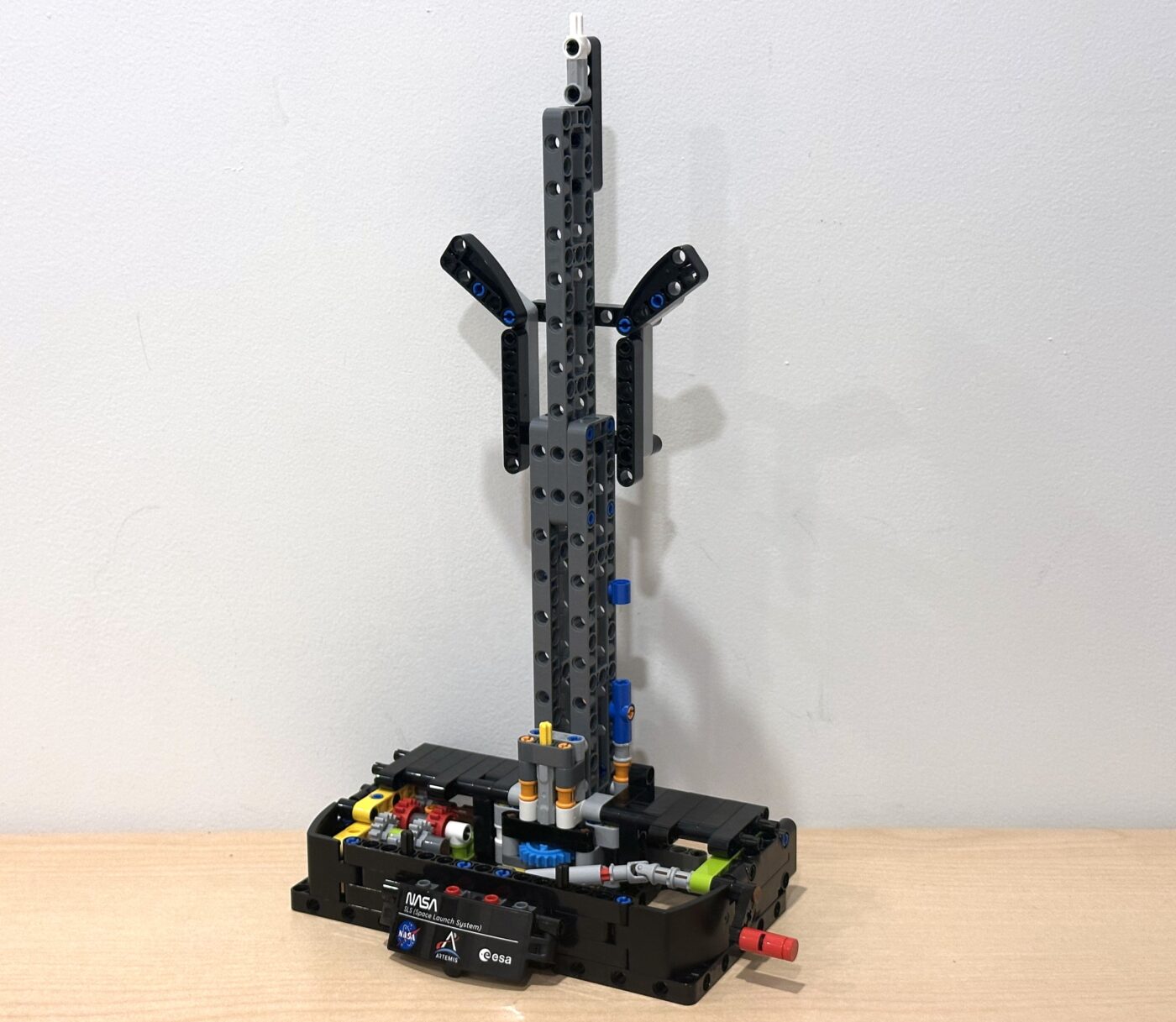
Bag 3 adds more paneling to around the base, including the bright red crank.
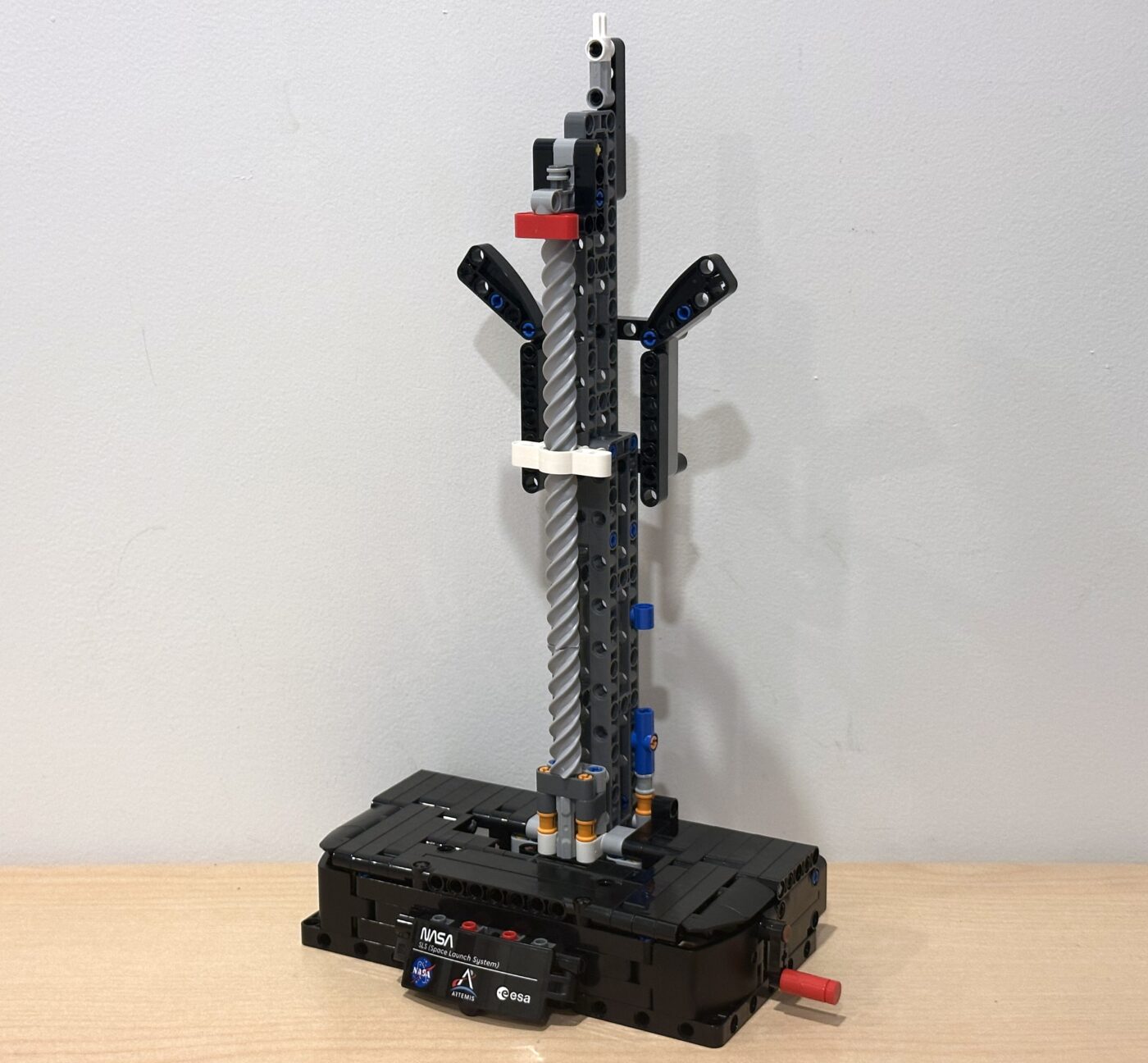
Bag 4 finishes up the base and adds the central worm gear stack.
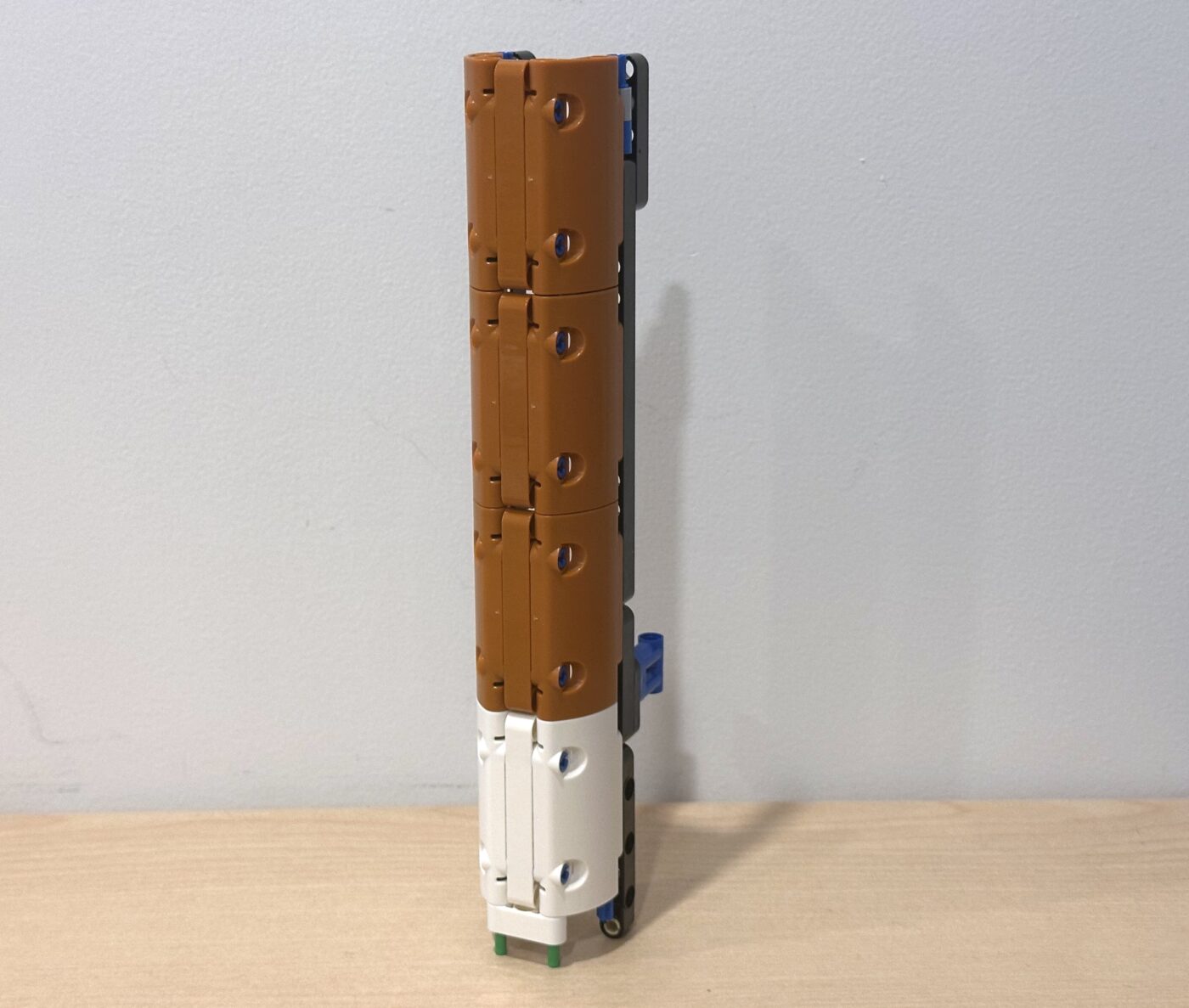
Bag 5 shifts gears and starts building the rocket itself as a separate sub-assembly.
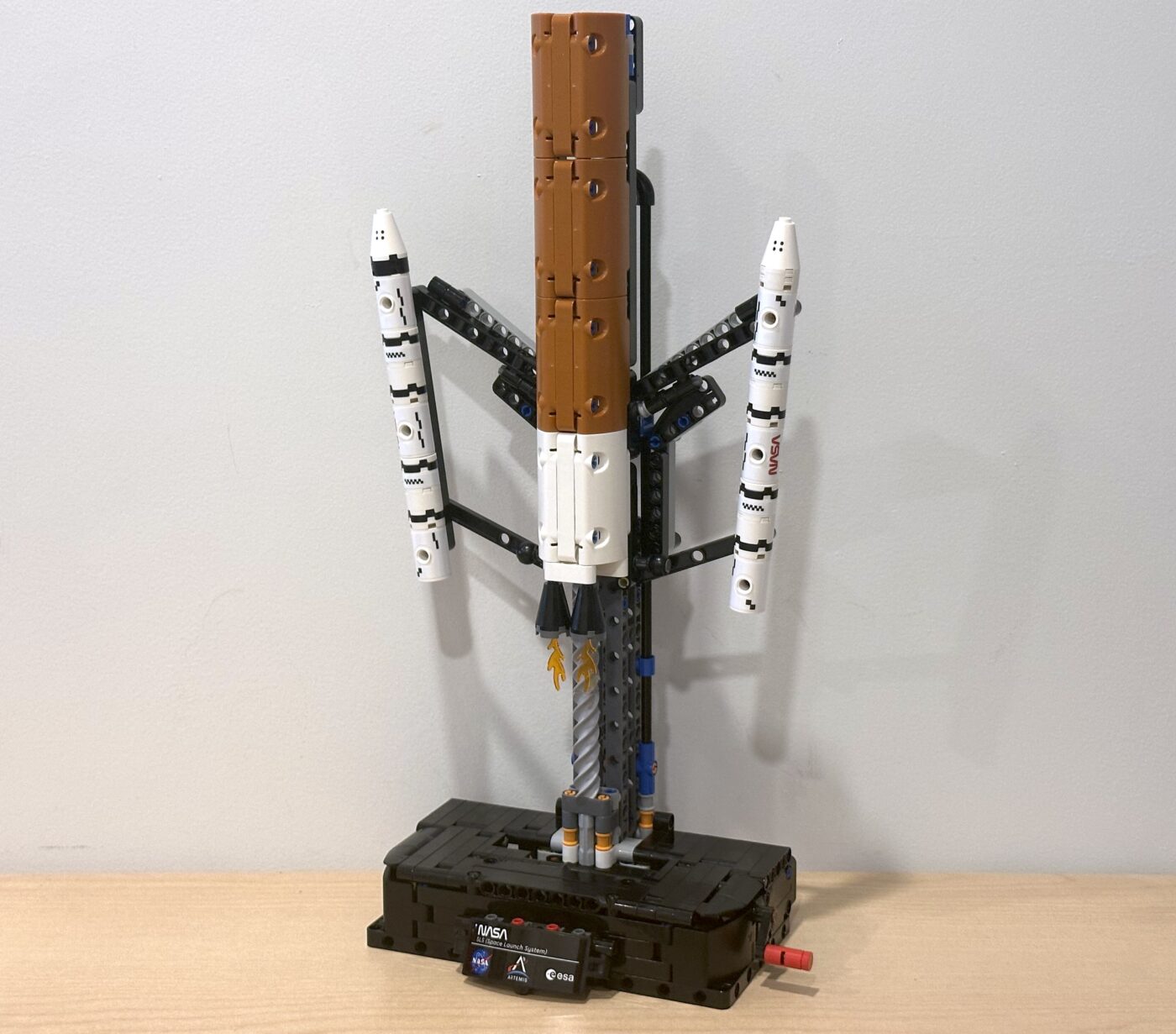
Bag 6 attaches it to the main build and adds the side boosters.
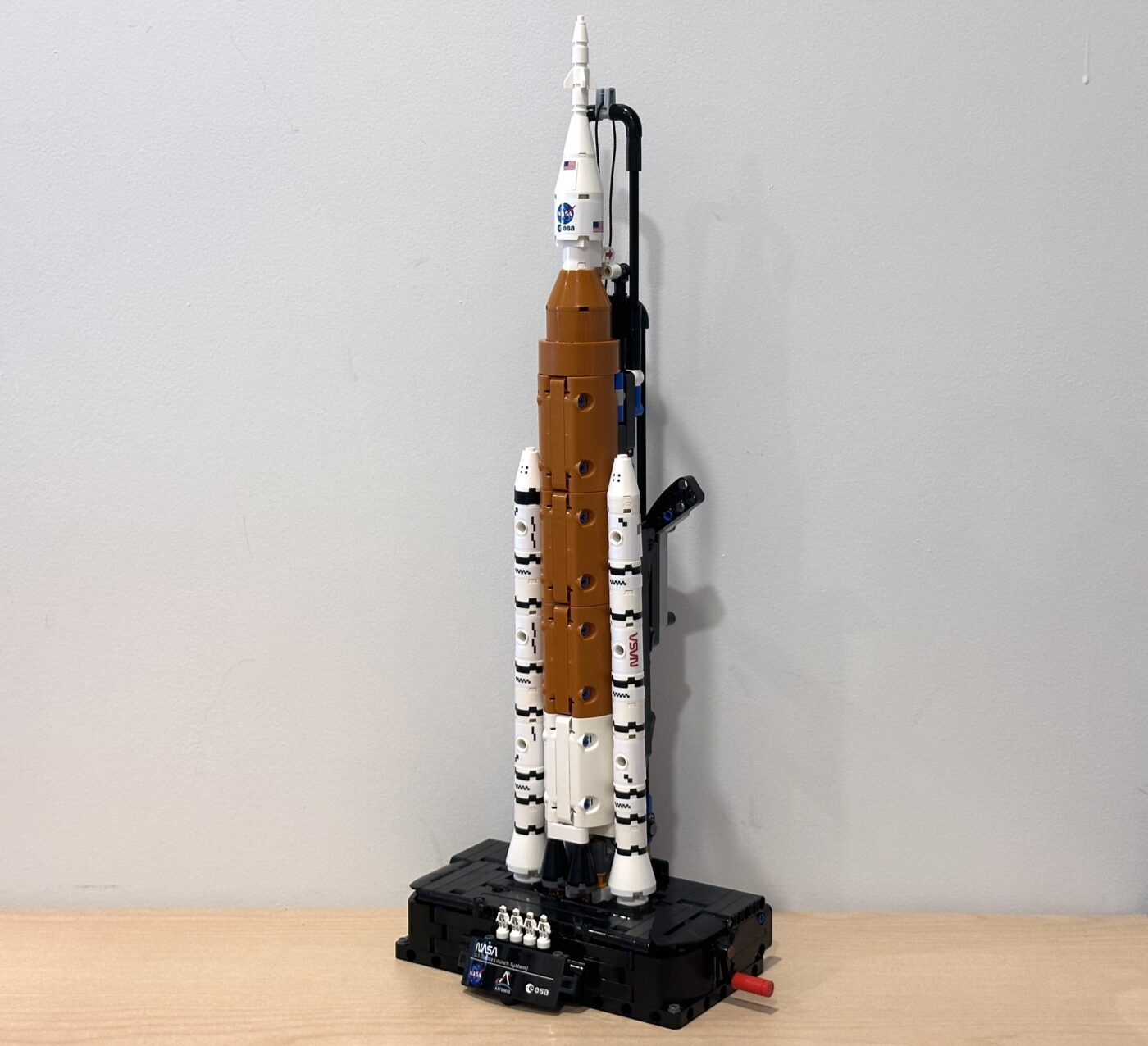
Finallly, bag 7 adds the top part of the mechanism and the finishing touches. Overall, it wasn’t a particularly difficult build process, but was definitely unusual and a breath of fresh air to build something so different.
Completed Model
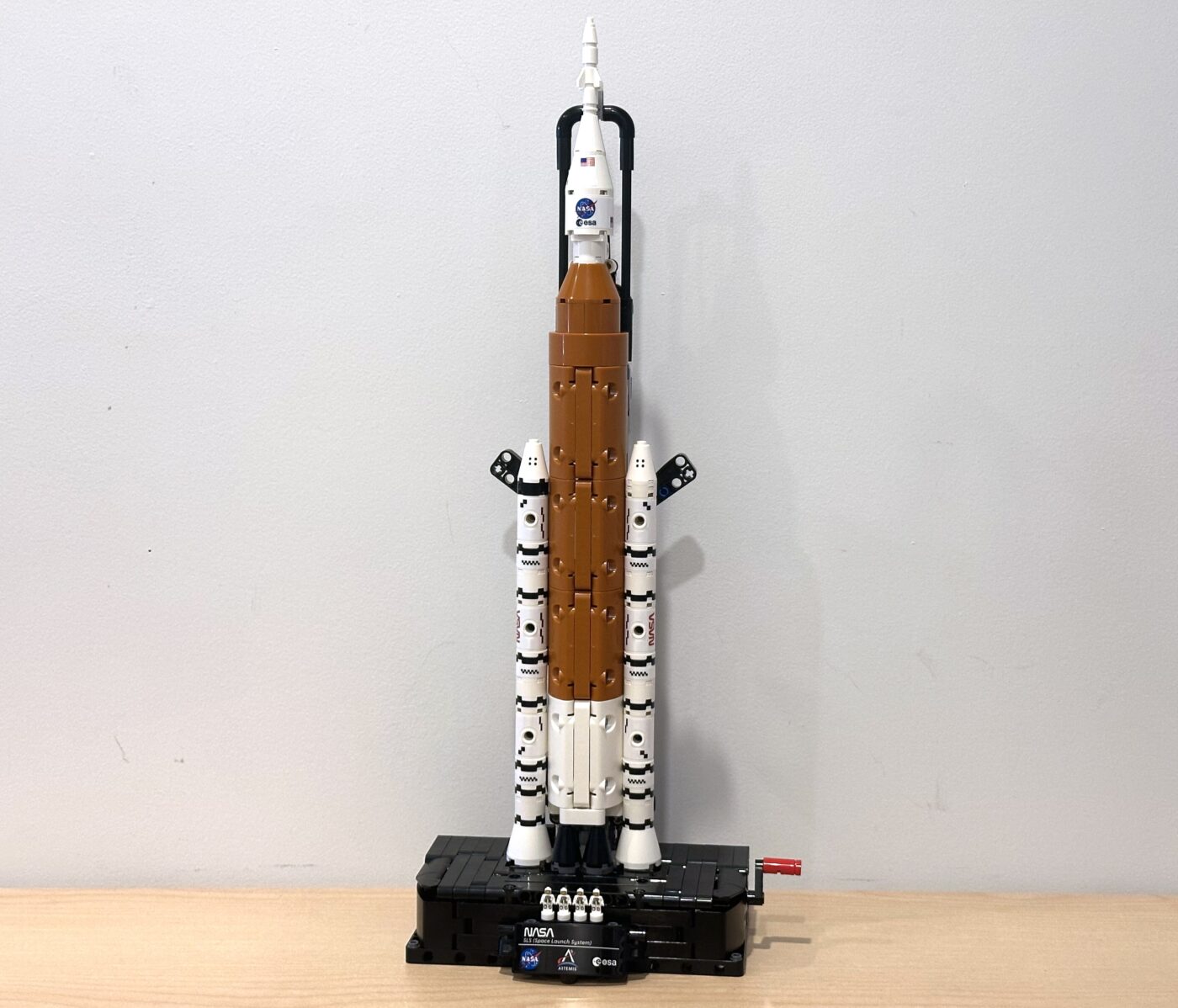
The completed model measures around 46cm (18″) tall in its docked form, so has quite a commanding amount of height. The colour scheme looks pretty cohesive from the front, with most of the Technic mechanism tucked away or hidden behind black paneling.
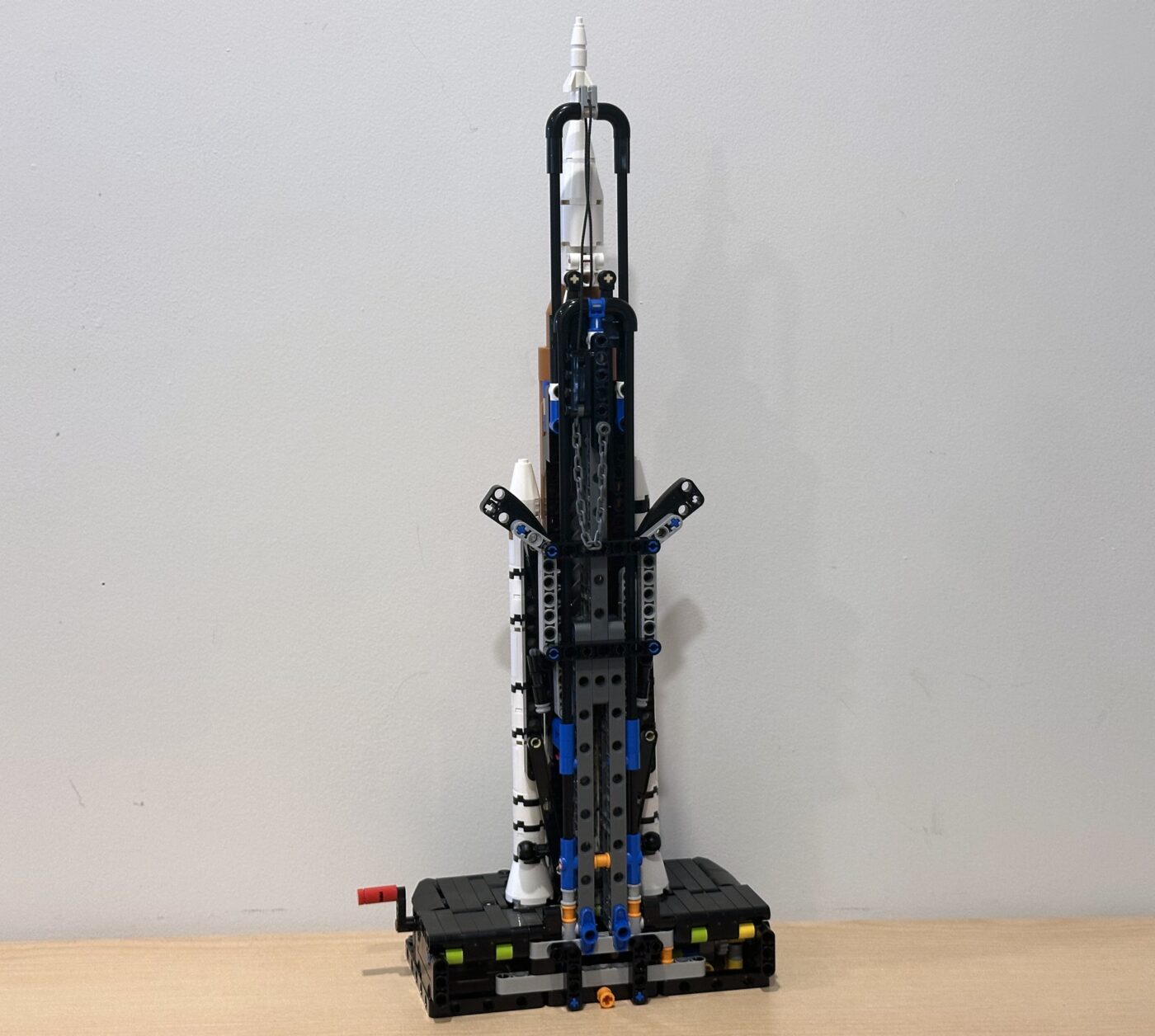
The back is significantly messier, but I think this is forgivable on a set that really focuses on one central mechanism and not aesthetics.
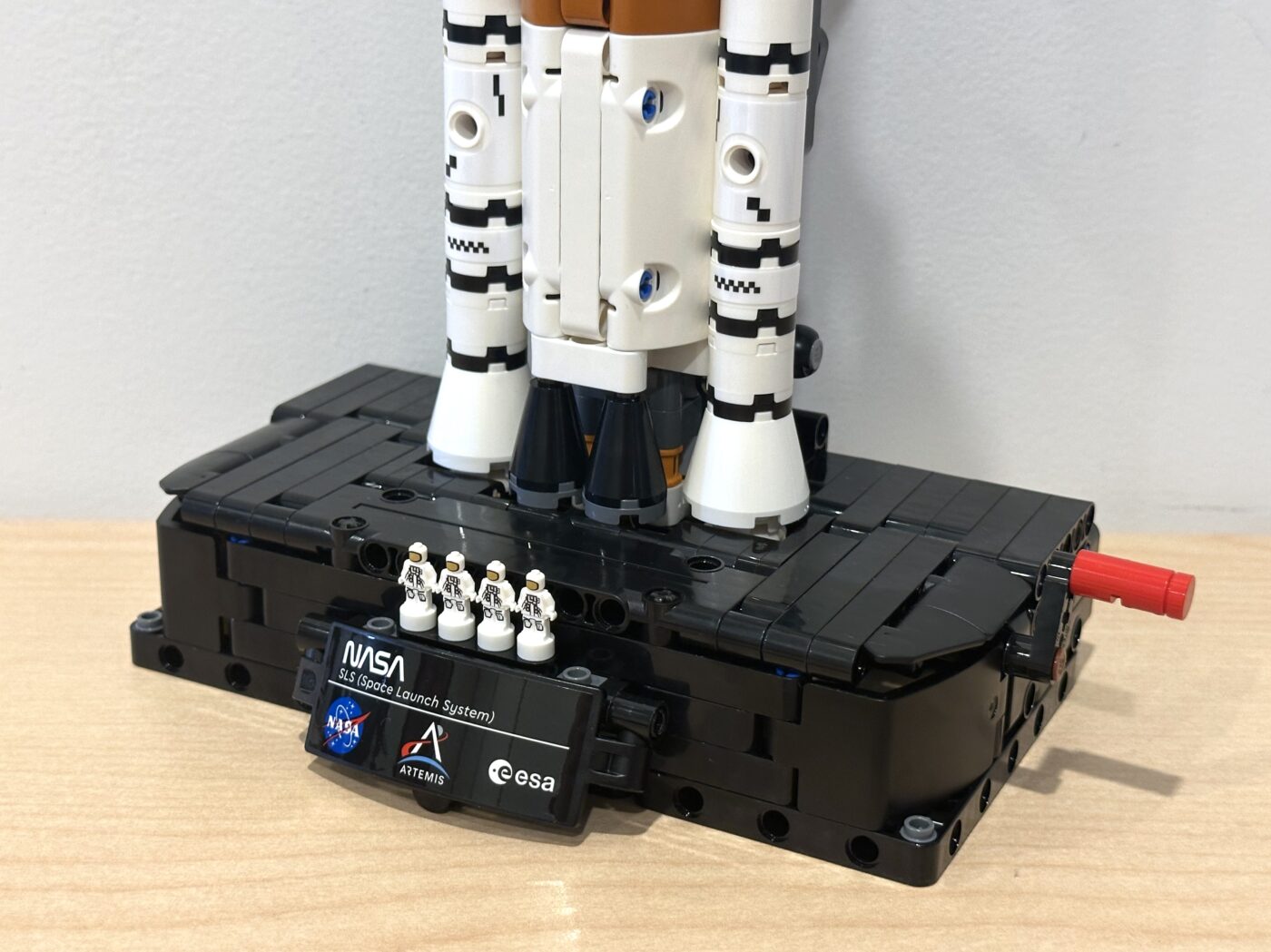
Before we get into it, let’s look at the base plate, which hides a lot of the mechanism itself. It’s nicely finished with curved black paneling all around.
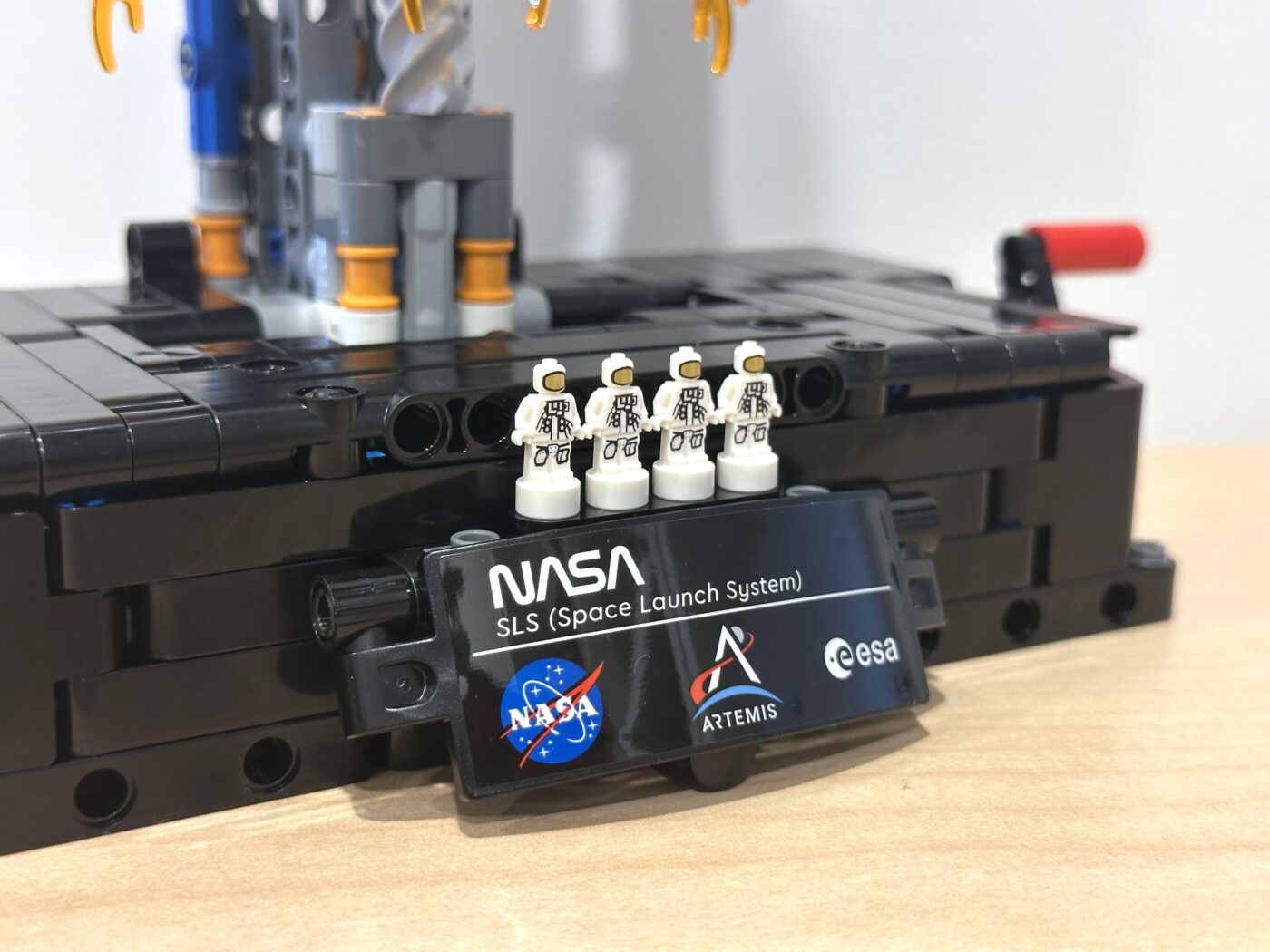
The stickered plaque looks good, and is embellished with four stunning printed microfigures wearing space suits. A fifth spare is included in the set too.
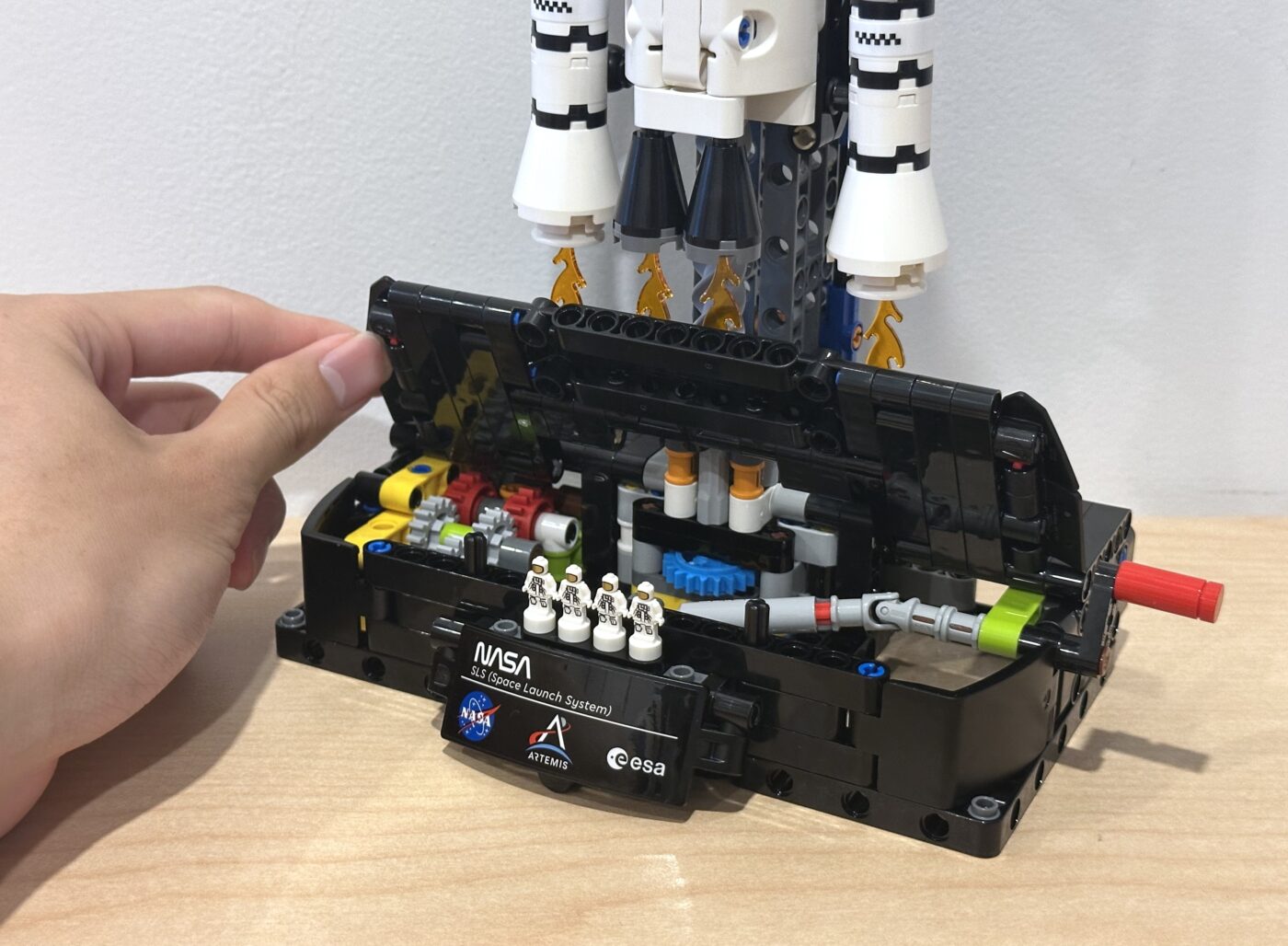
The front section of this base can actually be hinged open if you would prefer to get a look at the inner mechanisms, which is a nice inclusion.
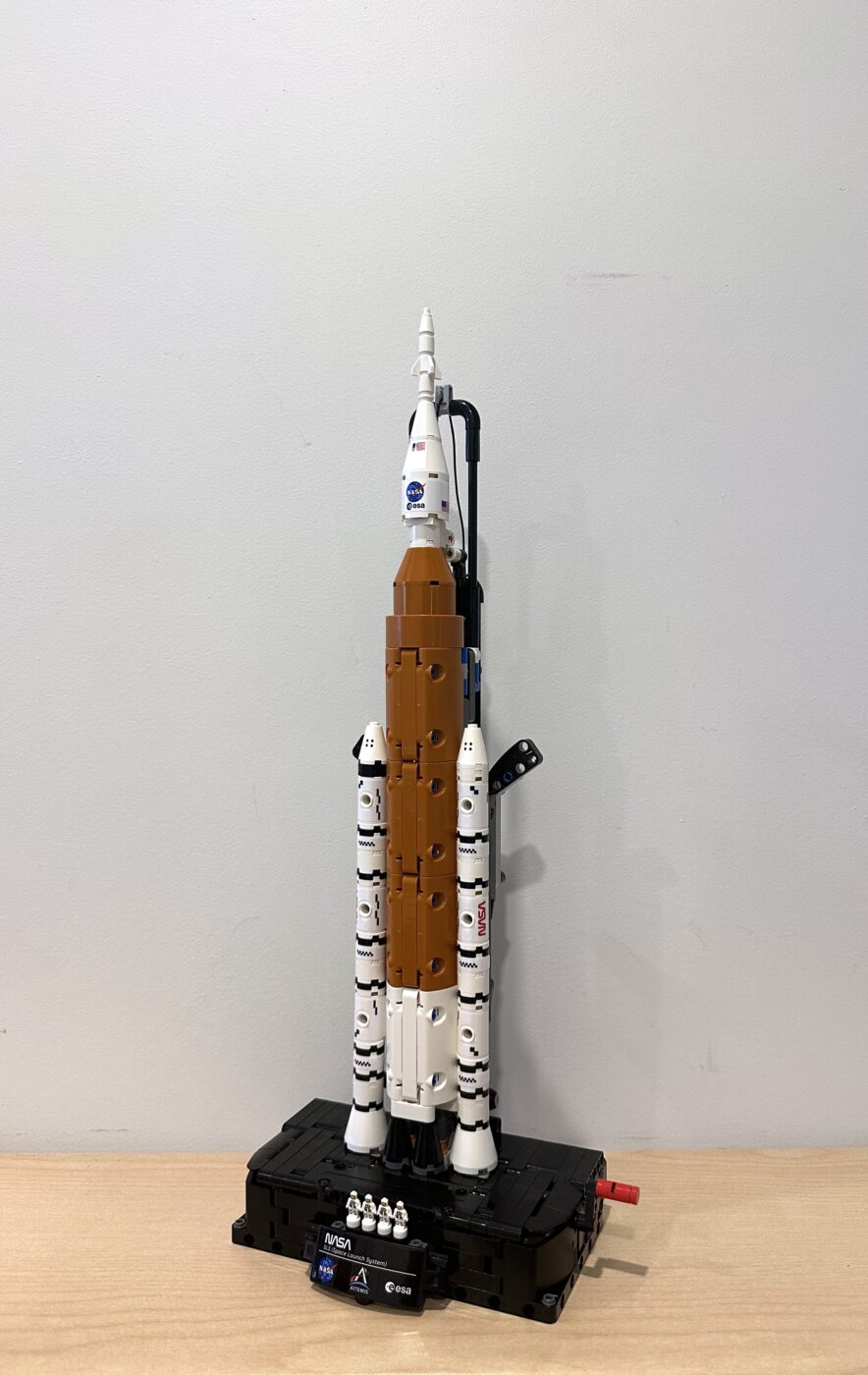
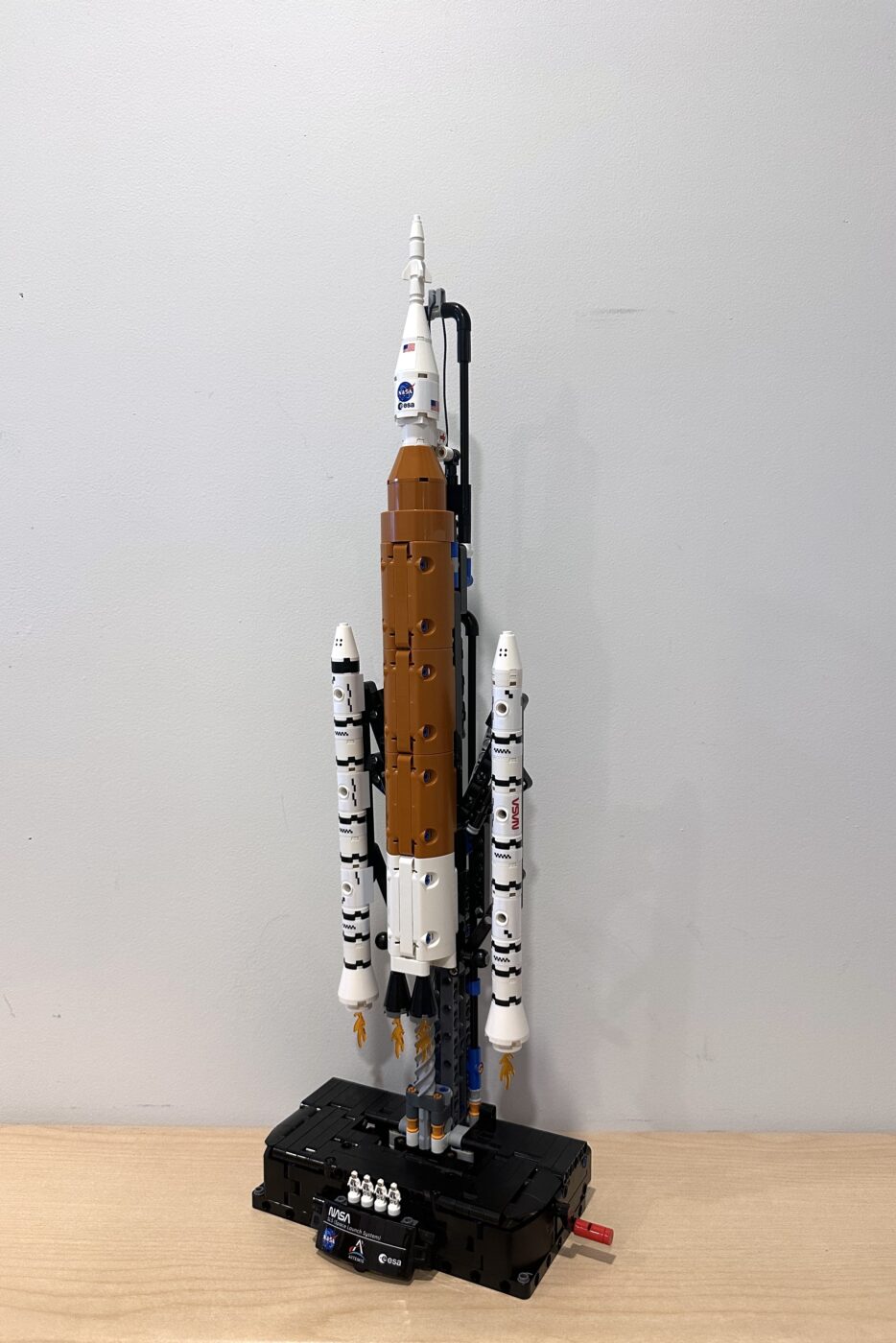
Of course, this set is really about the mechanism, so let’s look at how that works. Turning the conspicuous red crank on the side will start the launch process in several stages – the first one lifts the entire model off the base, revealing some orange flames…
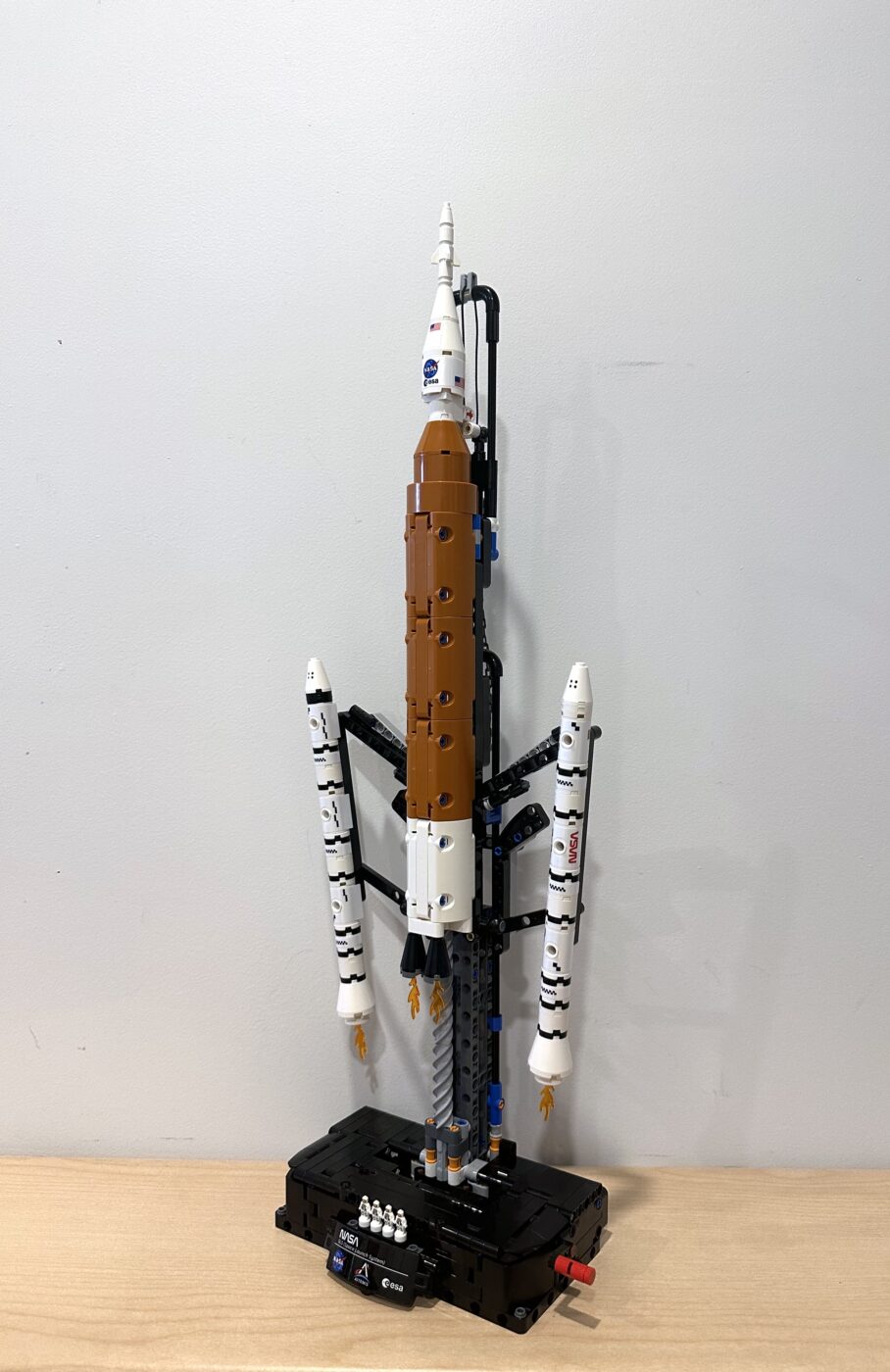
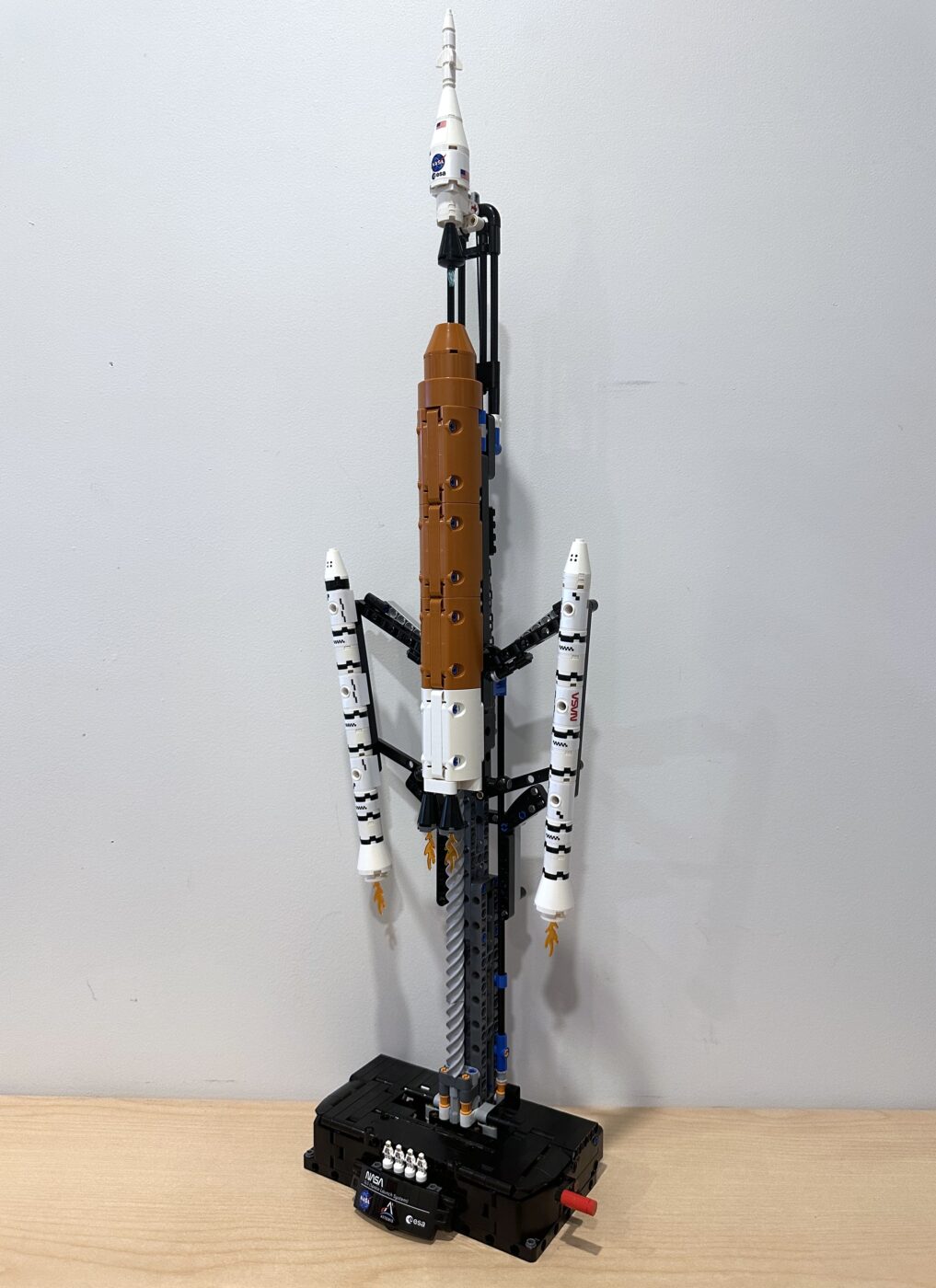
As the model climbs higher, the side boosters extend outwards/away on black Technic liftarms. Finally, as the model approaches the top, the Orion spacecraft at the very top separates away from the main rocket body, with a small trans-blue flame propelling it underneath.
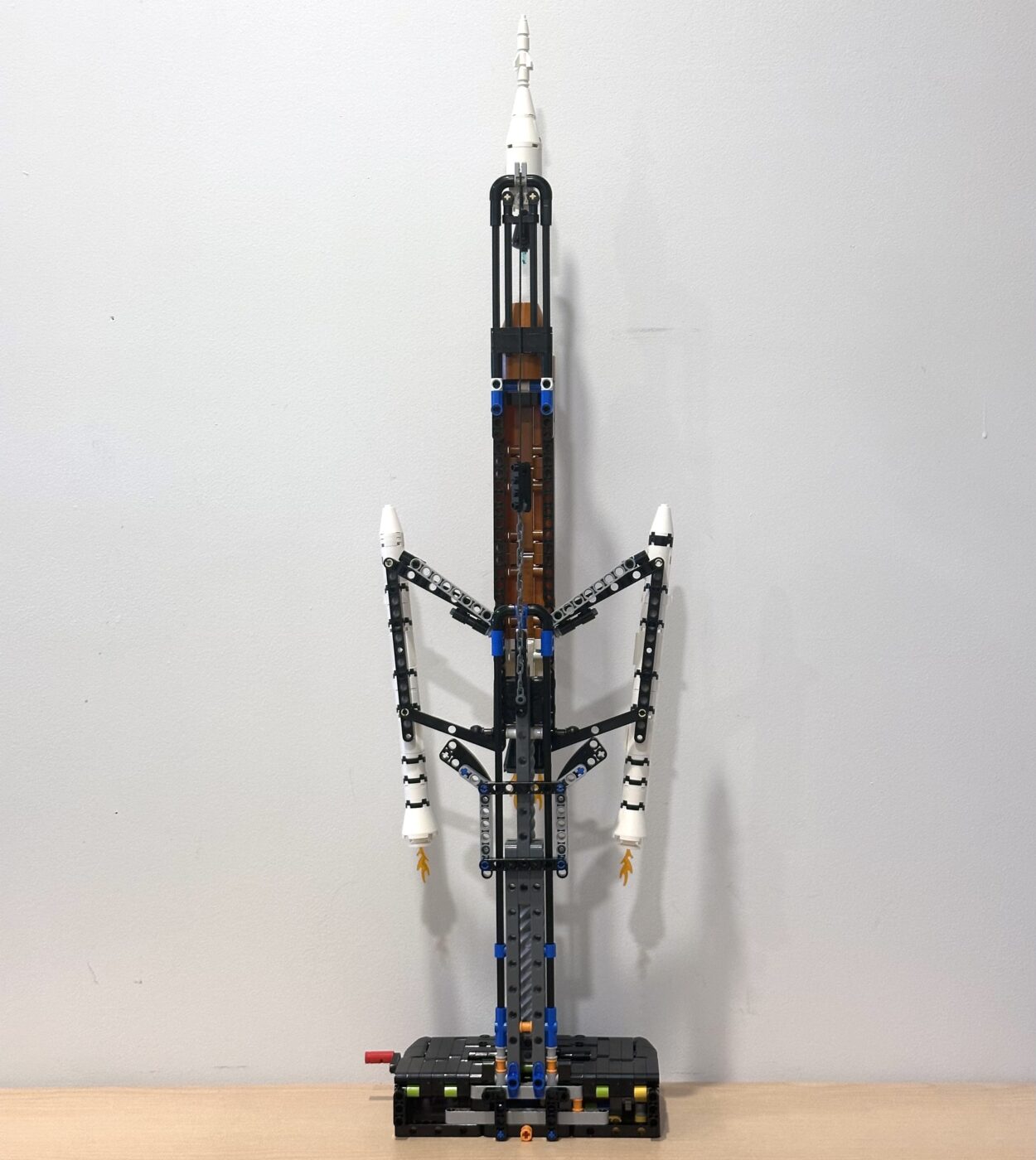
Here’s a look at the back when the model is fully deployed, which provides a slightly better look at how the mechanism works. The central worm gear stack moves the entire model outwards, with the angled black Technic beams creating a “track” of sorts for the side boosters to extend outwards. Finally, the chain and string at the top ensures the Orion spacecraft at the tip does not separate from the rocket’s body until the very top, which is ingenious engineering.
Normally it’s a little bit risky to have an entire set built around one specific play feature, but this launching feature is super fun and it’s really satisfying to turn the crank both ways to watch it unfold and fold back. With the model fully launched, it measures around 71cm (28″) tall.
It’s not all sunshine and rainbows though – I encountered a couple of frustrating problems on my copy of the set.
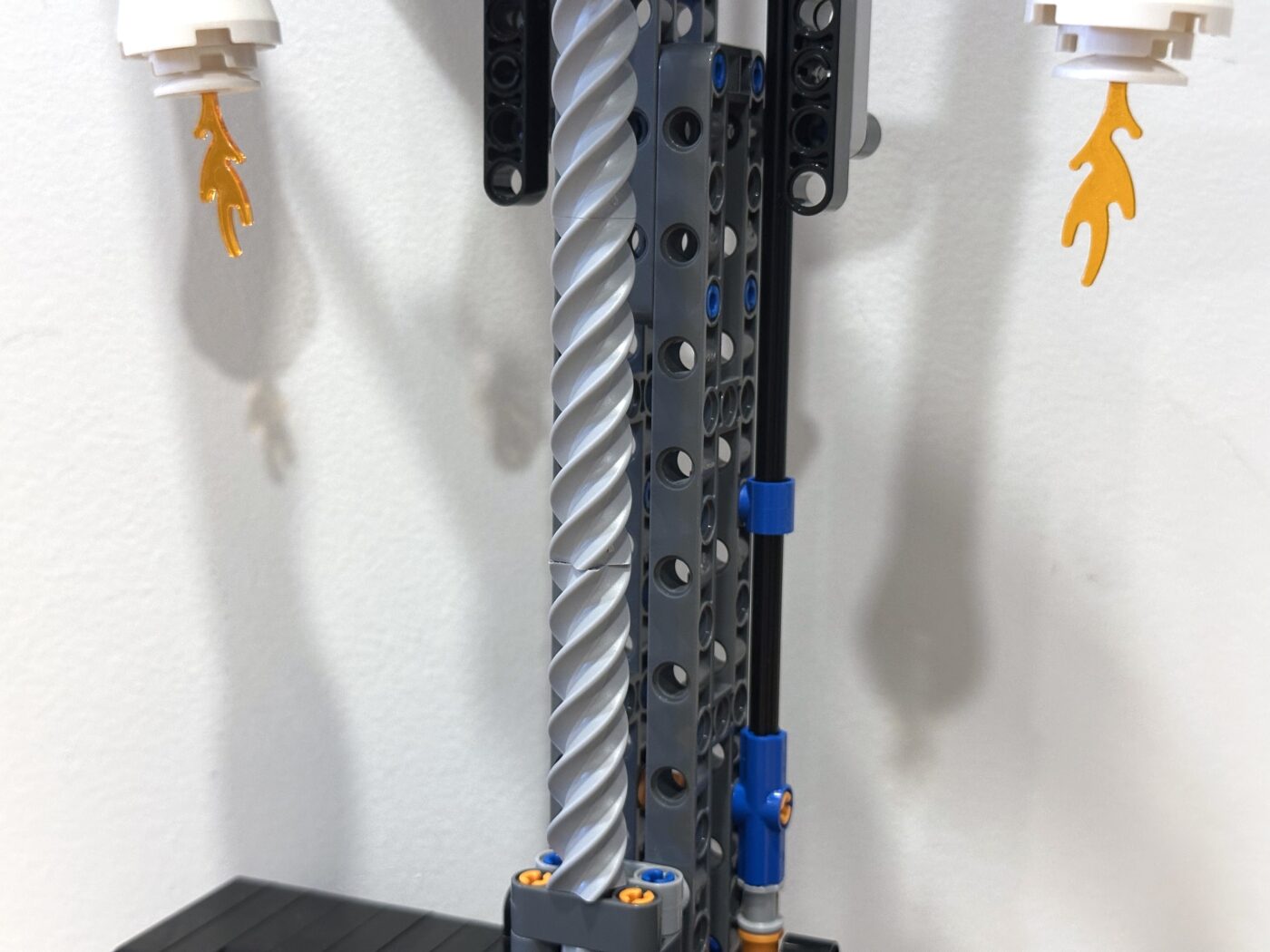
The first one is that one of the worm gear pieces was moulded in a misaligned fashion, which means the launch mechanism doesn’t quite work smoothly. Hopefully this is a one-off error limited to my copy of the set, which means the version you get should probably work fine, but it’s a disappointing quality error from LEGO that affects the main mechanism quite noticeably.
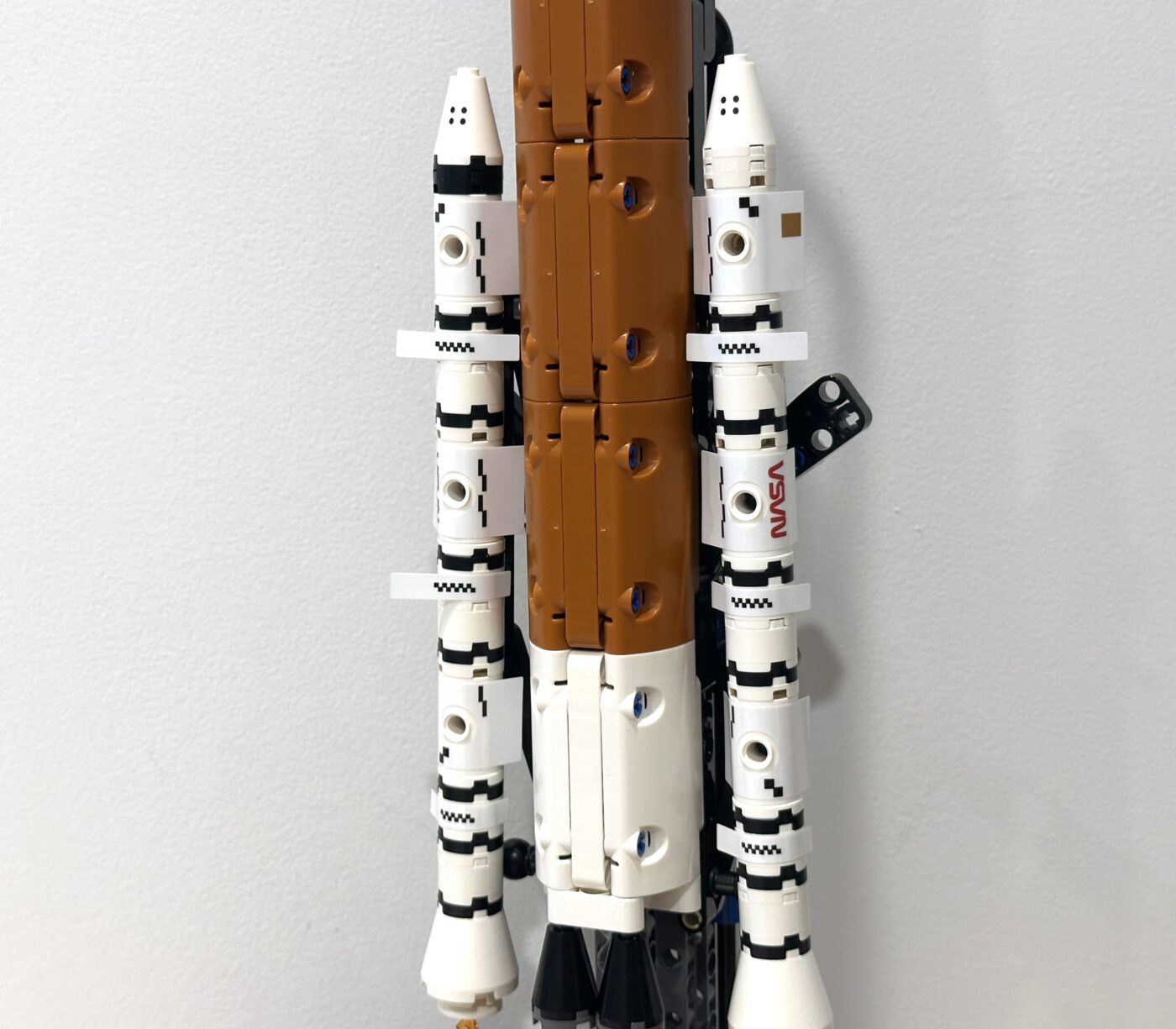
The second one, however, is shocking: most of the stickers in the set are attached to curved surfaces, but I was astonished to find them in this condition after leaving the set alone for a few hours! I’ve tried sticking them back multiple times, but they always end up detaching themselves over the course of a few hours. I’m not sure if this is related to humidity or climate, but it’s appalling quality that really negatively impacts the experience of interacting with the set.
Final Thoughts
Overall, I do applaud the designer of 42221 NASA Artemis Space Launch Rocket for trying something new, and I regard it as a success overall. The launch mechanism is really fun to play with and it also serves an educational purpose for younger LEGO fans who have an interest in space exploration. The retail price of US$59.99 isn’t particularly expensive either considering the piece count and size of the final model.
The main issue is the quality control issues. I have no idea whether these are specific to my copy of this set or will appear in others too, but it’s a bit worrying considering LEGO’s typical airtight QC standards. The stickers peeling is particularly frustrating since 90% of those in this set are attached to very curved surfaces. If you do own this set, let me know in the comments below if you’ve encountered similar issues! Hopefully this is a one-off, in which case this set is still a very impressive and well-done departure from the typical Technic sports car template.
Build
The model looks good for what it is – I can forgive the lack of aesthetics around the back. However, I will dock a point for the quality issues.
Playability
Although there’s only really one play feature, it’s executed well and is a ton of fun to play with.
Real Value
The price point seems pretty reasonable, which is always a positive.
Innovation
Definitely something quite unusual that we don’t see often from the Technic line, and I’d say this is definitely a success.
Keepability
This is a pretty good set that may have its keepability boosted by its unique set concept.
1
2
3
4
5

Thanks for reading! 42221 NASA Artemis Space Launch Rocket is available from LEGO.com or your local LEGO store. In Australia, it’s currently discounted modestly on Amazon Australia
To get the latest LEGO news and LEGO Reviews straight in your inbox, subscribe via email, or you can also follow on Google News, or socials on Facebook, Instagram (@jayong28), Bluesky or subscribe to the Jay’s Brick Blog Youtube channel.