
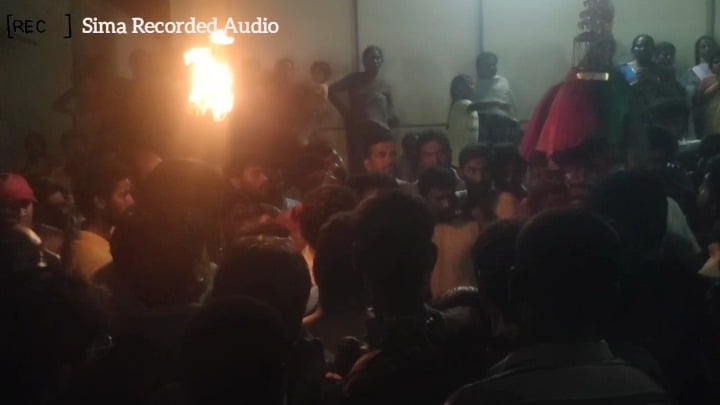
Every year, two days before Ugadi, a nearby village in konaseema, India transforms for their annual Goddess Jatara. I have never missed a single one. The energy starts shifting ten days early when the Garagalu (the sacred vessels that act as the physical manifestation of the Goddess) are brought out of the temple.
These traditions carry a silent authority. Once those Garagalu leave the temple, an ancient rule dictates that no one can leave the village boundaries until they return. While modern life has made this harder to follow strictly today, the spiritual commitment remains as strong as ever.
What makes this so powerful is how it weaves the entire community together. The ritual involves six specific castes working in total sync:
The Chakali own the Garagalu and carry them on their heads in a pure trance dance.
The Maadiga provide the thundering Dappulu percussion.
The Kapu perform the rituals.
The Brahmins treat the Goddess like a daughter (Aadapaduchu) of the village.
The Settibalija act as gatekeepers (Poturaju) carrying big fire wicks (kaagada).
The Mangallu offer the music.
If even one group is missing, the ritual fails. It’s like a "social technology" that keeps the village united. As sadhguru says, a Grama Devata isn't just a figure of worship, she is a live energy process consecrated for the protection of the community. I feel this most when the Dappulu music thunders and the Goddess enters the carrier to answer questions about the future.
The most intense part is the Sima (prophecy) at midnight. The Goddess speaks through the carrier to predict the rains, crop yields, and protection from evil. There’s a legend that a robber once stitched the mouth of the Goddess Nookalamma shut, so she stays silent while her sister, Peddintamma, speaks for both of them.
The day after the main Jatara is for the Mokku (vows). You’ll see people walking on fire, doing milk rituals (Palabhishekam), and preparing huge feasts. The carrier throws coins into the crowd – if you catch one, it’s a lucky charm for the year.
The festival ends with a tradition that always gives me chills. A final offering is left at the temple boundary at night. As we walk back to our houses, we are strictly forbidden from looking back. The elders say the Goddess comes to eat the offering at that exact moment, and it’s a sight no human is meant to witness.
by shankaranpillayi
1 Comment
So how do you know she ate it? Can you look the next day?