
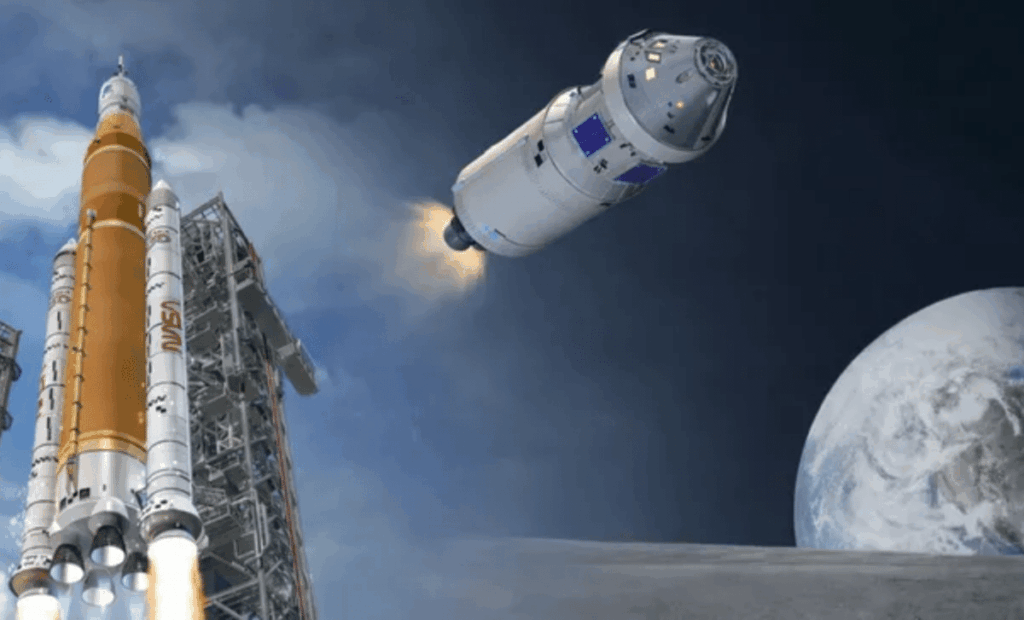
NASA has made a pivotal decision to upgrade its Artemis program by selecting a new upper stage for its Space Launch System (SLS) rocket. In a move that is sure to impact the future of human space exploration, the agency has chosen the Centaur V upper stage, previously used on United Launch Alliance’s (ULA) Vulcan rocket. This decision comes as part of a broader reorganization of the Artemis program, which is aiming to land astronauts on the moon in the coming years. Space.com recently reported this significant change, noting that the new upper stage will help NASA meet its ambitious timeline for the missions ahead.
The Shift to Centaur V: A Necessary Change for Artemis
The decision to switch from the Exploration Upper Stage (EUS) to the Centaur V represents a significant overhaul of NASA’s Artemis plans. The Centaur V, known for its proven performance, will now play a key role in future Artemis missions. The upper stage will be used to propel the Orion crew capsule, the centerpiece of the Artemis program, on its journey around the moon and back to Earth. NASA’s new direction comes after extensive evaluations of available technologies and a need to accelerate the timeline for crewed lunar landings. The Centaur V is part of United Launch Alliance’s (ULA) Vulcan rocket, which has already achieved successful launches, making it a trusted technology for this critical mission.
The decision to pick Centaur V was made after considering its reliability and advanced technology. As noted in the official announcement,
“No Other Supplies or Services Will Satisfy Agency Requirements due to the highly specialized nature of this requirement,” making it clear that no other options could meet NASA’s exacting standards for lunar missions.
This shift not only ensures NASA’s readiness but also helps streamline the rocket’s capabilities for future launches, positioning it as the preferred choice for Artemis 4 and Artemis 5 missions.
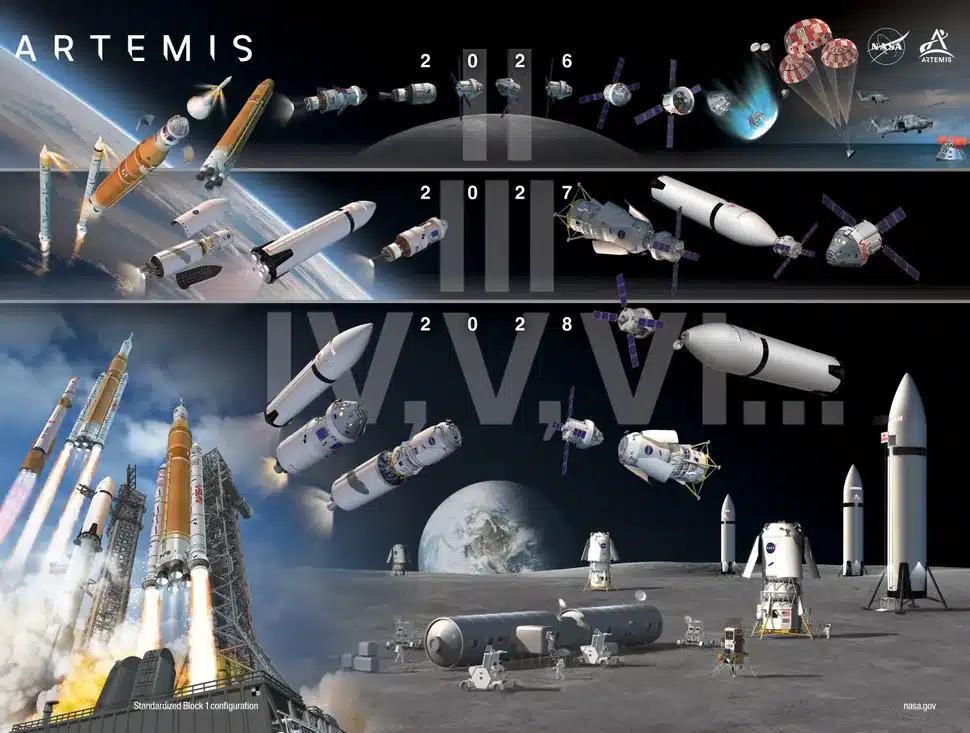 NASA Artemis program outline after restructure. (Image credit: NASA)
Why Centaur V Is the Only Option for NASA’s SLS
In the face of mounting pressure to meet its tight schedule, NASA has made it clear that the Centaur V is the only in-space propulsion stage capable of fulfilling the demands of the SLS rocket. According to NASA,
“ULA’s Centaur (with minor modifications) is the only existing in-space propulsion stage capable of meeting the SLS upper stage design parameters and performance characteristics, while also meeting NASA’s schedule.”
This endorsement underscores the critical role Centaur V will play in the upcoming missions, ensuring that the SLS rocket can deliver the necessary thrust and performance required for a successful Artemis program.
The Centaur V’s advanced features, including its dual RL10 engines and large fuel capacity, make it uniquely suited to handle the heavy demands of lunar missions. NASA’s decision to bypass a competitive bidding process and award a sole-source contract to ULA emphasizes the necessity of having a tried-and-true technology in place to avoid any further delays to the Artemis schedule. With the SLS rocket’s development already fraught with delays, NASA cannot afford to take any chances on untested technologies.
The Bigger Picture: Impact on the Artemis Program
The selection of Centaur V for Artemis 4 and beyond is just one piece of the larger puzzle that is the Artemis program. As NASA works to establish a sustainable human presence on the moon, the agency is also making adjustments to its broader mission timeline. Artemis 2, which will be the first crewed mission of the program, is set to launch as early as April 1, 2024. However, Artemis 3, originally slated for 2028, will now take place in 2027 as a test flight, bringing forward the timeline for Orion’s capabilities and its interactions with lunar landers.
This accelerated timeline means that Artemis 4, now expected to launch in 2028, will be the first mission to land astronauts on the moon’s surface. NASA’s selection of the Centaur V upper stage ensures that the rocket will have the necessary power to achieve these ambitious goals. The inclusion of Centaur V allows the Artemis program to move forward without further delays, helping NASA stay on track for its lunar goals.
The Challenges Ahead: Will the SLS Meet Its Goals?
Despite this new development, the SLS program continues to face challenges. The rocket has been plagued by delays, cost overruns, and public criticism about its sustainability. The program’s critics argue that the money spent on the SLS could be better used to support more cost-effective technologies, such as SpaceX’s Starship. However, with NASA’s shift to Centaur V, the SLS rocket will maintain its role as the flagship vehicle for the Artemis missions, at least through Artemis 5.
In addition to the SLS, NASA is exploring other potential vehicles for future missions. SpaceX’s Starship, for example, is being considered for Artemis missions beyond the fifth flight, with its massive payload capacity and reusability presenting potential advantages. As Artemis 6 and beyond approach, the question remains whether the SLS will continue to be the agency’s preferred option or if newer technologies will step in.