
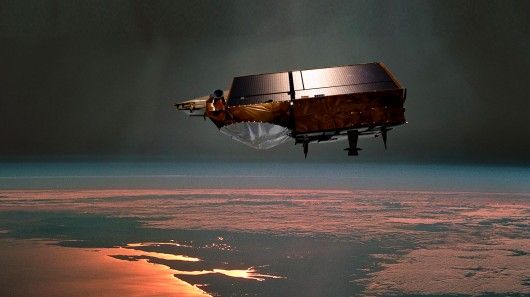
The CryoSat satellite, operated by the European Space Agency, has been upgraded with a new capability that allows it to monitor Earth’s magnetic storms—an unexpected but valuable expansion of its original mission.
CryoSat was initially launched to study changes in Earth’s ice, particularly in polar regions such as Antarctica and Greenland. Its main goal has been to measure ice thickness and track how climate change is affecting global ice levels. However, scientists have now discovered that the satellite’s instruments can also detect disturbances in Earth’s magnetic field.
Magnetic storms are caused by solar activity, such as solar flares and coronal mass ejections from the Sun. When these energetic particles reach Earth, they interact with the planet’s magnetic field, creating temporary disturbances. These events can affect satellite operations, GPS systems, and even power grids on the ground.
By using data from CryoSat, scientists can now track how these magnetic storms move and evolve over time. The satellite’s precise instruments allow researchers to measure subtle changes in the magnetic field, providing valuable information that was not originally expected from the mission.
Researchers say this new use of CryoSat data could improve space weather forecasting. Better predictions of magnetic storms can help protect satellites, communication systems, and other critical technologies from potential disruptions.
The discovery highlights how existing space missions can offer additional scientific benefits beyond their original purpose. By reanalyzing data and exploring new applications, scientists can gain fresh insights without needing to launch new satellites.
Experts at the European Space Agency are now working to integrate CryoSat’s magnetic data with other space weather monitoring systems. This combined approach could lead to more accurate and reliable forecasts.
The development also shows the growing importance of understanding space weather in a world that depends heavily on satellite technology. As more systems rely on space-based infrastructure, the need to monitor and predict solar activity becomes increasingly critical.
With its new role, CryoSat is proving to be even more valuable than originally planned. It not only helps scientists study Earth’s changing climate but also provides important data to protect modern technology from solar disturbances.