
“NASA stacks moon-bound Artemis 2 rocket
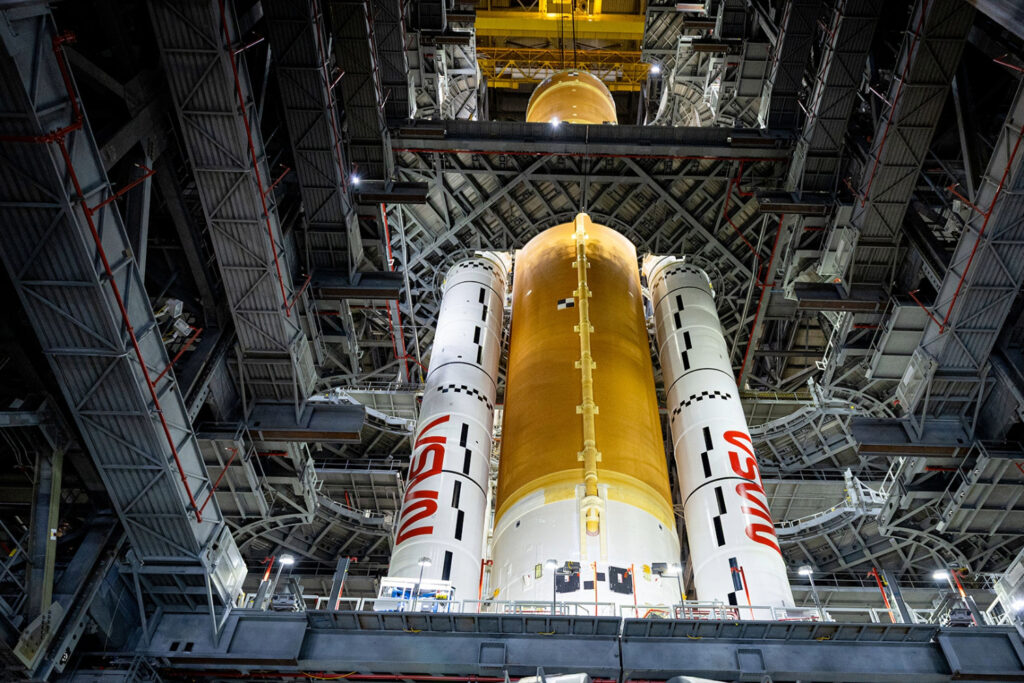
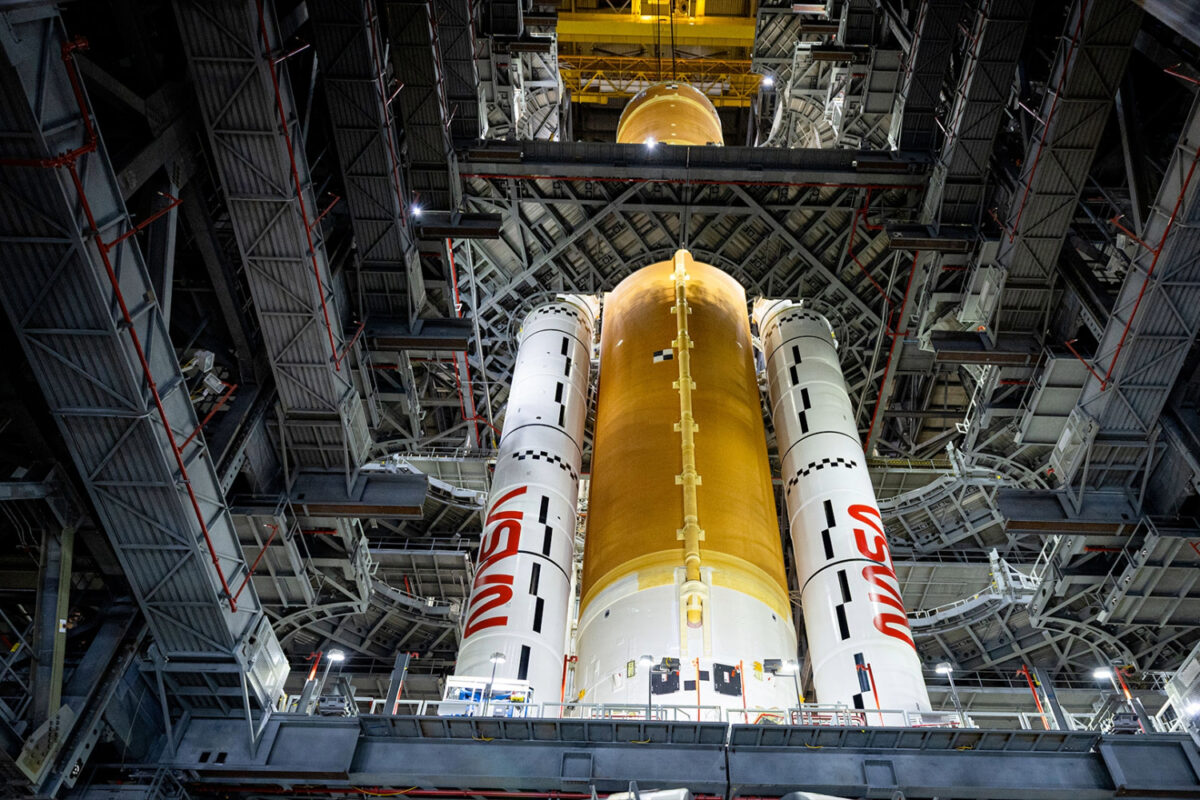
The Artemis II rocket looms over its dock at NASA’s Kennedy Space Center in anticipation of a historic mission around the Moon. This venture had suffered delays in recent months, highlighting the scope undertaken by the space agency. “They were definitely overzealous in what they were trying to achieve in the first few Artemis launches,” said Carlmont junior and aspiring engineer Brandon Shen.
NASA’s long-anticipated return to crewed lunar missions has hit another round of delays, pushing the launch of Artemis II to no earlier than April 2026.
This mission to carry astronauts around the moon for the first time in half a century highlights the persistent technical challenges facing the space program’s deep space plans.
Originally targeted for early 2026, Artemis II has been postponed multiple times in recent months due to a combination of hardware issues, weather disruption, and overarching safety concerns. Employees identified issues like liquid hydrogen leaks during fueling tests and a failure in the helium flow system, according to the Canadian Broadcasting Corporation. Both of these remain critical to the rocket’s Space Launch System (SLS) operation.
Further adjustments to the Artemis mission timetable have resulted in Artemis III no longer making history with the first moon landing in half a century, but rather being repurposed as a docking test in low Earth orbit. The massive public pushback to this announcement exemplified the social unrest created by the space agency in recent months.
“
Delaying the launch for safety reasons is justified because we’re keeping people safe, but not going to the moon makes us look dumb.
— Mike Gallien
NASA officials have restated time and time again that such delays should be expected from an ambitious mission of this scope and complexity, especially one that plans to send astronauts around the moon and back.
Mike Gallien, an astronomy and engineering lab coordinator at the College of San Mateo, supports the perspective of such a huge mission warranting an inevitable delay in its timeline.
“Any system you make, there are levels and degrees of complexity for that system. With each level of complexity comes another level of a failure point,” Gallien said.
This stance supports the idea that these kinds of delays should be expected and that the public unrest they’ve caused is unwarranted. Gallien goes on to add, however, that a further decision to rework the entirety of the scope of the Artemis missions had a drastically more significant impact on NASA politically.
“Delaying the launch versus not going to the moon are two distinct things that people might not like. Delaying the launch for safety reasons is justified because we’re keeping people safe, but not going to the moon makes us look dumb,” Gallien said.
According to Aeromorning, an aerospace news magazine, the stalling of this mission highlights an entire administration’s weakness on the global stage. To the rest of the world, the symbolic return to the moon is overshadowed by industrial failures and budgetary trade-offs.
“It portrays badly on NASA, especially with its long-term projects, because it creates challenges with its funding and long-term decision-making processes,” says Carlmont junior Masha Kyselova.
“
When you integrate and you don’t test it rigorously, things fail.
— Brandon Shen
From a technological standpoint, a majority of complications and failure points in the mission have come from unreliable outsourcing that has been noted as a trend in NASA operations in past decades.
Brandon Shen, an aspiring engineer and junior at Carlmont High School, illustrates the downside to outsourcing mission-critical components.
“Parts of NASA’s space launch vehicles are outsourced to different companies like Lockheed or Boeing, and when you integrate and don’t test it rigorously, things fail,” Shen said.
Despite these challenges, NASA continues to push forward, framing Artemis as a long-term effort to establish a human presence on the moon and, later down the road, send astronauts to Mars.
Whenever it launches, this mission will mark a major milestone in the first crewed voyage into deep space in decades. However, its delays also serve as a reminder that returning to the moon is far more of a challenge than the rapid progress of the Apollo era might suggest.