
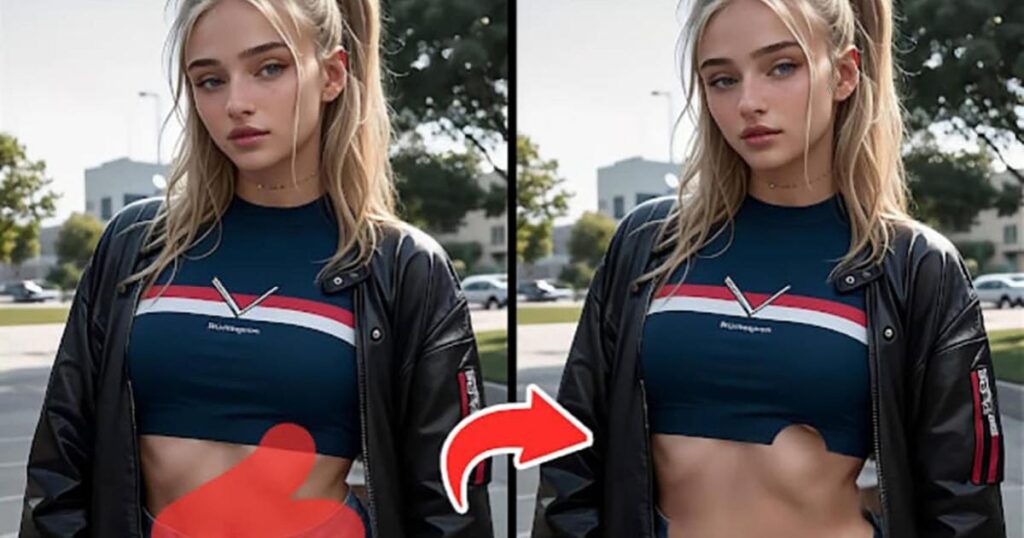
The YouTube ad for PixVideo – AI Video Maker, seen in January, showed “before” and “after” images of a young woman, the first with red scribble over her midriff and the latter revealing her bare skin, including underneath her shorts.
Text across the bottom of the image stated: “Erase anything [heart-eyes emoji].”
Eight people complained to the Advertising Standards Authority (ASA) that the ad sexualised and objectified women, and was irresponsible, offensive and harmful.
 The advert for PixVideo (ASA/PA)
Saeta Tech Ltd, trading as PixVideo – AI Video Maker, said it understood why the ad was considered likely to cause serious offence, but said concerns related to the ad’s presentation and messaging rather than the intended or permitted use of the product.
It said its terms prohibited the creation of nude or sexually explicit content, and it had automated AI-based detection and blocking to prevent exposed or explicit imagery from being generated.
The firm also said the app did not support, and was not designed to enable, the removal of clothing or the creation of nude imagery.
It said it had already removed the ad and voluntarily suspended all advertising to carry out a “comprehensive” internal audit and rectify marketing.
The ASA said it understood that the app did not permit users to create nude or sexually explicit content, but nonetheless considered that the ad reduced the woman to a sexual object.
It added: “Furthermore, because the ad implied that viewers could use an app to remove a woman’s clothing, we considered it condoned digitally altering and exposing women’s bodies without their consent.
“We welcomed Saeta Techs’ willingness to remove the ad. However, for the reasons above, we considered that the ad was irresponsible, included a harmful gender stereotype and was likely to cause serious offence.
The ASA ruled that the ad must not appear again, adding: “We told PixVideo – AI Video Maker to ensure that their ads were socially responsible and did not cause serious or widespread offence, including by featuring a harmful gender stereotype by objectifying and sexualising women.”