
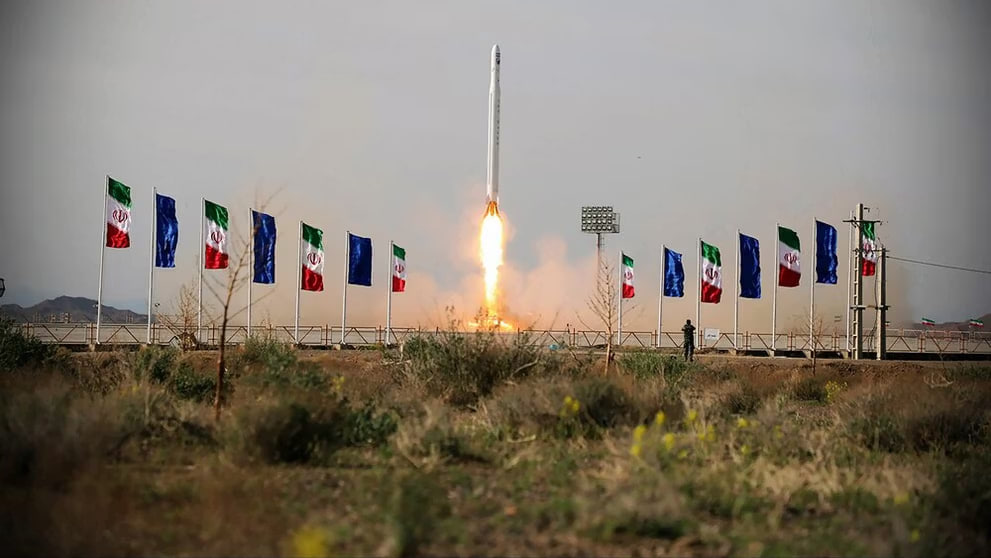
Israeli forces struck Iran’s primary space research facility in Tehran overnight on 13th March, as part of a wider wave of attacks on the capital. The IDF said it hit “dozens of Iranian terror regime infrastructure sites” across the city.
The Iranian Space Research Centre is Iran’s leading organisation for satellite development and space technology. Israel says the facility contained strategic laboratories for military satellite research, including systems for surveillance, targeting and directing fire at sites across the Middle East.
Iran has not publicly confirmed the extent of the damage.
What the ISRC Actually Does
Established in 2000, the ISRC has been Iran’s principal space research body for over two decades. It oversees satellite design, manufacture and propulsion research across sites in Tehran, Tabriz, Shiraz and Isfahan.
The centre has launched several satellites in recent years. These include Pars 1, Chamran-1 and Nahid 2, and it has produced satellite imagery at resolutions between 35 and 45 centimetres — a capability with clear dual-use potential.
Since 2018, the ISRC has been under sanctions from the United States, United Kingdom, Canada and New Zealand. The US Treasury Department linked it to Iran’s broader space and military programmes.
Israel’s Justification for the Strike
The IDF said the attack “significantly degrades” Iran’s ability to conduct satellite-based intelligence operations. During the same wave, it also struck a factory manufacturing air defence systems, claiming this had substantially reduced Iran’s capacity to rebuild its aerial defence network.
Independent verification of the scale of destruction remains limited.
 Published by Kerry Harrison
Kerry’s been writing professionally for over 14 years, after graduating with a First Class Honours Degree in Multimedia Journalism from Canterbury Christ Church University. She joined Orbital Today in 2022. She covers everything from UK launch updates to how the wider space ecosystem is evolving. She enjoys digging into the detail and explaining complex topics in a way that feels straightforward. Before writing about space, Kerry spent years working with cybersecurity companies. She’s written a lot about threat intelligence, data protection, and how cyber and space are increasingly overlapping, whether that’s satellite security or national defence. With a strong background in tech writing, she’s used to making tricky, technical subjects more approachable. That mix of innovation, complexity, and real-world impact is what keeps her interested in the space sector.