
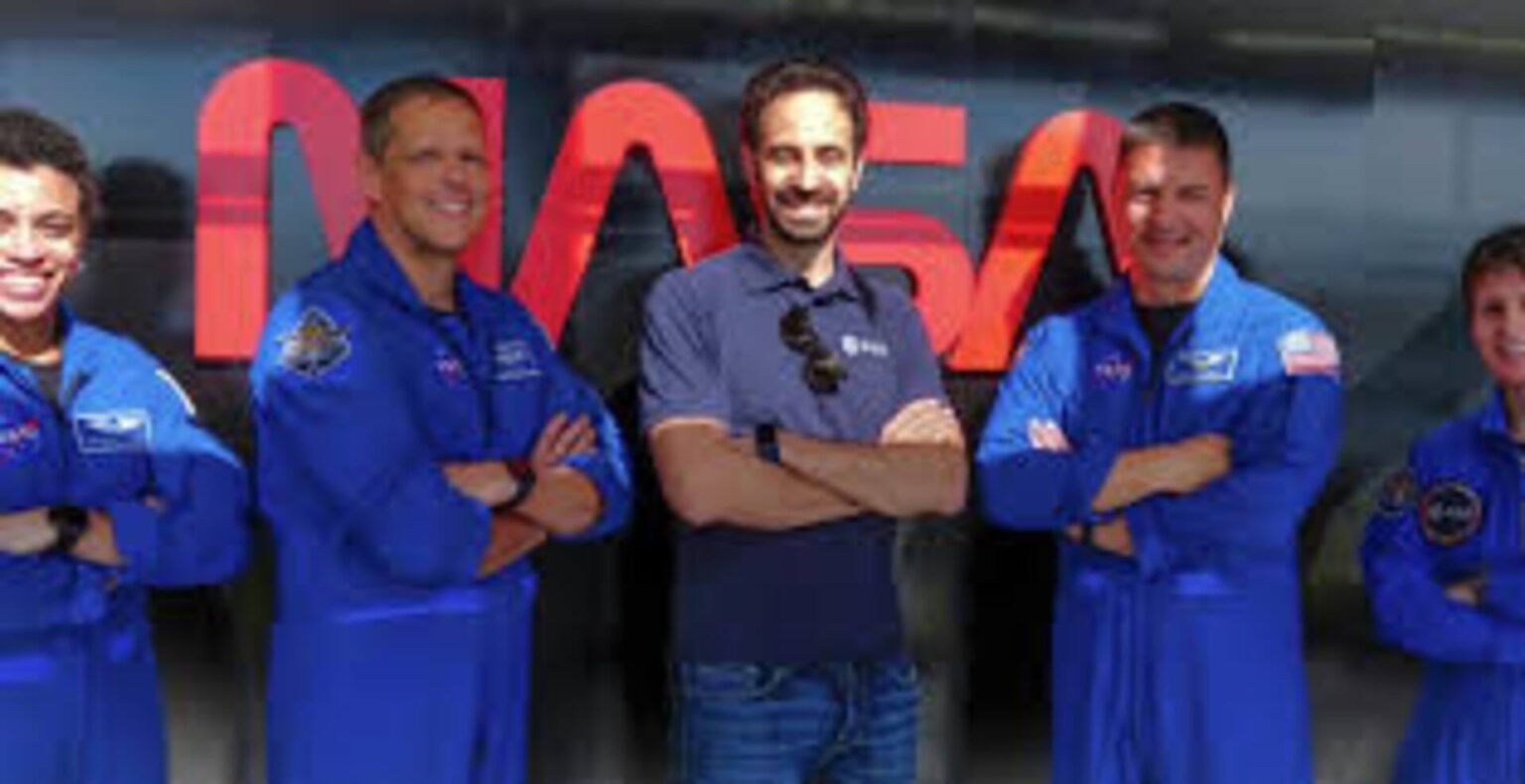
Greeks were among the first to try and graple the cosmos – its galaxies and stars – yet the Greeks have lifted off for space. Well, that may change, as Greece is poised to reach a new milestone in space exploration following the selection of a Greek scientist for the European Space Agency’s (ESA) astronaut training programme — a development that raises the prospect of a Greek astronaut joining a space mission for the first time. He will play a role as a as a mission doctor.
European and Greek media ran stories over the last two days on Dr Adrianos Golemis, who has commenced training at the European Astronaut Centre in Cologne, Germany. He emerged from one of the most competitive selection processes in European aerospace. He was chosen from a pool of more than 22,000 applicants.
In an Impactalk interview Dr Golemis said that he’s “in charge of the medical preparation of European astronauts before they fly into space, monitoring their health while they are in orbit around our planet (usually for six months) and organizing their rehabilitation after returning to our planet”.
He is also responsible for the selection of the “necessary and appropriate medicines” for astronaught’s missions, medical examinations and “medical support of the launch, their safe repatriation after the landing and the recovery of their health in the environment of earth’s gravity”.
The country has historically played only a limited role in human spaceflight, and Dr Golemis’s selection signals a shift in that trajectory.
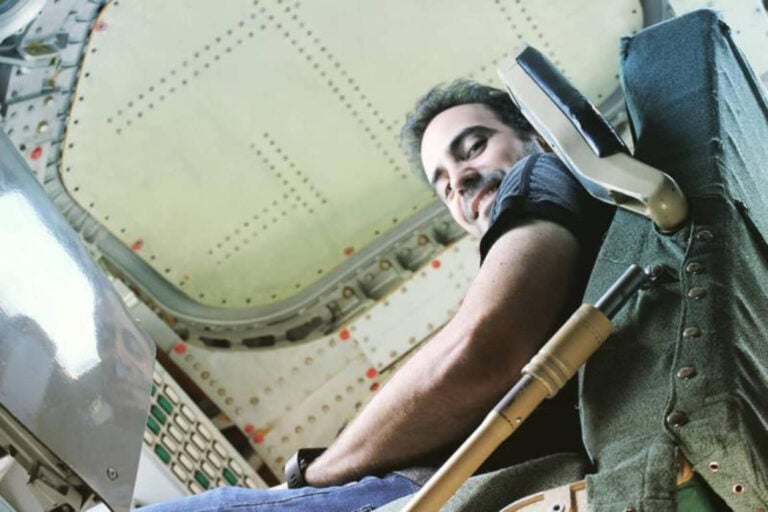 Dr Adrianos Golemis might be the first Greek in space. Photo: X
Greece’s Minister for Digital Governance, Dimitris Papastergiou, described the development as a source of national inspiration, particularly for young scientists.
“A few years ago, Greece’s position in space seemed like a distant scenario,” he told Euronews Next, citing recent investments in microsatellites and nanosatellites as evidence of the country’s growing ambitions in the sector. He added that Greece’s small satellite fleet is expected to be largely completed within the coming months.
ESA has in recent years made deliberate efforts to broaden its astronaut corps beyond its traditionally dominant member states.
According to Papastergiou, these investments are not solely about scientific progress but also about practical applications that directly affect citizens’ everyday lives. Satellite data, he explained, are already being used to improve weather forecasting, enhance natural disaster and fire management, and strengthen civil protection systems.
Space-based technologies can also support agricultural production, help monitor agricultural subsidies, and protect the environment and water resources. They play an increasingly critical role in telecommunications, cybersecurity and defence, where satellite data and emerging technologies are now considered essential to the functioning of modern states.
The minister stressed that the national strategy aims to build an ecosystem of space applications capable of boosting economic growth and innovation, while equipping public decision-makers with more effective tools.