
Most of us are familiar with the Hollywood version of exorcism—priests, crucifixes, and dramatic chanting. But while researching for my upcoming book on ancient Middle Eastern folklore, I stumbled upon a much more literal and, frankly, terrifying method used by the people of late antiquity: Incantation Bowls.
Imagine walking into a 6th-century home in Babylon or Nippur. If you were to dig under the threshold of the front door or in the four corners of the house, you wouldn't find treasure. You would find clay bowls buried upside down.
These weren't for eating. They were traps.
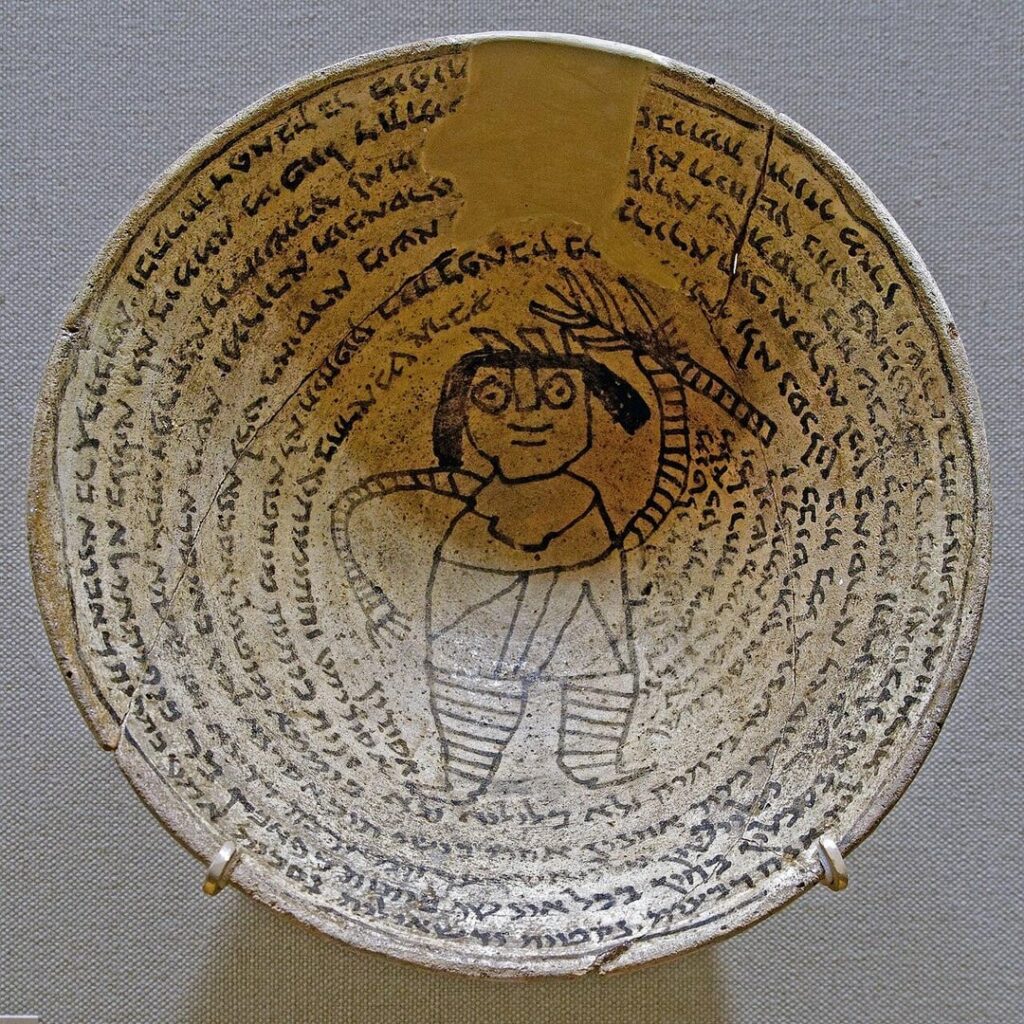
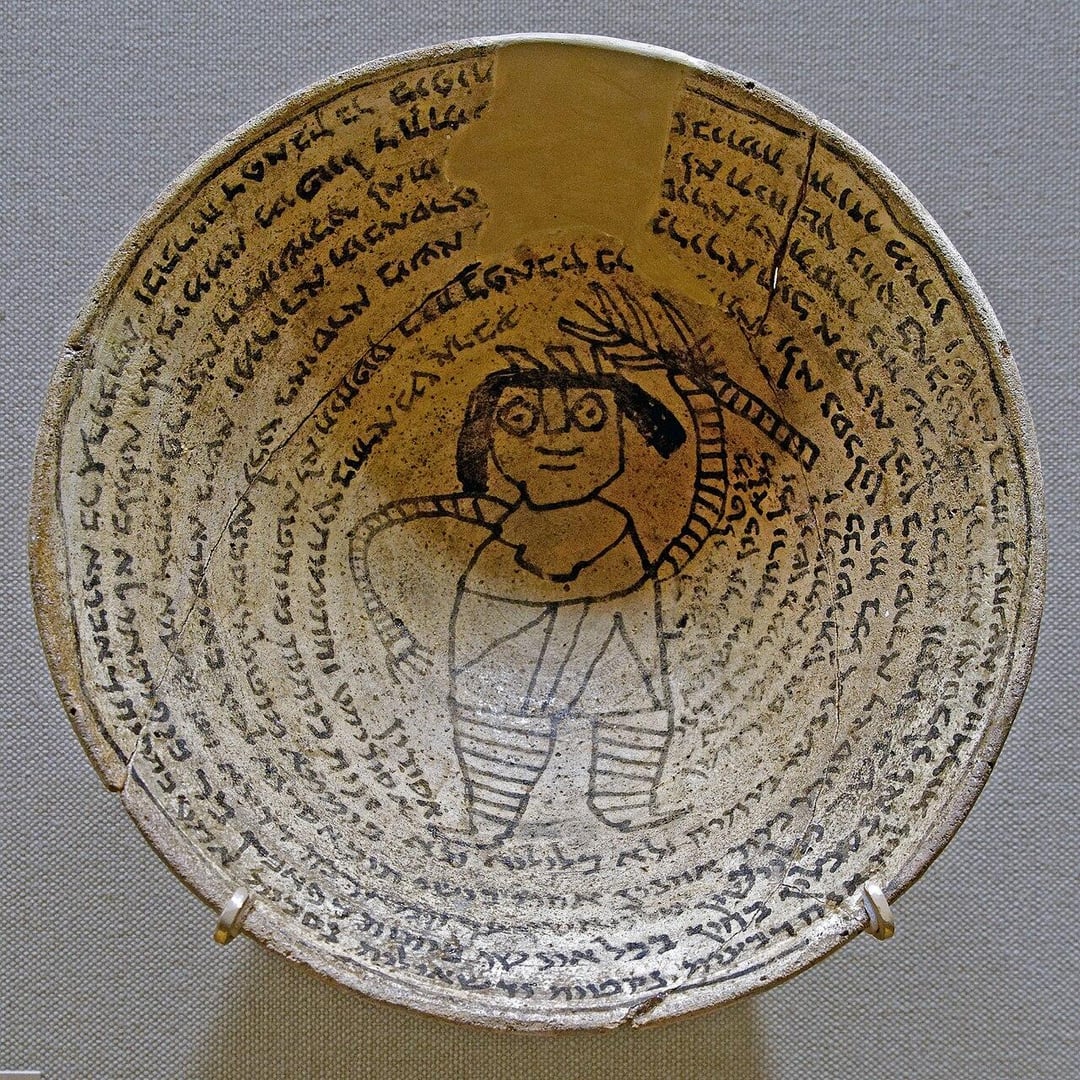
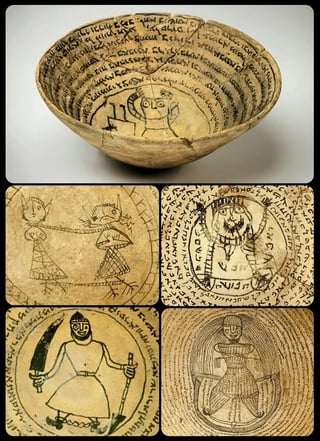
The interiors of these bowls are covered in spiraling Aramaic, Mandaic, or Syriac scripts—charms designed to ensnare specific entities. At the very center, there is almost always a drawing of a demon (often Lilith or Bagdana), depicted with their hands and feet shackled. The theory was brilliant in its simplicity: The spirit would be drawn to the bowl, follow the spiraling text from the rim inward, and once it reached the center, it would be "bound" by the magical decree and the physical weight of the bowl buried face-down.
What gets me is the sheer scale of this. These weren't rare artifacts; archaeologists have found them in almost every excavated house of that period. It wasn't just "superstition"—it was a household necessity, like a smoke alarm is for us today. It implies that 1,500 years ago, the presence of these "shades" or Jinn was so tangible and constant that people literally had to build traps into the foundations of their homes to stay safe.
The inscriptions are chilling. They don't just ask the spirits to leave; they "divorce" them. They use legalistic language to sever the tie between the human host and the entity. Some bowls even mention "elephantine" sizes, intended for particularly powerful or ancient beings.
I find it fascinating (and unsettling) that even after the rise of major religions, these practices persisted. It suggests that whatever these people were dealing with—whatever they were seeing in the corners of their rooms or the shadows of their courtyards—was so real that theology alone wasn't enough. They needed physical clay and ink to lock it away.
I’m curious to hear from the researchers here: Have you seen this kind of "physical containment" magic in other cultures? We always talk about "banishing" spirits into the void, but the idea of literally trapping them under your floorboards feels like a whole different level of "High Strangeness.
by bortakci34
6 Comments
For those who want to dive deeper into the history and archaeology of these “Demon Traps,” here are the sources I’ve been using:
* [**General Overview (Wikipedia)**](https://en.wikipedia.org/wiki/Incantation_bowl)**:** A deep dive into the different languages and religious contexts of the bowls.
* [**Bowers Museum – To Catch a Demon**](https://www.bowers.org/index.php/collections-blog/to-catch-a-demon-mesopotamian-incantation-bowls)**:** An excellent article detailing how these bowls were physically used as traps in ancient Babylon.
Dr Justin Sledge of the Esoterica channel has a fantastic video on incantation bowls. He also occasionally sells hand made reproductions that are gorgeous.
https://youtu.be/wyI9m50ODB4
“Who you gonna call?”
“Bowl makers!”
If these non human entities truly existed, wouldn’t their existence have been independently verified in the last century, beyond a shadow of a doubt?
A very good example of human superstition, though. Historically fascinating.
Looks better than the witch bottle.
dangit now I’m stuck in a bowl