
Home » RAILWAY NEWS » British Company Tended and ESA Join Forces to Revolutionize Railway Construction with Space-Tech Powered Virtual Worksite Solution
Published on
March 16, 2026
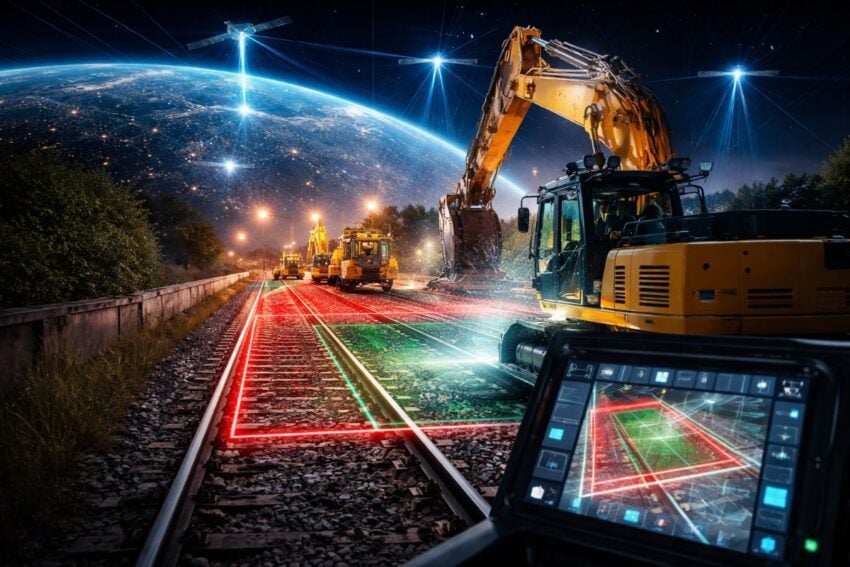
Image generated with Ai
In a groundbreaking collaboration with the European Space Agency (ESA), the British company Tended is revolutionizing railway construction with cutting-edge technology aimed at significantly improving the safety and efficiency of worksite management. This new initiative, building on the success of the Digital Worksite program, seeks to further enhance the Virtual Worksite Marker Board (VWSMB) system. By incorporating space-based positioning technology, the project is set to modernize how railway work zones are managed, streamlining the entire construction process and minimizing risks. This innovative digital solution will provide greater accuracy and reliability, even in the most challenging railway environments.
Virtual Worksite Marker Board Technology: A Leap Toward Innovation
The VWSMB technology, at the heart of this initiative, is designed to replace traditional physical boundary markers used on railway worksites. Traditionally, workers manually place physical panels around construction zones to demarcate boundaries, creating potential safety hazards and logistical inefficiencies. By harnessing geospatial data, the VWSMB system uses advanced mapping to create virtual boundaries for railway work zones, eliminating the need for physical markers.
The core of the VWSMB system is a device installed inside the cab of work machinery. This device continuously receives geospatial data and automatically adjusts the machinery’s positioning to stay within authorized boundaries. If an operator exceeds these pre-designated limits, the system triggers an immediate alert to prevent any potential safety hazards. This technology reduces human error, enhances safety, and cuts down on the need for personnel to enter potentially dangerous work zones.
Enhancing Accuracy with Space-Based Technology
The ongoing project aims to integrate space-based positioning technologies to improve the accuracy and reliability of the VWSMB system. Space infrastructure, including satellite signals, will provide real-time positioning updates for worksite machinery, ensuring that the system operates accurately even in areas with limited visibility or complex infrastructure.
Advertisement
Advertisement
The use of space-based technology will increase the precision of the VWSMB system, which will be crucial for construction sites in environments that are difficult to manage, such as tunnels, bridges, or areas with poor satellite coverage. With the backing of ESA, this project is poised to create a system that delivers unparalleled operational efficiency for railway construction projects, offering a significant leap in digital worksite management.
Tested and Proven: Early Success in the UK
The VWSMB system has already been successfully tested in various pilot projects across the British railway sector, with impressive results. In a collaboration with Siemens Mobility, the system helped save over GBP 130,000 by reducing work overruns and improving overall efficiency. Similarly, a test conducted on the East Coast line in partnership with Network Rail led to a time-saving of approximately 45 minutes during a work window, effectively extending the available working time by 17%. These early trials demonstrate the potential for widespread application of the VWSMB system, proving its ability to significantly enhance the operational efficiency of railway projects.
Advertisement
Advertisement
In Scotland, the technology has already been deployed by SPL Powerlines and Network Rail Scotland, yielding remarkable results. Initial deployments have led to time savings of about 30 minutes per shift, thanks to the elimination of the need for travel to install and remove physical boundary panels. This reduction in time, alongside the decreased physical movement, helps reduce risk exposure for workers while maximizing the productivity of each shift.
Improving Safety and Efficiency Across the Industry
The advantages of implementing the VWSMB technology extend far beyond efficiency gains. One of the most notable benefits is the significant reduction in the physical exposure of workers to high-risk environments. Traditionally, railway workers must often enter construction zones to manually install or remove boundary markers. By eliminating this requirement, the new system helps mitigate the potential for workplace accidents, reducing the likelihood of injuries or fatalities on-site.
Advertisement
Advertisement
Furthermore, the automated nature of the system ensures that work can proceed without delays or human error caused by the need for manual inspections. With a virtual boundary in place, construction crews can focus entirely on the task at hand without constantly worrying about whether the designated work zone has been properly marked. This shift toward automation and digital management also leads to a reduction in administrative overhead and allows for better coordination between different teams working on-site.
A Future-Oriented Solution for Modern Rail Infrastructure
As the railway industry faces increasing demands for modernization, the collaboration between Tended and ESA represents a major step forward in reshaping how infrastructure projects are executed. The integration of space-based technology is set to pave the way for smarter, more automated worksite management solutions. By offering increased safety, efficiency, and reliability, the VWSMB system will redefine the way railway construction projects are managed.
Moreover, the success of this project may have implications far beyond the railway sector. The principles behind VWSMB technology, including the use of virtual boundaries and space-based positioning, can be applied to other industries where safety, efficiency, and precision are paramount, such as construction, logistics, and public safety.
Looking Ahead: Transforming the Future of Railway Construction
With ESA’s involvement, the project is poised to reach new heights, ensuring that railway infrastructure projects can be completed faster and more safely than ever before. As the system continues to evolve, there are plans to explore further uses for the technology, such as tracking and managing equipment at construction sites. This could help transform how infrastructure work is planned, coordinated, and monitored, providing a more transparent and data-driven approach to railway construction.
In conclusion, the collaboration between Tended and the European Space Agency has the potential to revolutionize the future of railway construction. The integration of space technology into digital worksite management not only promises to enhance the safety and efficiency of railway projects but also represents a significant leap toward the modernization of infrastructure work across industries.
