
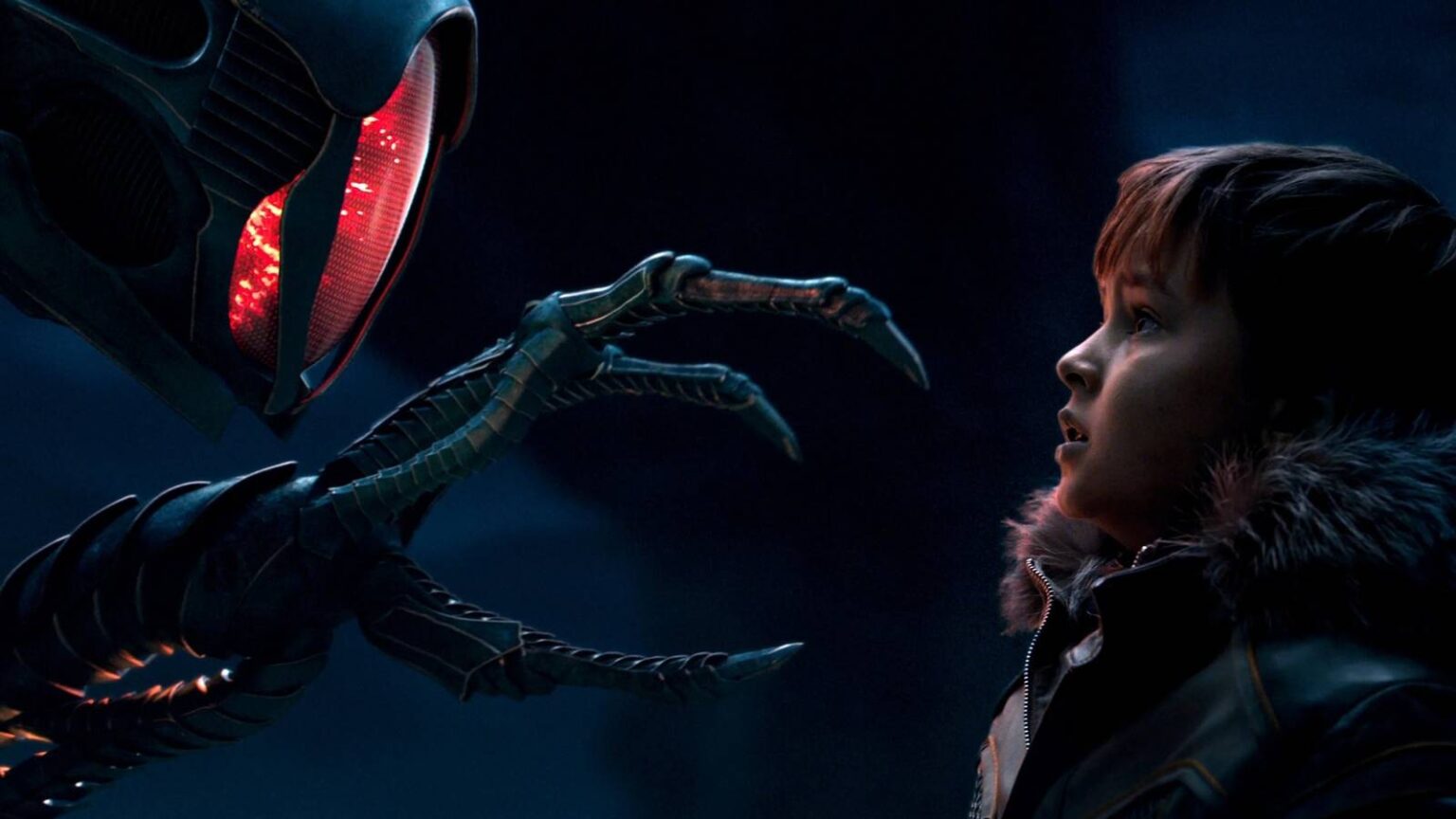
The streaming giant Netflix has seemingly tried its hand in every genre: animation, action, romantic comedies. You name it, there’s a category for it. One genre that it has excelled in over the years is science fiction, with series like Dark, Black Mirror, and the juggernaut that is Stranger Things. One of its best, though, is a three-season drama series that has its roots in 1960s Golden Age science fiction television, reimagining it for the modern era and honoring it in a way that a 1998 movie treatment spectacularly failed to do: Lost in Space.
‘Lost in Space’s First Reboot Forgets What Made the Original Special
The original Lost in Space premiered on September 15, 1965, as a take on Johann David Wyss’ classic tale “The Swiss Family Robinson.” The series starred Guy Williams as astrophysicist John Robinson and June Lockhart as his wife, biochemist Maureen, who, along with their family — oldest daughter Judy (Marta Kristen); Penny (Angela Cartwright), the middle child; and Will (Bill Mumy), their youngest, a child technology prodigy — set out on a five-and-a-half-year journey to an Earth-like planet orbiting the Alpha Centauri star. It’s a necessary first step towards colonizing space in an effort to alleviate Earth’s overpopulation and its related woes, and accompanying the family is U.S. Space Corps Major Donald West (Mark Goddard) and, unknowingly, Dr. Zachary Smith (Jonathan Harris), a saboteur whose actions lead to their becoming deeply and hopelessly lost in space.
Initially, the series was a gripping survival drama, with the Robinson family stuck on an alien planet, a unique and semi-serious spin on its literary inspiration. It was imaginative, family-friendly, boasted decent special effects, and was highly influential, ground zero for sci-fi tropes like the robot sidekick and the wunderkind. As the series progressed, the buffoonery of the cowardly Dr. Smith and his schemes, and Will and the Robot’s continual thwarting of them, came to dominate storylines, with Lost in Space becoming campier as a result, more akin to Batman. But all the things that betrayed the era in which it was made – costuming, cheesy sets – simply gave it charm. What ultimately made the series special was the unmistakable feeling of a family working together as a team.
Then came the 1998 Lost in Space movie, and it, quite simply, dropped the ball (earning only 27% on Rotten Tomatoes). The film didn’t get what made the series special, and the first sign that it was going to abandon the things that made the series unique and engaging was its heavy reliance on the “Danger, Will Robinson” catchphrase. The film went darker, ditching the series’ campy, comedic elements in favor of a more serious, ridiculously convoluted time-travel plot, and trading in the character development and the theme of family for explosions, body armor, and CGI spiders.
Netflix’s ‘Lost in Space’ Ditches the Camp of the Original While Keeping Its Core Themes
Netflix took a crack at Lost in Space in 2018, and the feeling was that it certainly couldn’t do worse than the film. Thankfully, 2018’s reimagining puts the family dynamic front and center again, only with significantly better effects and more balanced gender roles. Family isn’t a plot convenience, but a vital part of the entire series, with each character allowed to develop and the family bond being what aids them in facing the extreme dangers they’re confronted with.
Maureen (Molly Parker) is an aerospace engineer and mission commander, while John (Toby Stephens) is a former U.S. Navy SEAL. Judy (Taylor Russell), the oldest daughter, actually contributes as the mission’s doctor, having received her medical license at 18, while Penny (Mina Sundwall) is more than the cute middle child who loves animals and classical music, instead a rebellious teen with a creative heart. Will (Maxwell Jenkins) is the same tech prodigy, but rather than befriending the ship’s robot, he forges a connection with an alien robot (Brian Steele) he encounters after the ship crashes.
Related
The 35 Most Underrated Sci-Fi Shows You Haven’t Seen (Yet)
To infinity and beyond (the usual sci-fi shows)!
The characters of Don West and Dr. Smith are still present, but they’re deeper and more interesting. West (Ignacio Serricchio) isn’t the do-gooder of the original, but a ship mechanic who happens to be a smuggler of luxury goods (and has a lucky chicken, Debbie, a nod to “Debbie the Bloop” from the original). As the series progresses, he loses his self-serving ways and earns the trust of the Robinson family, and is embraced as one of their own by the end. Dr. Smith, on the other hand, is reinvented as Dr. Zoe Smith, a truly compelling and dangerous antagonist, sans the buffoonery, played by the talented Parker Posey.
Filled with humor and adventure, real dangers and complex themes, fundamental life lessons, and the importance of family, Netflix’s Lost in Space pays homage to the original series while feeling relevant and exciting, with the modern conveniences CGI affords to make it shine. Most importantly, it keeps the phrase “Danger, Will Robinson” in the pop culture lexicon while wiping away the bad aftertaste of the 1998 version in the process. For that public service alone, Lost in Space is one of Netflix’s best, and its undaunted commitment to the classic story’s most important themes cements its place in sci-fi TV history.