
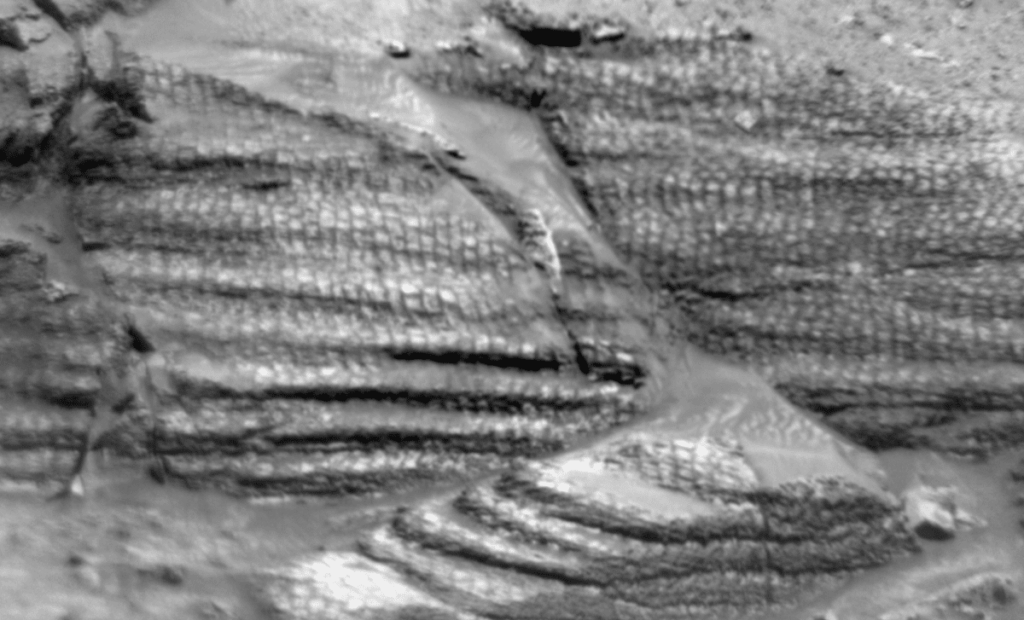
NASA’s Curiosity rover has recently reached one of the most stable and secure parking spots of its entire journey on Mars. This remarkable accomplishment provides a unique opportunity for scientists to conduct in-depth analyses of the Red Planet’s geological composition. The rover’s new location dubbed “Laguna del Bayo,” offers a perfect platform for Curiosity to explore Mars’ bedrock with unprecedented accuracy, bringing scientists one step closer to unraveling the mysteries of Mars’ past.
The Significance of the “Perfect Parking Spot”
Curiosity’s recent drive, executed with flawless precision, is more than just a simple relocation on Mars, it’s a pivotal moment that holds great promise for the future of planetary exploration. After navigating a challenging terrain, the rover has successfully arrived at a site with minimal risk of instability, ensuring that all its scientific instruments, including the APXS, remain safely deployed for critical operations.
The importance of this location lies in the underlying geology of the surrounding bedrock, which is thought to contain the potential “boxwork” features that the team has been closely monitoring. These features, if confirmed, could reveal vital information about the planet’s history, including clues about its environment and any possible microbial life forms that may have once existed.
By finding a stable spot to deploy its instruments, Curiosity is now able to perform a series of essential analyses, including those focused on the chemistry of the local rocks. Such activities will allow scientists to track how the bedrock’s chemistry changes, giving them deeper insight into Mars’ geological evolution over millions of years.
Curiosity Rover’s Key Science Goals in This Area
At its new parking spot, Curiosity is executing a well-planned series of scientific observations and analyses, focusing on the rock target “Tarija,” NASA reported in its recent blog post. With the APXS instrument carefully placed on the rock, the team is acquiring detailed compositional data that could shed light on Mars’ geological past. The instrument’s analysis, combined with ChemCam’s laser-induced breakdown spectroscopy, allows the team to study the rock’s mineral composition in high detail.
Alongside this, the rover’s Mastcam will capture high-resolution images of the surrounding terrain, including the linear ridges to the north and a potential fracture-filled area in front of the rover. These observations will help scientists map out the regional geological context, which is crucial for understanding the planet’s history.
As Curiosity ventures forward, it will continue to gather data on atmospheric conditions as well. With the acquisition of Mastcam tau measurements, the team will be able to assess the amount of dust in the Martian atmosphere, providing a clearer picture of how these environmental factors could affect future missions on Mars.
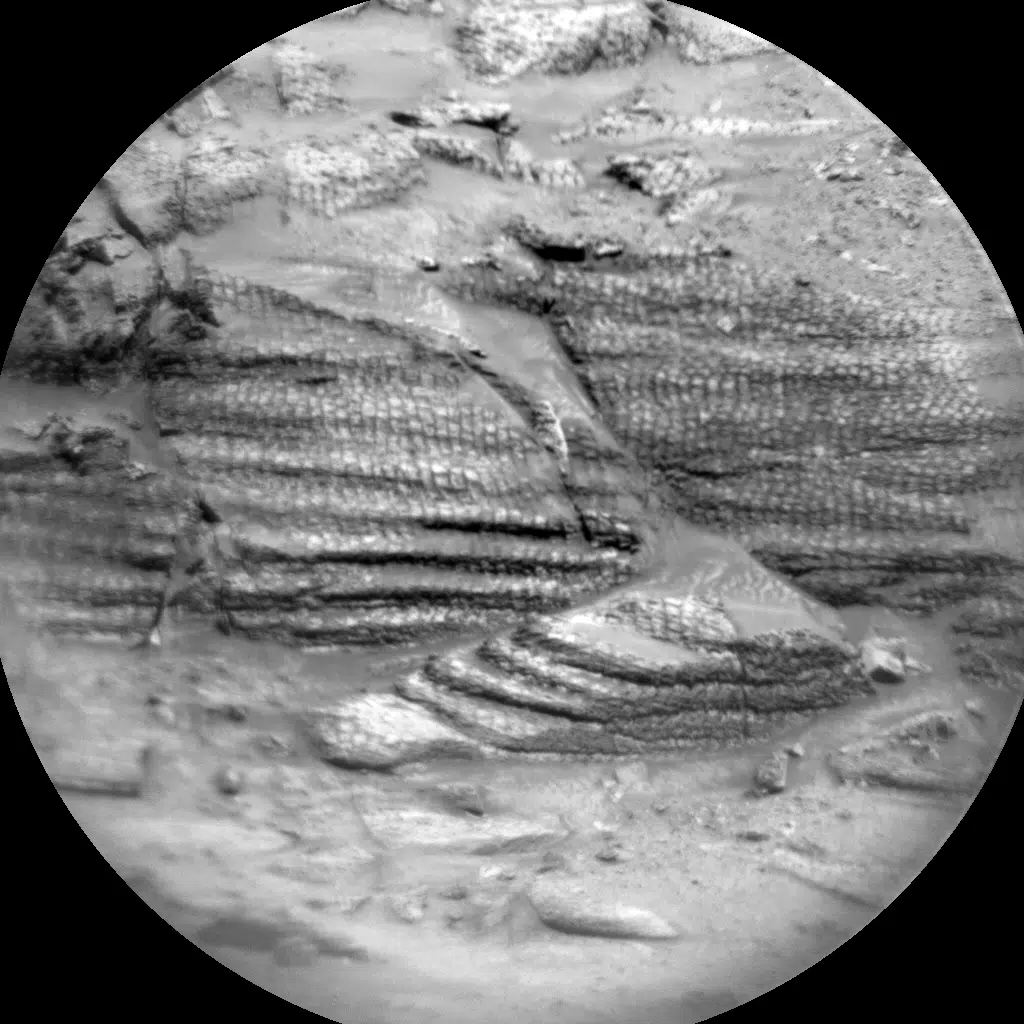 This image was taken by Chemistry & Camera (ChemCam) onboard NASA’s Mars rover Curiosity on Sol 4569 (2025-06-13 17:53:55 UTC).
Credits: NASA/JPL-Caltech/LANL/CNES/CNRS/IRAP/IAS/LPG
A 54-Meter Drive Toward New Discoveries
With its current mission phase well underway, the Curiosity team has planned a 54-meter drive (approximately 177 feet) to reach the next location of interest. After successfully executing this drive, the rover will conduct additional untargeted science observations, which include imaging the terrain beneath its wheels and capturing images of potential rock targets for autonomous analysis by ChemCam.
Moreover, the rover will continue to monitor atmospheric fluctuations, including a large dust-devil survey and suprahorizon movie, to understand Mars’ dynamic environment. These activities are essential not only for Curiosity’s immediate mission goals but also for the long-term planning of future Mars exploration efforts.
By combining these various scientific tasks, the Curiosity rover will provide invaluable data that will contribute to our broader understanding of the Martian environment, from its geology to its weather patterns, ultimately supporting future human missions to the Red Planet.