
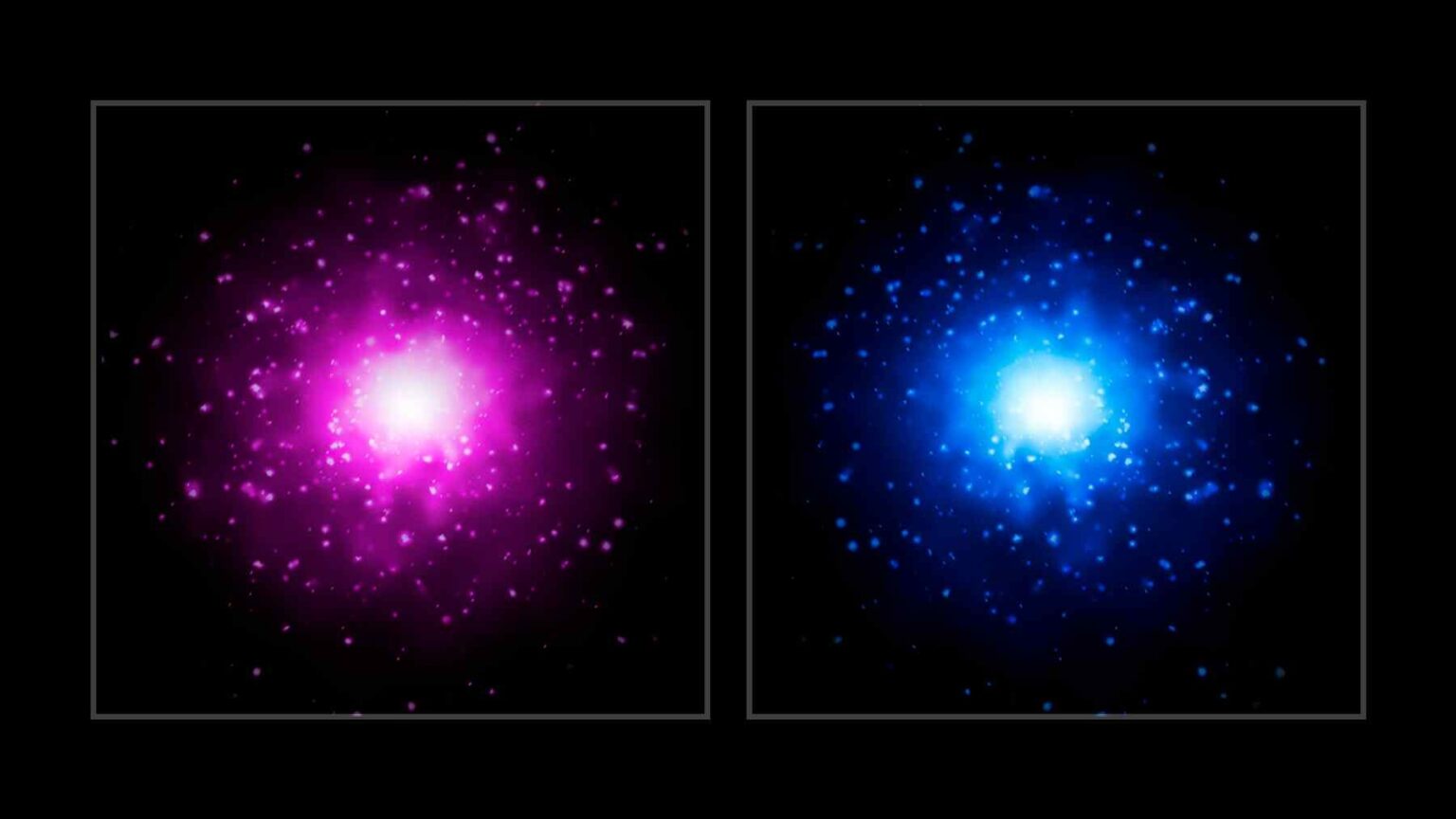
Astronomers have spent the best part of the last century hunting for a “cosmic concrete” that holds our universe together.
The sheer vastness of space will take us a lifetime to understand, if we’re lucky. The inconceivable distances in the cosmos have confounded the best minds in history, and the mysteries are only now beginning to reveal themselves as our technology advances.
What invisible matter is shaping our universe, and how can we study it?
How technology has opened the secrets of the universe
The remarkable advancements in technology have acted as our cosmic eyes.
NASA has developed a method to “listen” to the black holes in the universe. As we know, space is a vacuum, with no sound. As such, scientists developed “sonification,” which turned data from black holes into eerie soundtracks straight out of a horror film.
Time travel belevie it or not, has become a possibility too, in a way.
The game-changing telescopes, such as the Webb and Hubble ones, act like time-travelling machines that capture images from the earliest galaxies and star clusters to reveal how the universe behaved right after the Big Bang.
Space: The final frontier of human knowledge that needs to be understood
It has become abundantly clear that our knowledge of the cosmos is far from complete; in fact, we have barely scratched the surface.
The world is becoming increasingly dangerous to live in. New geopolitical issues have raised alarm bells as to how we can come together to save our planet. As such, the eggheads of the world are turning their attention to space to search for our next possible home away from home.
But the universe is so vast that we could spend the rest of our time gazing into it and never discover what makes it tick, or indeed what holds it together.
Recent discoveries of comets heading exceedingly close to our planet have raised our collective alert levels. The reality is that we need to study the unknown parts of our universe if we stand a chance at saving ourselves from ourselves.
A new mission to unravel the most iconic mystery in space has been developed by NASA, and it could have life-changing implications for the world and the universe, to be fair.
Cold and warm matter exist that keep the universe tightly held together
Scientists have found that the universe is mostly made up of what is referred to as “dark matter” or “dark energy.”
The reason it’s called dark matter is that it is an invisible force that makes up roughly 95% of the matter in the universe. Due to the fact that we can’t see it, even with the astonishing telescopes we have developed over the past few decades, NASA and others have named it dark matter.
The mysterious and unexplained cosmic concrete that makes up the majority of the cosmos uses gravity to pull stars and bend the very fabric of light.
A new study finds that dark matter can come in different temperature variants
A recent study, “A possible challenge for cold and warm dark matter”, published in Nature, has revealed that dark matter can come in different “temperatures” and speeds. This means that cold dark matter moves slowly, allowing for the matter to clump together in a bottom-up formation.
Warm dark matter acts much faster, where rapidly-moving particles smooth out small-scale cosmic structures in the universe.
As we now know, dark matter makes up 95% of the cosmic concrete holding the cosmos together. We are far from reaching a level of understanding as to what exactly dark matter is and where it comes from, but science has proven it does exist.
While our immediate attention has returned to the lunar missions we have planned, dark matter and all its mysteries still boggle the minds of us all.