
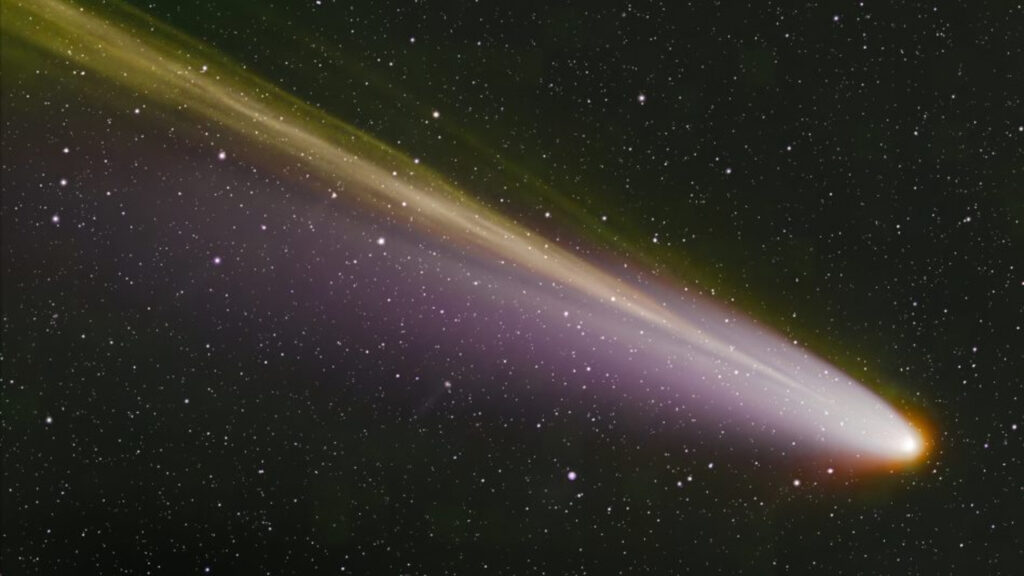
According to new reports, Comet C/2026 AI (MAPS), a recently discovered comet, might be visible from Earth in broad daylight if it survives perihelion. This comet is increasing in brightness and is expected to continue increasing as it approaches the Sun.
An Opportunity To View A Comet In Broad Daylight
Comet C/2026 AI (MAPS) was discovered on 13 January 2026 by four French astronomers. The discovery of this comet was made at the AMACS1 observatory in San Pedro de Atacama, Chile.
At the time of its discovery, Comet C/2026 AI (MAPS) was an 18th-magnitude comet, meaning it was faint and couldn’t be observed by amateur telescopes. It was discovered in the constellation of Columba (The Dove), located 191 million miles away from the Sun.
As it travels towards the Sun, the recently discovered comet gradually brightens, revealing itself to amateur telescopes. Astronomers expect this comet to reach perihelion by 4 April 2026, when it’ll pass the Sun at a distance of 99,000 miles.
If this comet survives perihelion, it might be visible from Earth during the daytime. However, there are certain things you’ll need to take into mind if you want to see this comet in the daylight sky.
Comet C-2026 AI (MAPS) Might Be Dangerous To Watch From Earth
The fact that the window to possibly see this comet is in the daytime raises a cause for concern. At perihelion, Comet C/2026 AI would peak near magnitude-5 (MAPS), making it visible to the naked eye from Earth, as Seiichi Yoshida of Japan points out.
Watching this comet will require staring directly at the Sun as the comet will pass to its left side. This would be dangerous as the infrared rays from the Sun are capable of burning the retina.
So to protect your eyes, it’s best to opt for another way to view this comet as it passes close to the Sun. One safe way to watch this comet is to rely on live images or videos from the Solar and Heliospheric Observatory (SOHO).