
 Credit: EUSPA
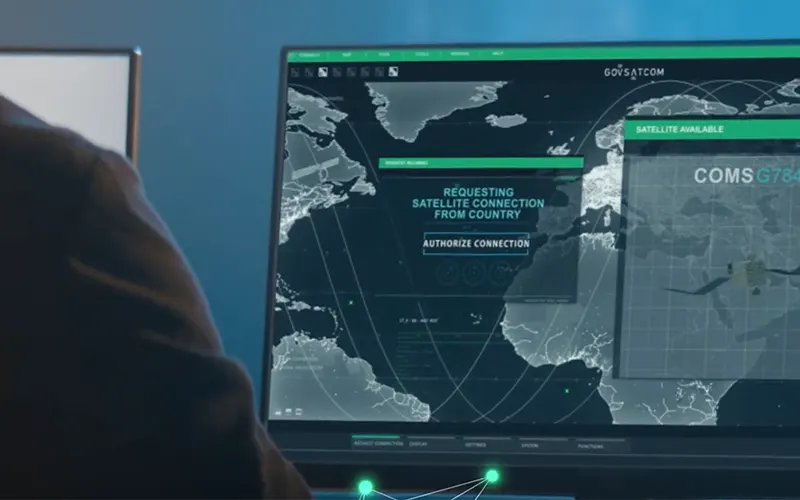
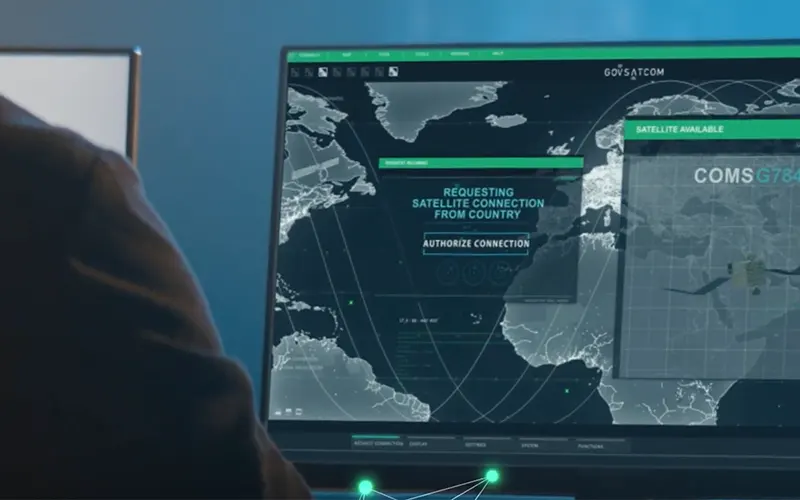
The European Union’s space agency, EUSPA, announced on 10 March that Cyprus has become the first country to use its GOVSATCOM secure communications service for “safety and security purposes along the south-eastern borders of the Union.”
GOVSATCOM was initially announced in 2018 and became operational in January 2026, with the initial service pooling capacity from eight satellites already in orbit provided by five countries. The service offers sovereign, reliable, and secure governmental satellite communications services for EU member states and serves as an operational bridge to the planned multi-orbit IRIS2 secure communications satellite constellation.
In the 10 March EUSPA announcement, the agency revealed that Cyprus had completed the first operational use of secure satellite communications delivered through GOVSATCOM, which it explained marked “a significant milestone in European governmental satellite connectivity.”
“The successful operational use of the GOVSATCOM Hub by Cyprus proves that space is no longer an extra but a critical infrastructure,” said EUSPA Executive Director Rodrigo da Costa. “By pooling our resources, we are building a more resilient and secure Europe, ensuring that every Member State has the connectivity it needs to protect its citizens.”
According to the EUSPA announcement, the secure communications services provided to Cyprus utilised capacity from a Greek governmental satellite through the satellite operator Hellas Sat.
While the nature of its use was not specified, the announcement stated that it was used by “Cypriot governmental users” for safety and security purposes on the Union’s south-eastern borders. Considering current geopolitical tensions in the Eastern Mediterranean, this could point to its use in operations related to regional security developments, including the 2 March attack on the United Kingdom’s RAF Akrotiri base on the island of Cyprus. Its use may also be connected to Cyprus currently holding the Presidency of the Council of the European Union, a role that rotates every six months among EU member states.
Keep European Spaceflight Independent
Your donation will help European Spaceflight to continue digging into the stories others miss. Every euro keeps our reporting alive.