
NASA’s revised plans to send astronauts back to the moon are quickly taking shape.
On Feb. 27, NASA Administrator Jared Isaacman revealed a new vision for the Artemis program, and the missions the agency hopes will establish a long-term human presence on the lunar surface. The shuffle includes updated mission goals for Artemis 3 and beyond, a shorter cadence between launches of the Space Launch System (SLS) rocket, and an SLS redesign that is now coming into focus.
Article continues below
You may like
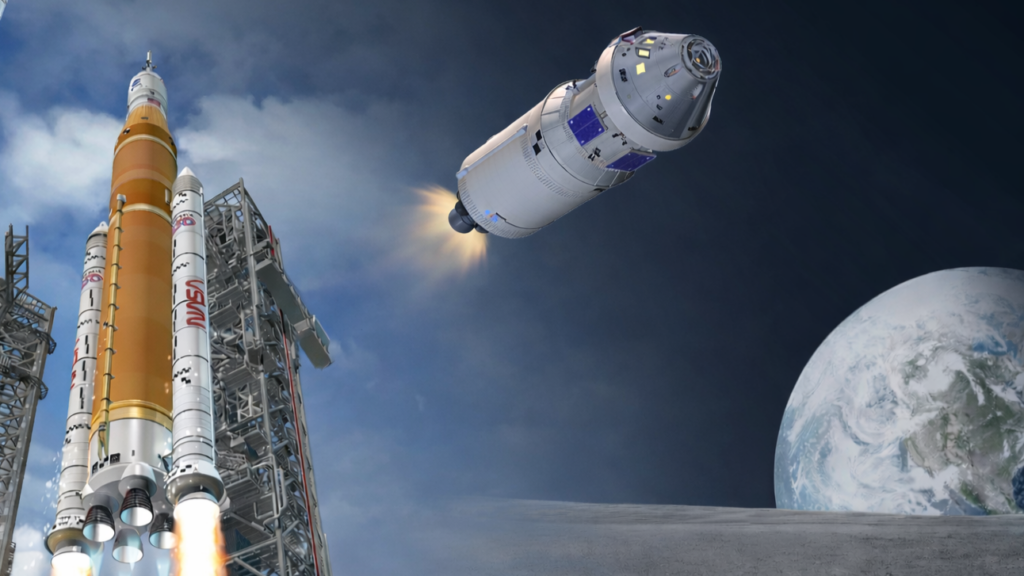
At the time of the Feb. 27 announcement, NASA did not indicate what the standardized SLS version would look like, or what its vision was for the SLS upper stage. But a concurrent image release illustrating the new Artemis framework showed the program’s Orion crew capsule flying on a vehicle that was unmistakably neither the ICPS or EUS.
Instead, Orion and its service module were pictured burning under the power of what appears to be a Centaur V — the upper stage for United Launch Alliance’s (ULA) new Vulcan rocket.
This fueled speculation at the time, which was confirmed on March 6, when the government’s System for Award Management (SAM.gov) website listed the “Vulcan Centaur V Upper Stage for Space Launch System” contract opportunity.
The opportunity originated from NASA’s Marshall Space Flight Center in Alabama, and was described as “a sole source contract” for ULA to supply “next-generation upper stages for use in Space Launch System (SLS) Artemis IV and Artemis V.”
“No Other Supplies or Services Will Satisfy Agency Requirements due to the highly specialized nature of this requirement,” agency officials added in the SAM.gov posting.
Centaur V has a proven flight record on Vulcan, which debuted in 2024 and has four successful launches under its belt (with a notable few issues, unrelated to Centaur). Its predecessors, Centaurs III and IV, flew using the same RL10 engine and relied on much of the same technology built into Centaur V to fulfill nearly 170 launches aboard ULA’s Delta IV and Atlas rockets.
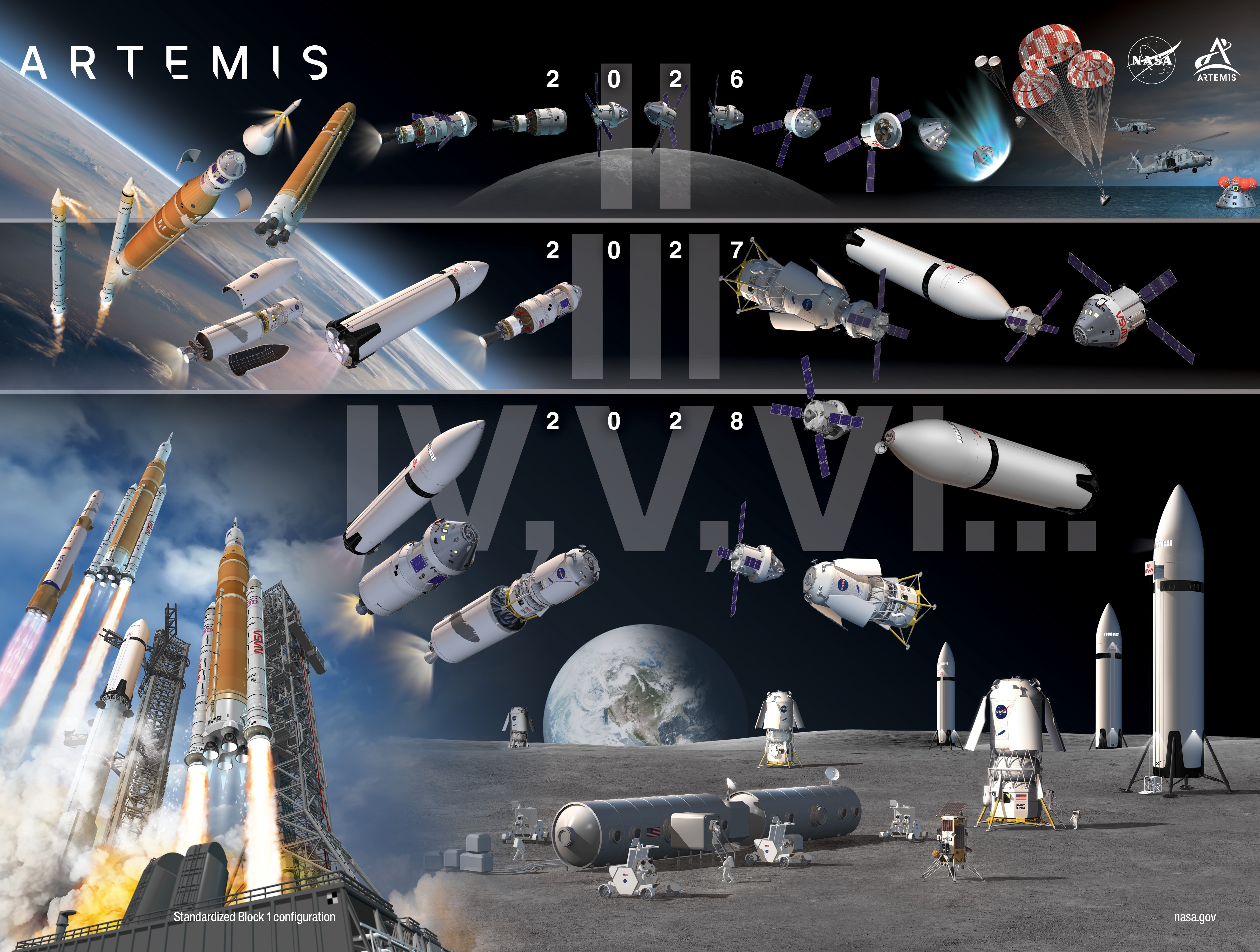
NASA Artemis program outline after restructure. (Image credit: NASA)
Additionally, a variant similar to Centaur, the Delta Cryogenic Second Stage, supported Orion on the spacecraft’s Exploration Flight Test-1 in December 2014, when a ULA Delta Heavy launched the capsule into space for the first time. That mission sent an uncrewed Orion to Earth orbit and back.
What to read next
Centaur V is powered by two RL10 engines and is the largest, most advanced of the ULA Centaur line. It holds about twice as much fuel as the ICPS and is nearly the same diameter as Orion and its service module.
“ULA’s Centaur (with minor modifications) is the only existing in-space propulsion stage capable of meeting the SLS upper stage design parameters and performance characteristics, while also meeting NASA’s schedule,” NASA said in a submitted document justifying awarding the contract to ULA without competition.
That schedule was also part of the shift in Artemis’ architecture. Artemis 2, which is on track for a possible launch attempt as early as April 1, remains unchanged. Each mission after that, however, has been repurposed and accelerated.
Artemis 2 will launch a crew of four astronauts on a 10-day mission to fly a single loop around the moon and back to Earth. Artemis 3 was originally designed as the program’s first lunar landing, targeted for 2028, but has been transformed into a 2027 test flight with Orion and one or more Artemis lunar landers in low Earth orbit. (Both SpaceX’s Starship and Blue Origin‘s Blue Moon landers were selected under Artemis’ Human Landing Services contract, and NASA has indicated that Artemis 3 will utilize either or both, depending on their readiness.)
Artemis 4 is now the first mission in the lineup with the objective of landing astronauts on the lunar surface, which NASA still hopes to accomplish in 2028, with a follow-up landing on Artemis 5 potentially occurring that same year.
With the Artemis 2 SLS stacked and nearly ready for launch, and the Artemis 3 SLS already outfitted to accommodate ICPS, Artemis 4 and 5 are only the two missions confirmed to launch Orion with the standardized SLS configuration and Centaur V upper stage, according to NASA’s contract specifications. which don’t mention any missions beyond Artemis 5.
What will carry Orion to orbit beyond Artemis 5 may be mere speculation at this point. The SLS has experienced numerous delays and cost overruns during its long development, spurring criticism from many who view its continued funding as more of a jobs program fueled by the U.S. Senate than as a sustainable space program. And some in the space industry are asking about the viability of SpaceX‘s Super Heavy booster — the first stage of the Starship megarocket, which remains in development — to support Orion launches, or possibly even Starship stepping in as Artemis’ crew transport vehicle for Artemis 6 and beyond.