
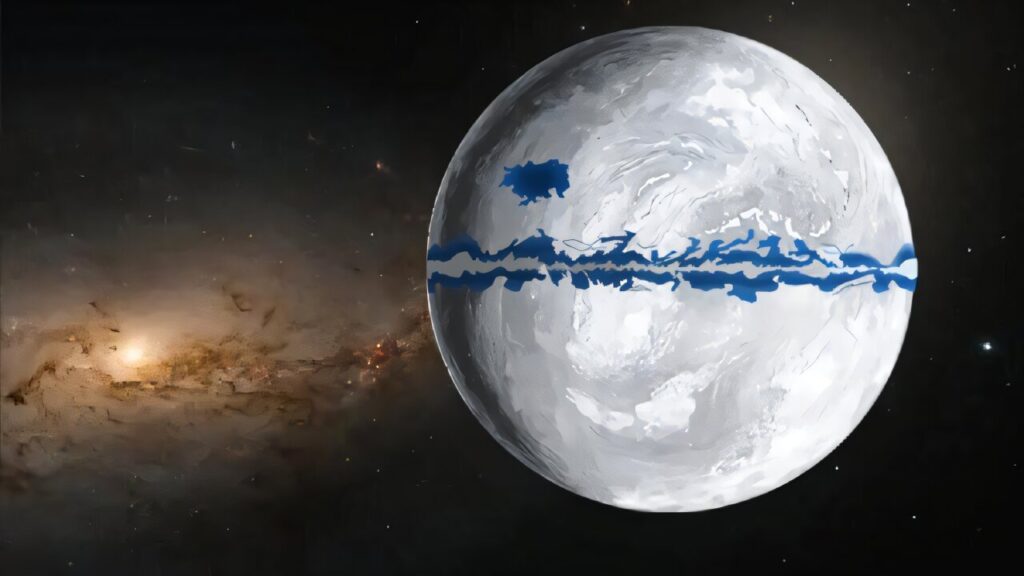
Scientists have determined that when large masses of seawater freeze, salt can be displaced from it and end up on the surface, forming a layer that reflects sunlight well. They believe that such a mechanism could contribute to the complete freezing of our planet.
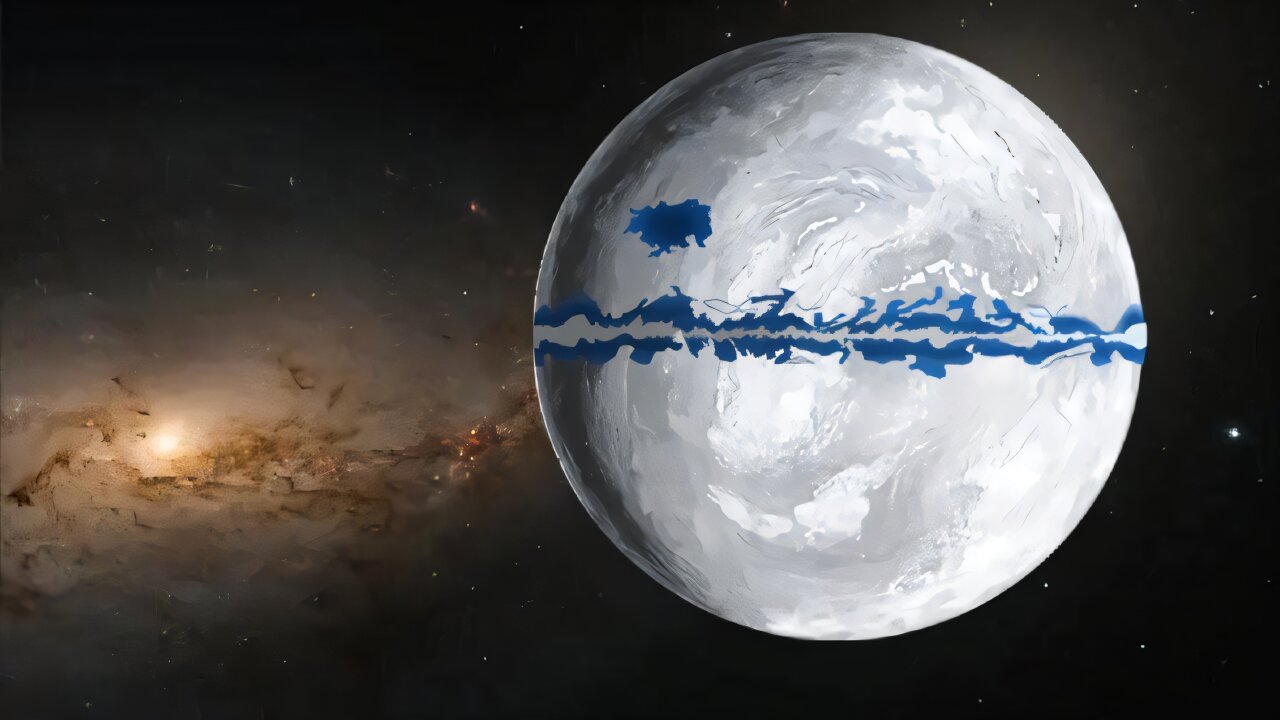 Snowball Earth. Source: phys.org
Snowball Earth
There have been periods in the history of our planet when it was completely frozen. And we are not talking about the last ice age, which ended 10,000 years ago. The most significant event occurred 720-635 million years ago at the end of the Neoproterozoic era. At that time, the ice caps practically converged at the equator.
The reasons why our planet periodically becomes colder are complex and not entirely clear. However, scientists have learned a lot about this, and you can find out more about their theory in this article. However, thanks to a publication in the journal Climate of the Past, there is now a new factor to consider when examining why the Earth is freezing.
This new publication is about salt. Everyone knows that seawater contains large amounts of it. However, few people think about what happens to it after it freezes. This is because Antarctic ice, even when floating in the open sea, consists almost entirely of fresh water.
Salt surface
And now scientists are wondering where all this salt goes. Of course, some of it passes into the ocean water beneath the glacier. However, as it turned out, a significant amount appears on the surface. This process occurs particularly intensely when sublimation — the direct conversion of ice into vapor — occurs on the hottest polar days.
Researchers have found that these layers of salt forming on the surface of the glacier reflect sunlight even better than pure ice. This means that they significantly slow down melting. This makes us wonder what would happen if the surface area of a glacier were measured not in thousands of square kilometers, but as a percentage of the Earth’s surface.
Researchers conducted simulations and showed that in this case, salt could significantly increase the average temperature of our planet, preventing it from falling into a feedback loop that leads to continuous growth in ice cover.
Of course, this does not mean that previous theories should be discarded. Salt is suggested as another important factor in these processes, but it is far from being the only one. The following studies will show how important it really is.
According to phys.org