
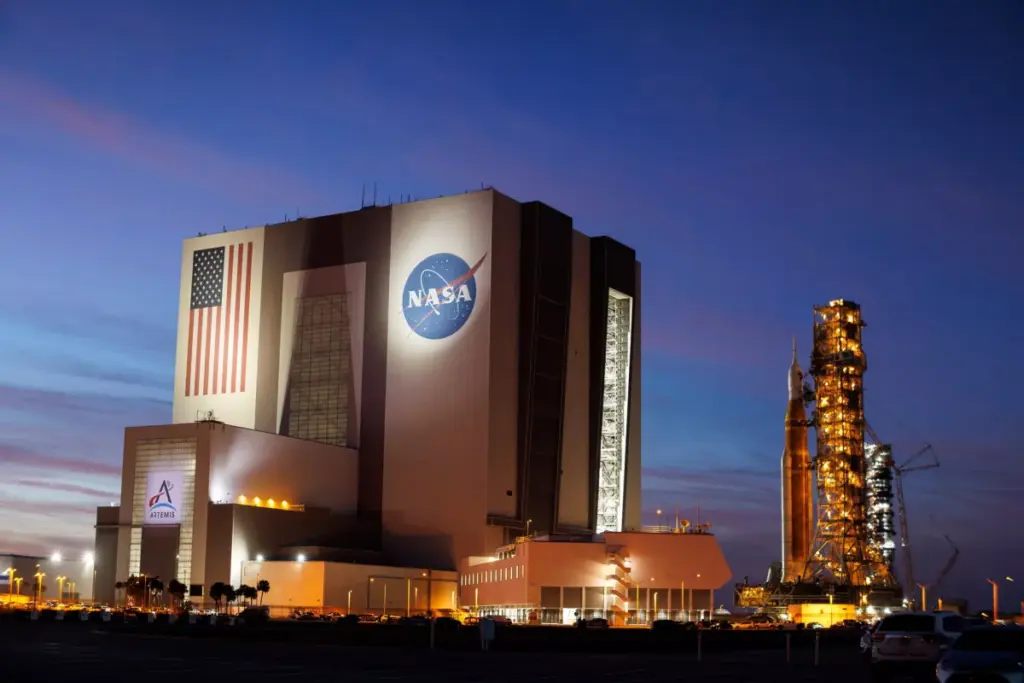
NASA’s decision to overhaul its strategy for returning humans to the Moon has delayed the first landing of its Artemis programme, but created new opportunities for commercial partners, including small space companies, developing technology to support long-term exploration.
At the Colorado headquarters of the space startup Lunar Outpost, March 6 began like any other day until chief executive Justin Cyrus heard about an unexpected press conference from Jared Isaacman, the Guardian writes.
Cyrus’s company is among dozens of private contractors supporting Artemis programme, the US effort to send astronauts back to the lunar surface for the first time in more than half a century. Any change to the programe could affect their work.
Isaacman’s announcement came as a surprise: NASA was restructuring its entire lunar landing strategy and shifting the first human landing attempt to a later mission, with astronauts now expected to land during the Artemis IV mission scheduled for 2028.
The change follows years of technical setbacks and cost overruns that have left the programme billions of dollars over budget and significantly behind schedule. The move also raises questions for the many private companies developing hardware and technology tied to the mission.
Despite the uncertainty, Cyrus sees opportunity.
Barring further delays, Lunar Outpost’s Mobile Autonomous Prospecting Platform (Mapp) rover could accompany astronauts on the Artemis IV mission.
“Humans will be back on the moon for the first time in over 50 years and one of our rovers will be alongside, which is a pretty awesome feeling,” he said.
“For us, selfishly, that’s a pretty exciting prospect. The broader announcement I’m 100% on board with, higher cadence, more missions going to the moon. It’s fantastic Nasa has concrete plans on how they can accelerate things, and that opens up what we are doing in the background.
“At the end of the day, rovers and robotic systems are critical to permanence on the moon. With Mapp, we are full steam ahead, the hardware’s been done for a long time, there’s a few checkouts that still need to be done for the electrical power system between the lander and the rover, and some software integration, but once that is complete, we’re off to the moon.”
Founded in 2017 by Cyrus and two colleagues, Lunar Outpost represents a new generation of companies working alongside government agencies in space exploration. The company is developing multiple lunar vehicles, including the larger Eagle lunar terrain vehicle designed to transport astronauts and cargo across the Moon’s surface.
But progress has not been without setbacks.
Mapp previously attempted a lunar mission aboard the Athena lander built by Intuitive Machines. The spacecraft successfully reached the lunar surface earlier this year but toppled during landing, trapping the rover inside.
“It got to the moon, it survived the tough landing, and unfortunately, we just couldn’t get it out of the garage,” Cyrus said. “It’s a point of pride that we survived a tough landing, but at the same time it makes it hurt just a little bit worse.”
Despite the disappointment, Lunar Outpost has continued preparing the rover for another mission while also developing technologies such as robotic construction arms and systems capable of generating oxygen and power on the Moon.
Cyrus says the company has learned to work amid uncertainty as NASA continues to refine its plans.
“Don’t get me wrong – on big days like today, I still have to go talk to the team like: ‘Hey, guys, this is good, you know, this is a positive thing,’” he said.
“But truly, if my workforce is watching what’s going on each and every day, worrying about how it’s going to impact their schedules, they wouldn’t be getting much done, right? So I would say we have a pretty positive working relationship with constant change. It sounds a little weird, I know, but you just kind of get accustomed to it.”
Ultimately, Cyrus believes NASA will succeed in returning humans to the Moon for the first time since the Apollo 17.
“We have five missions currently signed up going to the moon, and hopefully the Eagle LTV with Nasa is going to be announced within the next couple of weeks,” he said. “It’s kind of a step-by-step vision over the course of the next five years, and I think it’s going to be fun. In fact, I think it’s going to be an absolute blast.”
By Sabina Mammadli