
Humans could have come from Mars, scientists have said.
A study by Johns Hopkins University has found that alien microbes could travel between planets on asteroids, meaning humans could be descended from Martians.
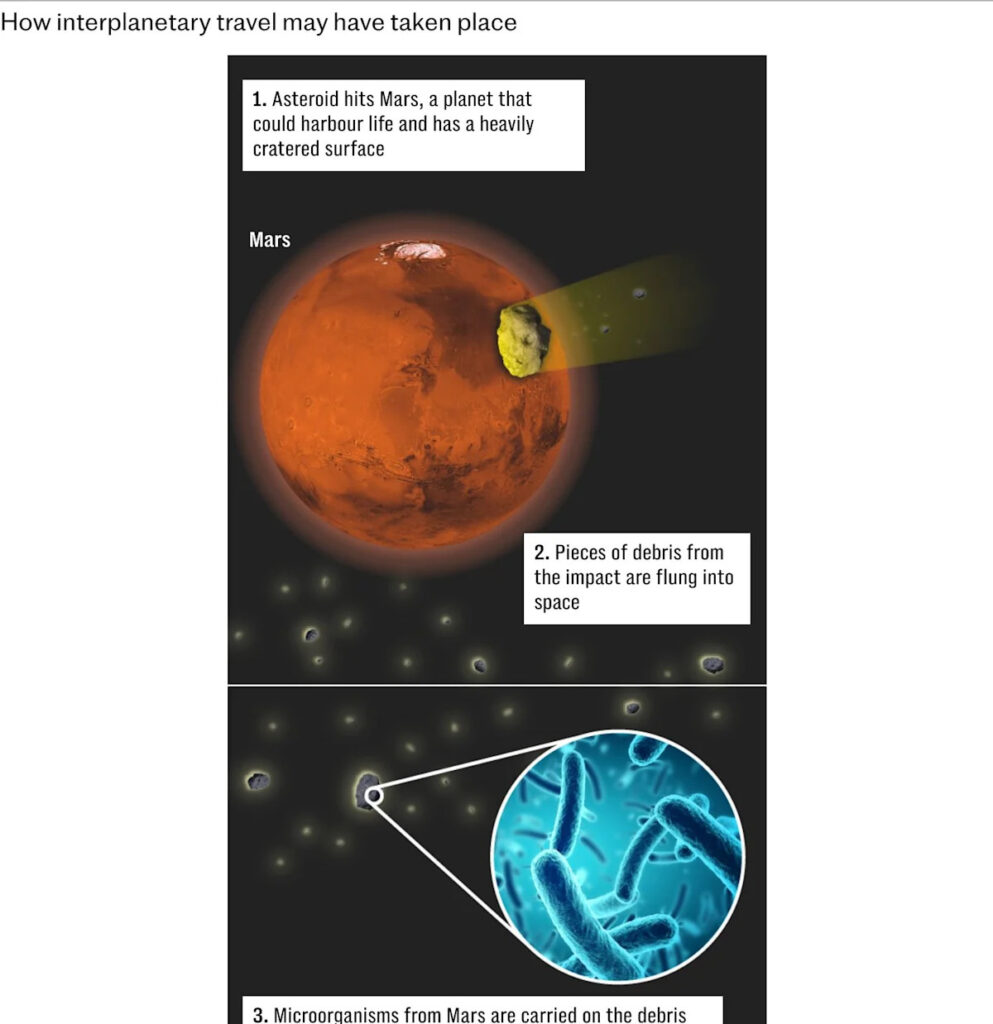
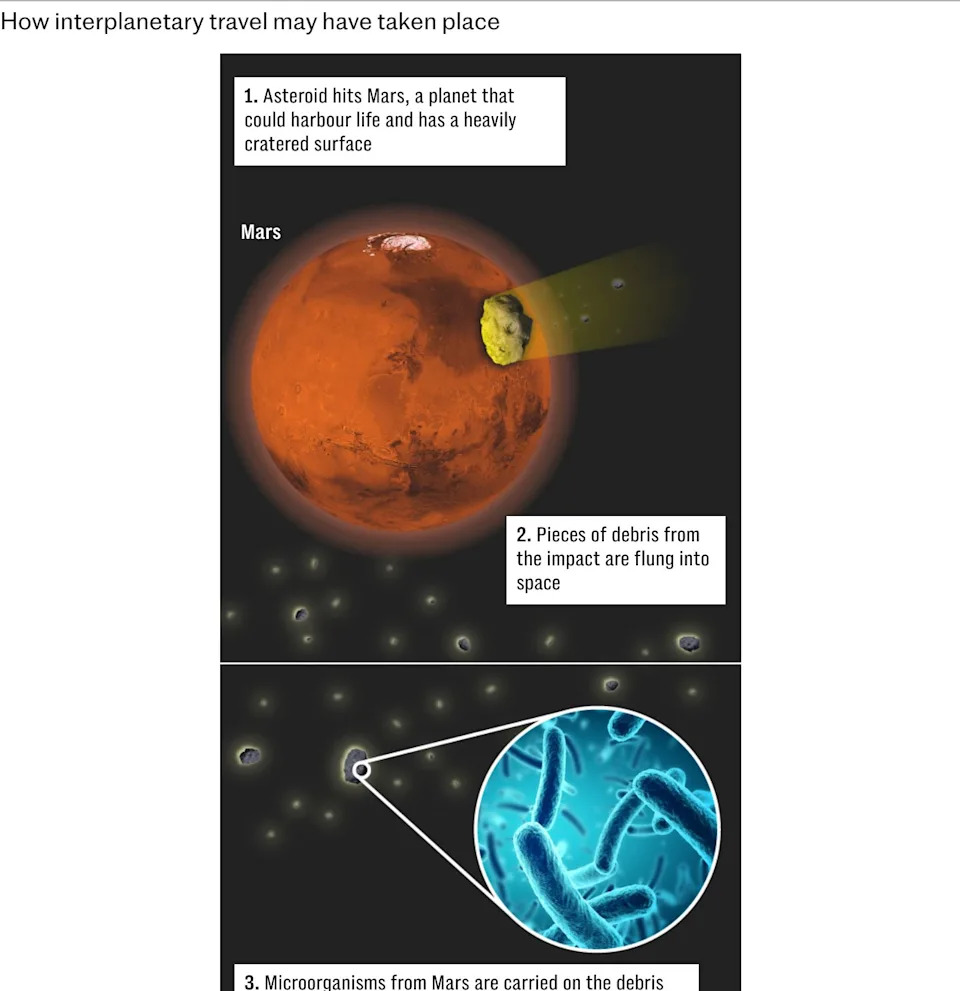
Astrobiologists have long speculated that life forms could be launched into space when asteroids crash into planets and then carried to other worlds, a theory known as the lithopanspermia hypothesis.
But it was previously unclear whether the microbes could survive the impact and hazardous trip through space.
Scientists in the US have discovered that a highly resilient bacterium found in the deserts of Chile could handle the stress of a planetary ejection.
Deinococcus radiodurans has a thick shell and an exceptional ability to self-repair, allowing it to withstand the most inhospitable conditions.
Scientists tested the microbe’s endurance by sandwiching it between metal plates and firing a projectile from a gas gun at speeds of up to 300mph.
The projectile generated pressure of up to three gigapascals – about 30 times the pressure at the bottom of the Mariana Trench, the Earth’s deepest oceanic trench. But despite the extreme conditions, the bacteria survived.
“We expected it to be dead at that first pressure,” said Dr Lily Zhao, the lead author and a Nasa fellow at Johns Hopkins. “We started shooting it faster and faster. We kept trying to kill it, but it was really hard to kill.”
She added: “We have shown that it is possible for life to survive large-scale impact and ejection. What that means is that life can potentially move between planets. Maybe we’re Martians.”
Scientists even found that the equipment expired before the bacteria. The steel configuration holding the plates fell apart before they had reached the limit of what the microbe could tolerate.
If microbes could reach Earth from other worlds, then Mars is a good candidate to be an ancestor for life on our own planet.
Mars was once habitable, with oceans of liquid water, but lost its atmosphere at around the same time that life began on Earth – approximately 3.5 to 4 billion years ago.
Although life has not yet been found on Mars, there are growing signs that organisms did once thrive there.
Last year, a Nasa spacecraft, the Perseverance rover, discovered leopard-spot markings on rocks on Mars containing organic compounds which could have been made by tiny alien lifeforms.
The black halos of the spots were found to contain iron and phosphate, which were indicators that microbial life once lived beneath its surface.
Impact craters cover the surfaces of most bodies in the solar system, and it is known that asteroid strikes can launch material across space.
‘It changes the question of how life began’
Mars is one of the most-cratered planets, and Martian meteorites have been found on Earth, so the study shows that if an asteroid hit an area where microbes were present, they could, theoretically, have travelled to Earth intact.
“Life might actually survive being ejected from one planet and moving to another,” said Prof Kaliat Ramesh, the senior author, of Johns Hopkins. “This is a really big deal that changes the way you think about the question of how life begins and how life began on Earth.”
Previous experiments to test the theory have been inconclusive because researchers picked microbes that were unsuitable for the extreme environments of other planets.
In contrast, Deinococcus radiodurans showed no signs of damage after the lower-pressure hits and just some ruptured membranes and internal damage after the higher-pressure experiments.
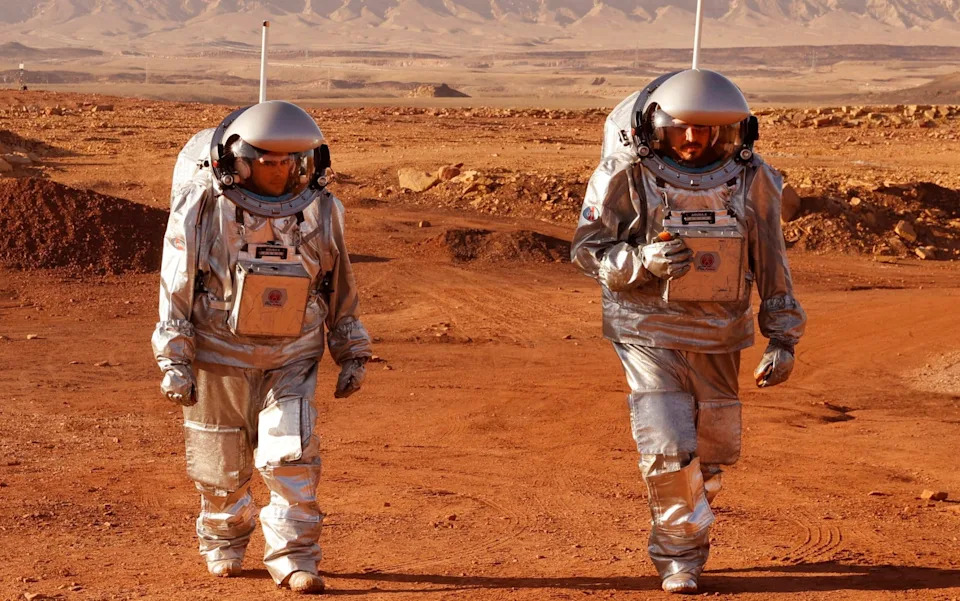
Astronauts prepare for a mission to Mars in 2021. Scientists say their findings indicate that humans may have to be more careful when travelling there than previously thought – Jack Guez/AFP
The scientists concluded that the experiment demonstrated that hardy bacteria easily withstood extreme pressure comparable to an ejection from Mars after an asteroid hit, as well as the inhospitable conditions it would face during the ensuing interplanetary journey.
The possibility of life spreading between planetary bodies also has significant implications for planetary protection and space missions, the team said.
When missions travel to planets that might sustain life, such as Mars, there are tight restrictions and safety measures to prevent contaminating the planet or vice versa.
But the study suggests life could travel to other “sterile” planets or moons where there are no such restrictions in place. “We might need to be very careful about which planets we visit,” added Prof Ramesh. The team is now planning to test whether other organisms, such as fungi, can survive asteroid impacts.
The study was published in the journal PNAS Nexus.