
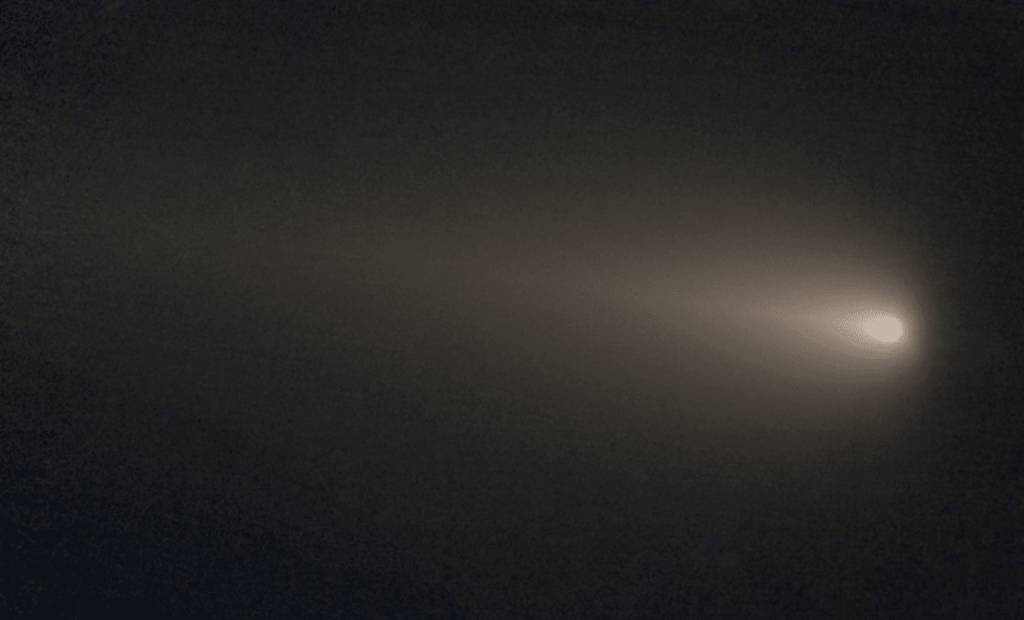
A recently discovered sungrazing comet, C/2026 A1 MAPS, is expected to make a dramatic passage near the Sun in early April 2026. If it survives the intense heat and gravitational forces of its solar encounter, this comet could put on an impressive show for skywatchers. According to an article by Universe Today, astronomers are eagerly watching the comet’s trajectory and its potential for a bright appearance, though its survival chances remain uncertain. As it draws closer to the Sun, C/2026 A1 MAPS’ journey will unfold in exciting and unpredictable ways.
Sungrazing Comet C/2026 A1 MAPS: A Dramatic Close Call with the Sun
Comets are some of the most intriguing objects in our solar system. Their unpredictable behavior and stunning displays make them a frequent subject of study and fascination for astronomers and skywatchers alike. Sungrazers, in particular, are comets that pass incredibly close to the Sun, sometimes skimming just above the Sun’s surface. While these close encounters often result in the comet’s destruction, there have been notable exceptions where a comet has survived and produced breathtaking visual phenomena. One such comet is C/2026 A1 MAPS, a new sungrazer that was discovered in January 2026.
At the time of its discovery, C/2026 A1 MAPS was located at an astonishing distance of 2.056 astronomical units (AU) from the Sun, a far-off location for such a comet. This distance, along with its faint magnitude of +17.8, suggested that the comet was likely to have a relatively large nucleus. Based on initial estimates, astronomers believe the comet’s nucleus may be around 2.4 kilometers wide. However, the excitement surrounding this comet stems from its perilous journey toward the Sun, where it will pass within just 160,000 kilometers of the solar surface on April 4th. For context, this is less than half the distance between the Earth and the Moon.
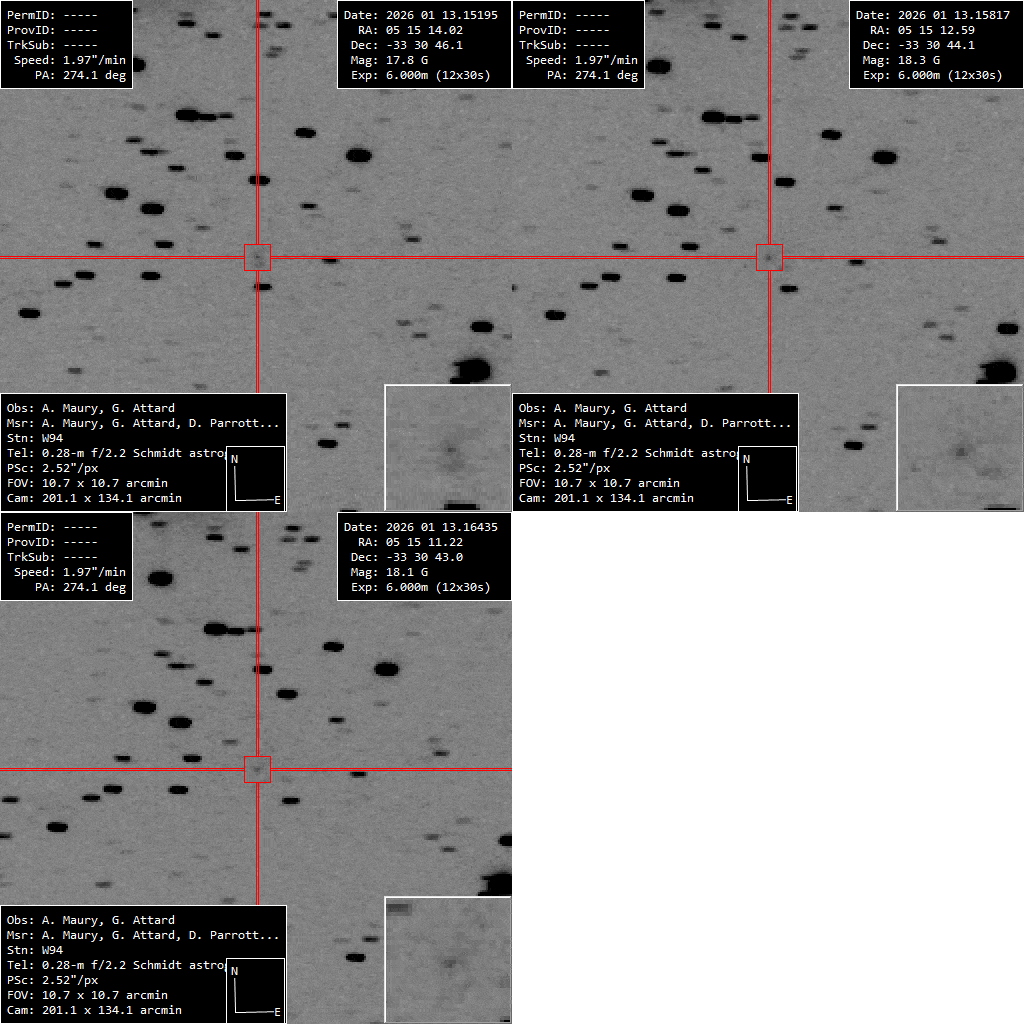 The comet imaged by Alain Maury and Georges Attard on 13 January 2026
The Sun’s Wrath: What Happens When Comets Get Too Close?
Sungrazing comets are notorious for their dramatic encounters with the Sun. As a comet approaches the Sun, it is subjected to extreme temperatures and gravitational forces that can cause it to disintegrate. In the case of C/2026 A1 MAPS, the comet will pass through the Sun’s corona, the outermost layer of the Sun’s atmosphere, where temperatures can reach millions of degrees. These intense conditions make the comet’s survival highly uncertain.
Despite the challenges posed by such a close encounter, some comets have survived similar passages in the past. One of the most famous examples is Comet C/2011 W3 Lovejoy, which passed just 140,000 kilometers above the Sun’s surface in 2011 and made a surprising recovery, providing skywatchers with an impressive post-perihelion show. However, survival is by no means guaranteed, and the comet’s survival chances depend on many factors, including the size and composition of its nucleus.
The extreme heat experienced by sungrazers is due to the Sun’s immense gravitational pull and the friction caused by the comet’s rapid movement through the solar atmosphere. As the comet dives toward the Sun, its icy core is vaporized, often leading to the formation of a dramatic tail of gas and dust. This spectacular display is a key reason why astronomers closely monitor sungrazers, even though many ultimately disintegrate or fade from view.
The Discovery of C/2026 A1 MAPS: An Exciting New Sungrazer
The discovery of C/2026 A1 MAPS in January 2026 has sparked excitement among astronomers, as it is the first comet of the year. Discovered by the MAPS team, a group of astronomers based in Chile, the comet’s discovery came as a surprise due to its remote location at the time. The MAPS team, which operates a network of telescopes in the Atacama Desert, has been instrumental in discovering a number of important celestial objects, including near-Earth asteroids.
C/2026 A1 MAPS was initially designated 6AC4721 but was later renamed after its discoverers: Alain Maury, Georges Attard, Daniel Parrott, and Florian Signoret. The acronym MAPS stands for the names of these astronomers. This is the seventh comet discovered by the MAPS team, which has also been responsible for finding numerous asteroids, including the potential Earth-impact asteroid 2023 DW. The discovery of C/2026 A1 MAPS is part of the team’s ongoing efforts to track and catalog near-Earth objects and other celestial phenomena.
The Kreutz Group: A Legacy of Sungrazing Comets
C/2026 A1 MAPS is a member of the Kreutz group of sungrazers, a family of comets that are believed to have originated from the fragmentation of a larger comet around 362 BC. Over the centuries, this family has produced numerous comets, some of which have been spectacularly visible from Earth. Famous members of the Kreutz group include Comets C/1965 Ikeya-Seki, which stunned observers with its close passage in 1965, and the Great Comets of 1843 and 1882.
The history of the Kreutz group is fascinating, as it suggests that these comets are the remnants of a single, massive comet that broke apart long ago. While many of the comets in the Kreutz group have been too faint to see with the naked eye, others have produced awe-inspiring displays. Comet C/2026 A1 MAPS represents the latest chapter in the story of the Kreutz group, and its upcoming perihelion passage will be eagerly watched by astronomers and enthusiasts alike.
Survival After Perihelion: Will C/2026 A1 MAPS Defy the Odds?
As C/2026 A1 MAPS approaches its perihelion, astronomers are closely monitoring its progress and trying to predict whether it will survive its close encounter with the Sun. If the comet does manage to survive, it will continue its journey out of the solar system, eventually reaching an aphelion 220 AU from the Sun. This would take the comet beyond the Kuiper Belt, into the distant reaches of the solar system, where few comets are ever seen again.
One of the key factors influencing the comet’s survival will be its nucleus. Comets are made primarily of ice and dust, and when they get too close to the Sun, the heat can cause these materials to vaporize. However, some comets have managed to survive perihelion by having larger, more resilient nuclei. If C/2026 A1 MAPS has a sufficiently large nucleus, it may be able to withstand the heat and pressures of its solar encounter, emerging from the other side with a spectacular tail of gas and dust.
SOHO’s Role in Observing C/2026 A1 MAPS
The Solar and Heliospheric Observatory (SOHO) has been instrumental in tracking sungrazing comets. Launched in 1995, SOHO has discovered over 5,000 sungrazing comets, and it will play a key role in observing C/2026 A1 MAPS as it approaches the Sun. SOHO’s LASCO C3 and C2 instruments will provide valuable data on the comet’s behavior as it passes through the solar corona.
As the comet passes through the SOHO’s field of view, astronomers will be able to track its movements and monitor any changes in its tail or nucleus. SOHO will be particularly useful in observing the comet as it disappears behind the Sun and reemerges, offering insights into its survival and its potential to produce a dramatic display. If the comet does survive its perihelion, SOHO’s observations will help scientists learn more about the behavior of sungrazing comets and their role in the solar system.
The Spectacular Potential of C/2026 A1 MAPS’ Tail
One of the most exciting aspects of sungrazing comets is the potential for a spectacular tail to form as the comet approaches the Sun. The tail of a comet is made up of gas and dust that are expelled as the Sun’s heat vaporizes the comet’s nucleus. If C/2026 A1 MAPS survives its perihelion passage, it could produce a stunning tail that stretches across the sky.
The tail of a comet can be an awe-inspiring sight, with long, sweeping arcs of light and color. Comet C/1965 Ikeya-Seki, for example, produced one of the most remarkable tails in history when it passed near the Sun in 1965. If C/2026 A1 MAPS follows suit, skywatchers may be treated to a similar display, particularly in the southern hemisphere, where the comet will be visible before and after its perihelion passage.
The Search for Other Sungrazers: What’s Next After C/2026 A1 MAPS?
While C/2026 A1 MAPS is currently the most exciting sungrazer in the sky, it is far from the only one. Sungrazing comets are not rare, and the Solar and Heliospheric Observatory (SOHO) continues to discover new ones regularly. Some astronomers speculate that we may be due for another bright sungrazer in the next few decades, with predictions pointing to the year 2050 as a potential time for the next great sungrazer event.
The discovery and tracking of sungrazers is an ongoing effort, with new tools and techniques constantly improving our ability to predict and observe these fascinating objects. As we continue to monitor comets like C/2026 A1 MAPS, astronomers are also looking for other potential sungrazers that may provide new insights into the behavior of comets and their interactions with the Sun.