
LISTEN | Astronomers reveal how they’re creating the first video of a black hole:
Quirks and Quarks17:57How astronomers are capturing the first ever video of a black hole
Contrary to science fiction, black holes are not portals to other dimensions or cosmic vacuum cleaners that swallow up everything around them.
“The media always paints black holes as these pits of despair, and everything falls in, but they’re much more fun than that,” astrophysicist Sera Markoff told Quirks and Quarks host Bob McDonald.
Markoff is part of a global team working to capture the first-ever video of a black hole, a scientific leap that could reveal how these mysterious cosmic objects behave.
“There’s just an enormous amount of questions that we’d like to be able to answer about black holes,” she said.
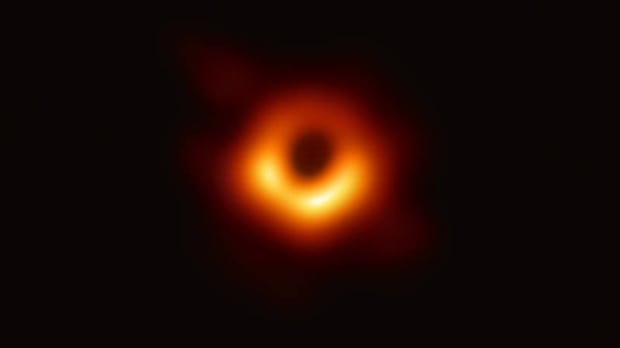
In 2019, scientists released the first image of a black hole — a supermassive one at the heart of Messier 87 (M87) galaxy, about 50 million light-years from Earth — using the Event Horizon Telescope, a network of eight radio telescopes that operates as a single virtual instrument, linking facilities from Antarctica to Spain and Chile.
Markoff, the Plumian professor of astronomy at the University of Cambridge, says the EHT is now being used to track the colossal black hole in M87 in motion — an advance that could reveal details that still images cannot. There are now 12 telescopes in total, but only eleven will take part, as the telescope in the South Pole cannot see M87.
This time, images will be taken far more frequently — every three to four days from March through April — allowing astronomers to bring the black hole’s motion vividly to life.
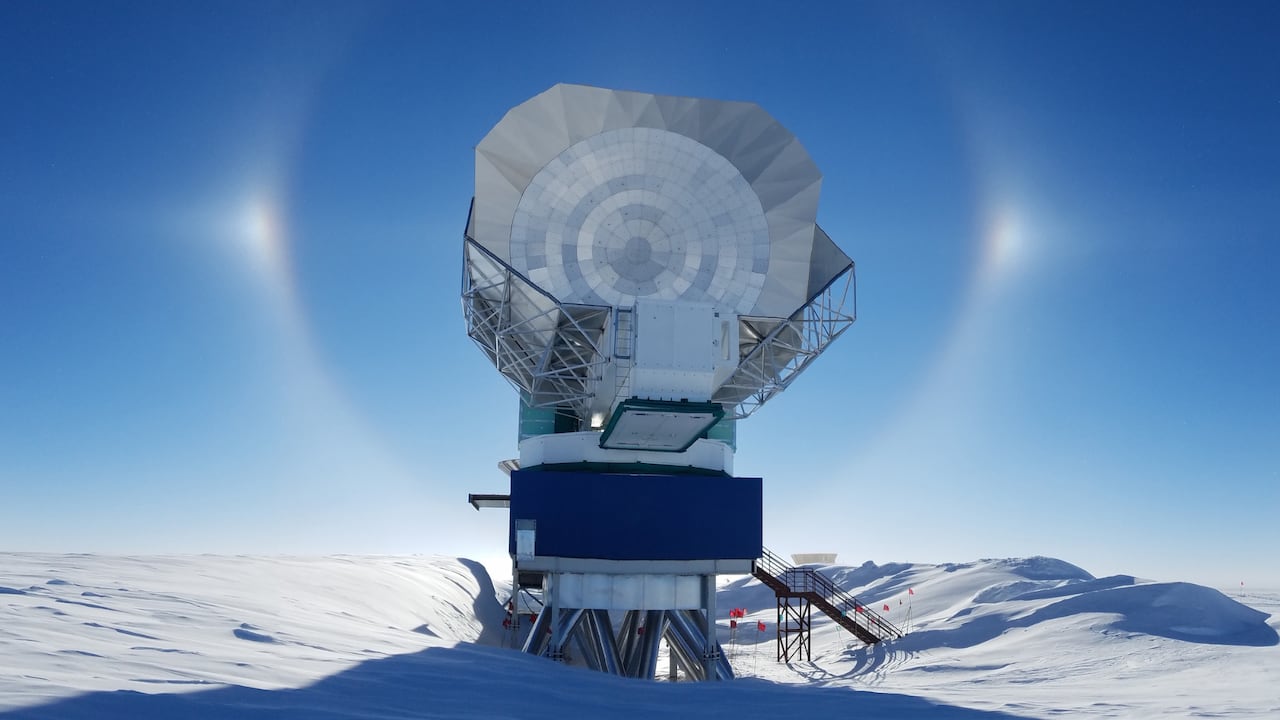 The South Pole Telescope is located in Antarctica, the most extreme location of the telescopes in the Event Horizon Telescope Array. (Junhan Kim/University of Arizona)
The black hole in M87 is a prime candidate for viewing, as it evolves much more slowly compared to others, from several days to over a week, says Vincent Fish, operations data manager for EHT.
That slower pace allows astronomers to combine an entire night’s worth of data into a single image — snapshots that can then be stitched together over time to create what Fish calls “a time-lapse movie” of the black hole in motion.
Choosing what to film
Black holes themselves change little on human timescales, but the hot gas swirling around them does. That material forms a turbulent disk that constantly shifts and churns, says Markoff, who is also professor of theoretical astrophysics at the University of Amsterdam.
For the black hole in M87, those changes unfold over just a few days to a week. Capturing only a single snapshot each year, as researchers did previously, meant missing much of its dynamic behaviour.
 Sera Markoff is the Plumian professor of astronomy and experimental philosophy at the University of Cambridge. She was one of the people who presented the first black hole image in 2019. (Tina Korhonen)
While there is another suitable candidate for observation — Sagittarius A* — it may be too restless to film, according to Fish, who is also a research scientist at MIT Haystack Observatory.
Located at the centre of our home galaxy, Sagittarius A* changes so quickly that observations taken just an hour apart can appear to show entirely different objects, making detailed study difficult, he says.
Probing extreme physics
According to Markoff, it will take a long time to process the many “petabytes of data” recorded at each of the telescopes before they can get to the point of analyzing them to construct the images they need for the video.
But once it’s ready, the video could help answer some of the biggest questions about how black holes work, she says.
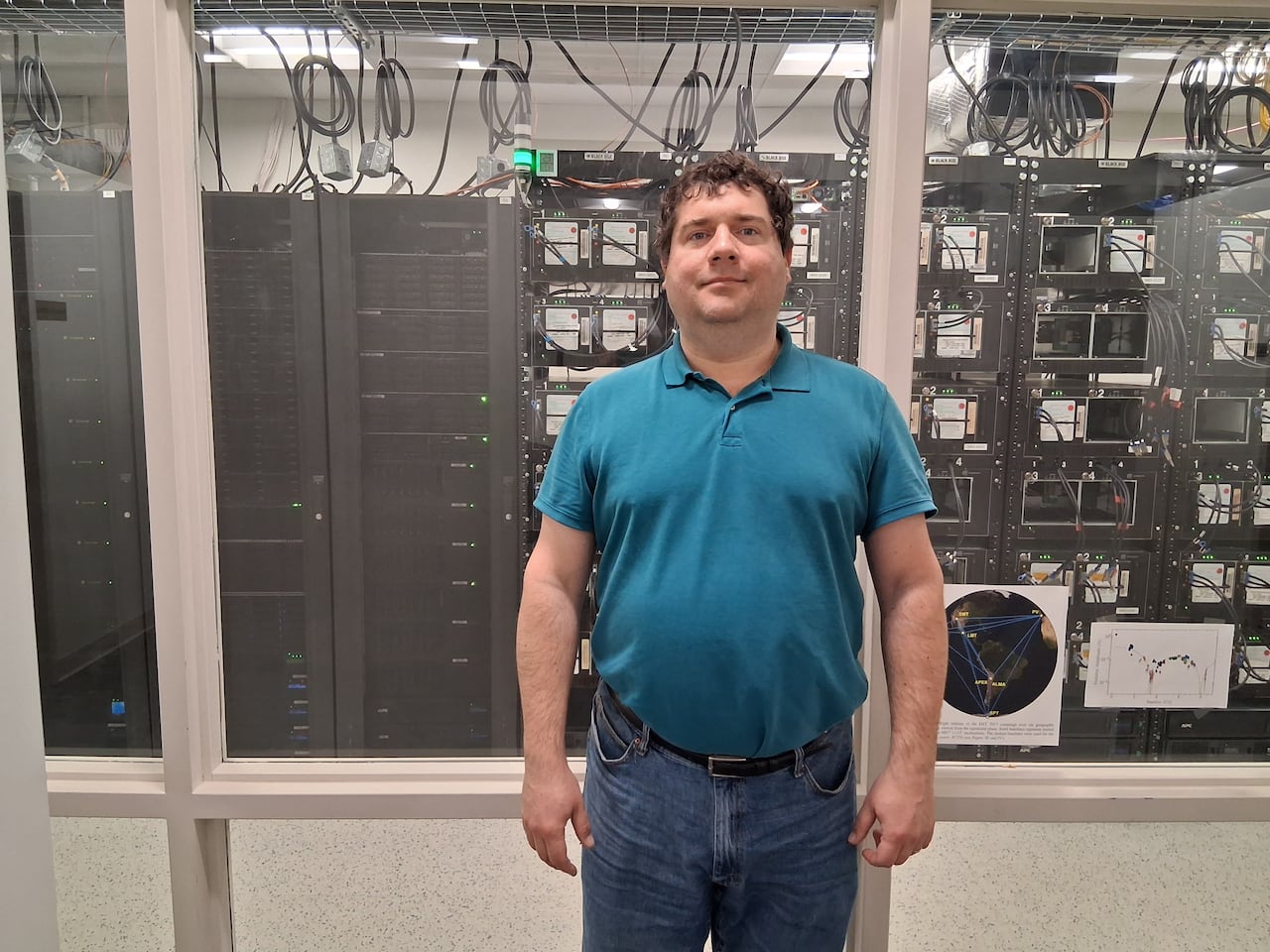 Vincent Fish is a research scientist at the Massachusetts Institute of Technology’s Haystack Observatory and sits on the Event Horizon Telescope science board. He’ll be the conductor of the telescopes to capture the first-ever video of a black hole in M87. (Heidi Johnson)
Matter swirling around a black hole moves at close to the speed of light, reaching conditions far beyond anything scientists can recreate in laboratories on Earth, she says. Because of this, astronomers have developed competing theories about what happens in these extreme environments.
Researchers, she says, hope the new observations will help resolve some of those debates: Which direction is the black hole spinning? How does it feed on surrounding matter? Why does some material fall inward and grow the black hole, while other material is blasted outward in “big firehose-like” jets of plasma?
Others can release winds of material, and some — like Sagittarius A* — remain largely dormant, leading scientists to suspect that black holes may cycle through active and quiet phases over time, says Markoff.
Understanding these processes matters because the influence of black holes extends far beyond their immediate surroundings, she says.
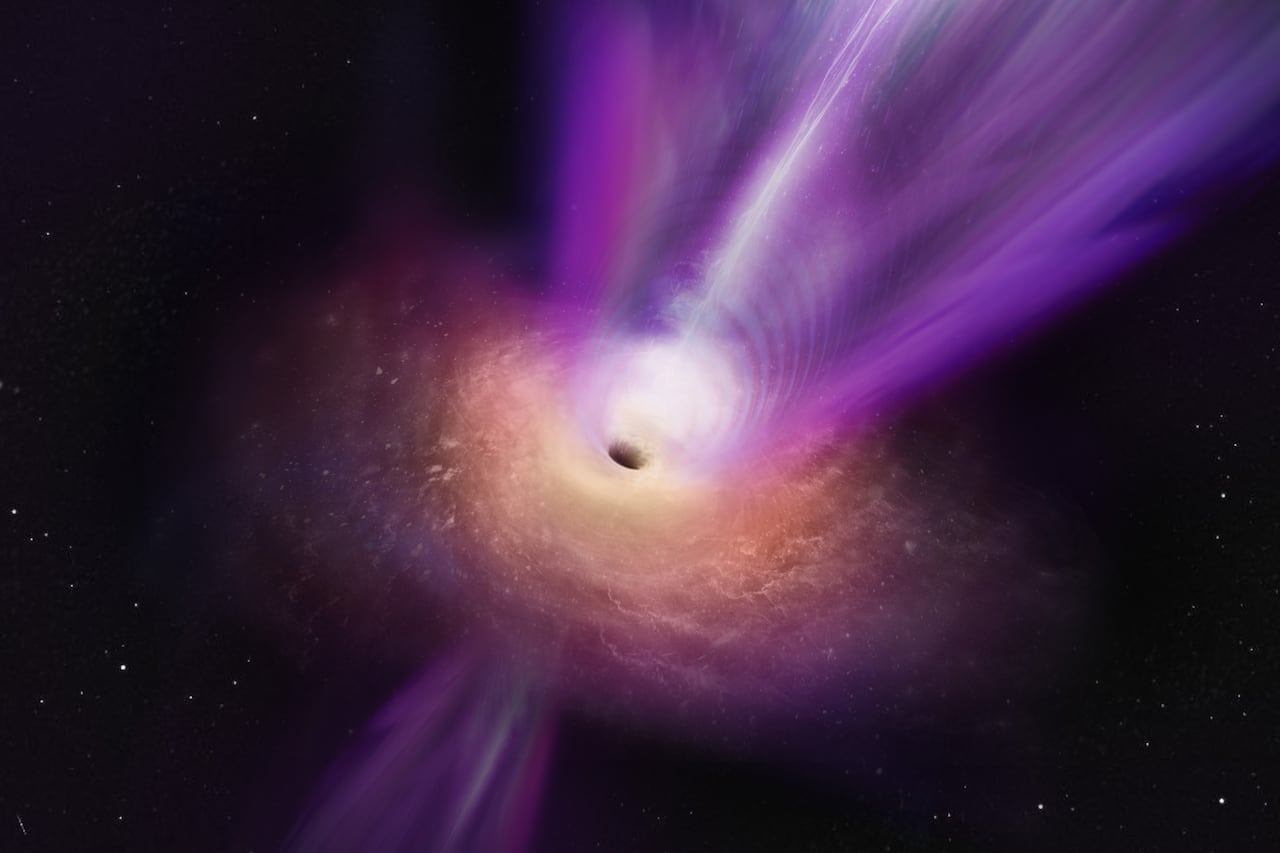 Artist’s conception shows a close-up view of the accretion flow and the jet emerging from the black hole region in Messier 87. (Sophia Dagnello, NRAO/AUI/NSF)
For example, jets from M87, she says, blast through the galaxy and inject enormous amounts of energy into the surrounding gas. This process — known as galactic “feedback” — can heat the gas and prevent it from cooling enough to form new stars.
In this way, black holes may regulate the growth of their host galaxies, sometimes growing, quenching or even shutting down star formation.
“When we think about ourselves living at this time and place in the universe, we’re asking ourselves, ‘How did we get here? Why does the universe look the way it does?” Markoff said.
“We know black holes played a big role.”