
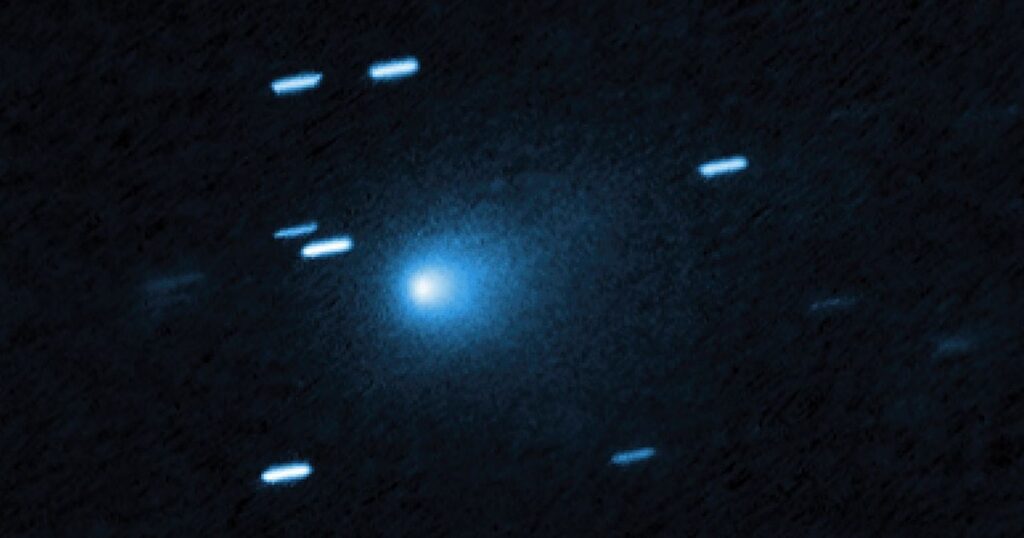

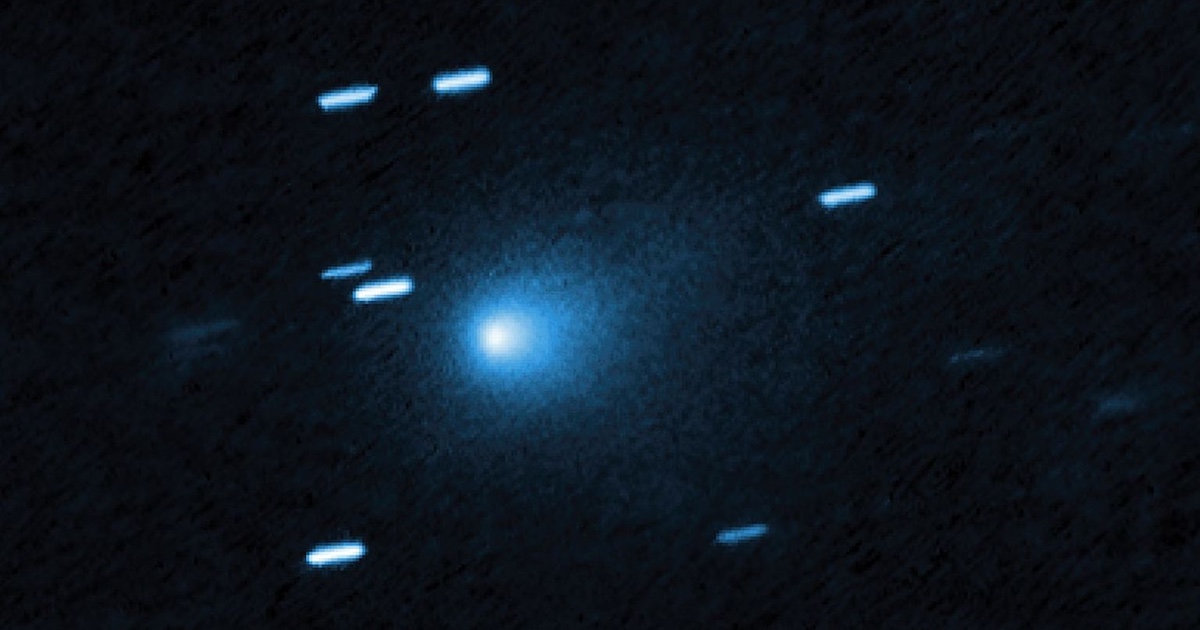
NASA/ESA/David Jewitt (UCLA)/Joseph DePasquale (STScI)
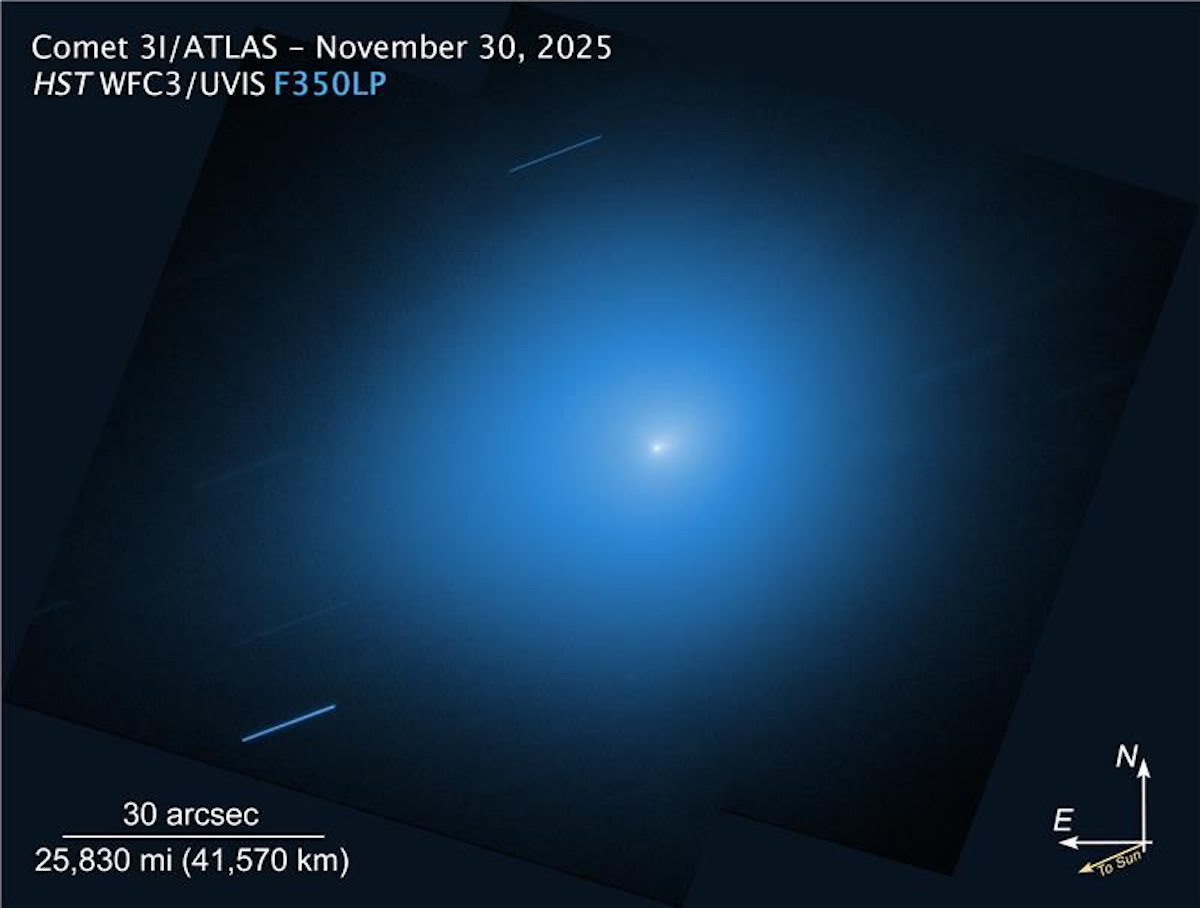
In December 2025, interstellar object 3I/ATLAS passed the Earth by on its whistle-stop journey through our solar system.
The comet had been hurtling through our solar system for some months – with its discovery in July 2025 quite the surprise.
This is because the comet did not originate in our solar system, and is only the third known interstellar object to ricochet through our solar system from elsewhere.
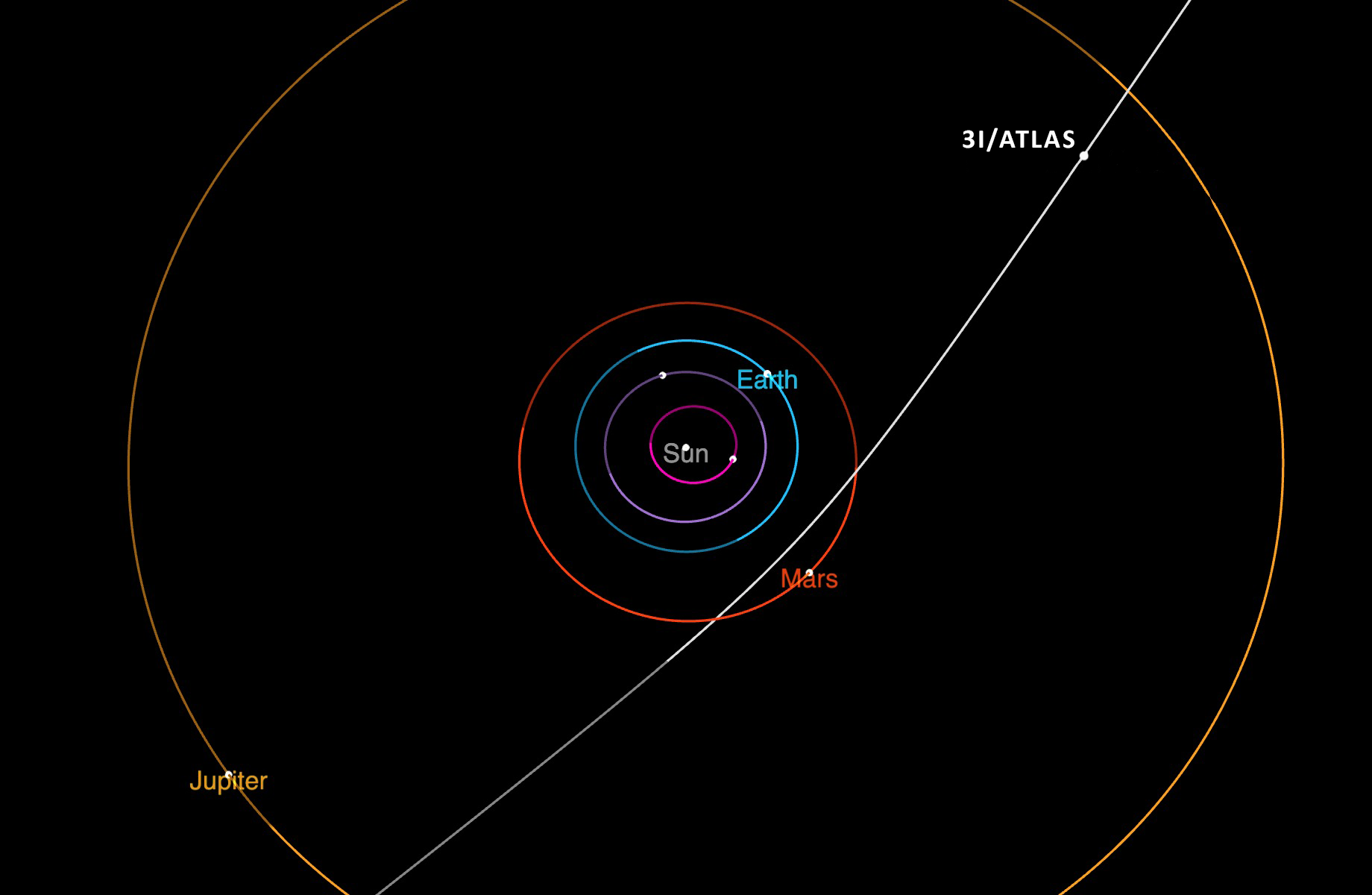
But it’s quite literally a flying visit, with 3I/ATLAS following a retrograde orbit at approximately 70 kilometers per second.
NASA/JPL-Caltech
Luckily, the visit of 3I/ATLAS is expected to have little in the way of ramifications – besides plenty of intrigue from the only known life forms it has passed.
In March 2026, the comet is projected to pass by Jupiter on its solar sightseeing tour, before following its path further toward the outward edge of our star system.
Though it is a fast route, it is a long one (for us – it’s extremely brief in terms of space time). Current calculations suggest that 3I/ATLAS will then bypass Saturn in July 2026, Uranus in June 2027, Neptune in June 2028 and Pluto in April 2029.
Shortly after passing Pluto, 3I/ATLAS will make its final departure from our solar system.
NASA/Hubble
As for where it came from? Well, we’re not entirely sure. However, scientists have followed its path to understand the direction from which it travelled, as explained in a NASA factfile:
“3I/ATLAS formed in another star system and was somehow ejected into interstellar space, which is the space between the stars. For millions or even billions of years, it has drifted until it recently arrived at our solar system. It has been approaching from the general direction of the constellation Sagittarius, which is where the central region of our galaxy, the Milky Way, is located. When discovered, 3I/ATLAS was about 410 million miles (670 million kilometers) away from the Sun, within the orbit of Jupiter.”
Though, as yet we’re unsure exactly where it came from, or how or why it got here, the reality that a (harmless) visitor from outer space is touring our solar system is fascinating for so many.
It makes you wonder what else is out there.
If you thought that was interesting, you might like to read about why we should be worried about the leak in the bottom of the ocean.
Categories: NATURE/SPACE, SCI/TECH
Tags: · 3I/ATLAS, comet, Hubble Space Telescope, interstellar object, NASA, orbit, science, single topic, solar system, space, space object, top