
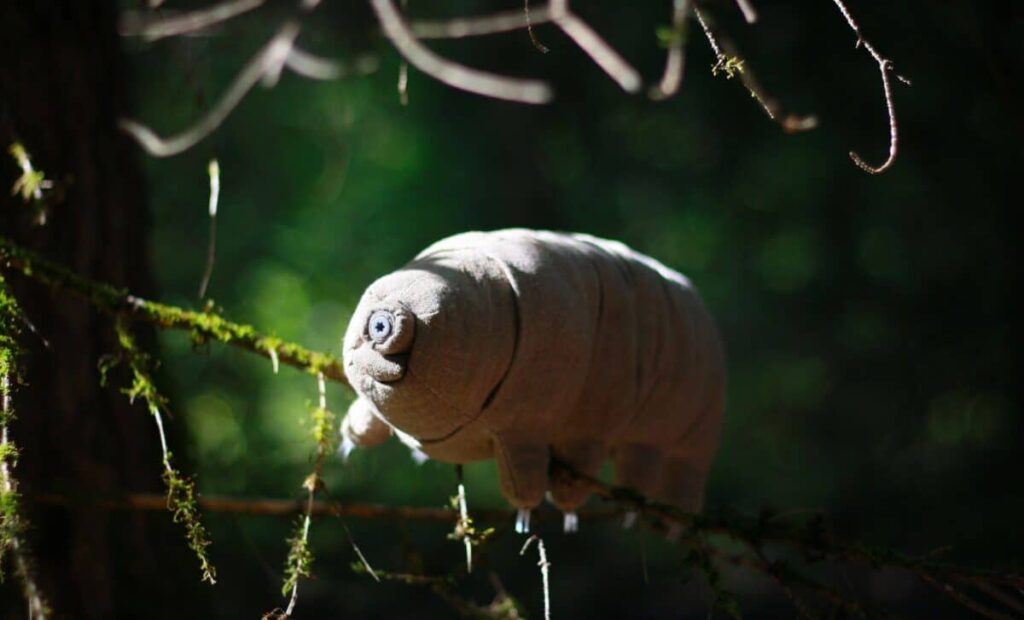
Mars may already possess a built-in defense against contamination from Earth. Experiments using simulated Martian soil show that some compounds in the regolith can damage or inhibit microscopic organisms.
Researchers investigating the habitability of Martian soil recently observed that certain regolith compositions can strongly affect living organisms. The work focused on how microscopic animals react when exposed to soil that mimics the chemical composition measured on Mars.
The results highlight a paradox for future exploration. The same properties that make the Martian surface hostile to life could also help prevent Earth microbes from contaminating the planet, an issue that space agencies take extremely seriously when sending spacecraft to Mars.
Martian Soil Found Harmful to Tardigrades
The research team led by microbiologist Corien Bakermans at Penn State University examined how tardigrades, tiny animals often called “water bears”, behave when placed in simulated Martian regolith.
Tardigrades are famous for their resilience. These microscopic organisms can survive extreme environments, including radiation, vacuum and freezing conditions. For scientists, they represent a useful model for testing how simple animals might react to alien environments.
According to reporting published by Penn State, the team exposed tardigrades to two types of regolith simulants based on measurements collected by NASA’s Curiosity rover in Gale Crater. One simulant, known as MGS-1, represents typical Martian soil, while OUCM-1 was designed to mimic material from the Rocknest region explored by Curiosity.
When placed in the MGS-1 simulant, the tardigrades quickly showed signs of stress. Within two days, many of them entered a dormant state, a survival response normally triggered by dehydration or harsh conditions.
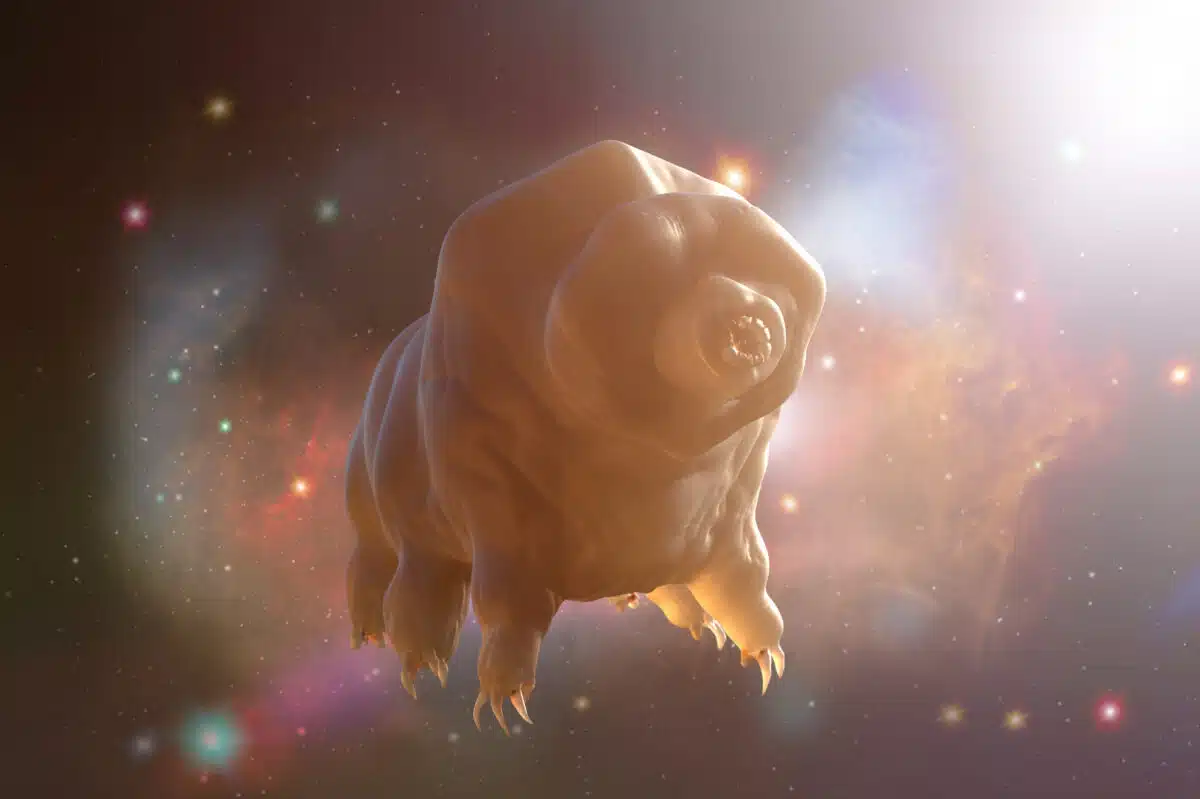 3D visualization of a tardigrade in space. Credit: Shutterstock
Regolith Toxins May Suppress Life
The researchers noticed a clear difference between the two soil simulants. Although both had negative effects, the MGS-1 material appeared significantly more damaging to the organisms. In the statement, Bakermans said,
“It was very damaging compared to OUCM-1, which was still inhibitory but much less so. We were a little surprised by how damaging MGS-1 was, [so] we theorized that there might be something specific in the simulant that could be washed away,” she said while describing the early results of the experiment.
To test the idea, scientists washed the simulant with water and repeated the experiment. After this treatment, tardigrades exposed to the washed soil showed much fewer negative effects, suggesting that the harmful substance was water-soluble, possibly salts or another compound that dissolves easily. The exact chemical responsible for the toxicity has not yet been identified.
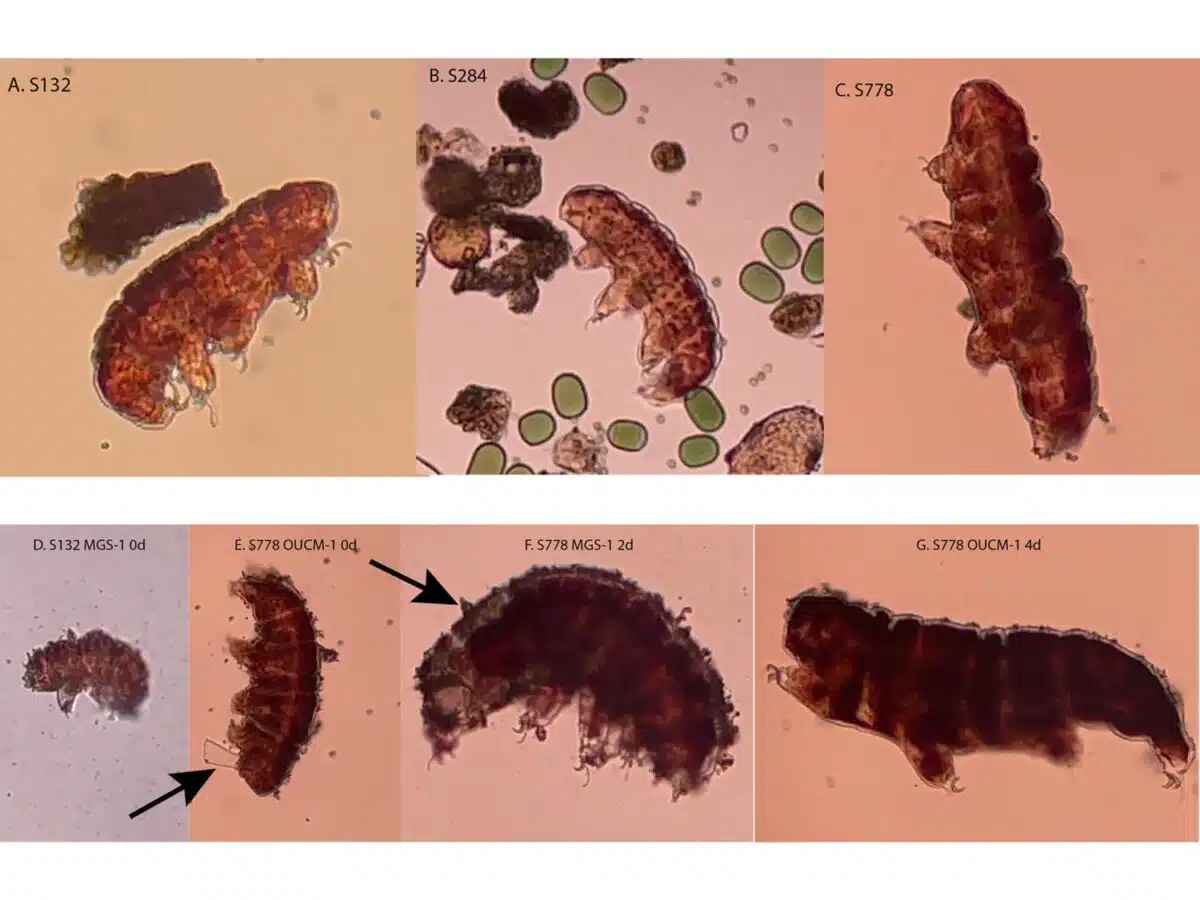 The top three images show active tardigrades in beach sand on Earth. Credit: Corien Bakermans/Penn State
Mars Missions Face a New Problem
The findings also touch on the long-standing issue of planetary protection, the effort to prevent biological contamination between planets.
Space agencies sterilize spacecraft before sending them to Mars because any microbes from Earth could complicate the search for native Martian life. According to guidelines established by the Committee on Space Research (COSPAR), missions that land on worlds that might host life must keep the probability of carrying terrestrial microbes below one in ten thousand.
Based on the research, the possibility that Martian soil itself can suppress biological organisms may act as an additional safeguard against accidental contamination. At the same time, the results point toward another possibility. If harmful compounds in the regolith can be removed by washing, future explorers might one day transform Martian soil into a medium capable of supporting plant growth.