
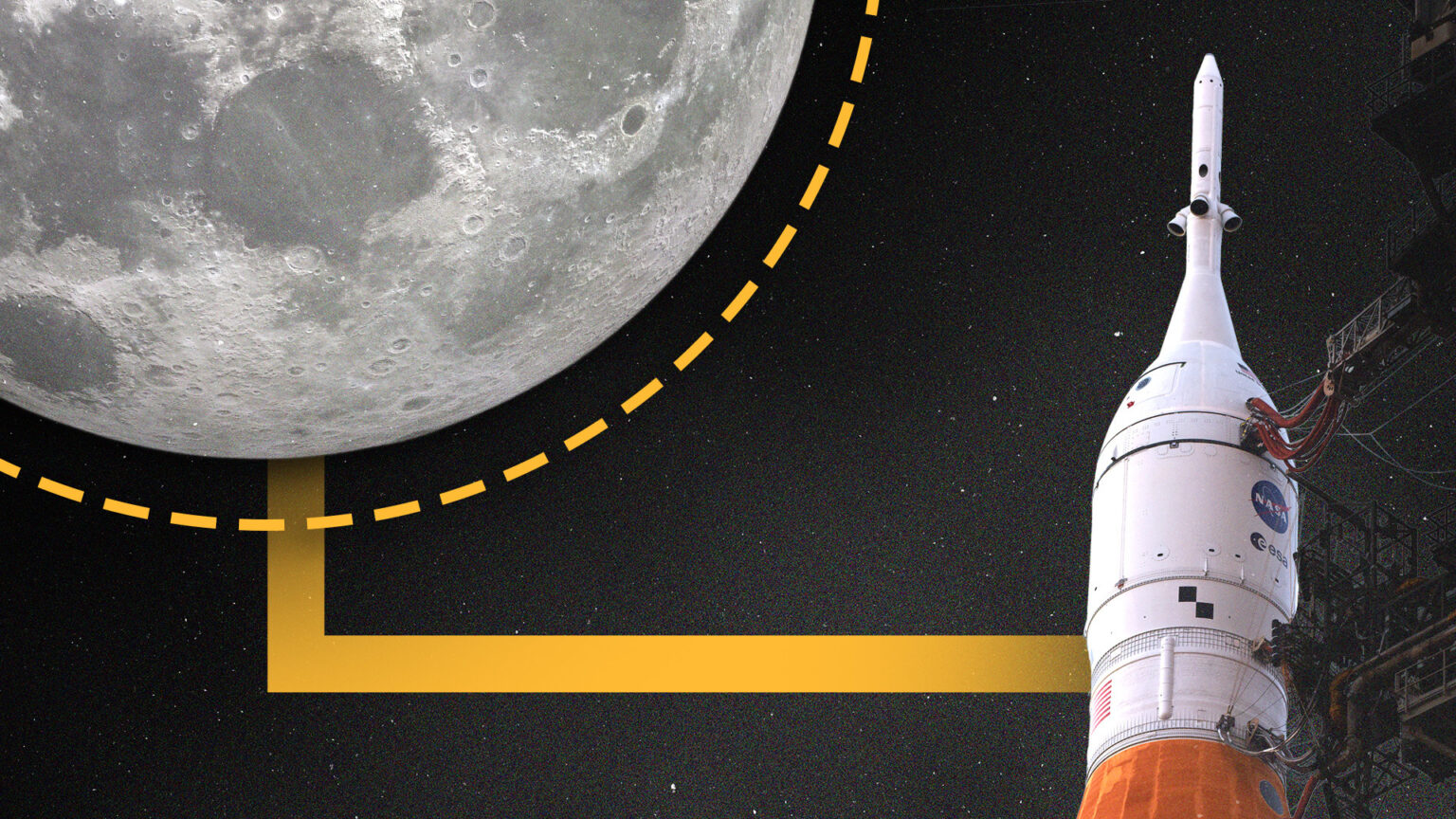
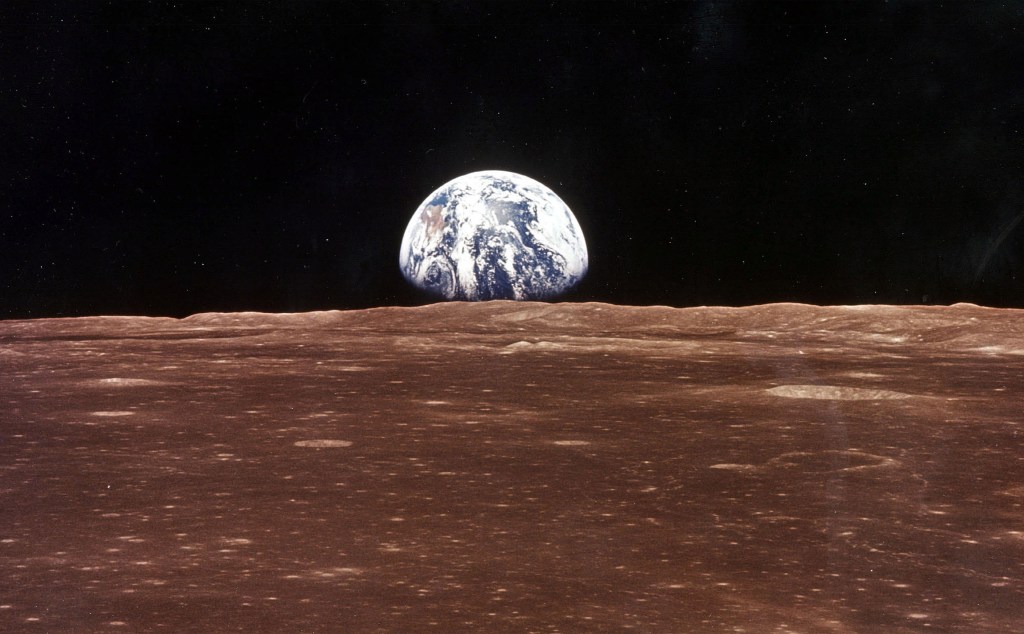
For more than 50 years, the moon has lingered just out of reach — a gray, cratered world visible through spacecraft windows and helmet visors.
No boots have unsettled its dust.
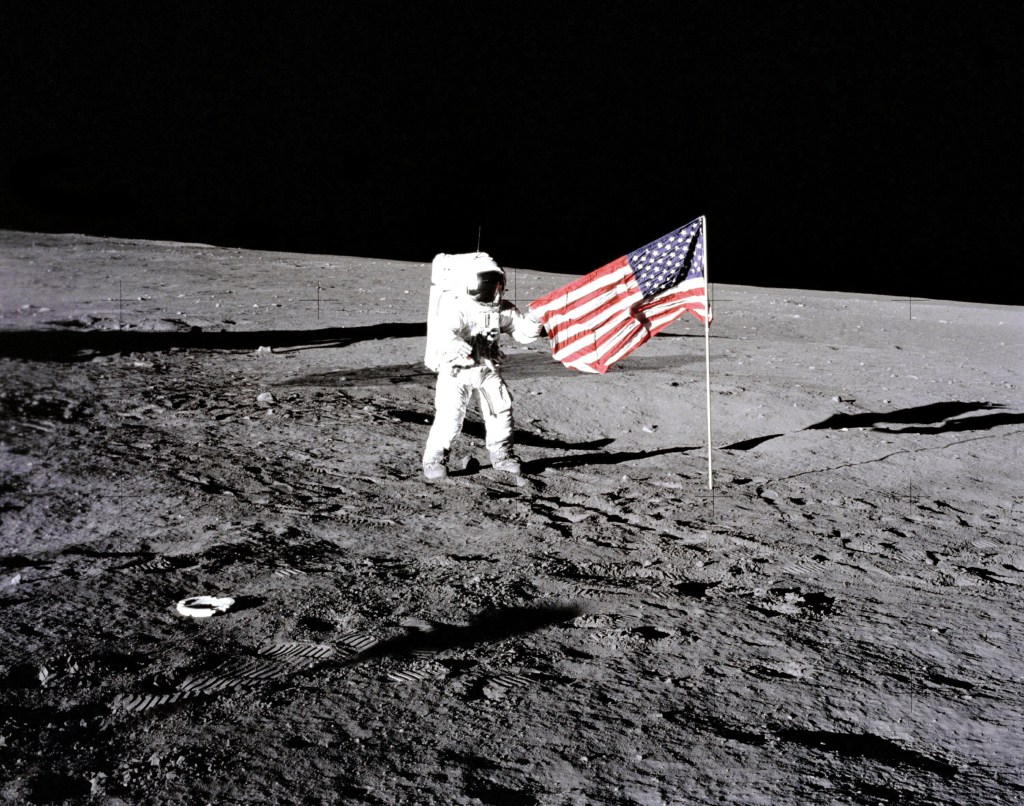
No human hands have thrust new flags into the surface.
No voices have crackled through radios, disrupting its eerie silence.
That was supposed to change soon.
 (Photo By NASA)
But NASA’s long-awaited Artemis II mission — set to be the first crewed flight around the moon since 1972 and a critical precursor to returning U.S. astronauts to the lunar surface — has been delayed yet again.
The Artemis program is now at least four years behind schedule, putting the U.S. in a too-close-for-comfort race with China to be the first nation to set foot on the moon this century.

Download the SAN app today to stay up-to-date with Unbiased. Straight Facts™.
Point phone camera here
Experts have long warned that the Artemis program’s timeline was too ambitious, too expensive and too risky, relying on too many “firsts,” such as a new lunar lander and new spacesuits, to be successful.
“In my judgment, the Artemis program is excessively complex, unrealistically priced, compromises crew safety … and is highly unlikely to be completed in a timely manner,” former NASA Administrator Michael Griffin told Congress in 2024.
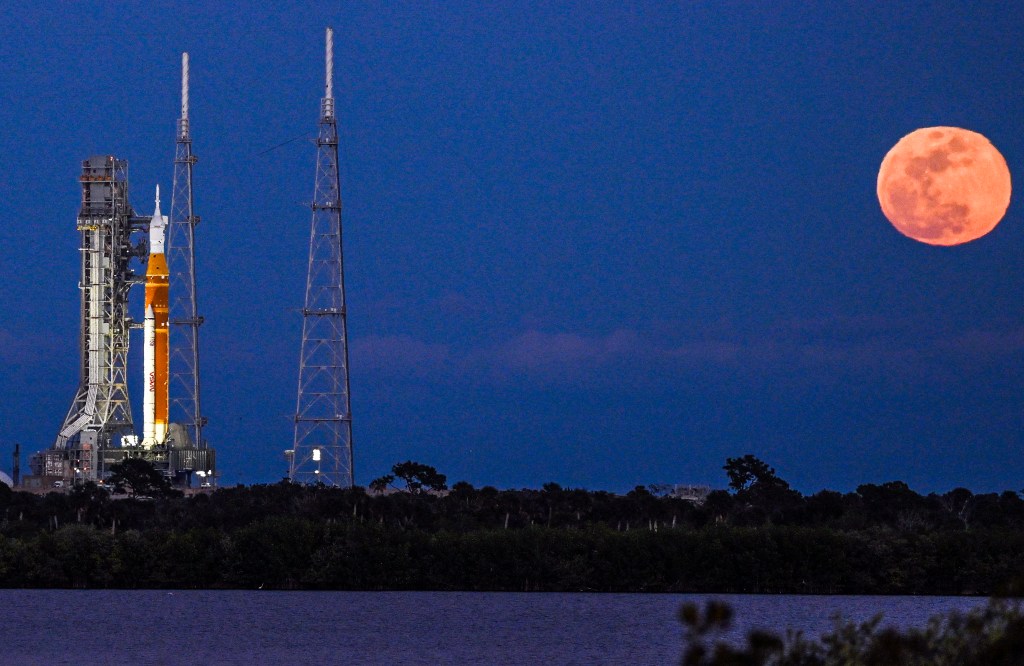
The latest setback, caused by an “interrupted flow of helium” to the rocket, will sideline flight windows originally scheduled for this month, and ground the flight until at least April.
Now, NASA is rethinking its approach to lunar missions.
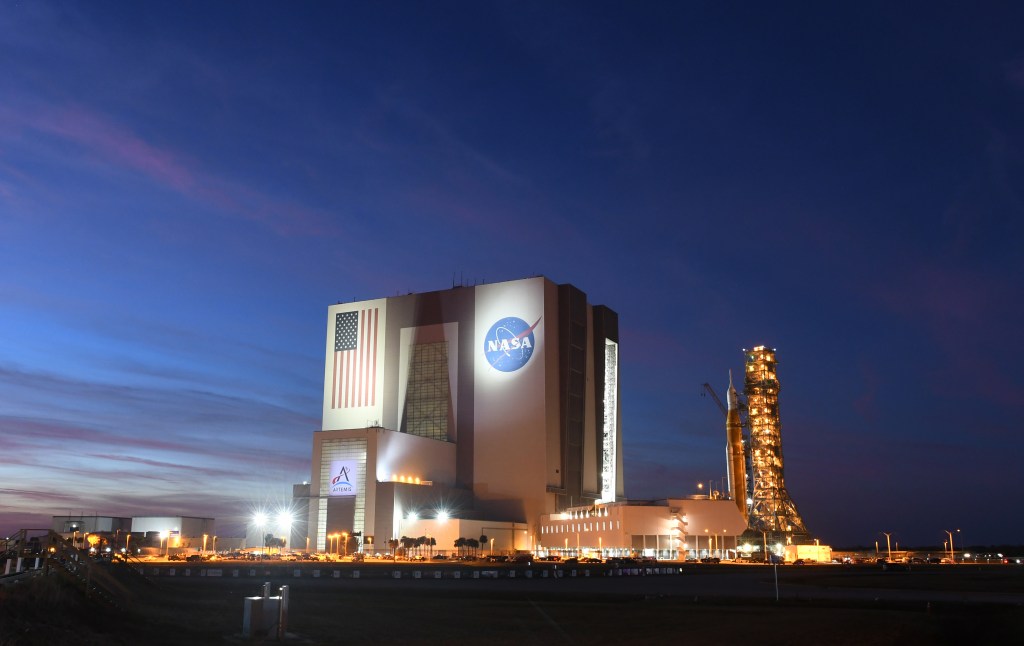
During a Friday news conference at Florida’s Kennedy Space Center, NASA Administrator Jared Isaacman announced the agency will simplify elements of the program and increase the frequency of missions, aiming to launch every 10 months versus every three years.
For comparison, Isaacman said, the Apollo program that first put astronauts on the moon in the 1960s and ‘70s — and Mercury and Gemini, the programs that pre-dated it — launched closer to every three months, on average.
“Everybody agrees this is the only way forward,” Isaacman said. “They know this is how NASA changed the world, and this is how NASA changes it again.”
Under this increased flight cadence, Artemis III, originally intended to be the boots-on-the-surface mission, will serve as another test flight in 2027. Now Artemis IV and V will target landings in 2028.
Whether this is achievable remains to be seen. But Ken Kremer, a research chemist and founder and managing editor of Space UpClose, said during the Friday news conference the revised plan is “fantastic” and “exactly what’s needed.”
Returning to the moon “will benefit all of humanity,” Kremer told Straight Arrow News. “There’s a great scientific argument to be made for going back,” which includes mining lunar resources, preparing for Mars missions and inspiring future generations of scientists and engineers.
 (Photo by Paul Hennesy/Anadolu via Getty Images)
How shifting presidential priorities affect moon landing timelines
In December 2017, almost a year into President Donald Trump’s first term, Trump signed a directive calling on NASA to return astronauts to the moon.
“We will not only plant our flag and leave our footprint, we will establish a foundation for an eventual mission to Mars,” Trump said. “And perhaps, someday, to many worlds beyond.”
Less than two years later, the administration announced a timeline: Boots on the surface by 2024.
The program was dubbed “Artemis,” named after the Greek goddess of the moon and twin sister of Apollo, for whom the original lunar program was named.
Trump’s plan was nothing new.
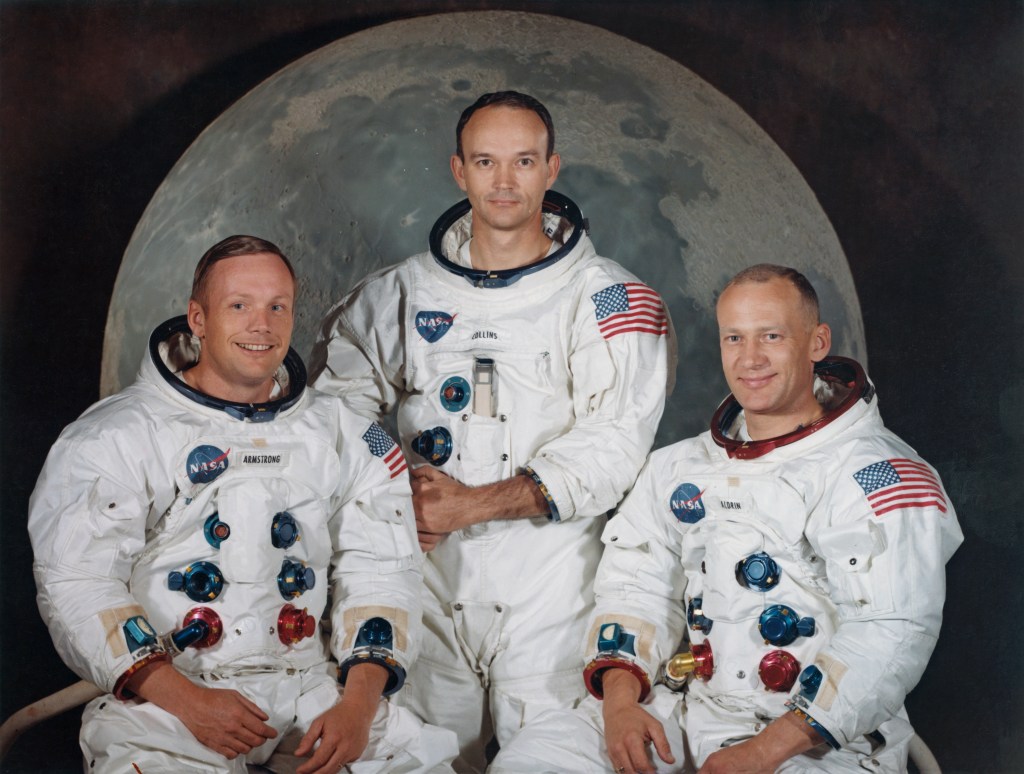
When Apollo 11 landed on the moon in July 1969, NASA personnel were already planning an era of exploration in which a lunar base was just a decade away, followed soon after by a trip to Mars. Instead, President Richard Nixon’s administration scaled back Apollo funding and canceled the final three moon missions.
The 1972 Apollo 17 mission became the last of its kind.
Since then, administrations have oscillated between low Earth orbit, the moon and Mars as priorities, repeatedly starting and cancelling programs.
That discontinuity came to an end five years ago when President Joe Biden took office. The 46th president opted to keep the country’s sights set on the moon.
 (Photo by NASA/Newsmakers)
But other nations had spent decades closing the technology gap, acting on lunar ambitions as the U.S. spun its wheels. China, in particular, has steadily advanced its space program since launching its first satellite in 1970, landing robotic missions on the moon and planning for a crewed lunar mission by 2030.
Now, the U.S. is faced with a race to the lunar surface — one that could prove geopolitically disastrous if lost.
“The stop and start is just a catastrophe for the program,” Kremer said. “We should have been back to the moon more than 10 years ago … and now the landing will be at the end of the decade if we’re lucky.”
Part of the problem is funding: The instability born from changing priorities not only disrupted timelines, it also shaped how NASA has been funded.
And now, the U.S. is planning large-scale lunar missions far more complex than the Apollo days, but providing significantly less money to do them.
“Money has been the bane of the existence of the efforts to get us back to the moon,” said Marcia Smith, veteran space policy analyst and founder and editor of SpacePolicyOnline.com.
Between 1960 and 1973, taxpayers spent $25.8 billion, according to the Planetary Society — approximately $280 billion today. By comparison, a 2023 government report estimated Artemis costs would hit roughly $93 billion by 2025.
“We had a lot of money back in the ‘60s,” Smith said. “If NASA got as much in 2017 as it did in the ‘60s, we could have gotten (to the moon) in that timeframe.”
 (Photo by Space Frontiers/Getty Images)
What does the new timeline for a moon landing look like?
The helium flow issue that forced NASA to postpone its Artemis II mission is just the most recent in a series of setbacks that have plagued the program since its inception.
Its Space Launch System rocket — which NASA began developing in 2011 and has cost taxpayers upwards of $23 billion — faced similar helium system issues during the 2022 Artemis I mission. This problem, along with other technical issues including a hydrogen leak, kept the uncrewed test flight grounded for months.
The Orion spacecraft, which will transport humans to the moon and has been in various stages of production since President George W. Bush’s administration, has struggled with its heat shield.
The lunar lander being developed by SpaceX has faced repeated delays due to its technical complexity and is now expected to launch for the first time in 2028 — four years late.
Multiple independent oversight bodies have raised red flags about the program over the years, citing burgeoning costs and schedule overruns, concerns about long gaps between mission launches and delays with the lunar lander.
The delays go beyond low funding levels and shifting priorities, said David Alexander, director of the Rice Space Institute at Rice University in Houston. The U.S. is attempting something different than the Apollo missions and requires more reliable safety systems, which adds to the complexity, he said.
“It is still hard to land humans on the moon and return them safely,” Alexander told SAN. “The reason it seems harder now is that the purpose is not to go a few times for a few days at a time, but to create a long-term sustainable presence with stays ultimately lasting weeks or months.”
The new plan announced last week should address some of those concerns.
As of now, Artemis II is slated to launch as soon as April after the helium flow issues are addressed. A new mission has been added to the timeline ahead of a moon landing, and therefore taking the sequential name of Artemis III; this mission will fly in 2027 to low Earth orbit to test, among other things, the docking systems with moon landers from either SpaceX, Blue Origin or both.
Artemis IV plans to be the first 21st-century mission to land on the moon in early 2028, followed by Artemis V later that year.
NASA also is working with SpaceX and Blue Origin to speed up development of their landers to meet these timelines.
“NASA must standardize its approach, increase flight rate safely and execute on the president’s national space policy,” Isaacman said. “With credible competition from our greatest geopolitical adversary increasing by the day, we need to move faster, eliminate delays and achieve our objectives.”
 (Photo by Miguel J. Rodriguez Carrillo / AFP via Getty Images)
What will the US gain by returning to the moon?
Despite these setbacks, many experts say returning to the moon will be worthwhile and different from the Apollo days.
Artemis will land near the lunar South Pole, an area that has yet to be explored by humans. The region contains water ice, important because it could be mined to produce drinking water, breathable oxygen and hydrogen propellant.
This would help achieve another goal of the Artemis program: Maintaining a long-term presence on the surface.
Start your day with fact-based news.
As it stands, transporting life-support resources such as water, oxygen and rocket fuel from Earth to the moon is prohibitively expensive.
Having those resources already on the moon would help sustain longer missions, reduce costs and prepare for a permanent lunar base.
It would also allow for the moon to act as a potential stopover for an eventual Mars mission.
“I think there is value in the idea that was behind the Trump decision to restore the moon as a pathway to Mars,” Smith said.
Returning to the lunar surface would also allow scientists to continue their search for answers about the formation of Earth and the solar system’s early days. And this could lead to the ultimate long-term benefit:
“We want to answer, ‘Are we alone in the universe?’” Kremer said. “Space and science are a way to motivate kids to be more than themselves and help all of humanity.”