
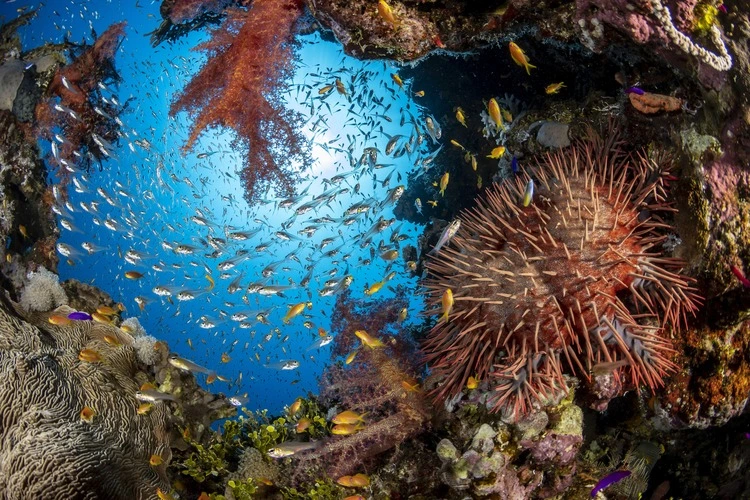
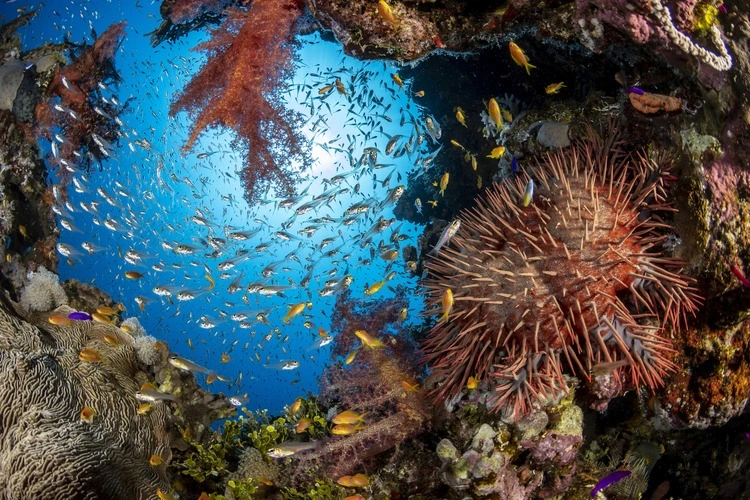
 Coral reefs’ vibrant exterior is only part of the story. Image: Shutterstock
Scientists recently discovered ‘hidden chemical universe’ inside coral reefs that could provide solutions to human diseases
At first glance, coral reefs captivate with their appearance alone. These vibrant, colourful colonies, however, belie an even more fascinating interior – a hidden ‘chemical universe’ revealed by scientists in their latest study published in Nature journal.
After analysing 820 samples from 99 coral reefs across the Pacific, scientists reconstructed the genomes of 645 microbe species living within the corals.
Enjoying this article? Check out our related reads…
More than 99 per cent of them were completely new to science. Taking a deeper look at their genetic code revealed these tiny residents are not ‘germs’, but in fact chemical engineers. Inside them, chemicals exist that can help create natural products which could prove to be solutions to human diseases or other biotechnological challenges.
Such discoveries are vital, considering most current medical drugs were originally discovered in nature, mainly from soil bacteria. However, now we are running out of new ‘soil leads’, finding alternate means within coral spells positive news.
Within their DNA, these microbes have ‘instruction manuals’ for building diverse biochemical molecules, including antibiotics. Researchers identifying these microbes say that they have uncovered a ‘molecular library’, written in a language they are only just beginning to translate.
These findings of biochemical diversity in corals are just the beginning. The most recent study examined only a handful of coral species, while at least 1,500 have been described worldwide – highlighting the enormous potential for scientific breakthroughs.
However, climate change is posing a real threat to discovering these scientific oddities. When warm temperatures kill of a reef, there is not only the loss of an ecosystem but of a potential wealth of unique microbes.
Why are coral reefs so important?
Coral reefs are one of the most biodiverse and productive ecosystems on Earth. They only cover around 0.2 per cent of the ocean floor, yet are home to a third of all named marine multi-cellular species.
Coral reefs provide a wide range of ecosystem services, such as food, livelihoods and coastal protection, to millions of people around the globe.
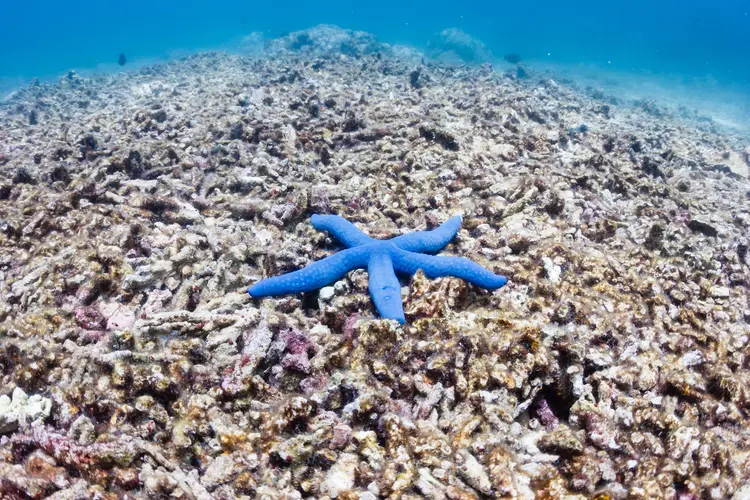 An example of coral bleaching across a reef. Image: Shutterstock
However, climate change and emerging diseases have caused a decline in live coral cover of more than 50 per cent since the 1950s. In 2025, Geographical reported that high temperatures have driven coral reef ecosystems into widespread decline, marking the first time the planet has reached a climate ‘tipping point’.
Warming waters have led to coral bleaching across the world, a phenomenon that occurs when corals expel all-important algae from themselves, which gives them their characteristic bright colours and provides nutrients.