
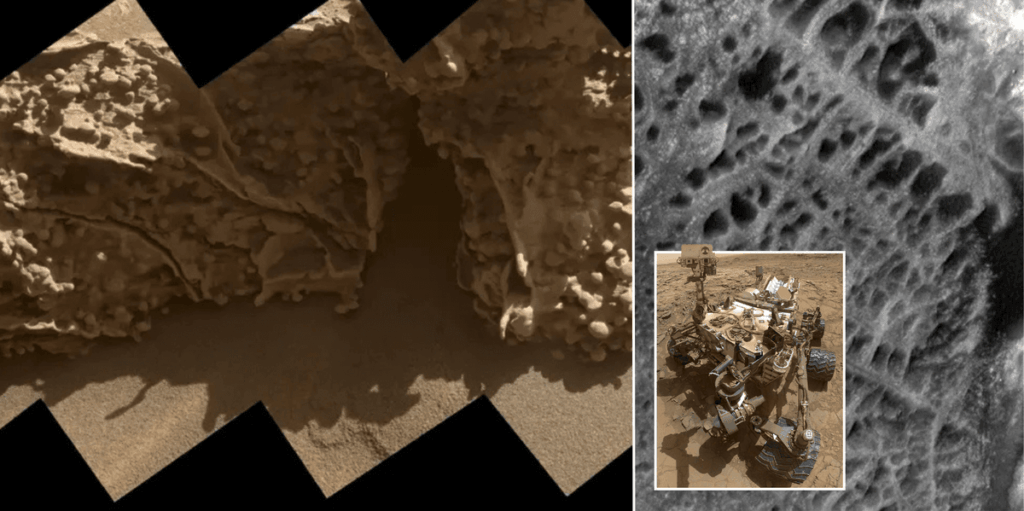
Nasa’s Curiosity rover has photographed remarkable spiderweb-like formations stretching across the surface of Mars.
Fresh images released by the space agency show the sprawling structures in unprecedented detail.
The photographs have uncovered something unexpected: tiny “eggs” dotting the Red Planet’s rocky ridges.
Scientists remain baffled by these mysterious egg-like nodules.
The small spheroids resemble features found on a peculiar “spider egg” rock that Naa’s Perseverance rover discovered in the Jezero Crater last year.
Researchers are struggling to determine how these unusual formations came to exist.
“We can’t quite explain yet why the nodules appear where they do,” said Tina Seeger, a planetary scientist at Rice University in Houston leading the investigation.
The formations, known as boxwork, consist of interconnected rocky ridges on the slopes of Mount Sharp within the Gale Crater.
These structures span an area of up to 12 miles across.
Ancient Martian groundwater flowing beneath the surface created them billions of years ago.
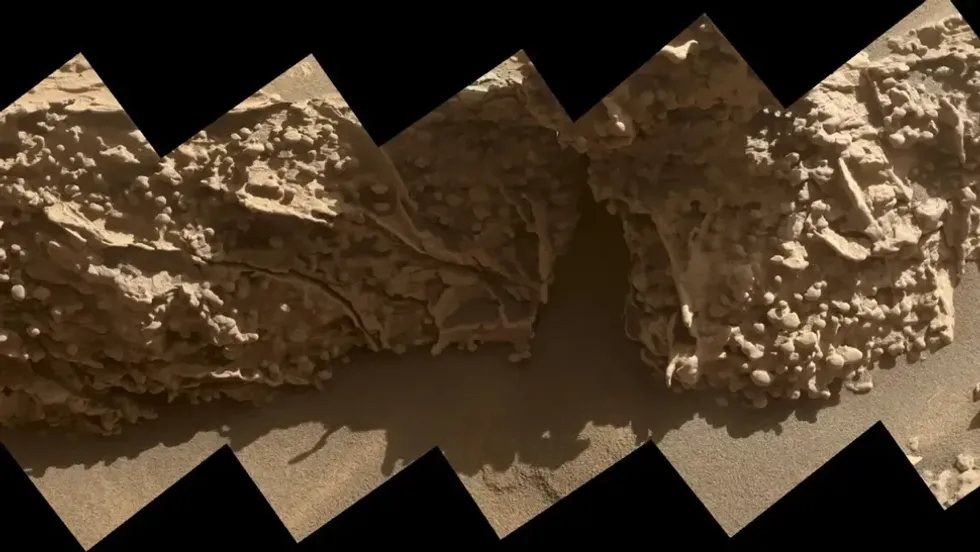
New photos from the rover show hundreds of tiny egg-like nodules on the surface of one of the boxwork ridges
|
NASA
Orbital spacecraft first detected the ridges back in 2006, though they remained largely under-studied until now.
Curiosity has spent the past eight months examining these web-like patterns up close.
NASA initially shared photographs of the boxwork in June 2025, shortly after the rover reached the area.
The latest images captured in August and September reveal far greater detail.
“Maybe the ridges were cemented by minerals first, and later episodes of groundwater left nodules around them,” Ms Seeger said.
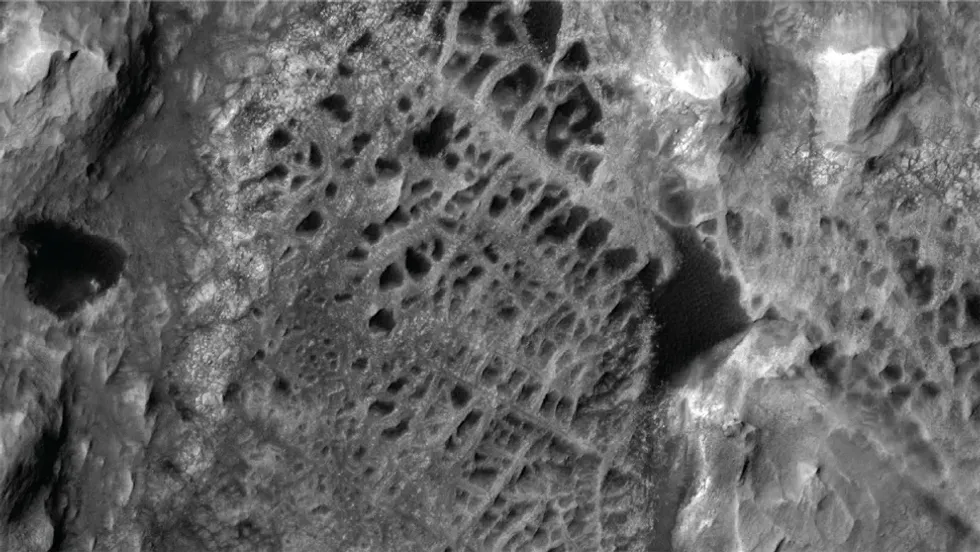
PICTURED: The Martian ‘boxwork’, as seen from above
|
NASA
Despite their “biological” appearance, the nodules and boxwork have no connection to alien life.
Boxwork consists of crisscrossing mineral-rich rock ridges scattered across Mars.
Earth has similar but smaller formations, mainly found in caves.
On our planet, these structures develop when calcite-rich water moves between rocks that eventually erode away.
Martian boxwork formed differently, shaped by powerful winds scouring the planet’s surface.
Groundwater deposited minerals in cracks and fissures, which hardened over time.
Billions of years of wind erosion wore away surrounding rock while leaving the resistant mineral ridges intact.
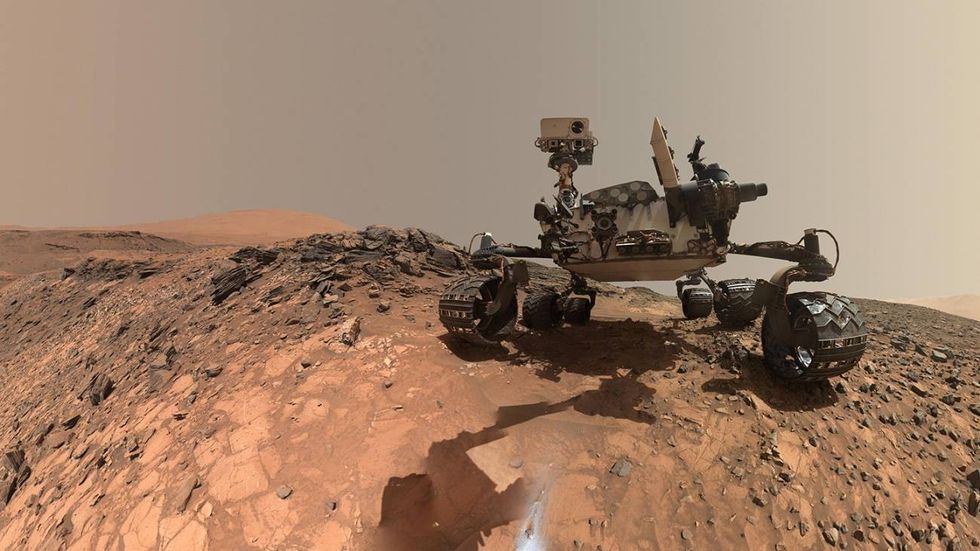
Nasa’s Curiosity rover took the photographs of the ‘eggs’
| NASA
The boxwork’s location high on Mount Sharp’s slopes has significant implications for understanding Mars’ ancient history.
“Seeing boxwork this far up the mountain suggests the groundwater table had to be pretty high,” Ms Seeger said.
This indicates water in the region may have persisted far longer than previously believed.
Scientists hope continued study will reveal whether conditions might have supported ancient Martian microbes.
“These ridges will include minerals that crystallized underground, where it would have been warmer, with salty liquid water flowing through,” said Kirsten Siebach, a Curiosity mission scientist at Rice University.
“Early Earth microbes could have survived in a similar environment. That makes this an exciting place to explore.”