
Traveling backwards in time has been the focus of several space films over the decades.
As our collective understanding of how the universe works expands, new revelations are made nearly every day. Space is vast. The sheer size can be incomprehensible, even for the best minds.
However, as technology advances, our ability to gaze at the stars gets better.
A new finding has brought the need to deepen our knowledge of the cosmos to the forefront of our minds.
Staring at the sky can leave us spaced out
Apart from the closest planets in our galaxy, space is filled with a wide variety of celestial bodies and rocky formations.
Advancements in telescope technology have provided mankind with the ability to gaze into the darkness of space and reveal the truth of the universe. As time and gravity are connected, it’s almost like looking at a picture of a long-lost period in time.
Galileo was one of the first to ponder the vastness of space. He inspired millions further down the history line to follow in his footsteps.
As we enter a new era of space exploration, the need to identify the celestial bodies that dominate the night sky is a top priority for us all.
The veil of the universe is slowly being lifted
We sure have come a long way as a species. From the early days of gazing into the sky through basic telescopes to the more recent space-based innovations that have been launched by the world, the mysteries around the cosmos have become that much easier to decipher.
Telescopes offer us the chance to unmask the previously unknown celestial bodies around our planet.
Galaxies around the universe are filled with everything from asteroids to dwarf planets, and more. The 1970s saw the space race expanding as the US and the Soviets battled to reach into the cosmos for the first time.
Most huge plants also have a multitude of moons that orbit and create their own gravity. The more that we can understand the deepest regions of space, the better off we as a species will be.
And as the probes we send into space make their way back to us, new revelations are unearthed.
As Einstein proved, time and space are intrinsically connected, and as one recent study stated, traveling backwards in time has become a real possibility for the comets and asteroids we now spend our time studying down here on our home planet of Earth.
Study finds one celestial body reversed in time
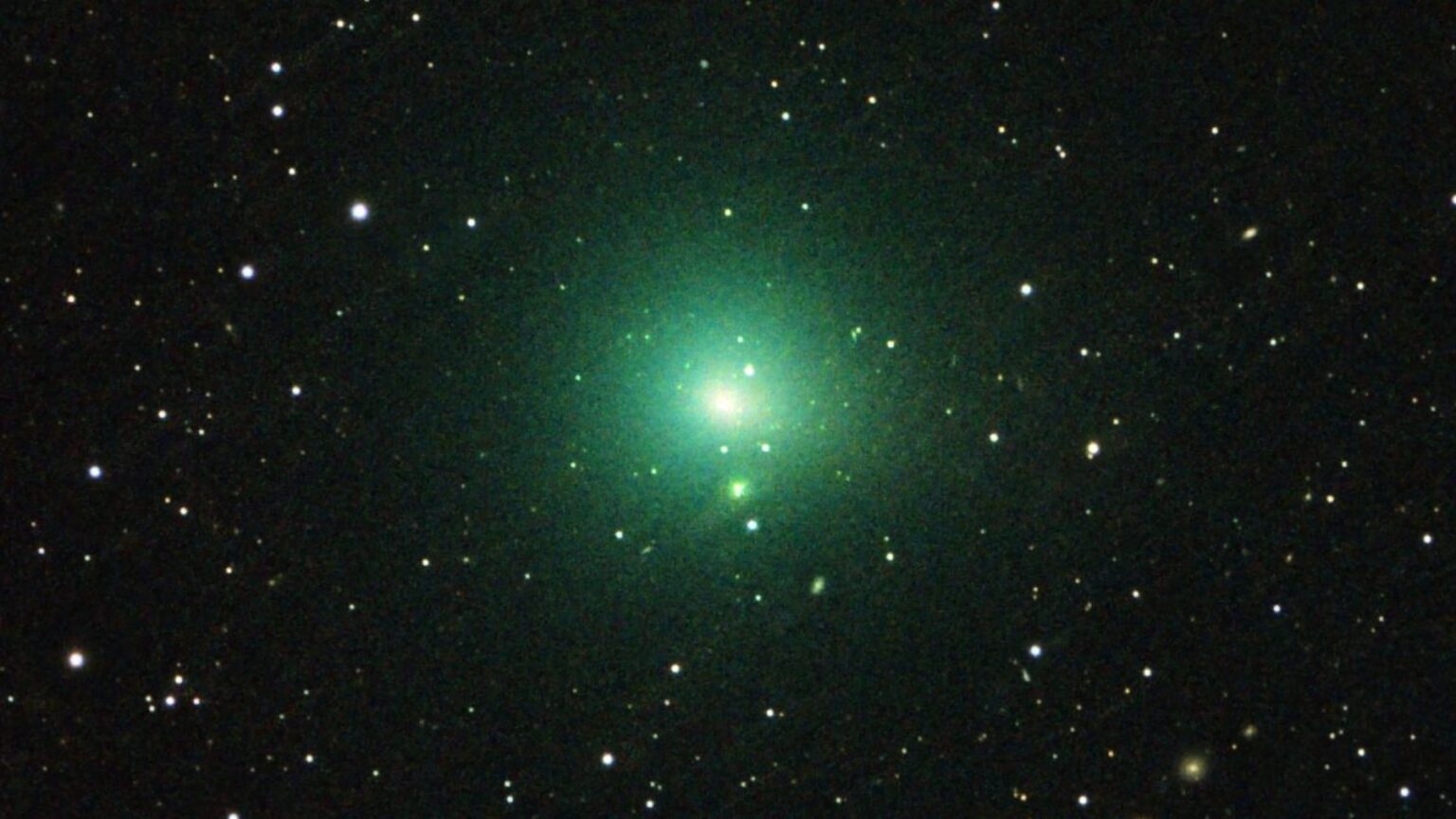
A recent study has noted that the Comet 41P/Tuttle-Giacobini-Kresak has been altering its speed and orbit dramatically.
The study Reversal of Spin: Comet 41P/Tuttle-Giacobini-Kresak published in arXiv has noted that as the comet passed by the sun, it reversed its spin. This can occur when comets shoot out gas at such high velocity that their rotation can essentially stop, and then head in the opposite direction.
As space and time are connected, the Comet 41P/Tuttle-Giacobini-Kresak has been traveling back in time as it gets closer to the sun.
The chemistry of these “space rocks” has become clearer as scientists are now able to study the images from the multitude of huge telescopes we have launched into space over the past few decades.
The study also found that the shape of Comet 41P/Tuttle-Giacobini-Kresak resembles that of a potato or an elongated circle. As we advance as a species, space and all its mysteries will become easier to understand, especially as more scientific discoveries are made.
How will the study deepen our knowledge of the universe as the researchers develop more crucial information?