
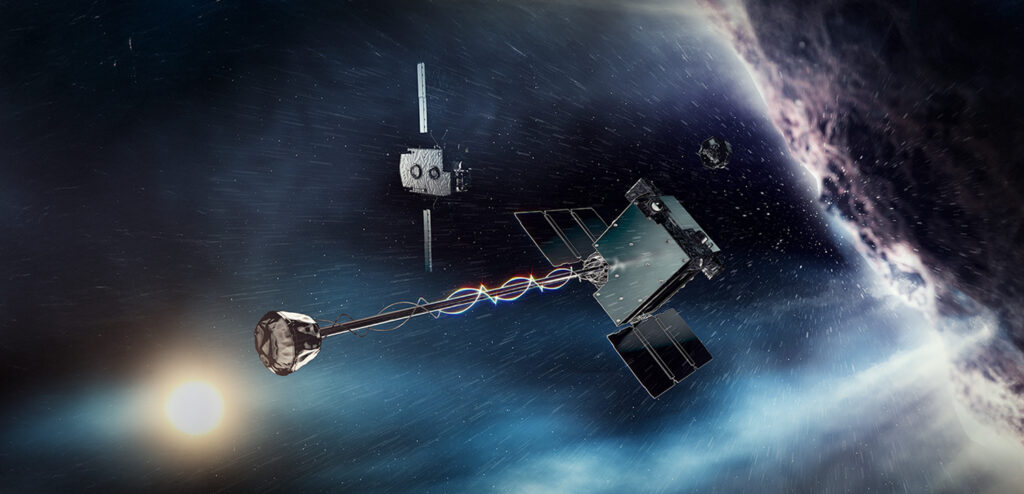
March 1986 was marked by some very significant events that took place in deep space: a fleet of five spacecraft approached Halley’s Comet. On the 40th anniversary of these historic events, we explain why scientists chose Halley’s Comet for study, how the Earth’s emissaries’ visit went, and what it contributed to science.
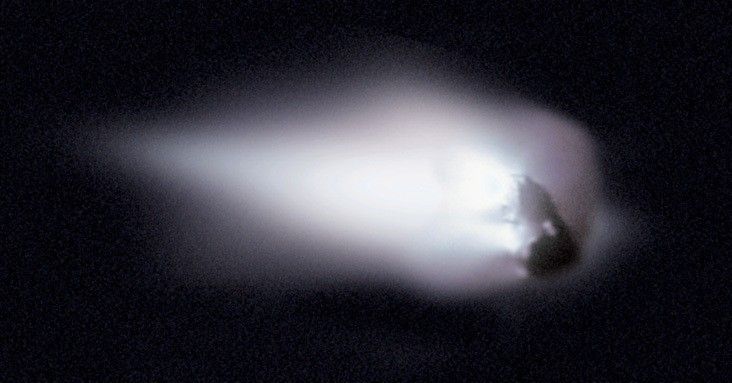 Image of Halley’s Comet taken by the Giotto probe. Source: ESA/Giotto/HMC
The most famous comet in history
Let’s start by answering the question of why Halley’s Comet was honored with being explored by an entire space fleet. It is quite simple – it is the most famous comet in history.
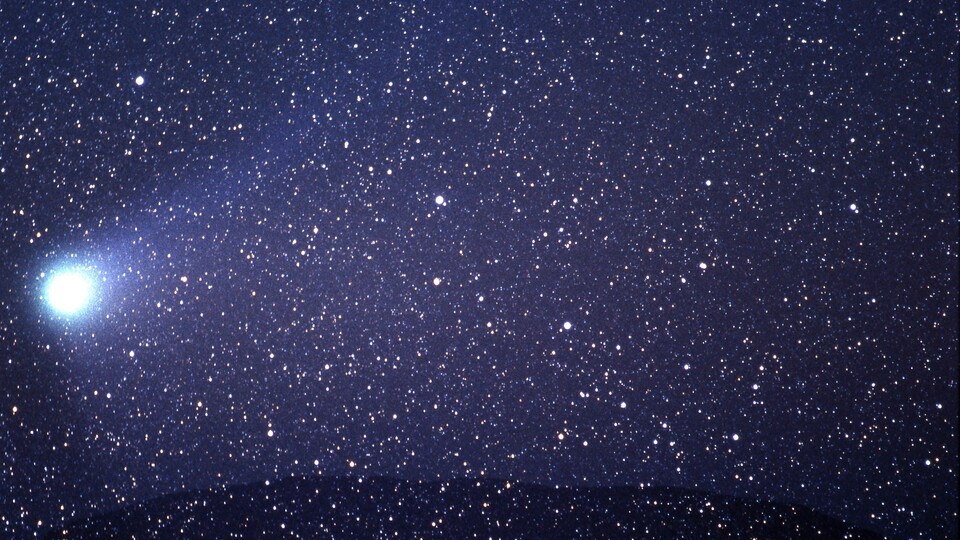 Halley’s Comet in the Earth’s sky in 1986. Source: wikipedia.org
It all began in the 18th century, when English astronomer Edmond Halley calculated the orbits of several dozen known comets and noticed similarities between some of them. The intervals between their appearances were 75-76 years. Halley made a bold assumption that they were all the same object. In 1716, he published detailed calculations, predicting that the comet would return in 1758.
Halley himself did not live to see this date. But on December 25, 1758, astronomer Johann Palitzsch did indeed discover the comet he had predicted. This event became the first triumphant confirmation of Newton’s law of universal gravitation. It is not surprising that the comet was named after Halley.
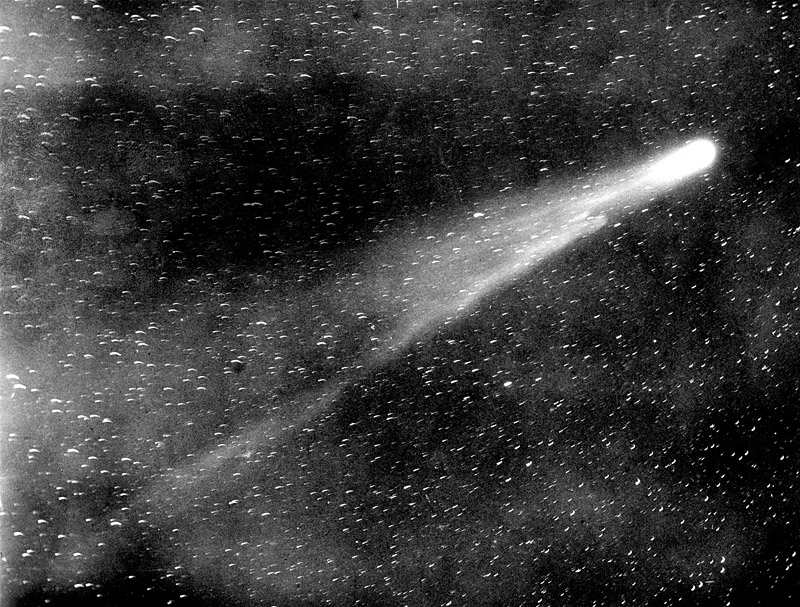 Photograph of Halley’s Comet taken during its visit in 1910. Source: The Yerkes Observatory
This alone would be enough to immortalize Halley’s Comet in the annals of science. But when scientists tried to find evidence of its past appearances, it turned out that it has literally accompanied humanity throughout its history. According to some estimates, about one-eighth of all references to comets in various written sources are somehow connected with it.
This “popularity” is explained by its unique characteristics. Although many brighter long-period comets (i.e., those with an orbital period of more than 200 years) are observed every century, Halley’s Comet is the only short-period comet that is clearly visible to the naked eye and appears in the Earth’s sky at relatively short intervals (by historical standards).
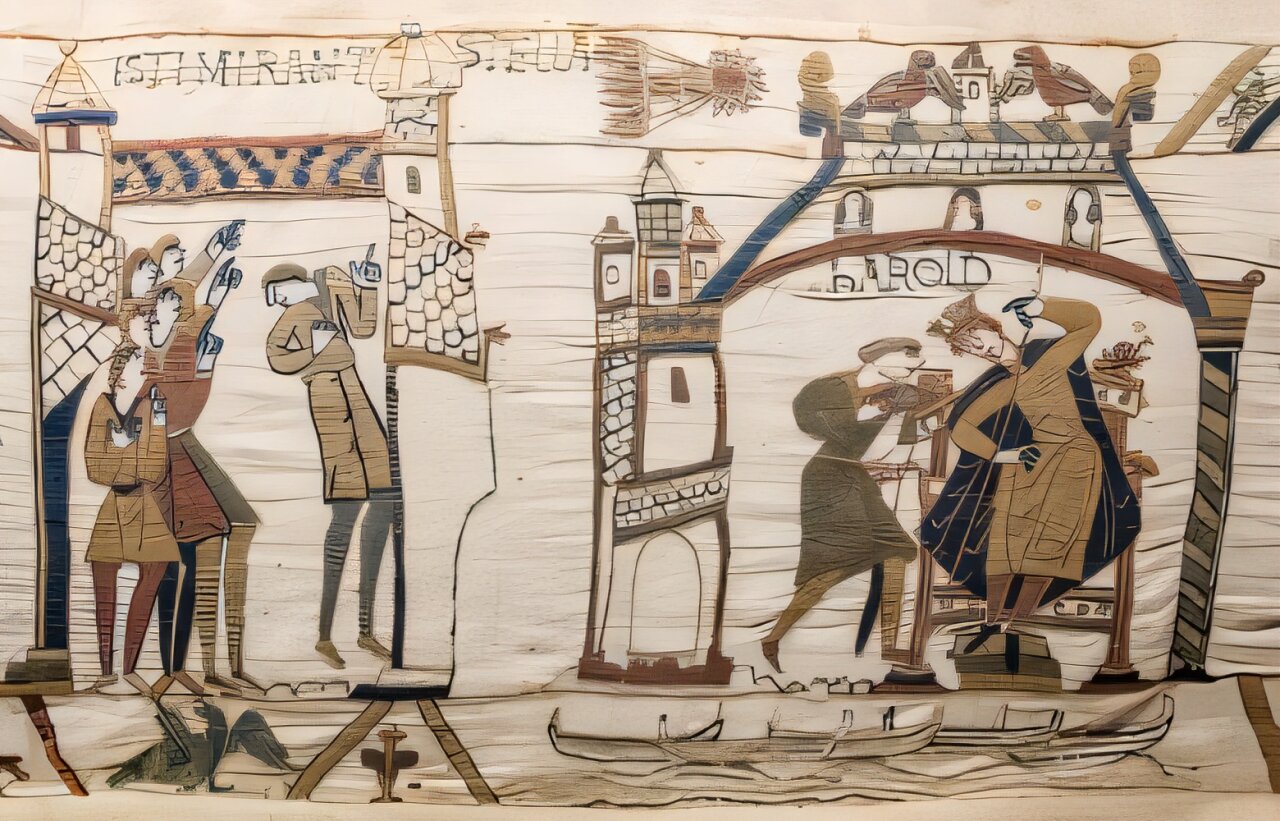 Halley’s Comet on the Bayeux Tapestry. Source: wikipedia.org
The first reliable mention of Halley’s Comet in Chinese historical records dates back to 240 BC. During subsequent visits, it was observed by the Babylonians, Greeks, and Romans. Given the regularity of the comet’s appearances, it is not surprising that many of them coincided with important events in Earth’s history. The comet’s appearance in 451 CE coincided with Attila’s invasion and the Battle of the Catalaunian Plains. Another famous visit by the comet occurred in 1066 AD, shortly before the Battle of Hastings, during which the Normans conquered England. Some scientists even link the appearance of Halley’s Comet in 12 BC with the Star of Bethlehem.
Halley Armada
Halley’s Comet’s last visit to Earth was in 1986. By that time, humanity had already begun actively exploring space. Scientists, of course, did not want to miss this unique opportunity. So, various countries began actively preparing projects for missions to study Halley’s Comet.
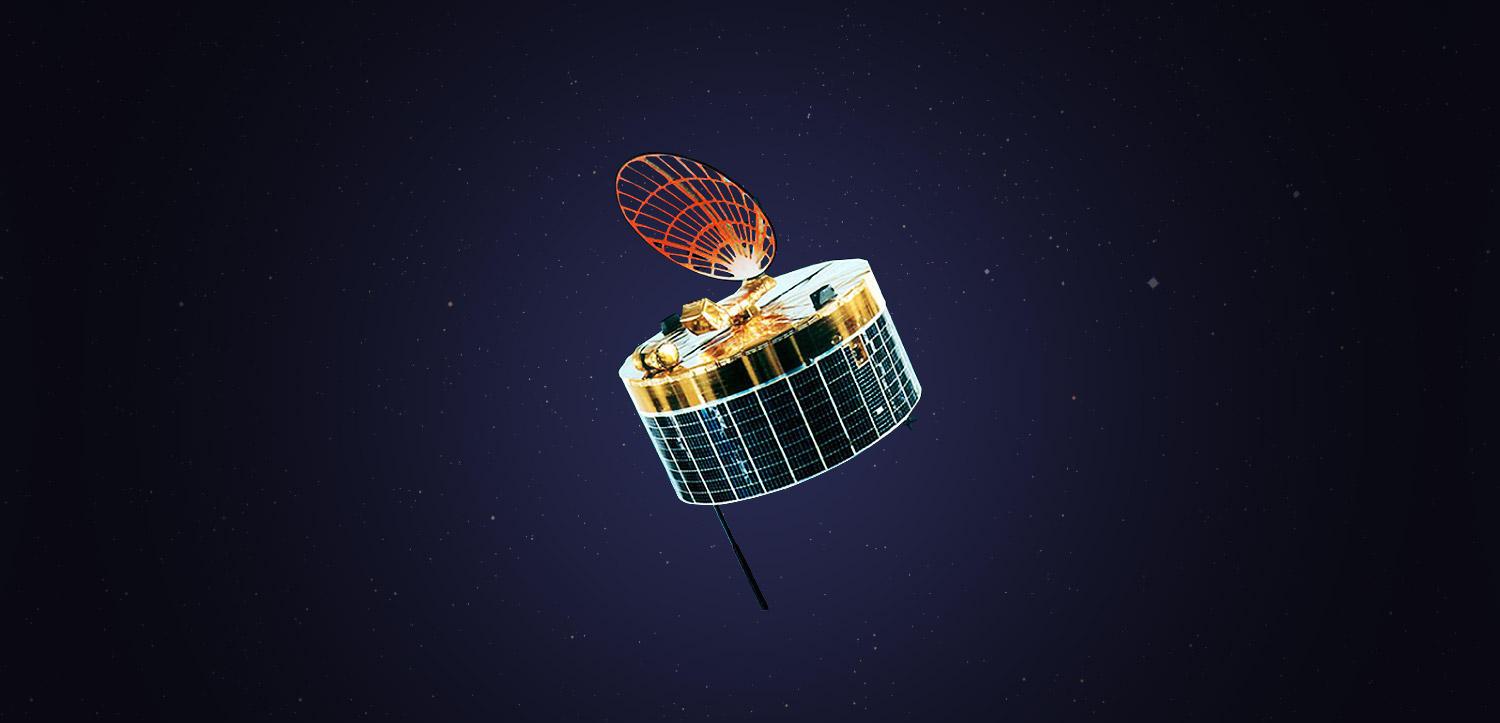 Suisei spacecraft (concept). Source: JAXA
Japan bet on a pair of probes named Sakigake and Suisei. Sakigake became the first interplanetary spacecraft in history not built in the USSR or the USA. It weighed 138 kg and carried instruments designed to study the parameters of the interplanetary environment.
Suisei had a similar design but carried a different set of scientific instruments. The probe was equipped with a device for studying solar wind and an ultraviolet camera designed to capture images of the hydrogen corona of Halley’s Comet.
The Soviet Union sent a pair of Vega spacecraft to Halley’s Comet. Interestingly, the mission was originally intended solely to study Venus using landing platforms and balloons. However, designers later made significant changes to their architecture: after Venus, the Vega flyby modules were to head for the comet.
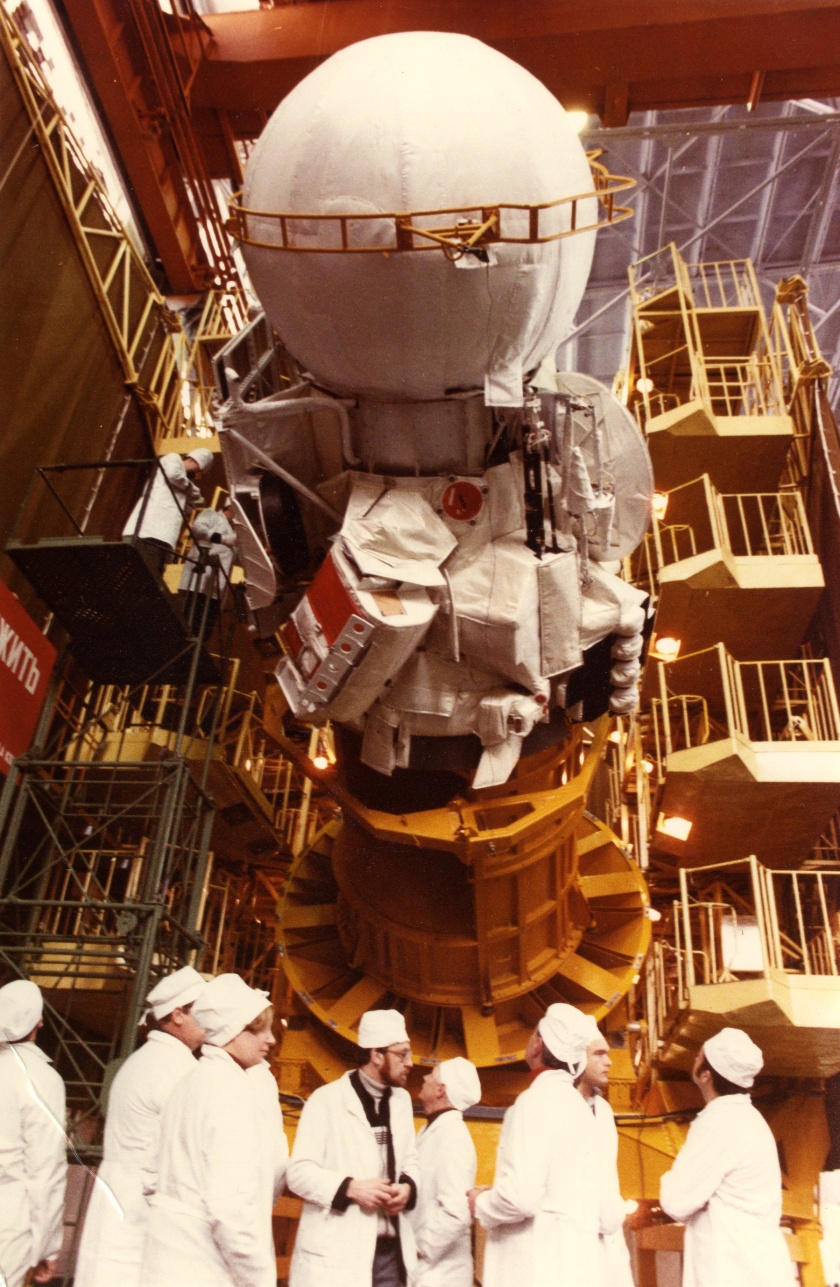 The Vega spacecraft before launch. Source: Institute of Cosmic Radiation, USSR Academy of Sciences
The Vega spacecraft had a complex design. The total mass of the spacecraft was 4,920 kg. Of this, 3,170 kg was accounted for by the flyby module and 1,750 kg by the Venus lander. The flyby module was equipped with a set of instruments, including cameras, spectrometers, a magnetometer, a dust sensor, and a plasma wave analyzer.
The European Space Agency (ESA) also got involved, building the Giotto probe to study the comet. The 960-kilogram device was equipped with a set of 10 scientific instruments: a camera, mass spectrometers, plasma analyzers, photo polarimeters, particle analyzers, and a magnetometer.
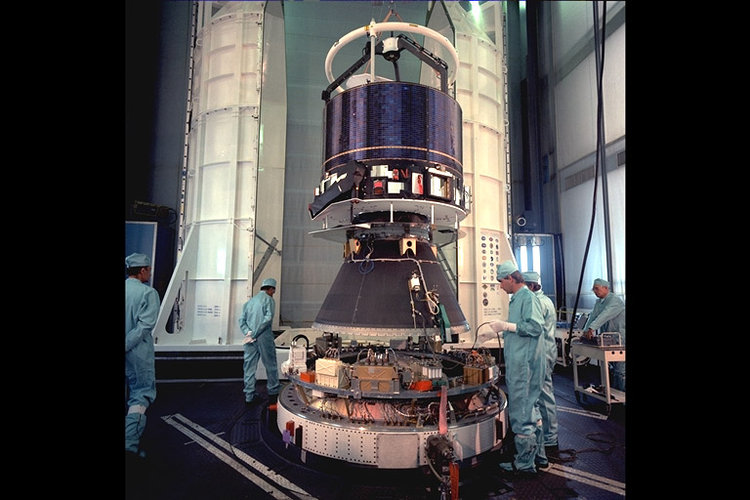 Giotto spacecraft. Source: ESA
All five of the above-mentioned spacecraft were unofficially dubbed Halley Armada. But what about NASA? Did the aerospace administration really stay out of the study of Halley’s Comet and not launch its own spacecraft to it?
In fact, NASA had developed several projects for missions to study the comet, including joint projects with ESA. However, they did not receive the necessary funding. In fact, this is precisely why ESA decided to send its own probe to Halley’s Comet.
Nevertheless, NASA still planned to participate in the study of Halley’s Comet by launching several satellites. But the Challenger shuttle disaster in January 1986 put an end to these plans.
Encounter with Halley’s Comet
Vega-1 was the first spacecraft to reach Halley’s Comet. On March 6, 1986, it passed within 8,890 km of the comet’s nucleus, taking several dozen photographs and conducting a series of measurements. On March 8, the Japanese Suisei approached Halley’s Comet. It flew at a distance of 151,000 km from its nucleus. The probe recorded two collisions with dust particles from the comet’s tail. On March 9, it was Vega 2’s turn. It flew at a distance of 8,030 km from the tailed guest. Two days later, Sakigake made a distant flyby of the comet. The maximum approach distance was 7 million km.
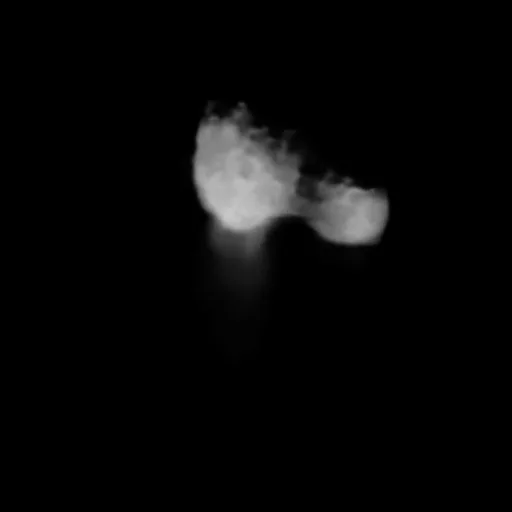 Image of Halley’s Comet taken by Vega 2. Source: Ted Stryk
The culmination was Giotto’s visit. The team managing it used images from the Vega spacecraft to navigate the probe more accurately, which had been given a very ambitious task: to fly as close as possible to the core and survive the visit.
On March 14, Giotto approached the comet. The spacecraft was transmitting information normally, but at a distance of about 1,200 kilometers from the nucleus, it was hit by a dust particle. The impact disabled the camera and spun the probe. Giotto lost contact with Earth, and its protective shield ceased to cover the scientific instruments.
Despite this, Giotto survived, flying just 596 kilometers from Halley’s Comet. After 32 minutes, it managed to regain stability, after which it transmitted the data collected during the flyby, including the most detailed images of the nucleus.
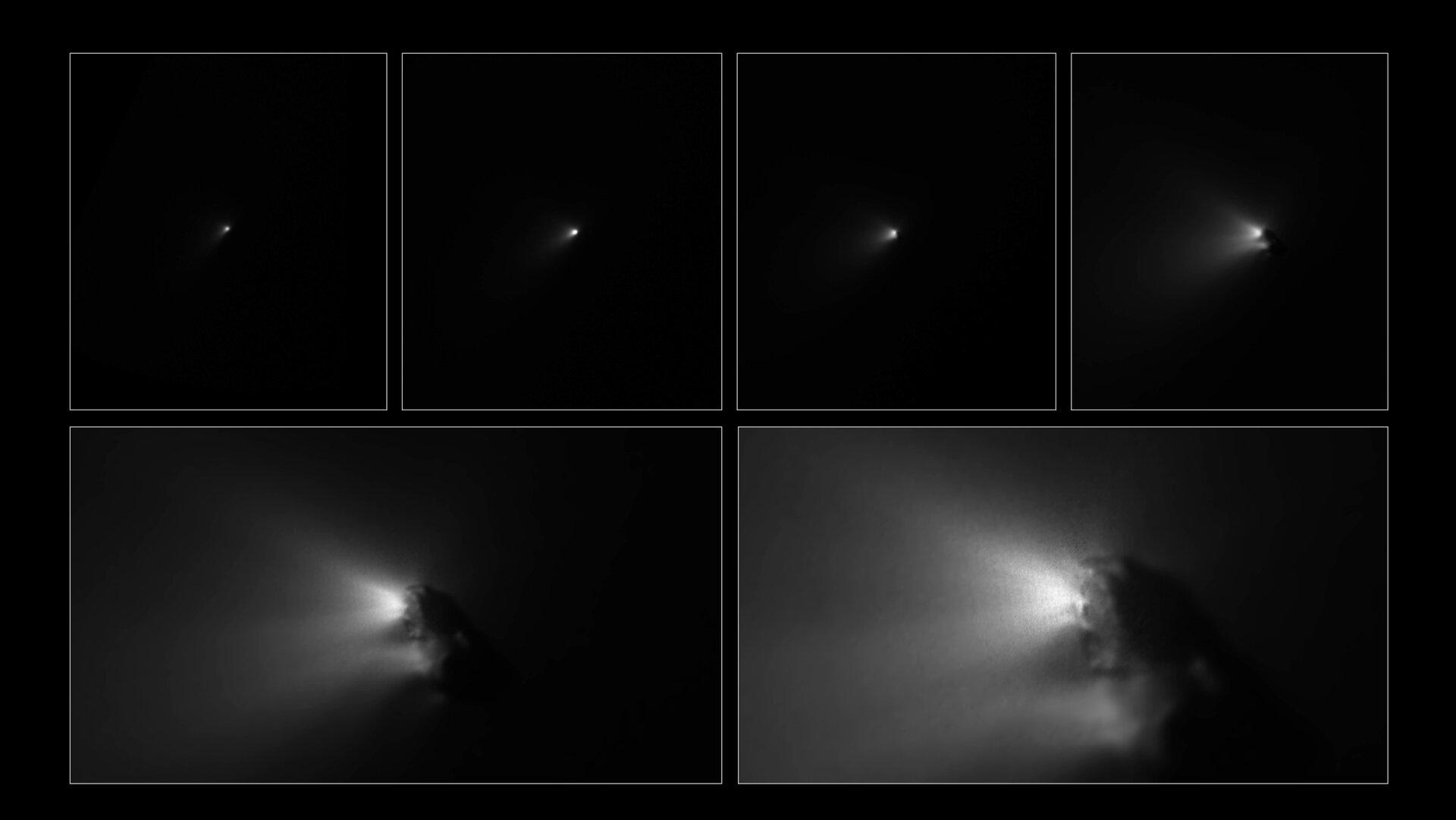 Images of Halley’s Comet taken by the Giotto probe. Source: ESA/Giotto/HMC
It turned out that the nucleus of Halley’s Comet measures 15×7.2×7.2 km. Outwardly, it somewhat resembles a peanut (a fairly common shape among asteroids and comets). The comet’s surface features hills, ridges, depressions, and craters. The average density of the nucleus is about 0.55 g/cm3. This suggests that a significant part of the internal volume is occupied by voids. The nucleus of Halley’s Comet rotates, completing one revolution in 53 hours.
It was also discovered that the surface of Halley’s Comet is very dark. It reflects only 4% of the light that falls on it, which is comparable to coal. At the same time, only a tenth of the surface of the nucleus showed activity. This is probably due to the fact that during its many visits to the inner Solar System, the comet lost most (according to some estimates, up to 90%) of its original mass.
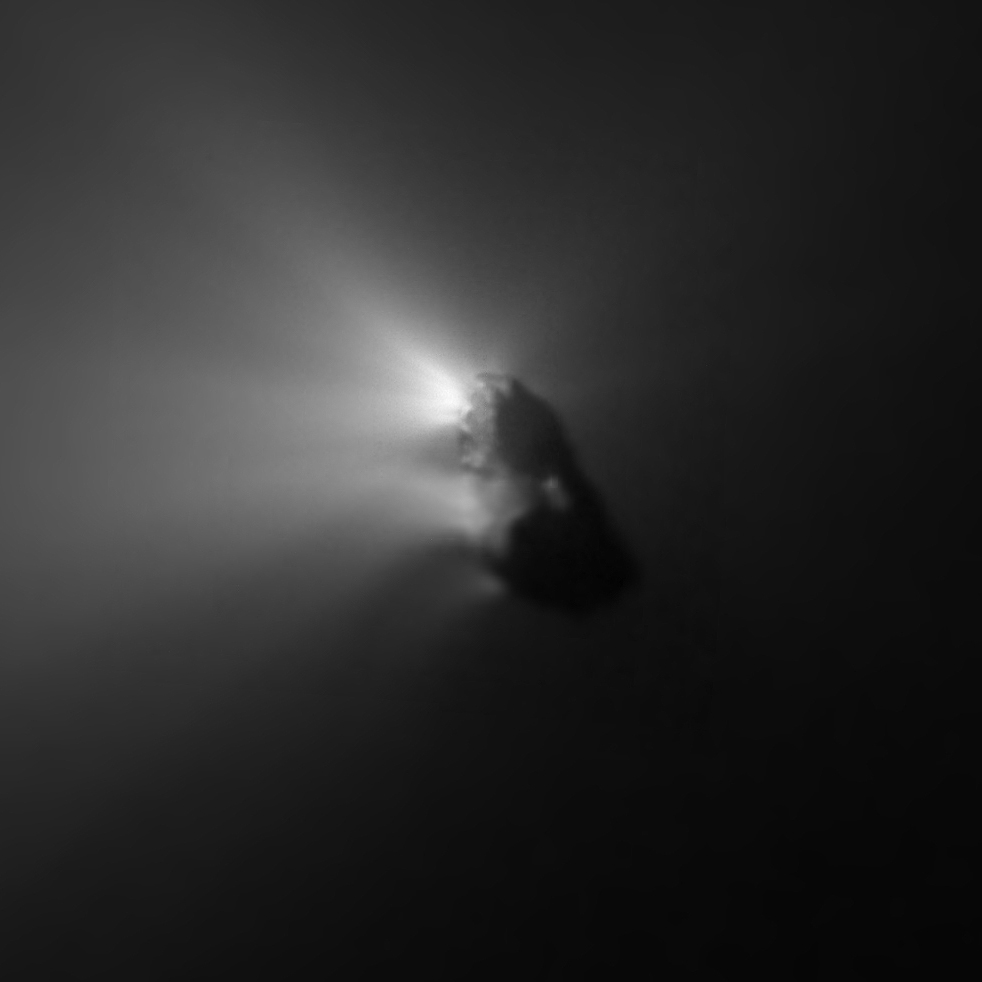 The nucleus of Halley’s Comet. Source: ESA
Analysis revealed the presence of substances such as water ice, methane, and ammonia in the comet’s nucleus. Many complex organic compounds were also found. This casts doubt on the previous notion of comets as “dirty snowballs.” In reality, Halley’s Comet turned out to be more like a ball of dirt with some ice and snow mixed in.
The legacy of the Halley Armada
The Halley Armada became a very important event in the history of science. For the first time in history, a spacecraft flew close to a comet and photographed its nucleus. The Halley Armada paved the way for more advanced space missions, during which humanity carried out a man-made bombardment of a comet’s nucleus (Deep Impact), delivered particles from its tail to Earth (Stardust), and made the first landing on its surface in history (Rosetta).
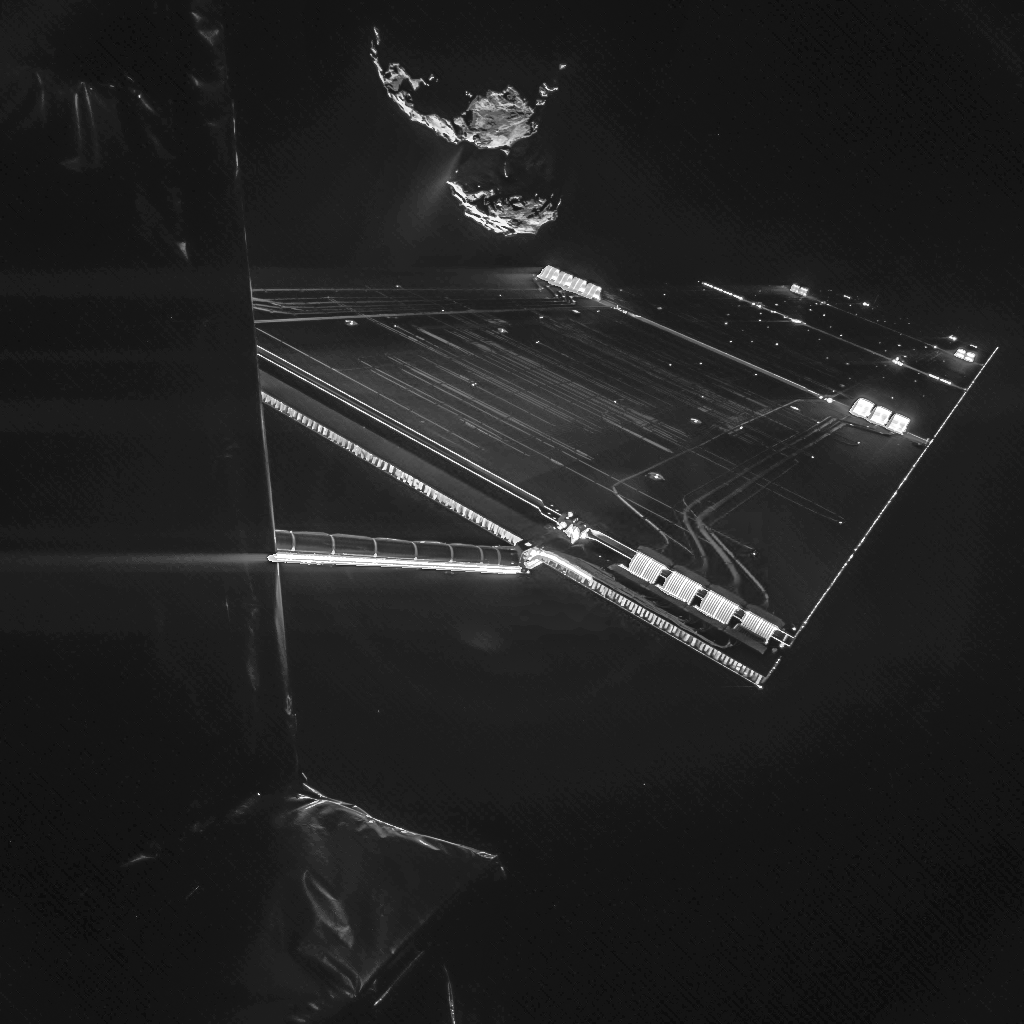 Selfie taken by Rosetta against the backdrop of comet Churyumov-Gerasimenko.
Source: ESA/Rosetta/Philae/CIVA
The Halley Armada also served as a watershed in global space exploration. Giotto became the first spacecraft in history to be independently built and launched into interplanetary space by the ESA. The same can be said about Japan’s Sakigake and Suisei. Since then, Europe and the Land of the Rising Sun have significantly strengthened their space independence by launching many more interplanetary missions, which have greatly enriched our knowledge of space.
For the USSR, on the contrary, the Vega spacecraft was effectively the swan song of its space program. They were the last Soviet interplanetary spacecraft in history whose mission ended in success.
In conclusion, it is worth mentioning that in a few years, we may well see a repeat of Halley Armada. On April 13, 2029, the asteroid Apophis will fly by at a distance of only 31,000 km from Earth. Such close visits by such large asteroids occur once every few thousand years. It is not surprising that many space agencies and private companies do not want to miss such a unique opportunity and are already actively preparing various missions to study Apophis.