
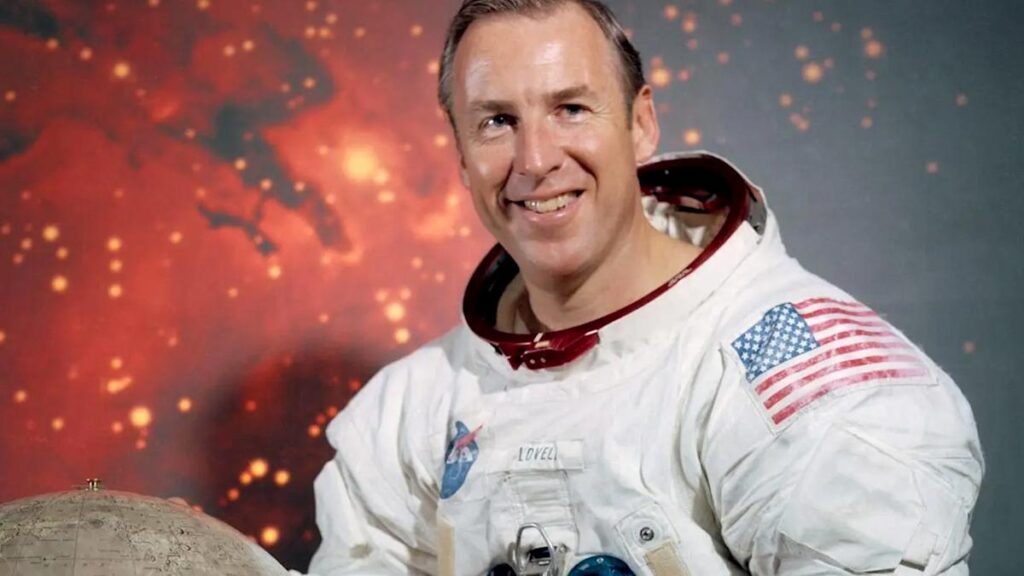
Editor’s note: Each month, Dispatch reporters will profile astronauts from Ohio, culminating in a larger story toward the end of the year about all Ohioans who became astronauts.
“Houston, we’ve had a problem.”
Those were the now-famous words of NASA Capt. James A. “Jim” Lovell Jr., one of America’s most decorated astronauts and the mission commander for the ill-fated 1970 Apollo 13. Lovell rephrased a comment fellow astronaut John L. “Jack” Swigert made in the aftermath of an oxygen tank exploding on the spacecraft.
The Cleveland-born Lovell was supposed to become the fifth person to walk on the moon. But instead, the seemingly routine trip became a life-or-death mission that gripped America and the rest of the world for days until Lovell, Swigert and Fred Haise crashed down in the South Pacific Ocean.
But if the mission had gone as planned, it likely would have been forgotten. Lovell probably wouldn’t have written a best-selling book, and almost certainly the 1995 blockbuster movie, “Apollo 13,” starring Tom Hanks as Lovell, would not have been made either.
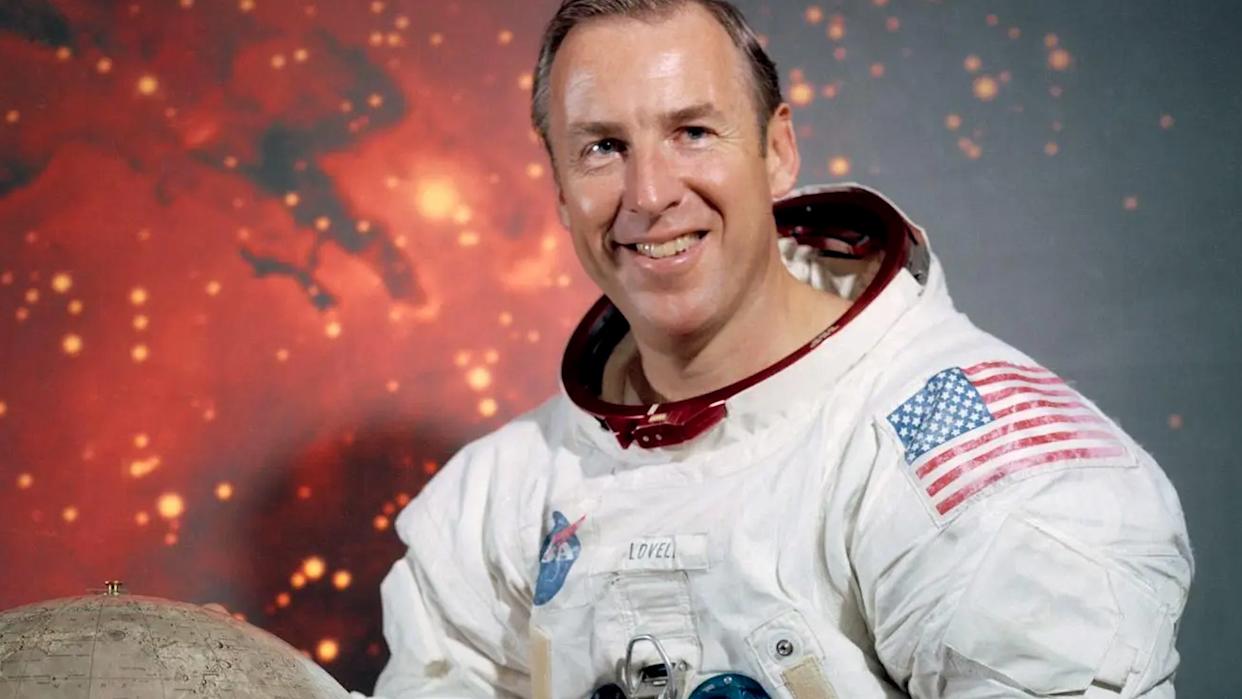
Famed astronaut Jim Lovell died at the age of 97 in August 2025.
In the decades after the disastrous mission, Lovell realized the failure of Apollo 13 actually brought out the best in NASA as the mission control and flight crew worked together to save Apollo 13 from almost certain catastrophe to successful recovery, Lovell told Dispatch sister paper the Milwaukee Journal Sentinel in a 2020 interview to commemorate the mission’s 50th anniversary.
“I’m very proud of 13 even though I didn’t land on the moon,” Lovell, who died in August 2025 at age 97, said in 2020. “That was a disappointment for me, but then a lot of people landed on the moon. And if 13 was a very successful flight, I wouldn’t be sitting here today to talk about it.”
Lovell was born in Ohio before moving to Wisconsin as a child
While Lovell considered Milwaukee his hometown, he was born in Cleveland on March 25, 1928. He spent his early years living in the Cleveland suburb of Parma before moving with his mother, Blanche Lovell, to the Badger State after his father, James Lovell Sr., died in a car crash.
Years later, in 2003, the Cleveland suburb honored Lovell by dedicating a park on West 24th Street in his honor.
Lovell studied engineering at the University of Wisconsin-Madison from 1946 to 1948, and graduated from the Naval Academy in 1952. Just hours after his graduation, Lovell married his high school sweetheart, Marilyn, on June 6, 1952. The couple was married for 71 years before Marilyn died at 93 years old in 2023.
Lovell’s NASA career and missions
Lovell joined NASA in 1962 as part of the second group of astronauts, alongside other Ohio native Neil Armstrong.
Before the nearly disastrous Apollo 13 mission to the moon, Lovell was a part of the Gemini 7, Gemini 12 and Apollo 8 missions.
His voyage into space during the two-week Gemini 7 mission orbiting Earth broke an endurance record and tested the effects of space travel for an extended period of time. Lovell was the command pilot for Gemini 12, the 10th and final flight of the Gemini series that was between the Mercury and Apollo programs.
During the Apollo 8 mission, Lovell and two other crew members were the first humans to orbit the moon, which they did 10 times without landing before returning to Earth.
Lovell named a triangular lunar mountain Mount Marilyn after his wife during the mission. The name is officially recognized by the International Astronomical Union. Mount Marilyn later served as a landmark during the first moon landing in the Apollo 11 mission.
By his March 1973 retirement, Lovell flew for nearly 8,000 flight hours, including 713 hours in space – the most experienced astronaut at the time, according to his obituary.
In his life, Lovell received numerous honors and awards including Congressional Space Medal of Honor, Presidential Medal of Freedom, Navy’s Distinguished Service Medal, two Navy Distinguished Flying Crosses, NASA’s Distinguished and Exceptional Service Medals, Distinguished Eagle Scout, and Distinguished Graduate of the United States Naval Academy, his obituary states.
He even won an Emmy Award for Apollo 8’s broadcast from the moon on Christmas Eve in 1968.
Apollo 13 mission avoids near disaster
But the mission Lovell is most known for is the near disastrous Apollo 13, which launched April 11, 1970.
A few days into the voyage, mission control asked Swigert to perform a routine maneuver, stirring the cryo tanks. Swigert flipped switches inside the command module.
Lovell heard a sharp bang and felt the spacecraft rock back and forth. He looked at Swigert, whose eyes were as wide as saucers, he recalled to the Milwaukee Journal Sentinel in 2020.
The oxygen tank that exploded was originally meant for Apollo 10, but it was dropped during installation. A different tank was added to the spacecraft, and the dropped one was set aside. It was later checked and installed on Apollo 13.
After the explosion, the astronauts realized they had to quickly shut everything down in the service module and move into the lunar module, which had batteries and oxygen for the two-day trip to the moon’s surface.
The lunar module became their lifeboat back to Earth. It wasn’t an easy trip as the crew spent four days in the module that was designed to support only two men for two days. It had no seats or heat. They powered down nearly all the life-support systems to ensure they had enough fuel and power to make it home.
The three astronauts and mission control personnel worked around the clock to ensure the crew returned safely to Earth.
Lovell later wrote about the harrowing event in the 1994 bestselling book, “Lost Moon,” which was adapted the next year into the Ron Howard-directed blockbuster movie.
The movie, which was nominated for an Academy Award for Best Picture, tweaked Lovell’s famous phrase to “Houston, we have a problem.”
Lovell makes a brief cameo the end of the movie when he shakes Hanks’ hand as one of the Navy commanders welcoming the crew back to Earth.
The Apollo 13 mission ended up being Lovell’s fourth and final space mission.
During a news conference after Apollo 13 returned, Lovell was asked if he wanted another opportunity to fly in space. He briefly thought, “what a chance.” But when Lovell looked at the back of the audience, he saw one very important person giving a thumbs down – his wife, Marilyn, Lovell told the Milwaukee Journal Sentinel.
“And so I said, ‘Well, I think we better let some other people try it,’” he said, laughing.
Lovell’s life after NASA
After he left NASA, Lovell held multiple executive positions and served on several boards. He wrote the book, “Lost Moon,” and then served as a consultant on the “Apollo 13” movie.
Lovell also served as a chairman for the Astronaut Scholarship Foundation. Alongside one of his sons, he opened a Lake Forest restaurant in Illinois. Throughout the years, he gave numerous motivational and space-related speeches around the world.
Lovell died Aug. 7 at age 97 surrounded by his family in Lake Forest. After his passing, Lovell’s family said in a statement to NASA they were enormously proud of his amazing life and his legendary leadership in pioneering human space flight. But to them, he was just Dad and Granddad.
“Most importantly, he was our Hero. We will miss his unshakeable optimism, his sense of humor, and the way he made each of us feel we could do the impossible. He was truly one of a kind,” the statement reads.
Delaware County and eastern Columbus suburbs reporter Maria DeVito can be reached at mdevito@dispatch.com and @mariadevito13.dispatch.com on Bluesky and @MariaDeVito13 on X.
This article originally appeared on The Columbus Dispatch: Ohio native Jim Lovell remembered as Apollo 13 hero