
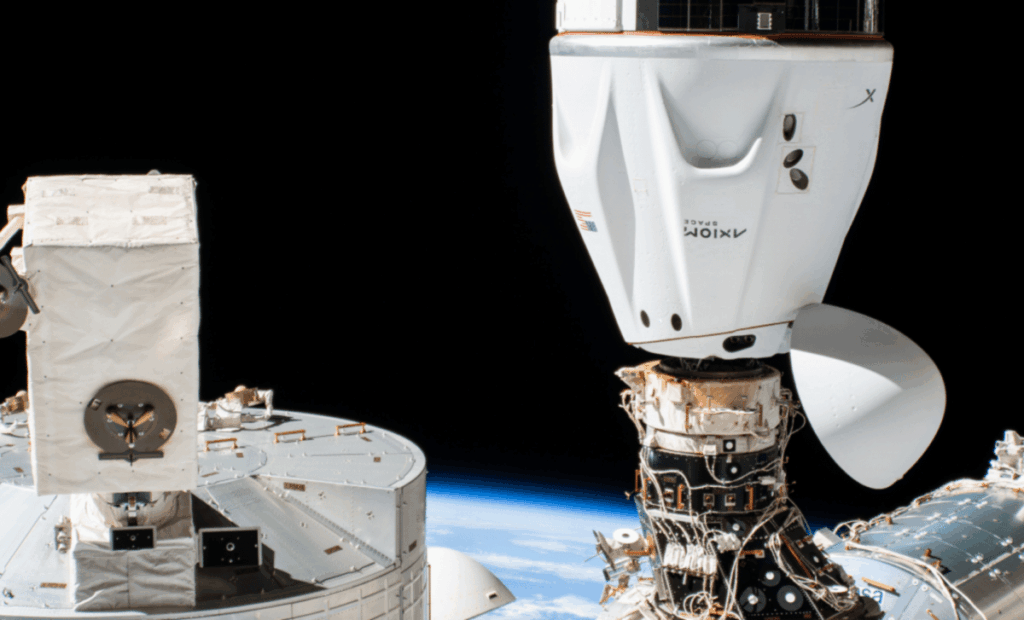
In early 2026, NASA announced back-to-back Private Astronaut Missions (PAM) awarded to Vast Space and Axiom Space, signaling a massive leap forward in commercial space exploration. These missions, set to launch in 2027, are part of NASA’s broader plan to foster the growth of commercial space stations in low-Earth orbit, with companies like Axiom and Vast leading the way. This development reflects NASA’s ongoing commitment to engaging private aerospace companies in the future of space exploration.
Private Astronaut Missions: A New Frontier for Space Exploration
NASA’s partnership with private aerospace companies Vast Space and Axiom Space marks an exciting new phase in the journey toward establishing commercial space stations. By awarding these companies PAMs, NASA is opening up the possibility for private enterprises to contribute more significantly to space exploration. This collaboration with the private sector highlights NASA’s shift from government-run space exploration to involving commercial entities. As NASA continues its strategic pivot towards privatizing low-Earth orbit, the missions in 2027 are expected to play a critical role in shaping the future of space tourism and research.
NASA administrator Jared Isaacman stated,
“Private astronaut missions represent more than access to the International Space Station — they create opportunities for new ideas, companies, and capabilities.”
Both Vast and Axiom Space are not only tasked with transporting astronauts to the ISS but are also developing their own commercial space stations. The two companies are playing pivotal roles in NASA’s broader vision to transition from the ISS to commercially operated destinations, ensuring a continuous human presence in low-Earth orbit.
.@NASA has selected @Vast for its sixth private astronaut mission to the International Space Station, advancing commercial opportunities in space. More… https://t.co/LMcgrzJcg5 pic.twitter.com/boyiL1N7kO
— International Space Station (@Space_Station) February 14, 2026
Vast Space’s Vision: A Revolutionary Artificial Gravity Station
Vast Space, a relatively new player in the aerospace industry, has big plans for the future. According to NASA Spaceflight, the company is working towards building the world’s first artificial gravity space station, with its Haven-1 module set to launch in 2027. The mission will mark a critical step in Vast’s long-term vision to create a sustainable commercial space station. Haven-1, designed as a single-module station, will serve as a testing ground for future developments.
The artificial gravity aspect of the station is particularly groundbreaking, as it could significantly impact the health and well-being of astronauts on extended missions. By simulating gravity, Vast hopes to mitigate some of the health challenges associated with long-term space travel, such as muscle atrophy and bone density loss. The Haven-1 module is just the first step toward Vast’s more ambitious project, the Haven-2 station, which will consist of nine modules and is expected to launch atop SpaceX’s Falcon Heavy and Starship rockets.
Vast’s approach to space station design goes beyond the technological. They are also focusing on creating a system that can support human life in space for extended periods, making their project one of the most innovative in the sector.
Haven Demo has successfully completed its initial perigee-lowering maneuver to demonstrate the spacecraft’s ability to perform a controlled deorbit.
The spacecraft engaged its orbit-maneuvering thrusters for approximately 14 minutes, lowering perigee by ~170km. pic.twitter.com/HcIpZ9n53d
— Vast (@vast) February 3, 2026
Axiom Space: Building the Future of Commercial Space Stations
Axiom Space has been a leader in private space missions for years. With four successful flights to the ISS under its belt, the company is now poised to develop its own multi-modular space station, which will eventually replace the ISS after it is decommissioned in 2030. Axiom’s vision includes a station built in stages, with the first module, known as the Payload Power Thermal (PPT) module, scheduled to launch to the ISS before the end of the decade.
Axiom’s space station will be designed for long-term sustainability, with plans to expand its capabilities by adding new modules. The company is already collaborating with industry leaders, including Thales Alenia Space, to construct and test the first modules. Axiom’s focus is not only on research and commercial use but also on creating a platform for private companies to operate in space, facilitating a range of activities from manufacturing to tourism.
In addition to its work on the space station, Axiom Space has secured funding for the project, including $350 million in financing as of February 2026. This financial backing will enable Axiom to continue pushing forward with its ambitious plans. NASA’s partnership with Axiom is integral to achieving this vision, as both entities work together to ensure that the ISS’s legacy is preserved through private ventures.
It’s an honor to be entrusted by @NASA to conduct our fifth commercial human spaceflight mission onboard the @Space_Station. Axiom Space has sent 14 astronauts, representing 11 nations to the station in the past 4 years, with crews conducting 160+ research and 100+ outreach…
— Axiom Space (@Axiom_Space) January 30, 2026
NASA’s Strategic Role in Commercial Space Stations
NASA’s involvement with companies like Vast and Axiom goes beyond merely providing access to the ISS. By supporting the development of commercial space stations, NASA is ensuring that there will be viable alternatives to the ISS when it is retired. This strategy aligns with NASA’s broader goals of encouraging private industry innovation while still maintaining oversight and collaboration with government agencies and international partners.
The agency has been proactive in laying the groundwork for these transitions, awarding funding to companies such as Blue Origin and Starlab Space to develop their own space stations. As NASA looks toward the 2030s, the goal is to have a robust commercial ecosystem that can support a wide variety of space-based activities. This includes everything from scientific research to tourism, with NASA facilitating the creation of infrastructure for these private stations.