
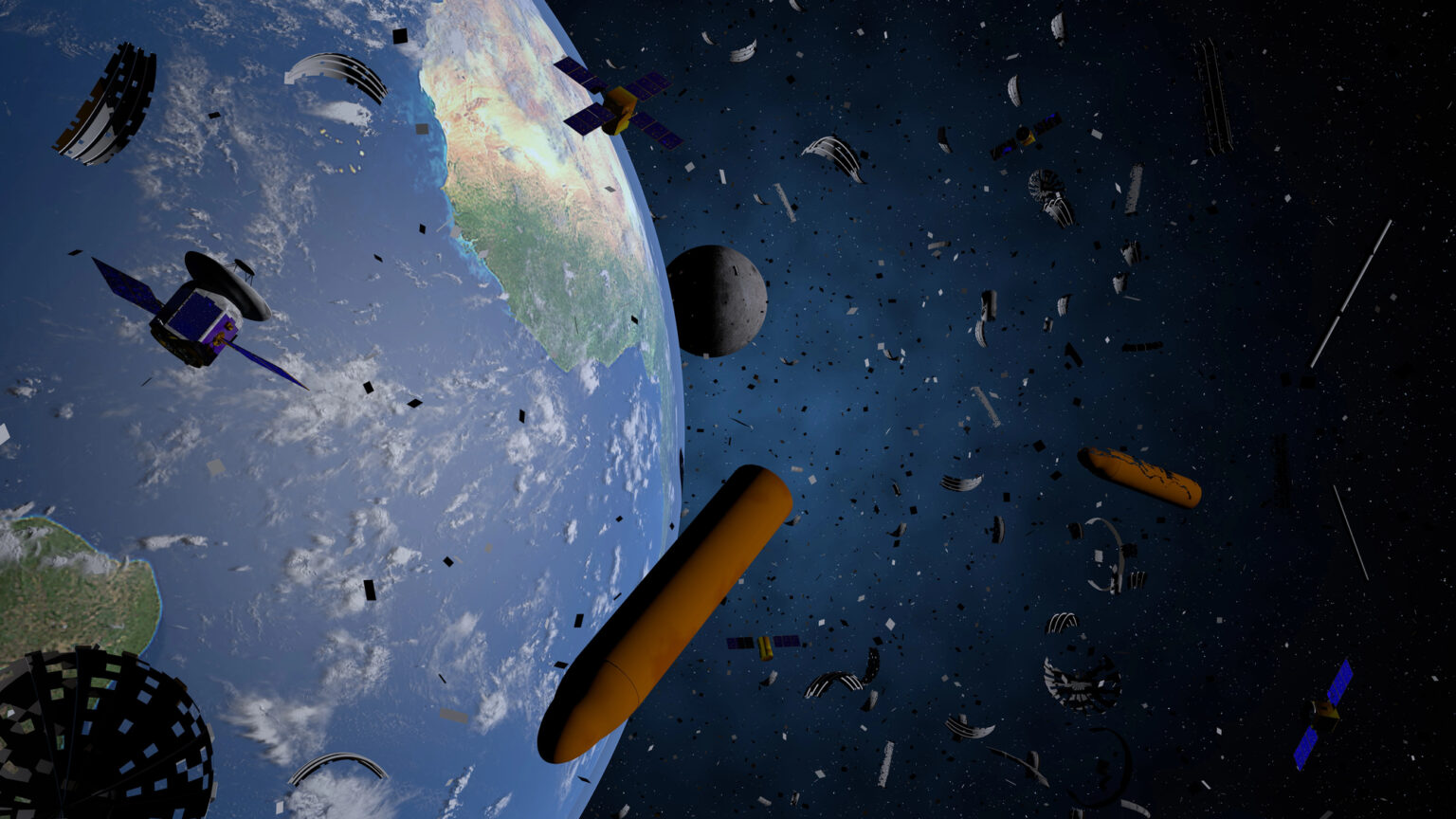
The European Space Agency has awarded a data procurement contract to Munich-based space surveillance company Vyoma. The contract covers statistical data on small space debris.
ESA is funding the deal through its Space Safety Programme. Under the agreement, Vyoma will supply bulk traffic data from its Flamingo-1 satellite. ESA will use that data to validate and improve estimates of small, uncatalogued debris in orbit.
ESA’s Meteoroid and Space Debris Terrestrial Environment Reference, known as the MASTER model, describes the space environment around Earth. It also supports risk assessments for satellite designers and operators. However, debris smaller than the detection limits of ground-based sensors remains difficult to observe. As a result, ESA has identified significant temporal and spatial gaps in current observations.
Therefore, the agency is acquiring space-based optical measurements. In turn, it aims to strengthen the statistical foundation of its debris modelling.
Flamingo-1 Observes From 510km
Flamingo-1 flies at an altitude of 510km. From there, it observes space objects from low Earth orbit to geostationary orbit.
The satellite carries an instrument with a large aperture and a wide field of view. Consequently, it can monitor large volumes of space at once. According to Vyoma, the sensor detects objects at both long and short distances. It also captures even small and fast-moving objects.
Because the spacecraft operates “in-situ” in low Earth orbit, it generates optical image data directly from space. ESA will use these measurements to refine the debris population currently represented in the MASTER model.
Dr Tim Flohrer, Head of ESA’s Space Debris Office, said: “Space situational awareness data generated from space-based observers like Flamingo-1 play an essential role in safeguarding current and planned satellites and contributes to a sustainable use of space around Earth”.
Meanwhile, Vyoma chief executive Dr Stefan Frey said the company is pleased to welcome ESA as a key customer. He added that it looks forward to supporting ESA’s mission to help satellite operators keep their assets safe.
 Published by Kerry Harrison
Kerry’s been writing professionally for over 14 years, after graduating with a First Class Honours Degree in Multimedia Journalism from Canterbury Christ Church University. She joined Orbital Today in 2022. She covers everything from UK launch updates to how the wider space ecosystem is evolving. She enjoys digging into the detail and explaining complex topics in a way that feels straightforward. Before writing about space, Kerry spent years working with cybersecurity companies. She’s written a lot about threat intelligence, data protection, and how cyber and space are increasingly overlapping, whether that’s satellite security or national defence. With a strong background in tech writing, she’s used to making tricky, technical subjects more approachable. That mix of innovation, complexity, and real-world impact is what keeps her interested in the space sector.