
Scientists from Ohio State University have shown that laser 3D printing could be used to turn Moon dust into viable lunar buildings. Not only would this be cost-effective once set up, but the resulting structures could be extremely durable, heat-resistant, and non-toxic.
In a process called In-Situ Resource Utilization (ISRU), such a technique would dispense with the need to ship building materials to the Moon to build future long-term bases.
If realized, this technology could be used in future manned missions to build things like habitats, tools, landing pads, radiation shields, and other vital structural components.
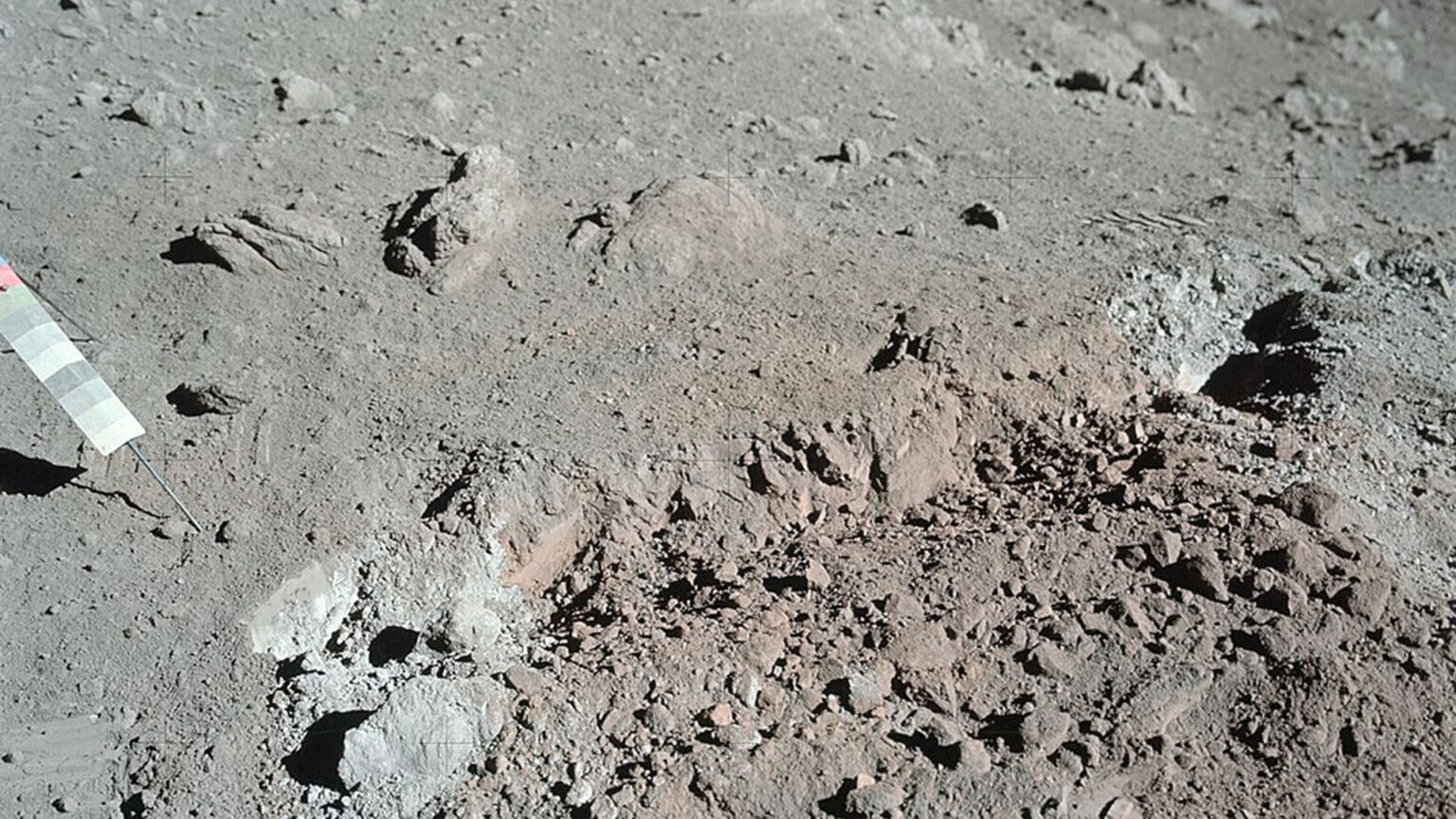
For reference, Moon dust (referred to as regolith) tends to be extremely fine-grained and usually sharp and highly abrasive. It is also glassy in appearance and tends to be basalt-rich (a kind of igneous rock), especially in the so-called “highlands” and “mare” regions of the Moon.
While very common on the Moon, on Earth, lunar regolith is in very short supply. For this reason, the team was required to use synthetic simulations of it to test their new technology.
To this end, they used something called LHS-1, which mimics lunar highland regolith very closely. Using this, the team spread the dust in a thin layer and then fired a high-energy laser at it.
Using the Moon to build on the Moon
This melts the particles in the dust, enabling them to fuse. Once cooled and solidified, the team then added additional layers of dust and repeated the process ad infinitum.
The result material is a ceramic-like substance that is very strong, heat-resistant, and very durable. They also discovered that the process can be completed on a variety of surfaces, like stainless steel, glass, and even alumina-silicate ceramic.
According to the team, they found that the moon dust ceramic generally sticks very poorly to steel and glass, but adheres very well to other non-lunar regolith ceramics.
This is not much of a surprise, as alumina-silicate tends to form compatible crystalline structures with the melted regolith. Using it as a base improves the final product’s mechanical strength, thermal shock resistance, and structural stability.
The team also played around with other environmental factors like oxygen levels and laser power. They found that the new material seems to be extremely sensitive to environmental conditions, which is an important finding, as for the process to be useful, it would need to work in the “real world” outside of a lab.
“By combining different feedstocks, like metal and ceramics, in the printing process, we found that the final material is really sensitive to the environment,” said Sizhe Xu, lead author of the study.
“Different environments lead to different properties, which directly affect the mechanical strength and the thermal shock resistance of certain components,” he added.
Cheaper than shipping stuff
If ever employed on the Moon, this would matter as the satellite has no atmosphere, and tends to suffer from massive temperature swings (~ +120°C to -170°C)
Temperature changes on this scale would tend to result in serious thermal shock, resulting in cracking and ultimately failure.
“There are conditions that happen in space that are really hard to emulate in a simulant,” another study author, Sarah Wolff, said. “It may work in the lab, but in a resource-scarce environment, you have to try everything to maximize the flexibility of a machine for different scenarios,” she added.
Looking ahead, technology like this could prove groundbreaking for future Moon missions, most notably the Artemis program. One of its primary objectives is to establish a long-term, sustainable presence on the Moon.
To do this, NASA needs to build long-term infrastructure on the Moon, and techniques like this would be very useful indeed. Especially since shipping things ike concrete or steel would be very expensive (around $1M+ per kilogram to the lunar surface).
“If we can successfully manufacture things in space using very few resources, that means we can also achieve better sustainability on Earth,” she continued. “To that end, improving the machine’s flexibility for different scenarios is a goal we’re working really hard toward,” she added.
You can view the study for yourself in the journal Acta Astronautica.