
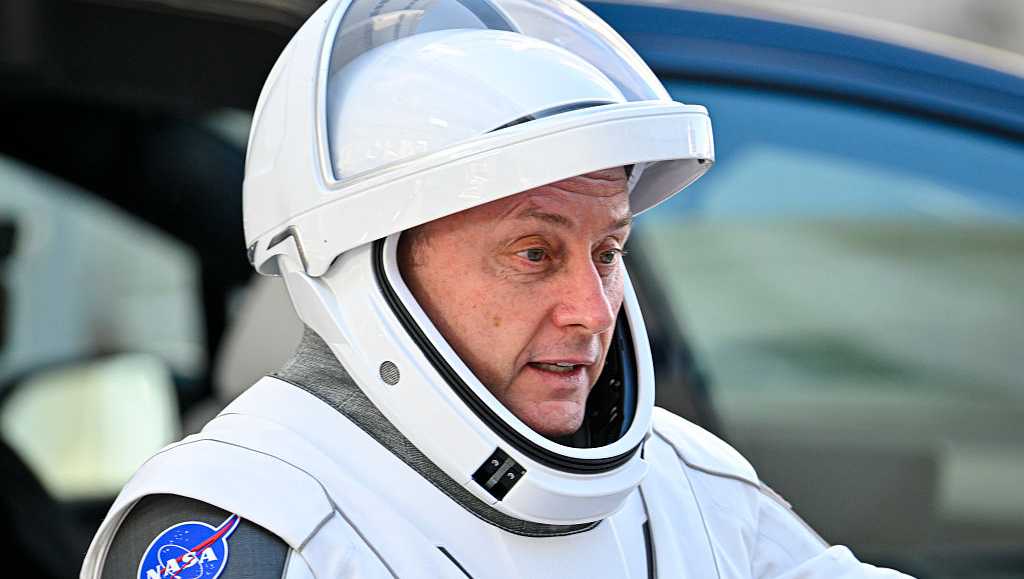
NASA’s Mike Fincke identified himself Wednesday as the astronaut whose medical condition prompted the space agency’s first medical evacuation.Related video above: Crew-11 astronauts removed from their SpaceX capsuleIn a written statement, the 58-year-old spaceflight veteran revealed he was the ailing crew member last month aboard the International Space Station. He did not say what was wrong with him but explained that his condition quickly stabilized thanks to his crewmates and flight surgeons on the ground.Fincke said he’s doing well now.”Spaceflight is an incredible privilege, and sometimes it reminds us just how human we are,” he said in the statement.Fincke launched with three others on a SpaceX flight last summer. Their mission came to an early end on Jan. 15, a week after he experienced what he called a “medical event that required immediate attention” by his fellow astronauts. The health concern also forced the cancellation of a planned spacewalk by Fincke and another NASA astronaut.Following their splashdown in the Pacific, all four astronauts were taken to a San Diego hospital. They flew home to Houston the next day.With the sick astronaut’s identity still a secret, Fincke said at a news conference a week after returning that the space station’s ultrasound machine came in handy during the medical crisis.He elaborated Wednesday, stressing that his situation was not an emergency but that everyone wanted “to take advantage of advanced medical imaging not available on the space station.”Fincke, a retired Air Force colonel who became an astronaut in 1996, has logged 549 days in space over four missions.The Associated Press Health and Science Department receives support from the Howard Hughes Medical Institute’s Department of Science Education and the Robert Wood Johnson Foundation. The AP is solely responsible for all content.
NASA’s Mike Fincke identified himself Wednesday as the astronaut whose medical condition prompted the space agency’s first medical evacuation.
Related video above: Crew-11 astronauts removed from their SpaceX capsule
In a written statement, the 58-year-old spaceflight veteran revealed he was the ailing crew member last month aboard the International Space Station. He did not say what was wrong with him but explained that his condition quickly stabilized thanks to his crewmates and flight surgeons on the ground.
Fincke said he’s doing well now.
“Spaceflight is an incredible privilege, and sometimes it reminds us just how human we are,” he said in the statement.
Fincke launched with three others on a SpaceX flight last summer. Their mission came to an early end on Jan. 15, a week after he experienced what he called a “medical event that required immediate attention” by his fellow astronauts. The health concern also forced the cancellation of a planned spacewalk by Fincke and another NASA astronaut.
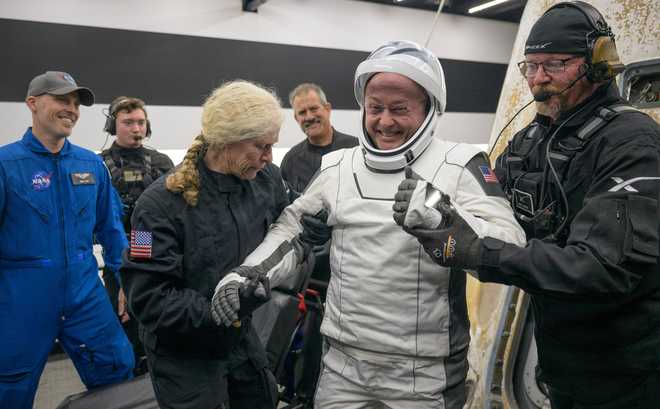
Bill Ingalls
In his image provided by NASA, NASA astronaut Mike Fincke is helped out of the SpaceX Crew-11 capsule after they re-entered the Earth in a middle-of-the-night splashdown near San Diego, Calif., Thursday, Jan. 15, 2026.
Following their splashdown in the Pacific, all four astronauts were taken to a San Diego hospital. They flew home to Houston the next day.
With the sick astronaut’s identity still a secret, Fincke said at a news conference a week after returning that the space station’s ultrasound machine came in handy during the medical crisis.
He elaborated Wednesday, stressing that his situation was not an emergency but that everyone wanted “to take advantage of advanced medical imaging not available on the space station.”
Fincke, a retired Air Force colonel who became an astronaut in 1996, has logged 549 days in space over four missions.
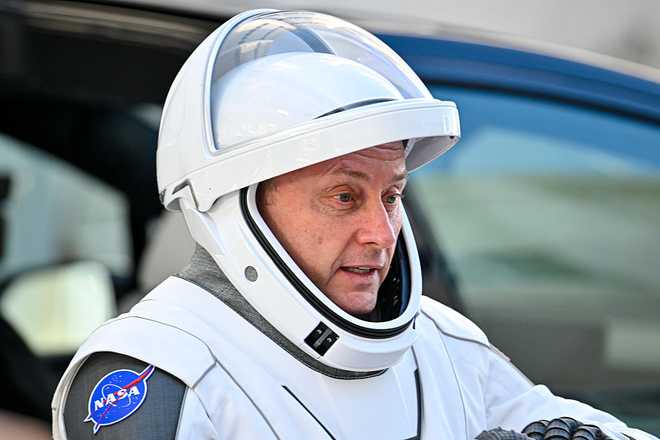
Miguel J. Rodriguez Carrillo
NASA astronaut Mike Fincke departs the Neil A. Armstrong Operations and Control Building at the Kennedy Space Center for Space Launch Complex 39A before the NASA and SpaceX Launch Crew-11 mission to the International Space Station on July 31, 2025, in Cape Canaveral, Florida.
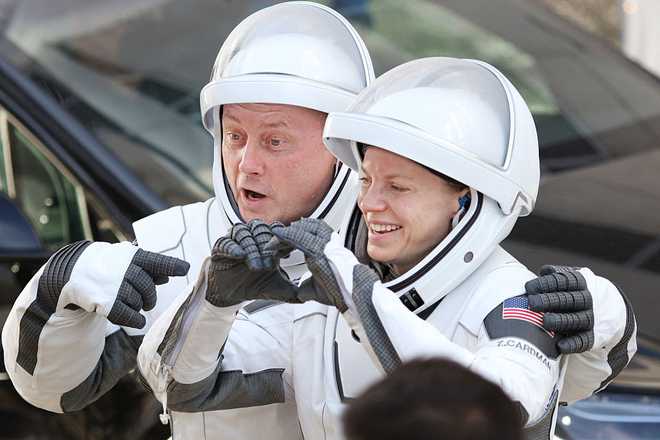
GREGG NEWTON
Crew-11 mission members NASA astronaut Mike Fincke (left) and NASA astronaut and mission commander Zena Cardman gesture to family and supporters as they depart the Neil A. Armstrong Operations and Checkout Building en route to launch complex LC-39A at the Kennedy Space Center in Cape Canaveral, Florida, on Aug. 1, 2025.
The Associated Press Health and Science Department receives support from the Howard Hughes Medical Institute’s Department of Science Education and the Robert Wood Johnson Foundation. The AP is solely responsible for all content.